Inowrocław Weekend Guide: Brine Towers and Poland's Oldest Salt Story
The essentials: Inowrocław's graduation towers, 320 m of blackthorn wall opened in 2001, stand free to visit in a classic spa park; the viewing terrace costs 2.5 zł. Direct trains run on the Warsaw-Bydgoszcz mainline, and Ciechocinek is half an hour away.
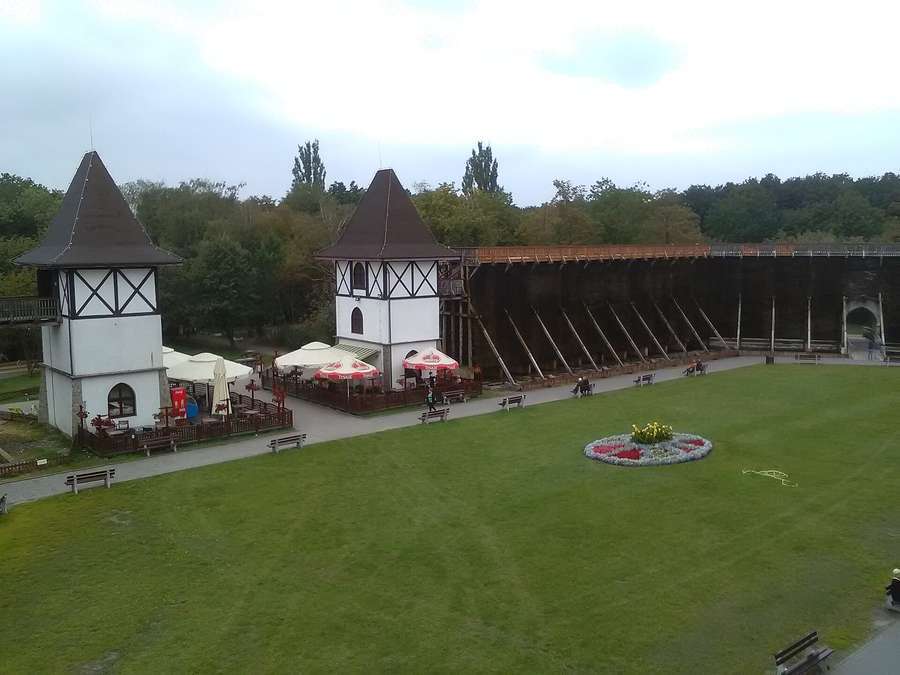
Inowrocław is the brine town most visitors to Poland have never heard of, which is exactly why to go. Its graduation towers, vast blackthorn walls breathing iodine mist into a classic spa park, are the second-largest in the country after Ciechocinek, the town sits right on the main Warsaw-Bydgoszcz railway, and a day here costs almost nothing: the towers and park are open to all, and the viewing terrace on top of the wall asks 2.5 zł. This is the plan for an offbeat, genuinely healthy day trip or quiet weekend.
Getting there
Inowrocław lies on the busy Warsaw-Bydgoszcz mainline, so direct InterCity and regional trains link it with Warsaw, Bydgoszcz and Toruń, and the station is about twenty minutes on foot from the Solanki Park or a short bus ride. By car it sits just off the A1 corridor between Łódź and Gdańsk, making it an easy add-on to a Toruń or Bydgoszcz trip. The spa quarter itself is compact: the towers, the park, the spa hospital and most hotels sit within a fifteen-minute walking loop.
The graduation towers: what you are looking at
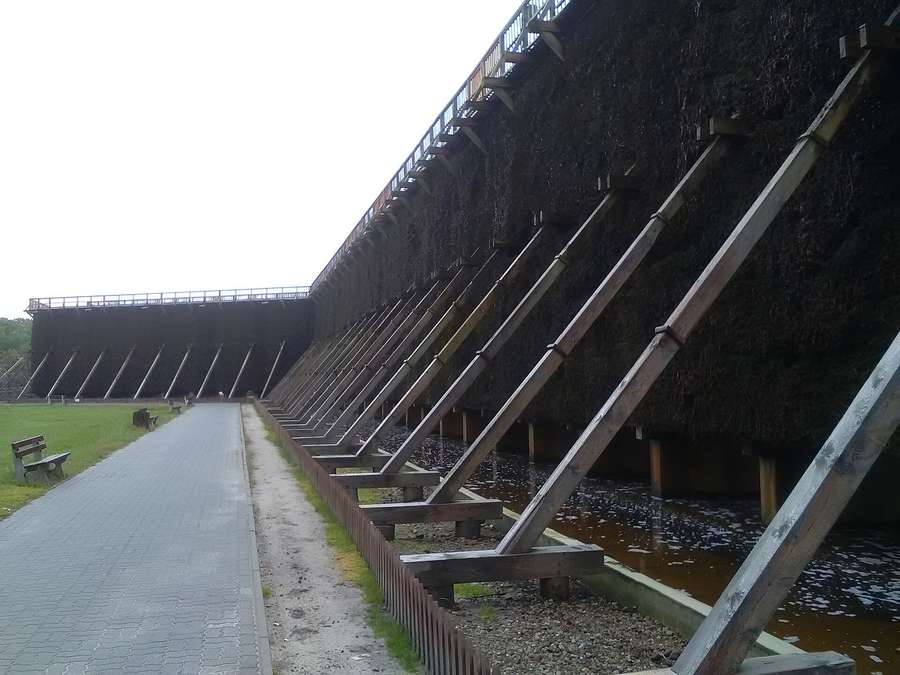
The Inowrocław tężnie, opened in 2001, are built as two joined polygons about 320 metres long and 9 metres high, the third graduation complex built in Poland and the second-largest. Brine is pumped to the top and trickles down through walls packed with blackthorn twigs; wind evaporates the water, and the air along the walls fills with a mineral aerosol rich in iodine. The spa describes the towers as a natural inhalatorium: time beside them is recommended for respiratory complaints, hypertension, allergies and simple exhaustion, and healthy visitors come because the salty air simply feels good. The microclimate reaches some 300 metres around the walls.
Walking the circuit is the ritual: the paved path hugs the blackthorn wall, benches line the leeward side where the mist drifts, and regulars settle in with newspapers for a slow hour. First-timers notice the salt on their lips within minutes and the faint tang of iodine in the air, somewhere between a sea breeze and a medicine cabinet; on breezy days the mist carries well beyond the wall, which is when the whole park seems to inhale. The recommended dose is thirty to sixty minutes of unhurried strolling and sitting, and locals treat it as a standing appointment through the cold season, when the aerosol works as a natural shield against the wave of respiratory infections. Above the wall runs a viewing terrace with a panorama of the park and town; entry to the terrace costs 2.5 zł. After dark the towers glow with the first LED illumination of a graduation tower in Europe, which turns an evening walk into the town's best free show.
Data source: Inowrocław city hall official attraction page and the Solanki spa's graduation tower pages (inowroclaw.pl, solanki.pl), checked 22 October 2026.
A salt story older than the town
The brine that feeds the towers is not a spa novelty. Archaeologists working in Inowrocław believe the town may hold the oldest salt-production graduation structures found in Europe, evidence that people were concentrating and boiling brine here in deep prehistory. The city presents that lineage proudly, and it reframes the modern towers: this is not a 21st-century wellness gimmick but the newest chapter of one of Europe's oldest industries. The town's spa era began in the 19th century, when the brine springs were tapped for medicine, and the grand sanatorium architecture of the park quarter dates from that boom. Patients have been coming ever since for mud treatments, brine baths and inhalations prescribed for joint, respiratory and skin conditions, and the working sanatorium, the Solanki spa hospital, remains the town's economic heart. That matters to a casual visitor for one reason: the whole quarter is kept at spa-resort standard, manicured, quiet and lit, because paying patients expect it, and everyone else enjoys the same setting for free.
Data source: Inowrocław city hall official attraction page (inowroclaw.pl), checked 22 October 2026.
Solanki Park and the spa quarter
The towers stand inside the Park Solankowy, one of Poland's great spa parks: over a hundred hectares of old trees, flower carpets, ponds and promenades laid out around the brine springs. Peacocks have long been part of the park's scenery, the duck ponds anchor the lower alleys, and the brine spring itself still surfaces in the park's wells. Around the towers the recreation ground offers mini golf, a rope park, a playground, an outdoor gym and tennis courts, open in the April-to-October season: 11:00-19:00 in April and September, 12:00-20:00 from May to August and 10:00-18:00 in October. The spa hospital and its treatment hotels line the park's edge, and their cafes welcome non-patients. The park is beautiful in every season: spring flowers, summer concerts beside the towers, autumn colour, and a snow-covered, lamp-lit stillness in winter that regulars call the best time of all.
Data source: OSiR Inowrocław official recreation-ground hours (osir.inowroclaw.pl), checked 22 October 2026.
The rest of the town
Inowrocław's centre is a modest, friendly market-town core with a few real sights: the Romanesque Church of the Holy Virgin Mary, one of the oldest stone churches in Poland, standing on its hill above the town, the neo-Gothic basilica, and the bastions of the old spa quarter. The town's museum adds the local salt-industry story to the archaeological finds, and the market square, rebuilt and modest, does the Polish small-city thing well: cheap milk-bar lunches, ice cream in summer, and pensioners debating the world on benches. The town pairs naturally with its neighbours: Ciechocinek's giant graduation towers are half an hour away, Toruń's Gothic old town forty minutes, and Bydgoszcz's waterfront the same. A brine-themed two days, Inowrocław plus Ciechocinek, is a genuinely original Polish weekend that almost nobody does.
Food is simple and good: the spa-quarter hotels keep proper restaurants with seasonal menus, the centre has the full milk-bar-to-bistro range at small-town prices, and the park kiosks do the classic Polish resort trade in waffles and ice cream through the warm months. The local edible souvenir is salt itself, sold in the spa shops in every grade from table to bath.
With children
The towers themselves fascinate children, the mist is tangible magic, and the recreation ground beside them covers the energy-burning: rope park, playground, mini golf and tennis in season. The park's flat, paved alleys are pram-perfect, the terrace climb is short and safe, and the low costs, 2.5 zł for the terrace, free for everything else, make this a budget-proof family day. Pack spare clothes in windy weather: the brine mist leaves everyone pleasantly salty. Frame the trip as a science adventure and it lands even better: watch the brine run down the blackthorn, feel the droplets on the breeze, hunt the oldest saltworks in Europe with a map, and finish with the LED light show after dark, which turns the whole wall into a glowing cliff.
A realistic weekend plan
Day one: train in, check into a spa-quarter hotel, walk the full tower circuit with a bench stop on the misty side, climb the terrace before dusk, then return after dark to see the LED illumination. Day two: a morning inhalation walk as the regulars do, the Romanesque church and town centre, and a slow afternoon either in the park or on a side trip to Ciechocinek or Toruń. Bring a windproof jacket and low expectations of crowds; the reward is a spa resort at its most honest, doing what it has done for a century and a half without an audience to impress.
Frequently asked questions
How much does it cost to visit the Inowrocław graduation towers?
The towers and Solanki Park are open to everyone; only the viewing terrace on top of the wall charges a ticket, 2.5 zł. The recreation ground beside the towers prices its attractions separately in season.
How big are the Inowrocław graduation towers?
They form two joined polygons about 320 metres long and 9 metres high, the second-largest graduation complex in Poland after Ciechocinek, opened in 2001. Their iodine-rich microclimate reaches about 300 metres around the walls.
Is Inowrocław worth visiting off-season?
Yes. The towers operate year-round, the LED illumination makes evening walks a show, and the spa park is famously atmospheric in autumn colour and winter snow. The recreation ground beside the towers runs from April to October.
Can I combine Inowrocław with other brine towns?
Yes. Ciechocinek, home of Europe's largest graduation towers, is about half an hour away, and Toruń and Bydgoszcz are both within forty minutes, making an easy two-day brine-and-Gothic loop.
How do I get to Inowrocław without a car?
Direct InterCity and regional trains serve Inowrocław on the Warsaw-Bydgoszcz mainline, and the station is a twenty-minute walk or a short bus ride from Solanki Park. Everything in the spa quarter is then walkable. * Photos: Cover - the Inowrocław graduation towers and spa park turrets by Koefbac, CC BY-SA 4.0, via Wikimedia Commons. Body - the blackthorn wall of the towers by Koefbac, CC BY-SA 4.0, via Wikimedia Commons.