Jam Labels in Poland: Dżem, Konfitura and Powidła
The essentials: Read the complete spread name and its fruit-use statement. Dżem, konfitura and powidła śliwkowe have different definitions. June 2026 rules raised general jam fruit quantities, with exceptions and an old-stock transition.
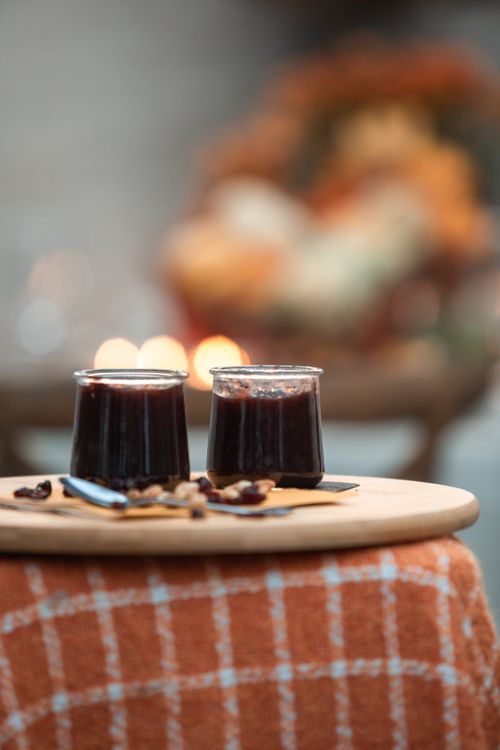
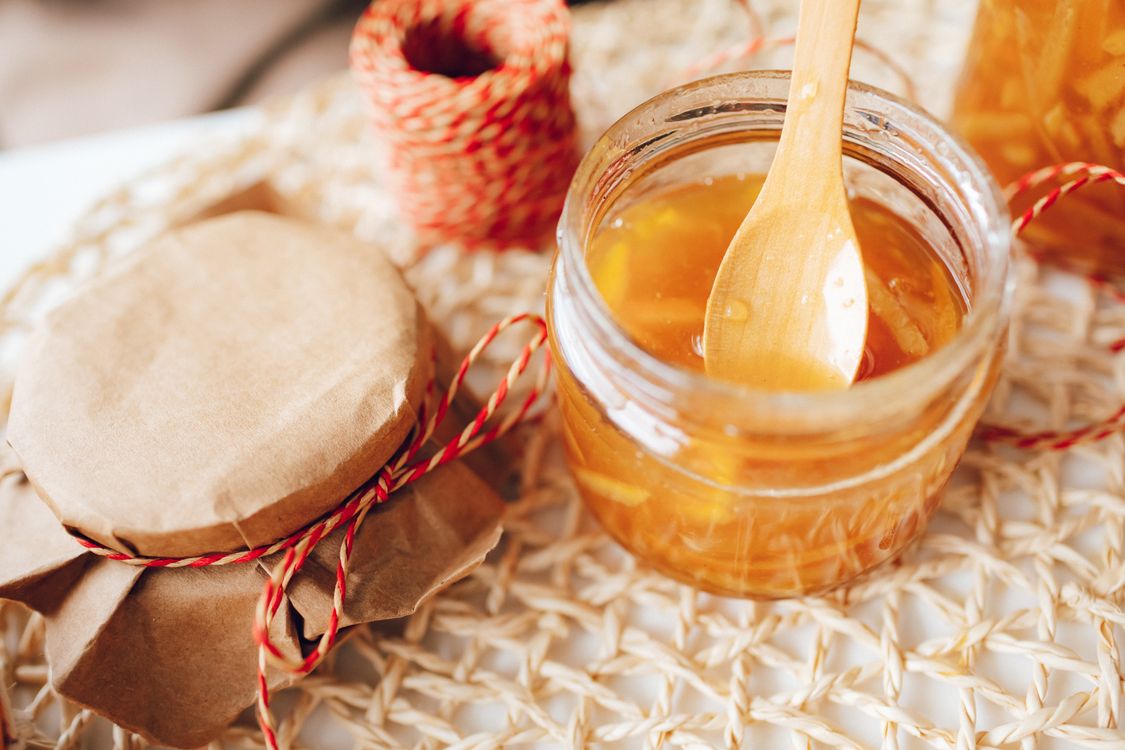
Cover: RDNE Stock project, source photograph, Pexels License. Image unchanged. Small jars of dark fruit spread on a covered table. Illustrative preserve context, not proof of legal category or fruit content.
A Polish spread shelf contains words that do not map neatly onto one English word, jam. Dżem, konfitura, galaretka, marmolada and powidła śliwkowe are not simply interchangeable brand styles. Their product names and fruit-use statements help explain what is offered. Reading those pieces is more useful than judging a jar only by colour or the size of the fruit picture.
This guide concerns shop-bought product names and fruit quantities. It is not a preserving recipe, a food-safety test or a ranking of diets. The photographs illustrate fruit spreads. They do not establish a legal category, fruit percentage or production method for the pictured jars.
Start with the actual designation
Dżem is the familiar jam designation. Konfitura is another defined fruit preparation, not merely a more elegant word for every jam. Galaretka in this part of the shelf refers to a jelly-type fruit preserve; the same everyday word can appear in other food contexts, so read the whole product name.
Powidła śliwkowe means the defined plum preparation. The word śliwkowe identifies plums. Do not assume that every fruit spread casually called powidła in a recipe or conversation has the same legal identity as a retail product bearing the full designation.
A label can also use another description for a fruit spread. Establish what it actually claims before deciding whether it fits your purchase. An unfamiliar name is a reason to inspect the information, not automatic evidence that a seller is doing something wrong.
Separate dżem from dżem ekstra
The June 2026 Polish changes raised the general fruit quantities required for jam and extra jam. For ordinary jam the general minimum became 450 grams of fruit pulp or purée used to make 1,000 grams of finished product. For extra jam the general minimum became 500 grams of pulp, with the relevant definition and exceptions applying.
Those are general figures, not an identical rule for every fruit. The amended regulation sets lower quantities for specified fruits, including currants and other named groups. Do not turn a memorable 45 percent or 50 percent shortcut into a verdict about every jar.
Ekstra has a defined role in the product category. It does not mean a public authority has chosen the jar as best tasting, or that the spread meets every personal preference. Read the actual fruit-use statement and ingredients rather than stopping at the extra word.
Read konfitura as its own category
The Polish rules describe konfitura as a sufficiently thick but non-gelled mixture of fruit pulp, sugars and water. The required fruit-pulp quantity is at least 500 grams for 1,000 grams of finished product. Konfitura ekstra has a 600-gram requirement in its definition.
This explains why a straight translation into jam can hide a useful distinction. However, it does not guarantee that every shopper will prefer one texture or that one jar is suitable for any baking task. A category definition and a recipe instruction have different jobs.
If buying a particular spread requested by someone else, keep the name intact. A dżem and a konfitura may both be fruit spreads, but a substitution should not be treated as invisible. Read the product rather than making the choice solely from the English word on a shop's shelf sign.
Understand the fruit-use line
Look for sporządzono z ... g owoców na 100 g produktu: made with a stated number of grams of fruit per 100 grams of product. The Polish labelling amendment effective in June 2026 uses this form of fruit information for the covered preparations.
The statement concerns fruit used to make the finished product. It is not always the same kind of number as the net weight of the jar or the nutrition-table amount of sugars. Read the subject and basis before comparing numbers from different parts of the label.
An invented example makes this clear. A jar weighing 300 grams might carry a statement about fruit used per 100 grams of product. The 300-gram quantity identifies how much spread you buy; the fruit-use line describes a composition basis. Do not read them as competing quantities.
Why fruit used can exceed the finished weight
Powidła śliwkowe is a concentrated plum preparation obtained by cooking, with a spreadable consistency. The Polish definition, as amended in 2022, allows it with or without added sugars and sets a minimum of 1,600 grams of plum pulp or purée for 1,000 grams of finished product. The regulation also has mutual-recognition provisions for qualifying products lawfully made or marketed in other EU states or made in EEA EFTA states; do not use the Polish figure as an automatic verdict on every imported jar.
That production basis explains how a fruit-use statement can exceed 100 grams per 100 grams of finished spread. Water loss during concentration means the starting fruit quantity and finished product weight need not match. It is not a claim that a jar contains more than its own net weight at the time of sale.
Do not translate powidła into automatically sugar-free. The definition allows both forms. Read the actual ingredients and any specific claim rather than deriving it from tradition or the dark colour of a plum spread.
Read marmolada with its full qualifier
English marmalade often leads shoppers to think of citrus, but Polish shelves use longer designations that need to be read in full. The amended rules use marmolada z owoców cytrusowych for the citrus category, while retaining distinct provisions for hard or soft marmolada made from other fruits.
Do not assume that every product carrying a form of marmolada is an orange preserve. Find the fruit description and the actual designation. A short English translation may leave out the qualifier that explains the product.
This guide does not give a complete manufacturing table for every marmolada category. The useful shopping step is to preserve the full name and read its fruit-use information, rather than treating one familiar word as a complete recipe or legal assessment.
Recognise the June 2026 transition
The revised quality requirements and related labelling changes apply from 14 June 2026. The Polish acts also provide a stock transition for qualifying products produced and placed on the market under the former quality rules before that date; the separate label transition covers products labelled under the former rules and placed on the market before that date. Such stock may remain available until exhausted.
Older and newer presentations can therefore appear at the same time. An older fruit threshold or wording seen on a qualifying jar is not automatically proof of an unlawful sale. The timing and applicable transition conditions matter.
Equally, a shopper should not invent a transition history for an unexplained product. If the label seems inconsistent, ask about the exact item. Keep a photograph and identification rather than declaring it covered by an exception simply because that would settle the question quickly.
Do not confuse fruit-use information with a health claim
A fruit statement does not answer every question about a spread. It is separate from the ingredients, nutrition information, storage conditions and any personal dietary requirement. This article does not repeat those full label-reading guides or rank one sweetener as medically preferable.
Read words such as bez dodatku cukrów in their actual context. Do not infer that a product contains no naturally occurring sugars, or that it is suitable for a medical diet, merely because it is a fruit preparation with a particular name.
Likewise, a rustic label or the word domowy should not replace the product's concrete information. A jar can look traditional while still requiring careful reading. Your purpose is to understand the declaration, not award a health guarantee from its packaging style.
Compare like with like
When comparing two jars, begin with their categories and fruit species. Then compare the stated fruit-use basis. Avoid placing an ordinary jam figure beside a concentrated plum-preparation figure and assuming the larger number answers every quality question.
Check the net quantity separately. Similar jars can hold different amounts. The size of a fruit photograph, the height of the lid or your memory of a previous purchase does not establish the present weight.
For online shopping, save the designation and readable label information. A retailer's broad jam category can contain several different products. If the title and label image disagree, ask which description applies to the actual version being sold.
Keep the question factual when something is unclear
Ask what the legal designation is, what the fruit-use statement refers to or whether an online image shows the current version. Keep the name, batch information and proof of purchase if the concern needs review. These details are more useful than an accusation based on texture alone.
Do not use this guide to judge the safety of a jar with an unusual appearance or damaged packaging. It supplies no mould-removal, reheating or home-canning instructions. A composition question and a food-safety question should not be silently combined.
A practical routine is to read the complete name, identify the fruit and quantity basis, recognise any applicable old-stock transition and then check the rest of the product information for its own purpose. That makes the spread shelf easier to understand without pretending that one English translation covers every Polish jar.
For a bilingual shopping list, truskawkowy identifies strawberry, malinowy raspberry and śliwkowy plum. Pair the fruit word with the full spread designation. Asking for a plum spread does not always identify the same product as asking for powidła śliwkowe. Keeping both pieces in the request makes a later substitution easier to spot and discuss.
Frequently asked questions
Why can a spread use more than 100 grams of fruit per 100 grams?
The statement concerns fruit used to make the finished spread. Cooking and concentration can remove water; the starting fruit weight and finished weight need not match.
Does powidła śliwkowe mean no added sugar?
No. The definition permits the concentrated plum preparation with or without added sugars. Read the actual product ingredients and claims.