Juice and Nectar in Poland: Sok, Nektar and Concentrate
The essentials: Find sok or nektar in the full product name, then read fruit content and concentrate wording. June 2026 changes added reduced-sugars juice categories, with a transition for qualifying old stock.
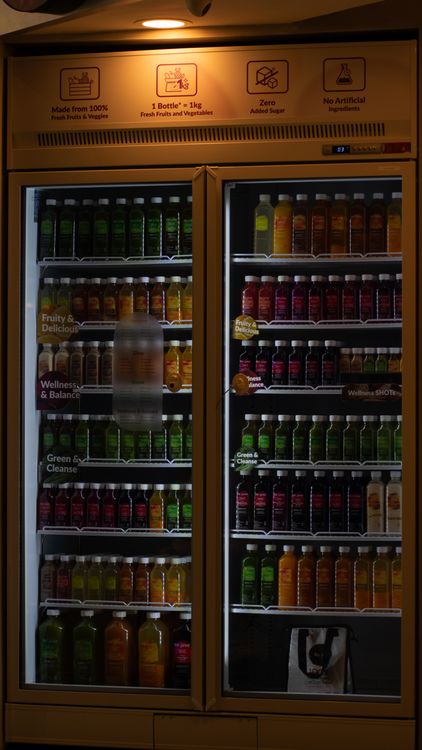
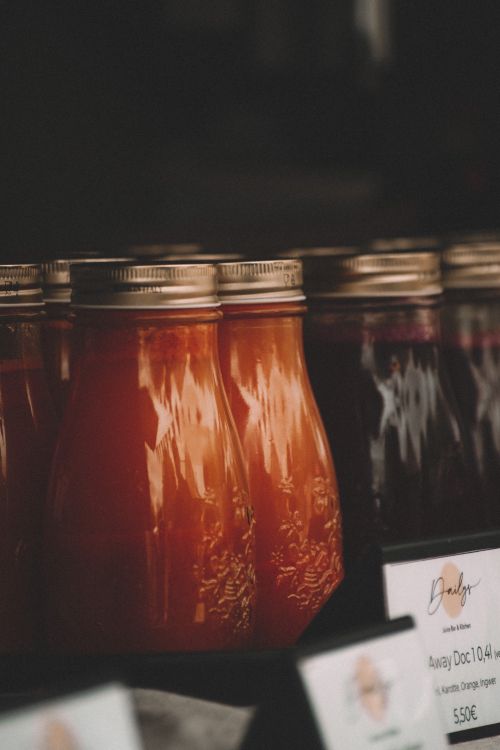
Cover: Ahmad Fathaan, source photograph, Pexels License. Image unchanged. Bottled drinks in a refrigerated display in Jakarta. General shopping context, not Polish labels or a verified juice category.
A carton with oranges on the front can contain juice, nectar or another fruit drink. In Poland, the first useful word is the product name, not the largest fruit photograph. Sok and nektar describe different products. Wording about concentrate adds another piece of information, while a reduced-sugars category introduced in June 2026 adds a separate distinction.
This guide is for reading the fruit-drink shelf. It does not rank diets, recommend drinks for children, explain a proposed sugar tax or give a home juice-preserving method. The photographs illustrate bottled-drink shopping, not verified Polish labels or evidence of the pictured products' composition.
Find sok or nektar in the actual name
Sok means juice. Nektar means nectar. Look for the full name near the mandatory product information, even when a large brand name or a fruit word dominates the front. A flavour picture alone does not establish which category the manufacturer declares.
Polish quality rules reserve the relevant names for products meeting their requirements. This makes the difference more useful than a vague comparison between expensive and inexpensive cartons. Establish what is offered before comparing two products as if they were identical.
A drink described differently should be read under its actual name and ingredients. Do not silently translate every fruity napój into juice. Equally, do not call a nectar fraudulent merely because it differs from juice. The question is whether you understand and want the product actually described.
Understand nectar's fruit-content statement
IJHARS explains nectar as a product made by adding water to fruit juices or purées, or a mixture of them. Its label gives minimum fruit content using wording such as zawartość owoców minimum, followed by a percentage. Read the number on the actual product rather than assuming all nectars contain the same proportion.
Minimum requirements depend on the fruit. A general statement that every nectar must be half fruit would be wrong. The consumer task is to find the declared minimum and connect it to the product's full name and composition.
An invented example shows the reading method: a label saying zawartość owoców minimum 40% declares a minimum fruit content of 40 percent for that product. It does not mean 40 percent of the drink is one highlighted fruit unless the rest of the information says so. This example is not an assessment of a current carton.
Distinguish juice from concentrate from concentrate itself
Z zagęszczonego soku means from concentrated juice. A juice made from concentrate is not the same description as a package of concentrated juice intended for another use. Read the full phrase rather than stopping at the familiar word sok.
Concentrated juice is made by removing part of the water. Juice from concentrate is a separate defined product. The distinction describes processing and product identity; it does not, by itself, supply a personal health ranking or tell you that every product must be diluted at home.
Use the actual instructions when a product requires preparation. Do not add water to a ready-to-drink carton because its name mentions concentrate, and do not treat an unfamiliar concentrate as ready to drink without checking. This guide supplies no dilution ratio for an unidentified product.
Read mixed-fruit information with the category
Polish labelling rules address products made from two or more fruit species. The fruit names normally follow decreasing proportions of the juices or purées used. For products with three or more fruits, wording such as wieloowocowy, meaning multifruit, can be used under the rules instead of listing all fruits in the name.
A large mango or raspberry image should therefore lead you to the full name and ingredients, not replace them. Read which fruits are actually declared. A fruit used to correct acidity can be treated differently under the naming rules, so a short name is not a complete manufacturing formula.
When comparing two mixed drinks, keep the same question in view. Are you comparing overall fruit content, the presence of a particular fruit, the product category or a preparation method? These are related questions, but one number or front image will not answer all of them.
Recognise the June 2026 reduced-sugars categories
Polish amendments effective from 14 June 2026 introduced defined fruit-juice categories with reduced sugars. The rules concern reduction of naturally occurring sugars by at least 30 percent against the relevant average juice of the same fruit type, while preserving other essential characteristics under the prescribed conditions.
This does not mean every juice was ordered to contain 30 percent less sugar. It identifies additional categories. Nor is it a claim that a particular carton suits a medical need or contains no sugars. Read the actual designation and the product's own information.
The full wording can be long, including a reduced-sugars juice made from concentrate. Read the complete description instead of treating reduced sugars and from concentrate as competing labels. They describe different aspects of the product and can appear together.
Do not use old nectar rules as a universal current shortcut
The June 2026 changes also differentiated permitted added sugars or honey for nectars by fruit group. Older explainers often quote one 20 percent ceiling for every nectar. That is not a complete account of the amended rules, which use different limits for the specified groups.
A shopper does not need to reconstruct a factory recipe to buy a carton. Read the actual ingredients and product information rather than assuming that a legal maximum is the amount used in every product. A permitted limit is not a declaration that all manufacturers add that amount.
This article does not provide a nutrition-table tutorial or tell you how much sugar to consume. It explains why the category, ingredients and any reduced-sugars designation need to be read separately. Use the product-specific information for the question you actually have.
Understand why older labels may still appear
The changes took effect on 14 June 2026, but transition provisions allow qualifying products produced and placed on the market under the former quality rules before 14 June 2026; a separate labelling transition covers products labelled under the former rules and placed on the market before that date to remain available until stocks are exhausted. Old and new presentations can therefore coexist.
Do not declare an older-looking carton unlawful solely because you have read about the new categories. Its market-entry and labelling history can matter. At the same time, do not assume every unexplained inconsistency is covered by a transition. Ask about the specific product if the information does not make sense.
The practical lesson is to read the label in your hand. A photograph from an older online review may no longer describe the version being sold. Keep the product name and readable label image together when checking a difference.
Keep processing descriptions separate from storage instructions
Words about pressing, concentrate or preservation concern the product's processing. They do not replace its storage conditions. Read the directions before and after opening, including any instruction specific to the package. This guide offers no fixed number of days that applies to all juices.
Likewise, a refrigerator photograph is not a universal storage rule for every unopened carton. The label and actual product conditions matter. Do not copy an instruction from a similar-looking bottle of another product.
If you transfer the drink to another container, keep its identity and relevant instructions available. A handwritten fruit name can lose the distinction between juice, nectar, concentrate and a different drink mixture. Clear identification helps a shared household avoid an accidental substitution.
Compare the exact version and quantity
Check the net quantity rather than assuming a familiar carton size. A brand can sell different volumes and product categories with similar graphics. Read the written description of the item in your basket, not a nearby variant on the shelf.
For an online order, inspect the specification and label images. If they disagree about the category or concentrate wording, save both and ask the seller which description applies. Do not resolve the conflict by choosing whichever sounds more attractive.
When buying for someone else, a request for orange juice should not automatically be filled with an orange-flavoured drink or nectar. Establish whether the substitution is acceptable. A clear product name makes that conversation easier than relying on colour or price.
Ask a focused question when information is missing
Useful questions name the uncertainty: Is this juice or nectar? What does the minimum fruit percentage describe? Is it ready to drink? Which concentrate wording applies to this version? These are easier to answer than a broad question about whether a drink is good.
Preserve the label, product identification and proof of purchase if a concern needs review. Do not claim a laboratory finding from taste, colour or cloudiness. This guide does not diagnose an unfamiliar drink or decide whether a damaged product should be consumed.
A repeatable routine is to find the category, read the fruit-content and concentrate information, recognise any specific reduced-sugars designation and then check the remaining product instructions. It keeps the shelf decision practical without turning a label into a health promise or a manufacturing certificate.
A useful bilingual note for a shared shopping list is sok jabłkowy for apple juice, nektar for nectar and wieloowocowy for multifruit. Add the exact product category requested rather than relying only on a fruit name. Keep concentrate wording when it is important to the person who will use the drink.
Frequently asked questions
Does from concentrate mean I should add water?
Not to a ready-to-drink juice merely because its name mentions concentrate. Read the full product description and its own instructions.
Did all juice have to reduce sugars in June 2026?
No. The changes introduced defined reduced-sugars categories; they did not require every juice to reduce its sugars by 30 percent.