Kadzidlo Farmstead in Winter: Tickets, Kurpie Crafts and New Spaces
The essentials: Zagroda Kurpiowska in Kadzidlo lists daily November-March hours of 10:00-15:00, with ticket sales ending 30 minutes before closing. Admission is PLN 12 standard, PLN 8 reduced and PLN 30 family; Sundays are free. The museum confirmed expansion completion in October 2026.
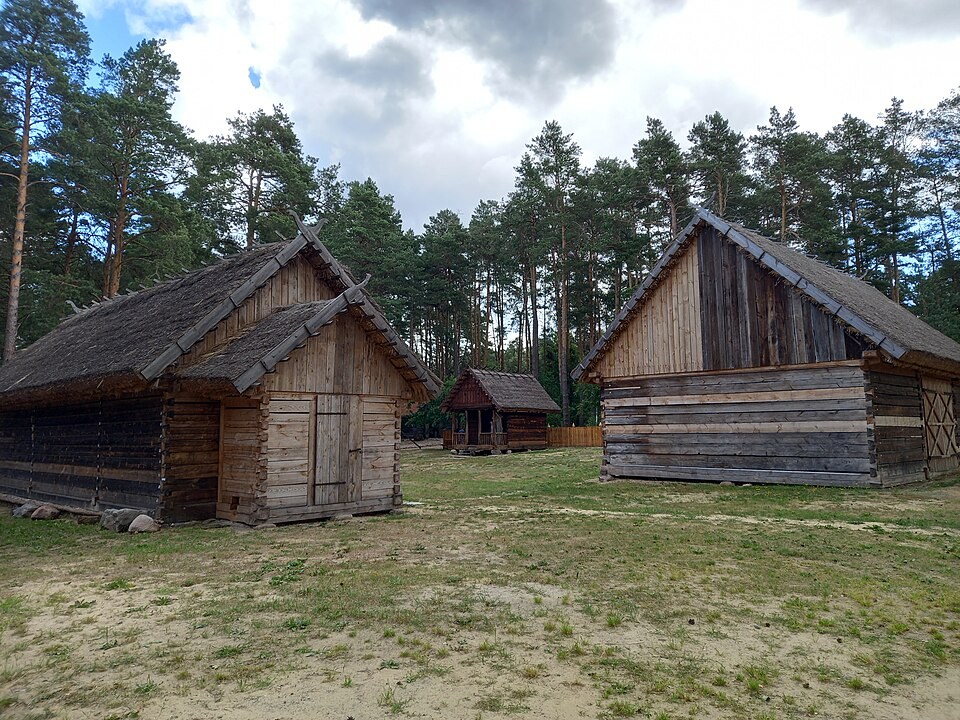
Cover: an archival view of the farmstead, photographed on 15 July 2022, before the 2026 expansion. It does not show the current layout or winter conditions. Photo: Parciaki / Wikimedia Commons, CC BY-SA 4.0. Resized and recompressed under the same licence.
A small Kurpie museum with its own winter timetable
Zagroda Kurpiowska in Kadzidlo is a branch of the Museum of Kurpie Culture in Ostroleka, but it is not the same place as the main museum on plac Bema. That distinction matters before you plan a winter visit. The main museum's Monday closure and weekday hours should not be copied onto the Kadzidlo farmstead. The branch has its own seasonal timetable and its own contact details.
The branch visitor page lists daily opening from 10:00 to 15:00 between 1 November and 31 March. From 1 April to 31 October, the published hours are 10:00-17:00. Ticket sales finish no later than 30 minutes before closing. For a normal winter day, that makes 14:30 the latest published ticket-sale point, not a sensible target arrival for an unhurried visit.
The museum's separate opening-hours page repeats those Kadzidlo seasons. Its public-information site also has a simpler 10:00-17:00 branch table without seasonal qualifications. Use the explicit winter timetable rather than interpreting that table as a longer winter day. Before a long journey or a holiday visit, ask the branch about exceptions and which displays will be available.
Tickets, free Sundays and the right telephone number
The branch page lists PLN 12 standard admission, PLN 8 reduced admission and a PLN 30 family ticket. Sunday admission is free. Those are the published Kadzidlo visitor prices, checked for this guide, rather than a quote for a private activity. Ask about family-ticket eligibility if it determines your purchase: do not assume the family-size definition under a different branch's tariff automatically carries across.
Holders of Karta Duzej Rodziny are listed as eligible for a 50 percent admission discount at the museum and its branches, including Kadzidlo. Show the relevant card and ask how the discount applies to your party. A discount on admission is not evidence that a workshop, food package or private event is also discounted. Similarly, free Sunday entry does not promise that every additional service costs nothing.
For Kadzidlo, use +48 29 761 82 00 or the mobile number +48 690 394 265. The published email is [email protected]. These branch contacts are more useful for questions about local conditions than assuming the central office can describe every open doorway that day. If you need English help, ask about language when arranging the visit; the published material does not establish an always-available English-speaking guide.
Organised groups are asked to reserve their visit by telephone or email. The branch page also advertises group activities and refreshments. Treat those as arrangements to agree in advance, not a menu of guaranteed walk-in activities. Confirm the total, group size, language, duration and any cancellation conditions before making a group commitment.
The 2026 expansion changes how to read older advice
Some search results still lead to a February 2026 construction warning. At that point, the museum said building work was continuing and some areas were temporarily excluded from visiting. That is useful historical context, but it is not a sound basis for telling visitors the farmstead remains a construction site today.
A later museum announcement dated 14 October 2026 says the second expansion stage was completed. Its photographs show an exhibition pavilion, a roofed barbecue area, a children's play area, audience seating and a pavilion for exhibits. A local August report about the rebuilt site also describes the return of events.
Completion of the project is not the same as a daily timetable for every new space. Ask what is open during your intended visit, especially if the pavilion or play area is the main reason for travelling. A photograph of a completed facility does not establish its winter operating rules, supervision arrangements or availability during a private event.
Start with the shape of the farmstead
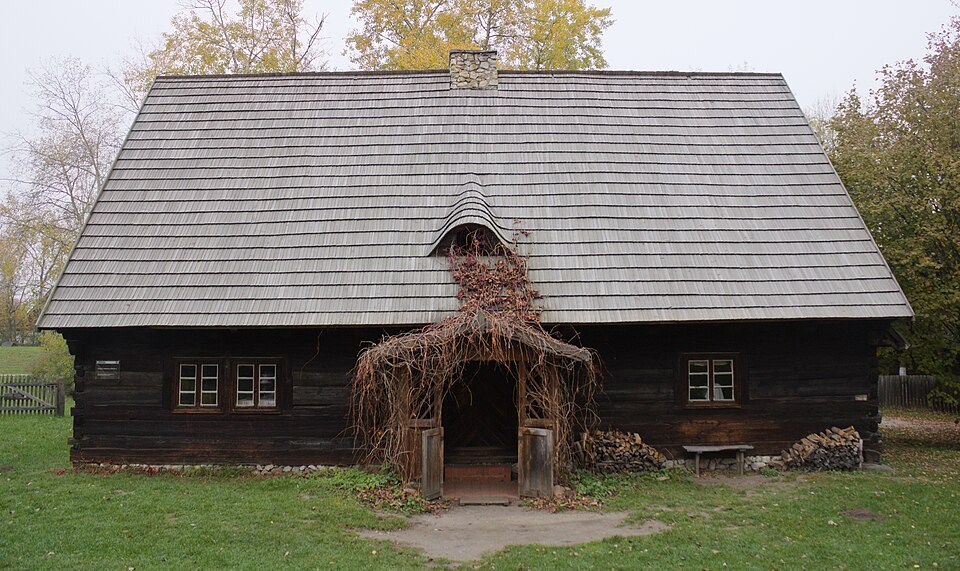
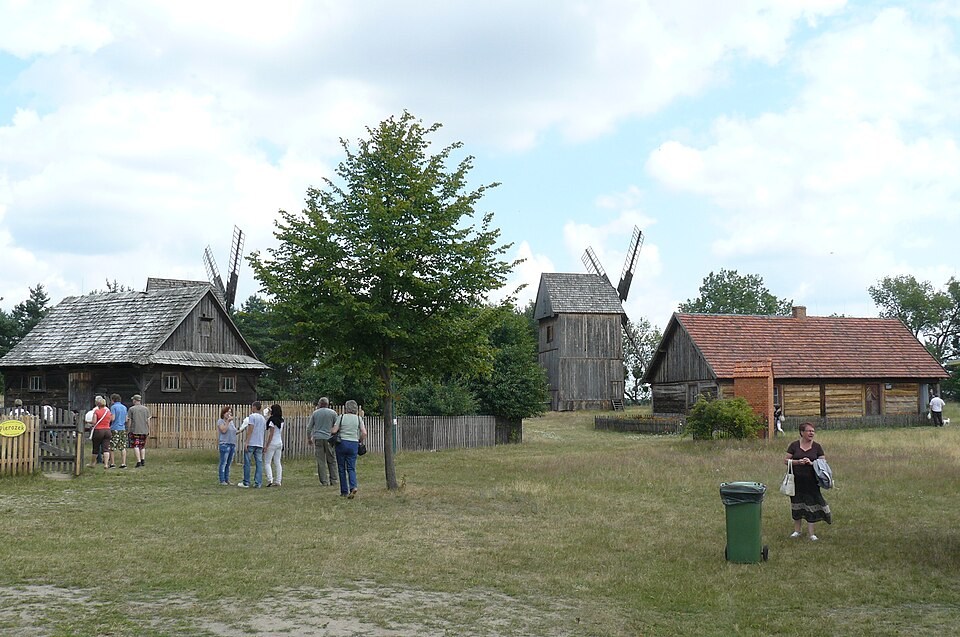
The museum's collection history explains that the open-air branch first welcomed visitors in 1991. It presents a Kurpie farmstead type associated with settlements on consolidated land at the end of the nineteenth century. The local word for the holding was siedlisko. Rather than treating the buildings as isolated photo stops, look at the relationships between them.
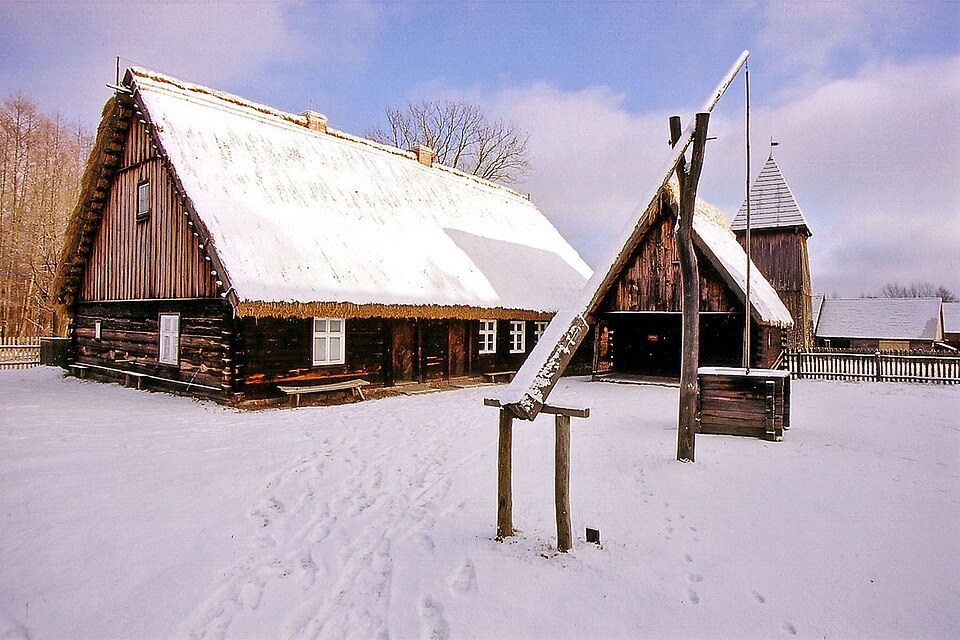
The described layout is an elongated rectangle, with the house facing the barn and other agricultural buildings along the sides. Houses faced the road with their gable end, separated from it by a small flower or vegetable garden. A well with a long lifting pole was another important part of the holding. These details explain how a family organised work, storage and domestic space.
Look upward at the roof ends. The extended, crossed boards called sparogi were cut into horn-like profiles. Above windows, carved wooden decorative pieces called koruny gave the houses another recognisable feature. You do not need specialist vocabulary to enjoy the visit, but knowing these two terms makes it easier to distinguish Kurpie architecture from a generic idea of a Polish wooden cottage.
The collection page contains older future-tense plans as well as historical descriptions. It also records buildings lost in a fire and subsequent rebuilding work. Do not read the whole page as a current list of structures you are guaranteed to enter. Use it to understand the collection, then ask staff which parts of that history are represented on the present route.
Inside the Golanka cottage: work and decoration
The cottage from Golanka provides a way into domestic life. The museum describes an entrance hall, a large room, a smaller space associated with weaving and the kitchen known as an izbetka. The kitchen was an everyday family living space, not merely a room where food happened to be prepared. Ask which rooms are accessible before expecting the full historic arrangement to be on view.
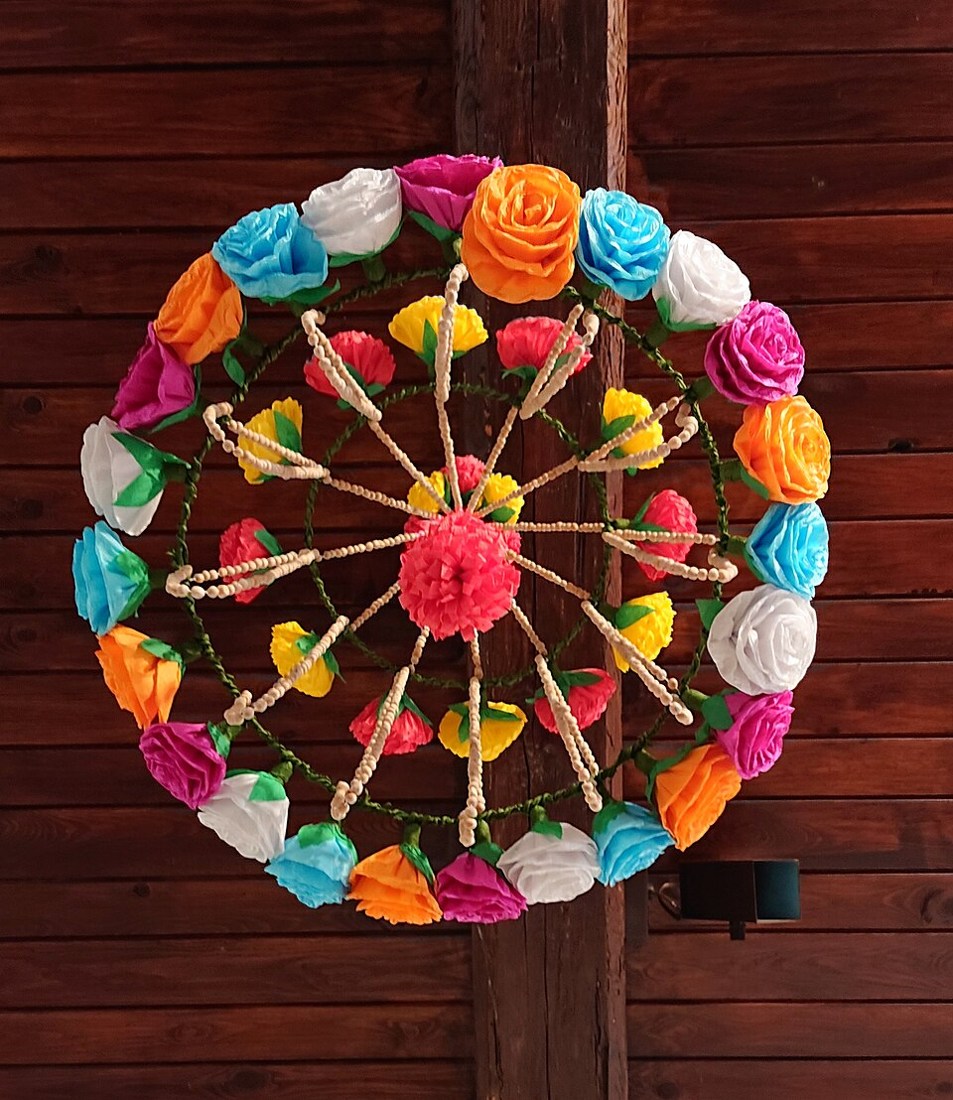
The larger room's decoration includes paper cutouts, religious pictures and a carefully arranged sacred corner. The collection description mentions byśki and nowe latka, ceremonial bread forms associated with the period between New Year and Epiphany. These explain seasonal customs, but their mention in a display description is not a promise of a baking demonstration or a fresh-food tasting during your visit.
Weaving equipment offers another practical subject for a family visit. Instead of asking children only whether they like an old room, ask what a loom needs: light, space and time. The museum describes looms being placed near windows and textile work providing an important source of income. It is a useful connection between an unfamiliar object and the household work that supported the people living there.
Grain, metalwork and forest traditions
The museum identifies the granary from Lodziska as dating from 1921 and the forge from Brzozowa as dating from 1928. The granary's role was protection as much as storage. Its raised position helped ventilation and kept the crop away from pests. Notice how a utilitarian building could still have carefully finished details, rather than assuming decoration belonged only to the dwelling.
The forge description lists a brick hearth, bellows, an anvil, tools and finished ironwork. These objects tell you about the equipment of a rural workshop. They do not establish that the hearth will be lit or a blacksmith will be working on an ordinary winter day. Ask about a dated workshop if seeing a demonstration matters more to you than seeing the building.
Log hives connect the farmstead with the region's forest beekeeping traditions. The museum explains how keeping bees in hollowed tree trunks related to later hives brought into farmyards. That offers another clear theme for a short visit: follow the work needed to keep a household supplied, from grain storage and tools to textiles and honey, rather than trying to memorise every building name.
Access information needs its date attached
The museum's access declaration was reviewed on 31 March 2026, before the expansion-completion announcement. For Kadzidlo, it describes natural circulation routes and says the site is not suitable for independent wheelchair movement without a helper. It also describes limits on adapting historic buildings. Do not convert the presence of a new pavilion into a claim that the whole historic site is now independently wheelchair-accessible.
The declaration lists an adapted toilet with a baby-changing table and permits assistance and guide dogs in the grounds and buildings. It says marked disabled parking spaces were not provided, while a car could approach very close to the main gate. Because these details predate completion of the new works, ask the branch to describe the current arrival route, surfaces, toilet access and any improved facilities relevant to your needs.
Use the visitor-page address, ul. Trasa Mazurska 1B, 07-420 Kadzidlo. An access heading uses a different street number, so confirm the entrance if arranging an assisted drop-off rather than relying on that heading alone. Leave space in the plan for a shorter route, suitable footwear and a change of conditions. A small open-air museum can still be tiring when natural paths are wet or difficult.
Make a winter visit about the collection, not a summer event
The historical page mentions annual festivals and craft events, but an old recurring-event description is not a booking calendar. For a winter visit, start with the branch hours and ask what is actually open. For a special activity, get the date, place, price and language confirmed separately. That keeps an ordinary museum ticket distinct from a lesson or a group meal.
A workable first visit is straightforward: arrive well before final ticket sales, confirm the open route, look for the roof and window details, and choose one household-work theme to follow. Kadzidlo is most rewarding when read as a particular Kurpie farmstead, not as a promise that every historic trade will be demonstrated on demand.
Frequently asked questions
Is Kadzidlo closed on Mondays like the main museum?
The Kadzidlo branch lists daily seasonal opening. The main museum in Ostroleka has a separate timetable and Monday closure.
Is the site still under the February 2026 construction warning?
The museum confirmed completion of expansion stage II in October 2026. Ask about individual spaces, rather than treating the February construction warning as current.
Is the whole site independently wheelchair-accessible after expansion?
That is not established. The March 2026 access declaration required a helper on natural routes and predates completion of the expansion. Confirm current arrangements with the branch.
Sources
- Kadzidlo branch: tickets, hours and group contacts
- Museum: separate branch seasonal opening hours
- Museum: October 2026 expansion completed
- Museum: historic collection and architectural details
- Museum public information: March 2026 access declaration
- Museum public information: branch offer and tariff scope
- Museum: February 2026 construction notice, superseded
- eOstroleka: August 2026 return of events after rebuilding