Kazimierz Dolny Day Trip from Warsaw: The Complete Guide
The essentials: Kazimierz Dolny is 140 km from Warsaw: direct buses take 2.5-3h, no train. The square, gorges and viewpoints are free; museum branches cost 5-18 zł (karnet 50 zł); the castle executioner tour is 25/15 zł in 2026.
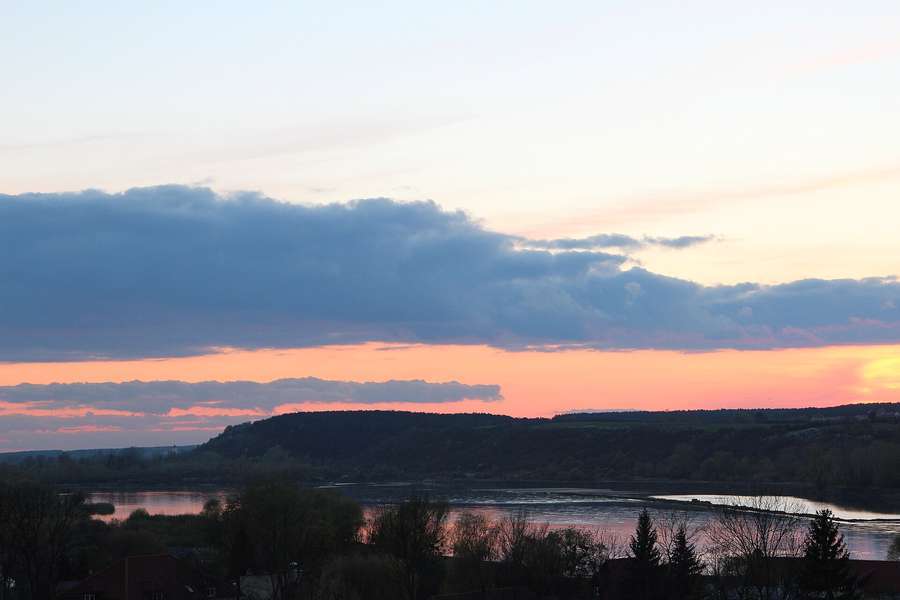
Two hours southeast of Warsaw, the Vistula bends around a town that looks like it was composed rather than built: a Renaissance market square, a ruined castle on the hill above it, loess gorges cutting into the slopes, and an artists' colony pedigree going back a century. Kazimierz Dolny is the classic first day trip from Warsaw for a reason - small enough to walk end to end, rich enough to fill a long day, and one of the few places in Poland where the itinerary writes itself. Here is how to do it well, with current prices and transport. For rail-based options, see our train day trips guide.
Getting there from Warsaw
Kazimierz Dolny has no railway station - the practical choices are bus and car. Direct buses (PKS carriers) run from Warsaw and take roughly 2.5-3 hours; booking platforms list the current daily departures. By car it is about 140 km and around two hours: the S17 expressway toward Lublin, then local roads via Puławy - parking around the market square is paid and scarce on summer weekends, so arrive early or use the lots by the riverside. A popular variation for cyclists: train to Puławy or Nałęczów, then a riverside ride into town. Data source: busfor.pl Warsaw-Kazimierz Dolny listings, checked 22 October 2026.
The market square and the parish church
Everything begins at the Rynek - one of Poland's most beautiful small-town squares, framed by the Renaissance Przybyła tenement houses and anchored by the parish church above. The church (the fara), rebuilt after a 16th-century fire, keeps one of the country's most distinctive Renaissance interiors, famous for its carved organ casing. The square itself is the town's living room: painters selling canvases, the local rooster-shaped pastries at the bakery windows, and the well in the middle that every child gets photographed on. Budget an unhurried hour just for the square and the church.
The castle and the watchtower
Above the square rise the ruins of the 14th-century castle and the standalone watchtower (baszta) - the town's signature silhouette and its best viewpoint over the Vistula bend. The castle complex at ul. Zamkowa 3 is managed by the town's cultural centre, which in the 2026 season ran guided "Zwiedzanie Zamku z katem" tours (visiting the castle with the executioner): normal ticket 25 zł, reduced 15 zł, on selected Saturdays. Even outside the tours, the walk up and around the ruins is the essential Kazimierz postcard. Data source: KOKPiT Zespół Zamkowy announcements, checked 22 October 2026.
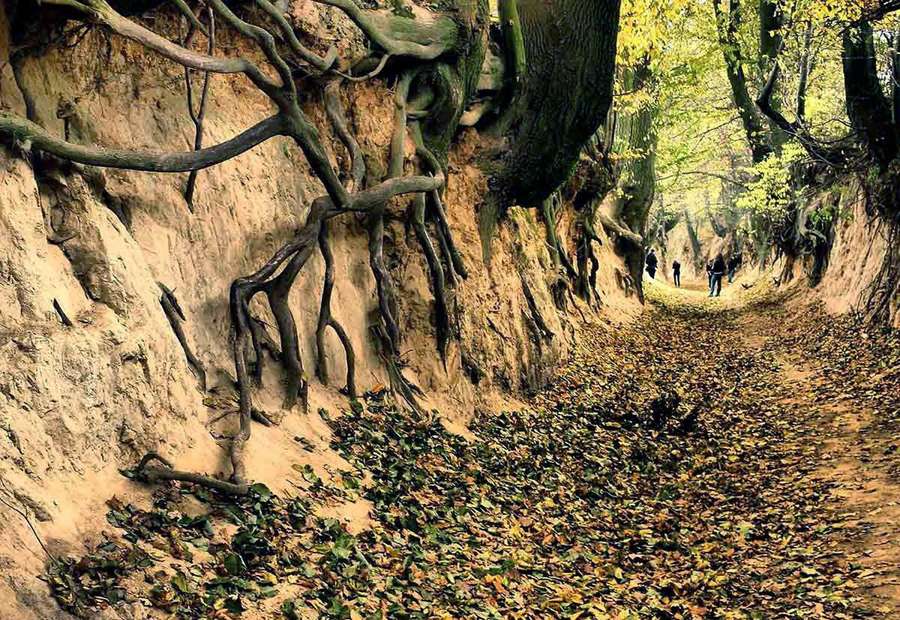
The loess gorges: Kazimierz's other half
What makes Kazimierz more than a pretty square is geology. The hills around town are cut by wąwozy lessowe - loess gorges carved by water into soft rock, with walls you can touch and tree roots dangling overhead. The two named ones everyone walks are Korzeniowy Dół ("Root Gorge", the photogenic one, its walls wrapped in exposed roots) and Norowy Dół, at whose exit stands a historic granary. Both are free, unsupervised and ten minutes on foot from the square; good shoes matter after rain, when the loess turns slick. The town's official tourist-route list includes a 22.4 km cycling route linking both "Three Crosses Mountains" of the area for the ambitious. Data source: kazimierz-dolny.pl tourism pages, checked 22 October 2026.
Why the painters came - and stayed
Kazimierz's reputation as an artists' town is not marketing. Painters began coming for summer open-air sessions in the early 20th century, drawn by the light over the Vistula valley and the Renaissance streetscape, and the habit never left: the town hosted the first plein-air painting festival in interwar Poland and has layered galleries, studio shops and pavement painters ever since. For a visitor the practical consequence is that the art is local rather than imported - the canvases sold around the square are by people who painted the view you are standing in - and the museum's collections lean heavily on the artists who settled here. The Kuncewiczów House, preserved as the writers Jan and Maria Kuncewicz left it, is the literary side of the same story: Kazimierz as a working retreat, not a stage set.
Eating and the rooster
Food in Kazimierz clusters around the square and the lanes down to the river, with the full Polish day-trip spectrum from milk-bar-simple to riverside terraces. The edible souvenir is the kogut - the rooster-shaped yeast-raised pastry, a playful local answer to Poznań's St Martin's croissant, sold at the square's bakeries and best eaten warm on a bench. For a sit-down lunch the unglamorous advice is to eat early: between 13:00 and 15:00 on a summer weekend every kitchen in town is at capacity, while an 11:30 lunch is instantaneous. Picnickers do well too - the riverside meadows toward the ferry landing double as the town's unofficial lunch lawn.
Trzy Krzyże and the panorama
For the view every Kazimierz postcard is taken from, climb the Góra Trzech Krzyży (Three Crosses Hill) on the town's edge: a short, steep walk to the crosses and a wide panorama of the town, the castle ruin and the Vistula valley. Go near sunset in summer; in autumn the loess slopes turn yellow against the white church towers and the light is arguably better.
The museum: five branches, one karnet
The Muzeum Nadwiślańskie spreads across five branches, each small enough to fit a day trip. Current prices: the Goldsmithing Museum (Muzeum Sztuki Złotniczej) 18 zł normal / 13 zł reduced, the Kamienica Celejowska 17/12 zł, the Natural History Museum 18/13 zł, the Kuncewiczów House - the writers' villa museum - 15/10 zł, and a combined karnet at 50 zł (45 zł reduced) covering the permanent exhibitions. The Galeria Wystaw Czasowych is 10/5 zł, the History and Culture of the Region section is 5/1 zł, and the Early Slavs Museum is free. Ticket desks stop selling 30 minutes before closing; in the current month the free-entry day for individual visitors is Saturday. Data source: mnkd.pl visit page, checked 22 October 2026.
Across the river: Janowiec and the windmill
Two short excursions round out the day. A small passenger ferry crosses the Vistula to Janowiec (prom-janowiec.pl), where the hillside ruins of a great 16th-century castle - another branch of the museum - face Kazimierz across the water. And three kilometres upstream in the hamlet of Mięćmierz stands the town's other icon: a wooden post windmill built in 1911, moved there from the village of Osiny, silhouetted above the riverbank. Both are reachable on foot for walkers or in minutes by car. Data sources: kazimierzdolny.pl ferry listing and kazimierz-dolny.pl monuments pages, checked 22 October 2026.
A note on memory
Kazimierz's beauty carries a shadow worth knowing. Before the Second World War roughly half the town was Jewish - it was known as the "little Jerusalem" of the Vistula - and the synagogue building, the surviving 19th-century walls, and the lapidarium cemetery wall built from shattered gravestones mark what was destroyed in the Holocaust. The museum's exhibitions treat this history seriously, and a quiet half hour at the kirkut is part of understanding the town rather than an optional extra.
When to go and practical notes
The town runs on tourism, so timing is the main variable. May-June and September give you full opening hours without the July-August crush, when the square is genuinely packed on weekends; autumn gorge colours are the connoisseur's choice; winter is quiet and atmospheric but some attractions and the ferry wind down. Everything in town is walkable - square to castle to gorge is a comfortable loop of under an hour - and the classic day plan is: morning bus in, square and church, castle and tower, lunch, one museum branch, the gorges, Trzy Krzyże at golden hour, evening bus home. Bring cash for small stalls, and do not schedule anything for the evening: the last buses back to Warsaw leave early enough to catch you out.
Staying overnight: when the day trip becomes two
Kazimierz rewards the overnight conversion more than most day-trip towns, because the square at 7:00 - when the delivery vans leave and the painters have not yet set up - is a different town from the square at 14:00. Guesthouses fill the old-town lanes, the museum itself rents guest rooms, and an evening walk through the gorges in near-darkness (with a torch and dry weather) is the town's best unlisted attraction. If your weekend allows it, bus in Saturday morning, sleep over, and take the slow Sunday: ferry to Janowiec, the windmill at Mięćmierz, and the museum branches you skipped. Sunday buses back to Warsaw run through the afternoon.
Frequently asked questions
How do I get from Warsaw to Kazimierz Dolny?
Direct PKS buses from Warsaw take about 2.5-3 hours (bookable online); there is no train station in town. By car it is roughly 140 km and two hours via the S17 and Puławy.
What does Kazimierz Dolny cost for a day?
Most of it is free: the square, gorges, Trzy Krzyże and riverside. Paid items are modest - museum branches 5-18 zł (combined karnet 50 zł), the castle executioner tour 25/15 zł in the 2026 season.
Is Kazimierz Dolny good for children?
Yes - the gorges feel like adventure terrain, the ferry is an event, and the Early Slavs Museum is free. Just watch small children on the gorge edges after rain and bring shoes that can handle mud. * Photos: Fallaner (CC BY-SA 4.0), Rafał T (CC BY-SA 3.0), via Wikimedia Commons.