Mustard in Poland: Sarepska, Francuska and Honey Styles
The essentials: Musztarda styles can differ in seed mixture, texture, vinegar and added sweetness. Compare the actual delikatesowa, sarepska, francuska or miodowa product, keeping household and catering formulations separate.
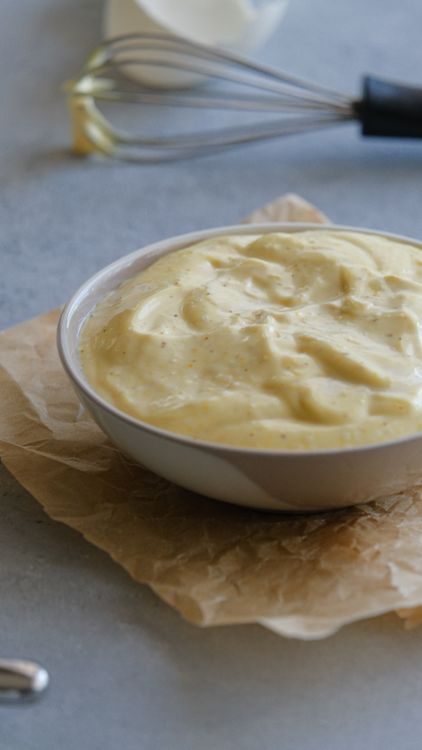
Cover: Merve, source photograph, Pexels License. Resized and JPEG-compressed. A bowl of creamy sauce. Illustrative context, not a cited jar or verified mustard style.
The mustard shelf in Poland offers more than a choice between mild and hot. Names such as delikatesowa, sarepska, francuska and miodowa can point towards different seed mixtures, textures, vinegars and added flavours. Those distinctions matter if you want a smooth sauce, visible whole seeds or a sweet mustard for a particular recipe. A familiar yellow colour does not tell you all of that.
Start with the intended use, then compare the actual producer's description and ingredients. Prymat's range supplies useful examples of these styles, including household and catering products. The descriptions below are attached to named variants, not a claim that every Polish mustard with the same style name has the same formula or the same intensity.
Musztarda and gorczyca answer different questions
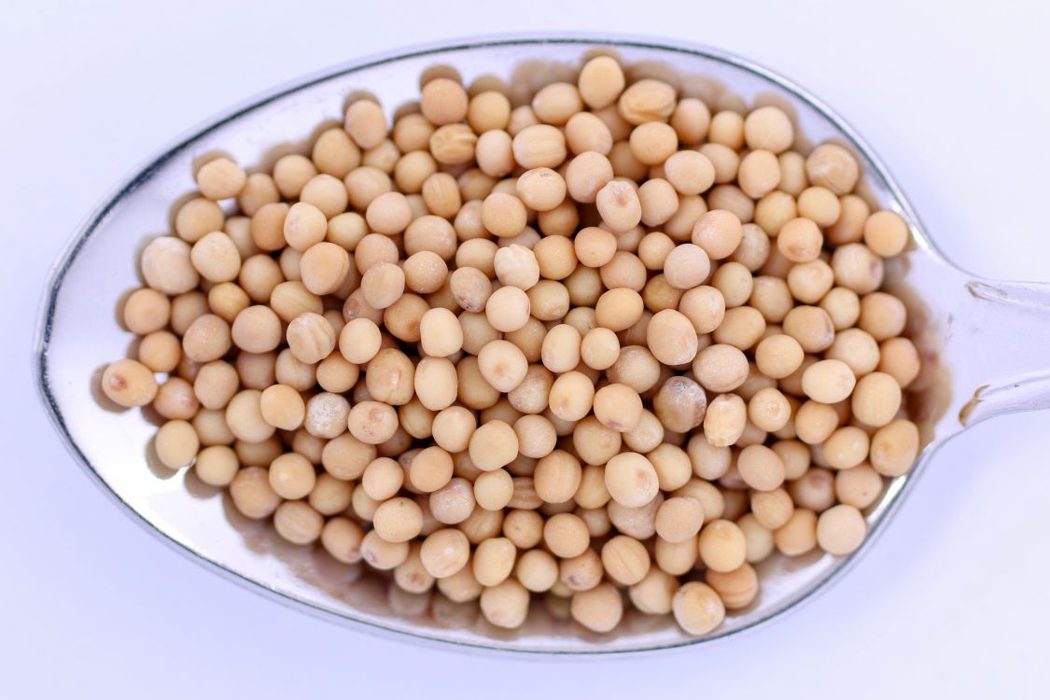
Musztarda identifies prepared mustard, while gorczyca identifies the mustard seed ingredient. Prymat's product lists distinguish gorczyca biała and gorczyca czarna, white and black mustard seeds. Reading those terms helps explain why two jars from the same producer can differ beyond the name on the front. The type of seed and the way it is presented are part of the formulation.
Do not mistake a bag of seeds for a ready-to-use jar because both appear under a translated mustard category. If your recipe asks for prepared mustard, preserve musztarda in the shopping note. If it asks for seeds, retain the seed description. Turning one into the other is a preparation task, not simply choosing a different size of the same product. This guide is about buying the prepared condiment, not making mustard at home.
Delikatesowa: a concrete mild, creamy example
Prymat's 300 g PET delikatesowa is described by the producer as mild and creamy, made with white mustard seeds. The page suggests uses including salad sauces, hot dogs and hamburgers. That is a useful starting point when you want a smooth-looking, relatively mild mustard within this producer's range. It is not a guarantee that every jar labelled delikatesowa from another maker has the same texture or flavour.
For a detailed ingredient example, Prymat GastroLine's separate 2.5 kg delikatesowa page lists water, white mustard seeds, spirit vinegar, sugar, salt and turmeric extract. Keep that formula attached to the catering product rather than silently assigning it to the 300 g bottle. The two pages support a comparison of how the producer describes its range, but a shared style name is not enough to prove two pack formats have identical formulations.
The catering page suggests vinaigrette and dips for meat or salads. That shows a use for the product beyond adding a spoonful beside a sausage. If you want to follow a recipe that blends mustard into a sauce, the described texture and flavour are relevant purchasing clues. They do not establish a fixed amount that every dressing needs or a rule that a mild mustard can replace any other style without changing the result.
Sarepska: read the seed mixture as well as the heat word
Prymat GastroLine's sarepska 1,000 g product is described as moderately hot, with a characteristic structure and a formulation based on white and black mustard seeds. Its listed ingredients are water, white mustard seeds, spirit vinegar, black mustard seeds, sugar, salt, flavouring and turmeric extract. The producer suggests it with roasted or grilled food, in marinades and in hot or cold sauces.
This gives more information than treating sarepska as a synonym for strong mustard. There is a specific seed mixture and a stated place in this producer's range. The page calls the catering bottle a counterpart to the small retail product, but the exact ingredients quoted here belong to the 1,000 g page. Check the current household packet if that is what you buy rather than assuming a translated store listing has preserved every detail.
Heat words can also vary between product descriptions and pack formats. Ostra means hot or sharp, łagodna means mild, and a producer may use a more qualified description in the main text. These are useful cues, not a calibrated scale across brands. If intensity matters to you, compare the manufacturer's actual description rather than deciding that every sarepska must taste equally strong or that a name alone gives a precise ranking.
Francuska: the visible seeds are a useful distinction
Prymat's Musztarda francuska łagodna 180 g is described as a mixture of white and black mustard seeds in water and wine vinegar. The producer says the seeds are left unground, giving a distinctive appearance and texture. Its ingredients list water, white mustard seeds, wine vinegar, sugar, black mustard seeds, salt, citric acid and turmeric extract. This is a concrete whole-seed example rather than merely a jar with a French-sounding name.
That texture can matter as much as the stated mild flavour. If you want visible seeds in a dressing or sauce, francuska is a useful search term to investigate. If you need an entirely smooth mixture for a particular recipe, do not assume those seeds will disappear simply because the product is also mustard. The named product's structure is part of what you are buying, not a decoration that can always be ignored.
The producer suggests this mustard with a range of foods and as a dressing ingredient. Those uses do not make it a universal equivalent of Dijon or any other style named in an English recipe. Preserve the recipe's requested mustard and check the chosen product before substituting. A geographic adjective on the front is not proof that two different styles use the same seed treatment, acidity or seasoning.
Miodowa: honey is part of an actual formulation
Prymat's mild honey mustard 185 g lists water, sugar, white mustard seeds, spirit vinegar, honey 5.9%, salt, spices, flavouring and turmeric extract. The producer describes a sweet, mild flavour and suggests it for dips, salads, marinades and grilled dishes. This is a useful example of miodowa meaning a mustard formulation that includes honey, rather than ordinary mustard with a serving suggestion to add honey later.
The ingredient list also prevents a common shortcut. The honey percentage does not mean honey is the only sweet ingredient: sugar is listed separately. If you are choosing for a particular formulation, read the whole list rather than making a judgement from the word miodowa alone. This is an ingredient distinction, not a claim that a honey label makes a condiment healthier or less sweet than another mustard.
Likewise, do not assume a honey-mustard product will reproduce a recipe that asks you to combine a separately chosen mustard with honey. A prepared mixture already fixes several ingredient relationships. It may be convenient, but it is a deliberate substitution. If the recipe depends on a particular mustard and separately measured honey, retain those requirements rather than treating the prepared jar as a ready-made exact equivalent.
Vinegar and extra ingredients help distinguish the jars
The examples show why texture is not the only difference. The quoted delikatesowa and sarepska ingredient lists use spirit vinegar, while the cited francuska uses wine vinegar and also lists citric acid. The honey product adds honey and spices as well as separately listed sugar. These are specific formulations, not a legal definition of each mustard style across the market.
A shopping comparison can therefore be quite practical: smooth or seeded, mild or sharper according to this producer, ordinary or honey-flavoured, and which ingredients the recipe needs. You do not have to decide that one vinegar is always better or that a longer ingredient list is automatically a problem. The useful question is whether the exact product fits the sauce, sandwich or meal you intend to make.
This also helps when a grocery service offers a substitute. A jar from the same brand may still change the seed structure or include a sweet ingredient you did not plan for. Compare the complete name and formulation before accepting it. "Mustard" is a category, not proof of equivalence, particularly when the recipe is built around the appearance or flavour of a named style.
Keep the style and format together when you reorder
When you find a product you like, save its brand, exact style and pack format rather than remembering only the lid colour. The examples include a 180 g francuska jar, a 185 g honey product, a 300 g delikatesowa bottle and catering formats with their own pages. A larger container can be convenient, but its size does not prove the recipe is identical to another product with the same style word.
If a page does not show a full ingredient list, inspect the actual packet rather than copying one from a neighbouring variant. The 300 g delikatesowa description and the 2.5 kg catering ingredients here remain clearly separated for that reason. Product-specific sourcing avoids turning a helpful catalogue comparison into a claim that all mild mustard from one producer is interchangeable.
A shopping note that matches the intended result
For a creamy mild mustard, investigate the producer's delikatesowa description. For a sharper seed mixture, compare the actual sarepska. For visible whole seeds, inspect a francuska product and its texture description. For a prepared sweet flavour, read the miodowa ingredients rather than assuming it is only mustard plus honey. Those are practical routes into the shelf, not universal recipes for the styles.
Keep any recipe-specific request intact when you choose. This guide does not replace one mustard with another by a fixed spoonful ratio, promise an identical sauce or rank the products by healthfulness. It helps you recognise the choices already built into a jar. Buying the intended mustard means deciding about seed texture, flavour and formulation before the first spoonful reaches your dish.
Frequently asked questions
Does francuska automatically mean the same as Dijon?
No. The cited francuska is a whole-seed product. Match the style and texture requested by your recipe.
Is honey the only sweet ingredient in honey mustard?
Not in the cited Prymat product, which lists sugar separately as well as honey 5.9%. Check the actual formulation.