Your First Opera or Ballet in Poland: Seats and Surtitles
The essentials: Check the format, singing language, surtitle language and view from your exact seat. Polish National Opera’s 2026/27 pages show different language arrangements and a specific Gallery surtitle warning for Tosca.
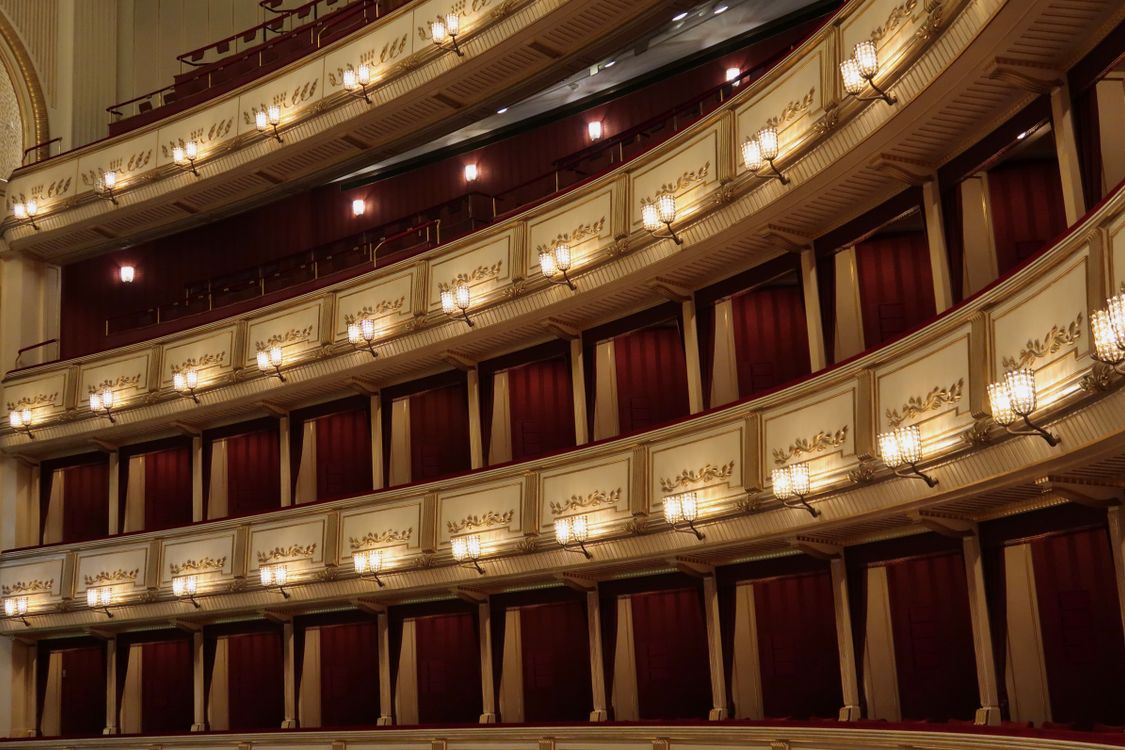
Cover: deiji _, source photograph, Pexels License. Image unchanged. Interior seating at the Vienna State Opera, Austria. General opera-house context, not the Polish National Opera seating plan.
An opera-house programme can offer a sung drama, a ballet, a concert or another kind of performance. For an English-speaking newcomer in Poland, choosing between them is more than choosing a title you recognise. The performance language, the projected text, the stage view and the structure of the evening all matter.
This guide uses the Polish National Opera's current 2026/27 information as concrete examples. It is a planning method, not a promise of ticket availability or a national rulebook. The auditorium photograph shows the Vienna State Opera, while the ballet photograph is general performance context, not a pictured Polish production.
Decide which kind of performance you want
Read the event's own description. Opera, ballet and a gala are not interchangeable labels. An opera-house building can host several formats, and its calendar may also contain online presentations or events outside the main auditorium.
The Polish National Opera's 2026/27 listings identify productions by format, language and venue. Use that information before comparing prices. A ballet triple bill and an opera in several acts can offer very different evenings even when they share a building and a similar start time.
Do not assume a production is an introductory event because its title is familiar. Read the description, length and intended audience. This article does not rank artistic difficulty or promise that one work will be comfortable for everyone seeing opera or dance for the first time.
Separate the sung language from the surtitle language
The language sung on stage and the language projected for readers can differ. The current Romeo and Juliet page identifies Gounod's opera in the original French with Polish and English surtitles. The Falstaff page describes the original Italian with Polish and English text.
Those are production-specific statements. An English web page is not a promise of English singing or English surtitles. Read the actual line describing the work, then confirm the arrangements for the date you choose.
Tosca provides a useful contrast: the cited 2026/27 page describes Italian singing with Polish surtitles. Do not copy the language arrangements from Romeo and Juliet onto another opera merely because the same institution presents both. The difference can determine whether the text support meets your needs.
Treat surtitles as part of seat selection
If you need to read the words, ask about visibility before selecting the seat. The Polish National Opera's Tosca page warns that certain Gallery seats may have a restricted view of the surtitles. It is a concrete operator warning, not an assumption about every upper-level seat in every building.
Seeing the stage and reading the screen are separate checks. A seat can offer one view without the other being adequate for your purposes. Do not decide solely from proximity, a category colour or a description of the building's size.
Ask about the exact row and seat for the production in question. A useful question is whether both the relevant stage area and the surtitle display can be seen. Do not rely on moving to an unsold place or using a phone translation during the performance as a substitute for a suitable seat.
Use the current seating plan, not an old review
For 2026/27, the Polish National Opera describes a revised seating-zone division. Its own page connects the zones with comfort, stage visibility and location. A review or seat recommendation from an earlier season may refer to a different category arrangement.
Check the current plan during selection and read any seat warning that appears. A lower-priced category is not automatically a bad choice, but an unexplained restriction should not be ignored because the ticket is affordable.
Keep the seat's identity with your planning notes if you ask the box office for advice. General praise for an auditorium is not a response about your particular view. This guide does not recommend a row number without seeing the relevant current plan and production information.
Plan ballet around movement and the production description
A ballet listing should be read as a dance production rather than an opera with missing dialogue. The Polish National Opera's Androids page, for example, identifies a ballet in two acts and describes its story and choreographic approach. A title alone would not communicate all of that.
A synopsis can help you choose whether the production interests you. It does not guarantee a particular interpretation or mean that every dance work has the same narrative structure. Read whether the evening is a full work, several pieces or another format.
For the seat, keep the movement on stage in mind and ask about any restricted view. Do not assume that the language question disappearing makes all other access or visibility questions disappear. Nor should a ballet be presented as automatically suitable for every child merely because it relies on dance rather than sung dialogue.
Read acts, parts and intervals as an evening plan
The current Falstaff page publishes acts, an interval and an approximate total duration. The Romeo and Juliet page also breaks down the performance into parts and an interval. Read those specific details instead of assuming every opera lasts the same amount of time.
The Polish word przerwa means interval. A performance with no interval creates a different late-entry situation from one with a scheduled break. Do not make an early train reservation or another commitment from an invented finish time.
Approximate duration is still approximate. Allow practical room for leaving the auditorium and collecting belongings. This guide does not convert a published running time into a guaranteed moment at the street door or a confirmed public-transport connection.
Understand this operator's arrival and late-entry policy
The Polish National Opera's FAQ recommends arriving at least an hour before the performance. It also distinguishes entrance opening times by performance space: an hour for Moniuszko Auditorium events and half an hour for the named smaller spaces in its instructions.
The same FAQ says latecomers can enter only during an interval, if there is one. That is a reason to treat the start time seriously, not to assume a short delay will be harmless. Another music venue can have a different policy; do not generalise this rule to all Polish concerts or theatres.
Check the actual hall printed on your ticket. If an access arrangement or collection step affects your arrival, ask the operator before the day. This article does not confirm that an unidentified route through the building suits a particular mobility need.
Read the sale and refund conditions before paying
Use the operator's own route and verify the production, date, hall and seat. The Polish National Opera publishes online sales and box-office information, with specific conditions for reservations and concessions. A reservation is not the same thing as a completed ticket purchase.
Its 2026/27 ticket page also describes refund arrangements and distinguishes timing and refund methods. Read the current wording attached to the sale rather than relying on an older short FAQ answer or assuming a general change-of-mind period.
This guide does not quote a universal ticket price or guarantee that a discounted seat is available. Check the final amount and eligibility before paying. A concession shown in a calendar is not permission for every customer to select it without the stated proof.
Keep auditorium conduct tied to the venue's instructions
The Polish National Opera asks visitors not to record or take photographs during performances and not to bring food or beverages into the auditorium. It accepts printed online tickets or their display on a mobile device under its visitor guidance.
Those instructions do different jobs. Having a ticket on your phone does not authorise photography once the performance begins. Have the entry information ready, then follow the auditorium instructions rather than treating the device as part of the show.
The operator also describes cloakroom arrangements in its FAQ. Check what applies to your visit rather than borrowing another venue's policy. You do not need to invent an elaborate national dress ritual to prepare; the useful work is understanding the event and its actual visitor rules.
Make the language and view questions explicit when buying for others
Ask whether your companions need English text, prefer dance or want a particular work. A title you recognise may not answer those preferences. Do not silently choose a Polish-only surtitle option for someone who was expecting English support.
Share the format, approximate length and relevant visibility warning before the purchase becomes a commitment. These are practical details, not reasons to make the outing intimidating. A clearly described plan lets people decide what suits them.
A strong first opera or ballet choice brings together the right format, the actual language arrangement, a suitable stage and screen view, and a realistic evening schedule. Use the operator's production information for each of those checks. Familiar titles and beautiful auditorium photographs can inspire the outing, but they cannot complete those checks for you.
Before leaving, recheck the selected production for changes and keep any purchase-channel notification. A season page is useful for discovering possibilities, but it is not a promise that every listed performance remains unchanged. If the date, hall or language arrangement changes, assess the revised plan rather than treating it as automatically equivalent to the ticket you meant to buy.
Frequently asked questions
Are all operas presented with English surtitles?
No. Read the actual production’s statement. The cited2026/27Romeo and Juliet page lists Polish and English surtitles; the citedTosca page lists Polish.
Can latecomers enter immediately?
Polish National Opera’s FAQ says admission is only at an interval, if there is one. Other operators can have different rules.