Opole for a Weekend: Song, Canals and a Piast Tower on the Odra
The essentials: Opole rewards a weekend: a 700-year-old Piast tower, an island old town wrapped in the Odra, the Venice of Opole canal lit at night, the Museum of Polish Song (30 zł, free Tuesdays) and a zoo on a river island. About an hour by train from Wrocław.
Every June, Polish television fills with images from Opole's amphitheatre, and for one weekend the whole country sings along. The rest of the year, the smallest regional capital in Poland goes quietly about being one of its prettiest: an island old town wrapped in the arms of the Odra, a canal lined with floodlit tenements that locals call their Venice, and a round brick tower that has watched over the city for seven centuries. Two days here cost little, the crowds stay thin outside festival week, and the riverside evenings alone justify the train fare. 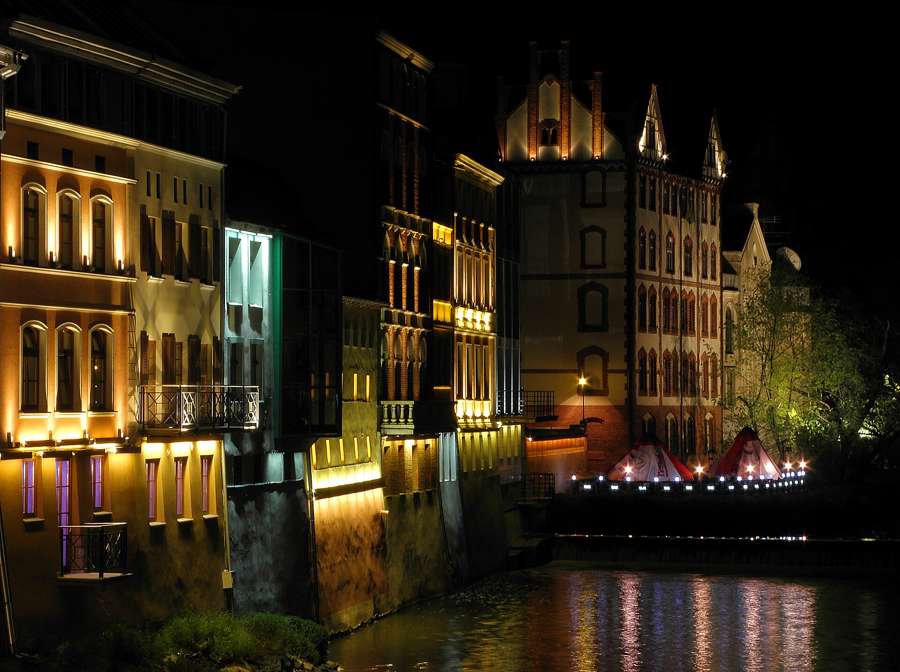
Getting there
Opole sits in southwestern Poland on the main rail line between Wrocław and Katowice. Trains from Wrocław take around half an hour to an hour, from Katowice about an hour and a half, from Kraków roughly two hours, and from Warsaw around three hours, which makes the city an easy side trip from any of them. The station is a 20-minute walk from the old town, and once you arrive the whole centre, islands included, fits into a walking loop. Drivers from Wrocław use the A4 motorway; allow about an hour.
Data source: rail operator and Opole city information, checked 22 October 2026.
The tower and the islands
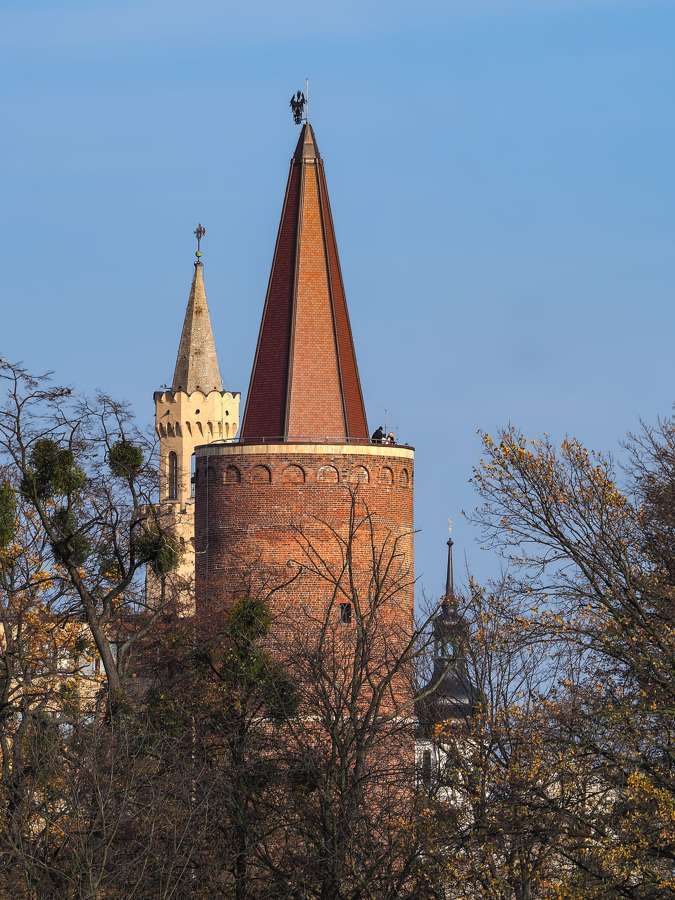
Opole is one of Poland's oldest cities, and for three centuries it was the capital of its own duchy, ruled by a local branch of the Piast dynasty until their line died out in 1532. Of the ducal castle on the Odra's bank, one thing survives: the Piast Tower, a round brick keep from around 1300 that now serves as the city's viewing terrace and its best photograph. Climb it first; the panorama lays out the whole geography of the city at your feet, from the cathedral spires to the amphitheatre's green roof to the silver loops of the river.
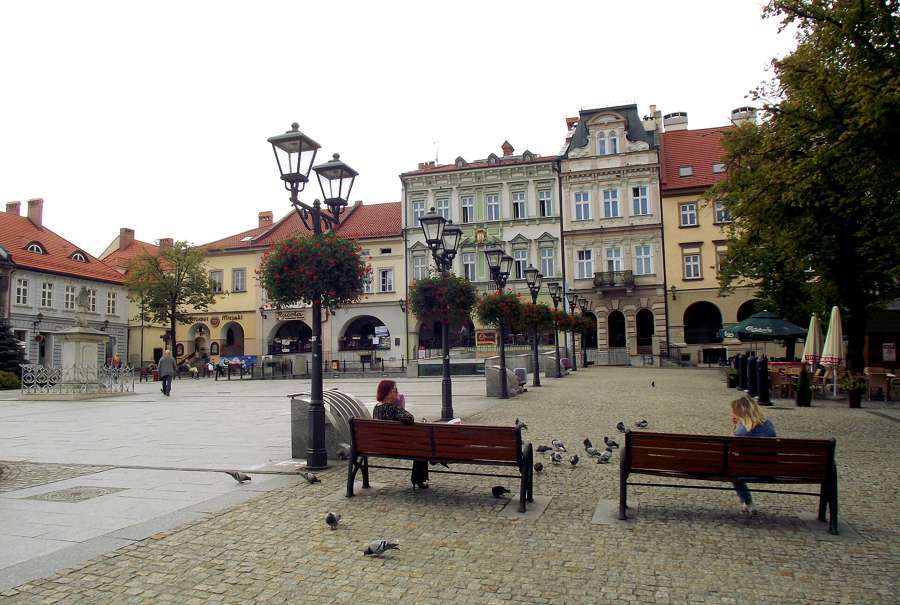
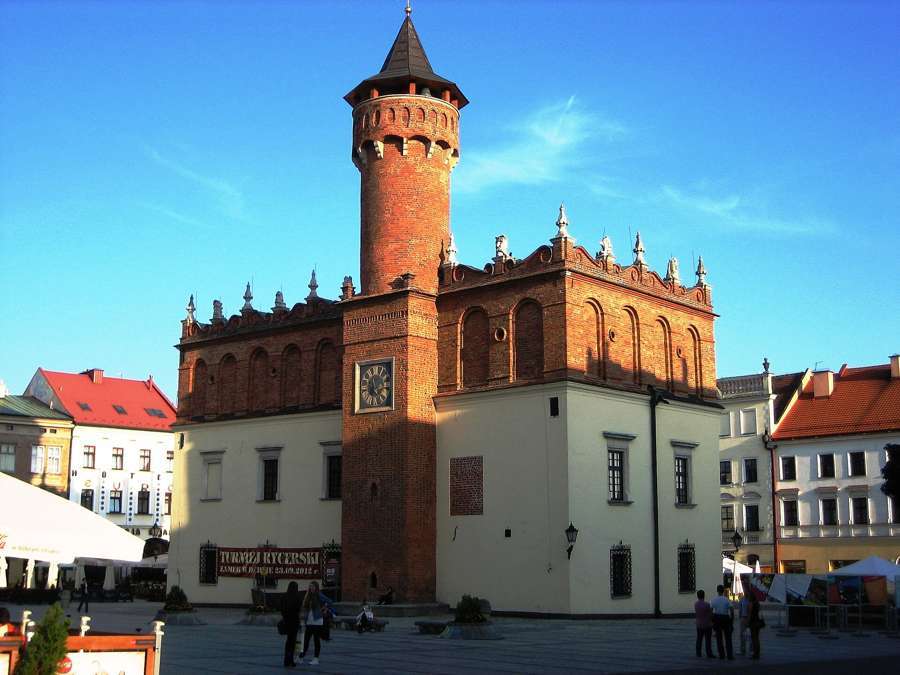
Before you climb, give the market square an hour. Opole's Rynek is a fine, lived-in square anchored by a town hall whose tower echoes Florence's Palazzo Vecchio, rebuilt after a 1930s collapse into its present romantic form. Around it, the tenements carry the city's layered past: Polish Piast origins, centuries under Bohemian, Habsburg and Prussian rule, and a return to Poland in 1945. Opole's region remains the centre of Poland's German minority, and you will notice bilingual street names and German-language services; it gives the city a Central European texture unlike anywhere else in the country.
That geography is water. The Odra splits around Opole's old town into a chain of islands, and the city has leaned into it beautifully. On Ostrówek island stands the Cathedral of the Holy Cross, a Gothic brick church whose tower pairs with the Piast Tower in every skyline shot, and whose crypt holds the tombs of the Opole Piasts. On Piasek island, the Baroque Franciscan church and monastery sit among chestnut trees. Between them, the Młynówka canal runs beneath overhanging tenements whose reflections double in the water; floodlit after dark, this is the Opolska Wenecja, and it earns the nickname. Come back after dark, when the facades glow above their own reflections and the bridges fill with couples taking the same photograph you are about to take.
Data source: Opole city and tourist information, checked 22 October 2026.
The capital of Polish song
Opole's national fame rests on music. The National Festival of Polish Song has filled the city's amphitheatre every June since 1963, launching careers from Maryla Rodowicz to Doda, and the green-roofed amphitheatre on the Odra's bank remains a shrine of Polish pop. Inside it, the Museum of Polish Song tells that story with stage costumes, gold records, handwritten lyrics and listening stations that will keep anyone who grew up with Polish radio busy for hours.
Tickets cost 30 zł normal and 23 zł reduced, with a family ticket (two adults and two children) at 65 zł. Tuesdays bring free entry to the permanent exhibition for individual visitors from 14:00 to 18:00, with entry passes issued from 9:30 and numbers limited, so arrive early if that is your plan. Even outside festival week, the amphitheatre grounds on the river are worth the walk.
If your weekend lands in June, plan around the festival: tickets sell out, hotel prices jump, and the city turns into a national street party. The rest of the year the same stage hosts concerts through the summer, and the museum's temporary exhibitions often mark anniversaries of the festival's legendary editions.
Data source: Museum of Polish Song official price list, checked 22 October 2026.
The island zoo
Opole's zoo enjoys one of the loveliest settings of any in Poland: it fills Bolko island, a green wedge between two arms of the Odra a short walk from the old town, so you visit lions and giraffes with the sound of the river all around and old oaks overhead. It is a well-kept, mid-sized zoo with big cats, primates, a walk-through lemur zone and enough shade to stay pleasant in high summer.
Tickets cost 46 zł normal and 35 zł reduced, children under three enter free, and families or groups of three or more pay 38 zł per person. Combine it with a riverside walk: paths circle the island, and in season boats cruise the Odra from the banks nearby. Bolko island itself is worth time beyond the enclosures: the surrounding park, with its old trees and quiet benches, is where Opole comes to breathe, and the northern tip of the island gives a fine view back to the Piast Tower across the water.
Data source: Opole Zoo official price list, checked 22 October 2026.
With children
Opole is an easy, gentle family weekend. The zoo is the anchor and worth a whole morning; the islands and riverside paths handle the running-around hours; and the Piast Tower turns history into a game, because children who climb towers remember them. The Museum of Polish Song works surprisingly well for older children: the listening stations and the sheer glitter of the stage costumes hold attention, and Tuesday's free entry makes it a bargain. Everything is flat, compact and laced with bridges, which is to say: perfect buggy terrain, and endless small thrills of crossing water.
For food, this is Silesia, so come hungry: the regional table means rolada (beef roulade) with kluski śląskie, the round potato dumplings with a dimple, and red cabbage, served in portions that assume you walked here from Wrocław. The old town's restaurants cluster around the Rynek and the streets toward the cathedral, with prices well below the big-city average.
Data source: zoo, museum and city information, checked 22 October 2026.
A simple weekend plan
Saturday: arrive by midday, the Piast Tower for orientation, the cathedral and islands, dinner in the old town, then the floodlit Venice of Opole after dark. Sunday: the zoo on Bolko island, the Museum of Polish Song, and a last walk along the Odra before the train. Opole is the rare weekend that feels like a discovery: a city the rest of Poland visits once a year through a television screen, and you get to walk.
Practical notes: the Piast Tower keeps seasonal hours and can close in poor weather, so treat it as a fair-day reward rather than the fixed point of your plan. The islands are linked by footbridges, so no route ever requires backtracking. And if you have a third day, the castle village of Moszna, with its fairytale 99-towered palace, lies about 30 km northwest and pairs with Opole perfectly.
Frequently asked questions
How much does Opole Zoo cost?
Tickets cost 46 zł normal and 35 zł reduced, with children under three free. Families or groups of three or more pay 38 zł per person. The zoo occupies Bolko island, a short walk from the old town.
Is the Museum of Polish Song free on any day?
Yes. On Tuesdays, individual visitors enter the permanent exhibition free from 14:00 to 18:00, though entry passes are limited and issued from 9:30. Regular tickets cost 30 zł normal and 23 zł reduced.
What is the Venice of Opole?
The Opolska Wenecja is a stretch of the Młynówka canal where historic tenements overhang the water. Floodlit after dark, with facades reflected in the canal, it is the city's most romantic walk.
How do I get to Opole from Wrocław or Kraków?
From Wrocław, trains take around half an hour to an hour; from Kraków, roughly two hours. Opole sits on the main Wrocław to Katowice rail line, so services are frequent in both directions. * Photos: The Piast Tower in Opole by SuperGlob, CC BY-SA 4.0; the Venice of Opole at night by SuperGlob, CC BY 3.0, both via Wikimedia Commons.