Bieszczady for a Long Weekend: Połoniny, Dark Skies, Forest Rails
The essentials: The Bieszczady are Poland's wild southeast: grass-covered połonina ridges (park entry 11 zł), the 1890s narrow-gauge forest railway from Majdan, huge Lake Solina, and some of Europe's darkest night skies. Plan a long weekend with a car from Rzeszów.
There is a corner of Poland where the mountains roll instead of spike, where the night sky goes properly black, and where entire valleys hold more wolves than people. The Bieszczady, in the far southeast along the Ukrainian and Slovak borders, are Poland's wilderness legend, and they earn it. This is not a day-trip destination: it is the trip, the one people return to every September for the rest of their lives. Give it three days minimum, and do not expect to be reachable by phone. 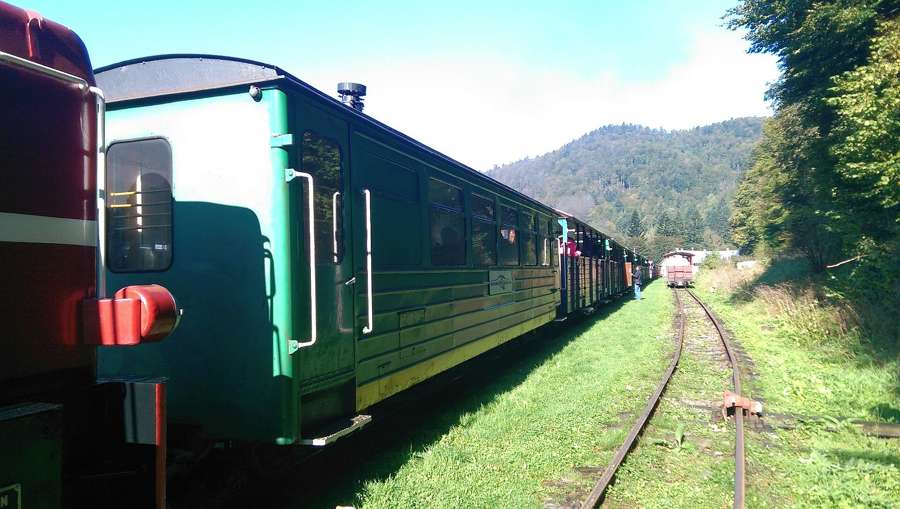
Getting there and getting around
Bieszczady rewards effort. From Rzeszów, the nearest city with an airport and fast trains, the gateway towns of Ustrzyki Dolne, Cisna and Solina are two to two and a half hours by car or regional bus. From Kraków budget three and a half to four hours, and from Warsaw around six, which is why this is a long-weekend trip at minimum. Rail reaches only as far as Zagórz near Sanok, so a car transforms the experience: trailheads, villages and the lake are scattered, and buses between them are infrequent. If you come without one, base yourself in Ustrzyki Górne for hiking or Solina for the lake and plan around local bus times.
Choose your base by personality. Solina and Polańczyk serve the lake crowd: families, sailors, anyone whose perfect afternoon is a pier and a waffle. Ustrzyki Dolne is the practical hub with shops and restaurants. Wetlina, Smerek and Ustrzyki Górne are the hikers' villages, strings of guesthouses along mountain streams where the day starts with boots on the porch. Cisna keeps the railway and the quietest valleys of all.
Data source: transport and regional information, checked 22 October 2026.
The połoniny: mountains like nowhere else
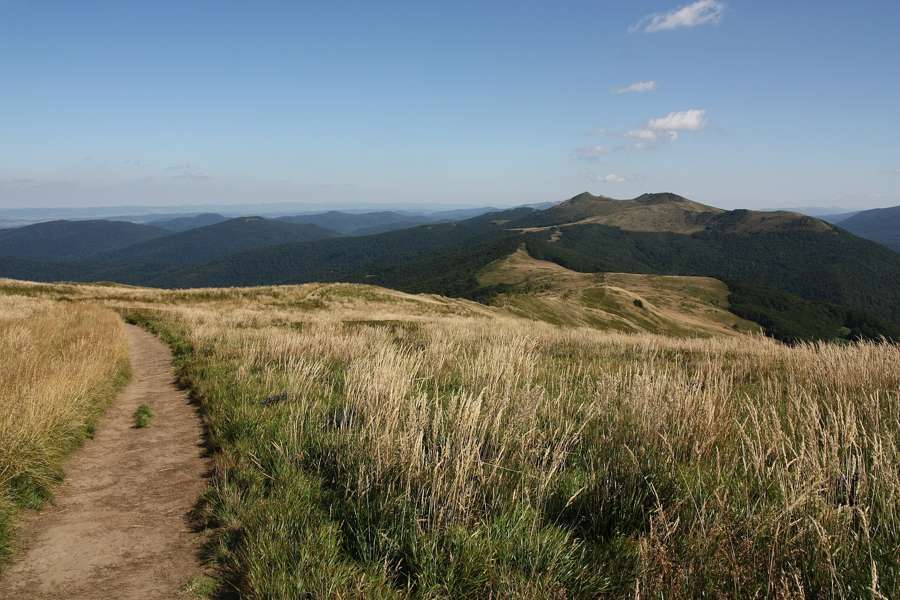
The Bieszczady's signature is the połonina: broad, grass-covered ridges that roll above the treeline like a golden sea, a landscape found almost nowhere else in Europe. The classic first walk is Połonina Wetlińska from the Wyżna Pass, a steady climb that pays off with a ridge walk past the Chatka Puchatka shelter and views over wave after wave of blue ridges into Ukraine. Its sister, Połonina Caryńska, joins from the same trailhead for a full ridge day. For the summit collectors, Tarnica at 1,346 metres, the highest peak of the Polish Bieszczady, rises above the village of Wołosate on a well-marked trail that fit families manage in a long half-day.
These trails cross the Bieszczady National Park, and entry is paid: 11 zł normal and 5.50 zł reduced, with children under seven free and Large Family Card holders entering free as well. Buy tickets at the trailhead kiosks or online before you set out, carry water, and respect the weather: the połoniny are glorious in sun and genuinely hostile in wind and fog. Autumn is the famous season, when the beech forests burn copper below the golden ridges, but September weekends bring the year's biggest crowds to the same passes.
The walking itself is friendlier than the drama suggests. Bieszczady trails climb steadily rather than brutally, the marked routes are well maintained, and the ridge sections feel like walking across the roof of a gentler world. That said, treat the połoniny with respect: there is no shade, no water and no shelter up top, and weather turns fast. Carry a layer more than you think you need, start early, and check the forecast the night before every ridge day.
Data source: Bieszczady National Park official price list, checked 22 October 2026.
Why the valleys are empty
Bieszczady's emptiness is not natural, and understanding it changes how you see the landscape. Until the 1940s these valleys were home to the Boyko and Lemko highland peoples, with their wooden Orthodox churches and scattered hill villages. The upheavals of the Second World War and the forced resettlements of 1947 emptied the region almost completely. Nature took the valleys back, forests swallowed the fields, and the beech woods grew over a vanished world. What survives are the cerkwie, the wooden and stone Orthodox and Greek Catholic churches, dozens of them, often on hillsides where no village remains, several of them on the UNESCO World Heritage list. Seek them out between hikes: they are the region's soul in timber. The church at Smolnik above the San valley and the hillside cerkwie around Komańcza and Radoszyce are among the most beautiful, and most stand unlocked or open on request, tended by the small communities that have returned to the region.
Data source: regional heritage information, checked 22 October 2026.
Lake Solina and the forest railway
The region's gentler face sits in its western valleys. Lake Solina, the largest artificial lake in Poland, spreads beneath the country's biggest dam, a sight in itself, and in summer its shores fill with beaches, boat cruises and every kind of water equipment for hire. It is the Bieszczady base that works for everyone, including visitors who never intend to wear hiking boots.
Twenty minutes away near Cisna, the Bieszczady forest railway offers the region's most charming ride: a narrow-gauge train from Majdan station that winds along forest valleys on tracks laid in the 1890s for logging, hauled on some runs by a steam-era locomotive. Children adore it, photographers adore it, and in autumn the line runs through tunnels of turning leaves. Seats are limited and summer departures sell out, so buy tickets online in advance or arrive at the Majdan ticket office early, from 8:30 in the summer season. The full ride takes around two hours return, slow enough for every photograph and every question a five-year-old can invent, with the forest pressing close on both sides of the open windows.
Data source: Bieszczady Forest Railway operator information, checked 22 October 2026.
With children
Bieszczady is a superb family wilderness, provided you match the mountains to the legs. The forest railway is the perfect first day: effortless, exciting, and it buys goodwill for the walking to come. Lake Solina covers the swimming-and-ice-cream days. For hiking, the walk from Wyżna Pass to the Chatka Puchatka shelter on Połonina Wetlińska is the classic family summit: a real połonina ridge, a real shelter with hot tea, and a manageable distance for school-age children with snacks and patience. Watch the sky after dark wherever you stay: Bieszczady has some of the darkest nights in Europe, and a ten-minute lesson in the Milky Way from the doorstep of your guesthouse is free. The region is also home to Poland's second great bison herd, and lucky visitors on quiet morning roads sometimes meet them at the forest edge, grazing like something out of an older Europe.
Data source: national park, railway and regional information, checked 22 October 2026.
A long-weekend plan
Day one: arrive via Rzeszów to Solina, the dam, the lake and an early night. Day two: the forest railway from Majdan in the morning, an Orthodox church or two on the drive west, sunset from a połonina if legs allow. Day three: the main hike, Połonina Wetlińska or Caryńska from Wyżna Pass, or Tarnica from Wołosate for the ambitious, then the long drive home. Add days rather than subtract them; Bieszczady shrinks badly.
Practical notes: mobile coverage vanishes on the ridges, so download offline maps before leaving your guesthouse. Guesthouses and shelters fill weeks ahead for late September and the May holidays; book early or aim for June. Cards work in the towns but cash still rules the trailhead kiosks and village bars. And the region's food deserves its own line: try fuczki, the sauerkraut pancakes of the highland valleys, and whatever trout the local smokehouse has on the counter.
Frequently asked questions
How much does entry to the Bieszczady National Park cost?
Entry costs 11 zł normal and 5.50 zł reduced. Children under seven and Large Family Card holders enter free. Tickets are sold at trailhead kiosks and online.
Do I need a car in Bieszczady?
Strongly recommended. Rail ends at Zagórz, trailheads and villages are scattered, and buses are infrequent. Without a car, base in Ustrzyki Górne or Solina and plan around local bus schedules.
What is the best first hike in Bieszczady?
Połonina Wetlińska from the Wyżna Pass: a steady climb to a rolling grass ridge with the Chatka Puchatka shelter and immense views. Fit families with school-age children manage it in a long half-day.
When is the best time to visit?
Late September and early October for the famous autumn colours, though that is also peak crowding. June and July bring wildflowers and long days; May is quiet and green. Winter is beautiful but demands real preparation. * Photos: Połonina Wetlińska by Yarl, CC BY-SA 3.0; the Bieszczady forest railway by Stanisław Ludwiński, CC BY-SA 3.0, both via Wikimedia Commons.