Pesto in Poland: Basil, Rosso and Jarred Formulations
The essentials: Choose pesto by the actual recipe, not colour alone. The cited jars differ in basil and tomato components, cashews or almonds, cheeses, oils and other ingredients; keep the selected product's use and handling instructions.
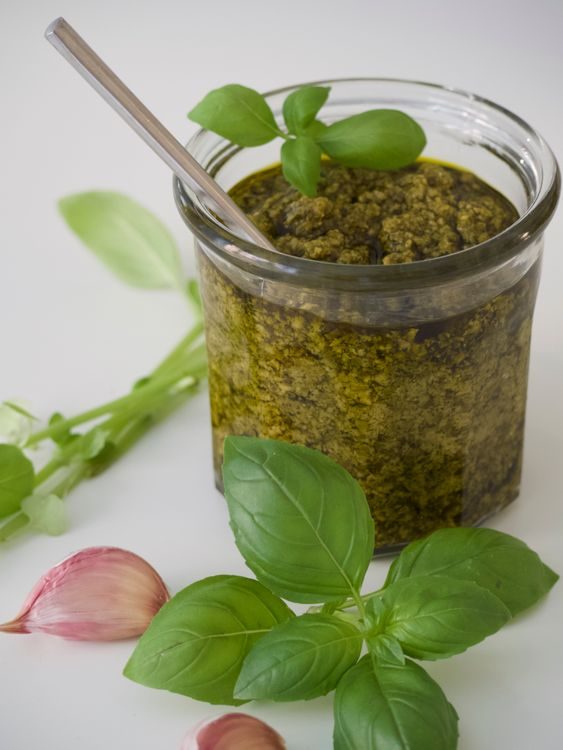
Cover: thea a, source photograph, Pexels License. Resized and JPEG-compressed. A jar of green pesto with basil leaves. Illustrative sauce context, not a cited branded jar or verified nut, cheese or oil formulation.
A pesto shelf in Poland offers more than one fixed basil recipe in different jars. Green pesto can use cashews, sunflower oil and milk ingredients; a chilli version can have its own formulation; red pesto can combine several tomato ingredients with different nuts and cheeses. The colour is a useful visual cue, but it does not identify everything inside the selected product.
The practical decision is which ready-to-use sauce fits the dish you intend. Barilla's Polish pages, Develey's Polish product information and Podravka's Polish page provide the concrete examples below. This is a comparison of named jarred recipes, not a rule about regional authenticity, a homemade pesto recipe or a claim that every green or red jar will behave identically.
Pesto is already a formulation
When a shopping list says pesto, retain the type and brand if the recipe specifies them. The jar may already bring oil, herbs, nuts, cheese, seasoning and other ingredients into the dish. It is not the same starting point as buying basil, a pure nut paste or plain tomato passata and making a sauce yourself. The product's recipe has made several choices in advance.
That is useful when you want a convenient sauce, but it also explains why a substitute deserves a quick ingredient check. A familiar green colour does not establish pine nuts, and a basil name does not prove that the main oil is olive oil. Read the actual formulation rather than completing the list from an image or from a remembered homemade recipe.
The examples here are not taste-test rankings. No firsthand tasting or cooking results are claimed. The aim is to make the differences visible enough that you can select a product intentionally, then follow the chosen jar's directions and the rest of your dish's recipe without assuming one sauce is simply another with a changed colour.
Barilla alla Genovese: basil, cashews and a named cheese
Barilla's Polish Pesto alla Genovese ingredient list starts with sunflower oil and fresh basil 30%, followed by cashews and Parmigiano Reggiano cheese 5%. It also lists corn fibre, whey powder, salt, milk proteins, extra virgin olive oil, sugar, basil extract, natural flavourings, lactic acid and garlic. This is the actual cited product list, not a reconstructed traditional recipe.
The presence of olive oil does not make it the only oil. Likewise, the cited nuts are cashews; this guide does not rewrite them as pine nuts because that might be expected from another recipe. Keep the named cheese percentage attached to that ingredient rather than turning it into a figure for all dairy components, since the formulation lists other milk ingredients separately.
The page also says the basil is Italian. That is an origin statement about the basil in the described product, not a claim that the jar contains 100% basil. The ingredient list's fresh basil 30% describes a different question. Reading those two statements together prevents an origin headline from being mistaken for the ingredient's share of the entire sauce.
Chilli pesto is not simply the same jar with a red fleck
Barilla's Polish Pesto Basilico e Peperoncino page lists sunflower oil, basil 33%, corn fibre, cashews, whey powder and peperoncino chilli 4%, followed by salt, milk proteins, flavourings, green-pepper puree, lactic acid and garlic. The listed formula is different from the alla Genovese example. It should be read as its own product, not as that recipe plus a guessed extra chilli amount.
The ingredient statement does not name the same Parmigiano Reggiano cheese component given in the alla Genovese list. That is a comparison of the actual lists, not an assertion that the chilli jar has no milk ingredients. It expressly includes whey and milk proteins. An incomplete shortcut such as green pesto without cheese can therefore conceal a different fact from the one a shopper meant to check.
If you want a chilli version, keep its full name in the order. The 4% figure belongs to the cited formulation and does not establish how hot every shopper will find it, how many spoonfuls a particular dish needs or the chilli share in another producer's pesto. Use the description to identify the jar, not to invent a universal heat scale.
Develey rosso combines several tomato and cheese ingredients
Develey's Pesto Rosso 190 g page lists sunflower oil, tomato puree 33%, water, dried tomatoes 5.7%, cashews 5%, hard cheese 3%, basil 3% and Pecorino Romano sheep's cheese 1%, alongside salt, garlic, chilli and other ingredients. The hard cheese's own parenthesised list includes milk, salt, rennet and egg-derived lysozyme. These details identify one prepared sauce rather than a plain tomato product.
The separate tomato figures refer to separate named ingredients. Do not combine puree and dried-tomato percentages into an invented fresh-tomato equivalent, or assume they describe the same concentration. For choosing a jar, it is enough to see that this rosso has both forms of tomato plus nuts, cheese and seasoning. The exact formulation matters more than a generic red-sauce photograph.
The producer suggests pasta, sandwiches and snacks. That is a useful description of intended roles, but it does not supply a universal serving ratio for every dish. If you plan to use the sauce on bread rather than mix it into pasta, keep that use separate from any recipe-specific quantity. A jar size is a purchase quantity, not automatically the right amount for one meal.
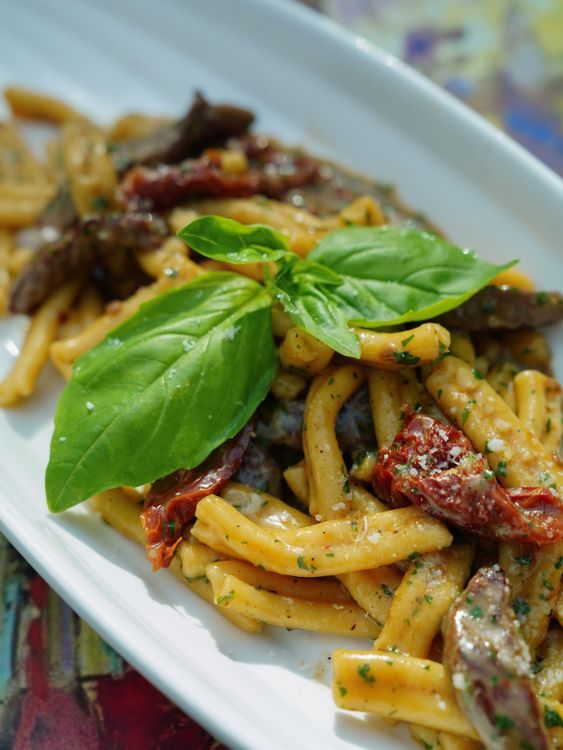
Podravka rosso has another actual recipe
Podravka's Pesto Rosso 190 g lists tomato concentrate 39%, sunflower oil, cashews 7.2%, dried tomatoes 7%, basil 5%, Pecorino cheese 5% and Grana Padano cheese 5%, then salt, sunflower lecithin, garlic, citric acid and chilli. It is another red pesto, but the listed tomato, nut and cheese ingredients differ from the Develey example. The shared rosso name does not settle their proportions.
Podravka tells the user to mix this sauce with freshly cooked hot pasta and says the sauce does not need heating. Keep that instruction attached to this named product. It is not a direction to undercook the pasta, and it does not establish the heating requirement of every sauce sold beside it. The pasta still follows its own preparation directions before the sauce is mixed in.
This is also why a ready-to-use pesto should not automatically be treated like a tomato base intended for a long cooking stage. Read the selected jar's own use information. The guide does not invent a single cooking timetable that applies equally to passata, a prepared tomato sauce and every red pesto merely because all contain tomato ingredients.
Mutti's red pesto example uses almonds
Develey's Polish information for Mutti Pesto Rosso 180 g lists tomato puree 59.5%, sunflower oil, olive oil, Parmigiano Reggiano 5%, dried tomatoes 3.5% and almonds 3.3%, together with capers, vegetable fibre, salt, natural flavourings, sugar and oregano. The vegetable fibre is described with pea, carrot and bamboo sources. This is a distributor's Polish product statement for the named Mutti jar.
The almond component provides a concrete reason not to assume every red pesto uses the same nut as the cashew examples above. The capers and oregano also distinguish the written recipe without requiring a guess about taste intensity from the colour of a photograph. The article does not promise which one you will prefer; it identifies what the product information actually says.
Nor does the higher puree figure establish a direct comparison with Podravka's concentrate figure. Puree, concentrate and dried tomatoes are different named ingredients in these statements. Keep the original terms when comparing them instead of ranking the jars by one number stripped from its ingredient. Choosing a ready sauce is easier when the comparison preserves those distinctions rather than flattening all tomato components into a single score.
Handling periods belong to the selected product
Develey's own rosso page says to refrigerate after opening and use within three to four days. Podravka's rosso page says to refrigerate after opening for up to seven days. The Mutti product information on Develey's site says to refrigerate after opening and use within five days. These are separate published instructions, not a timetable this guide applies to every pesto.
Read the current jar and keep its instructions with that product. Do not borrow a longer period from another brand or infer a handling rule from the colour or oil layer. This article does not diagnose changes in an opened sauce, guarantee individual dietary suitability or replace the full current label with a shortened ingredient comparison.
Match the sauce role before making adjustments
For a basil-led ready sauce, compare the actual green pesto recipes, including their named nuts, oils and milk ingredients. For a chilli choice, retain the exact variant rather than assuming an identical base. For red pesto, keep the tomato ingredient terms and the named nuts and cheeses separate. These distinctions help you buy the sauce your recipe intended without reconstructing it from memory.
If you deliberately choose another pesto, the dish may need its own judgement about seasoning and texture. This guide gives no guaranteed one-for-one substitution, universal pasta-water amount or health ranking. Its useful promise is narrower: the comparison keeps the actual product choices visible, so your next jar is selected for its written formulation and intended job rather than colour alone.
Frequently asked questions
Does every green pesto use pine nuts and only olive oil?
No. The cited Barilla alla Genovese lists cashews and sunflower oil, with extra virgin olive oil listed separately.
Are all red pesto products the same recipe?
No. The cited Develey, Podravka and Mutti products have different tomato ingredients, proportions, nuts and cheeses.