Classical Concerts in Poland: Your First Philharmonic Visit
The essentials: Read the programme type, works and actual hall before buying. Warsaw Philharmonic explains movements, applause and late entry in its first-visit guide; these are operator examples, not identical rules for every Polish venue.
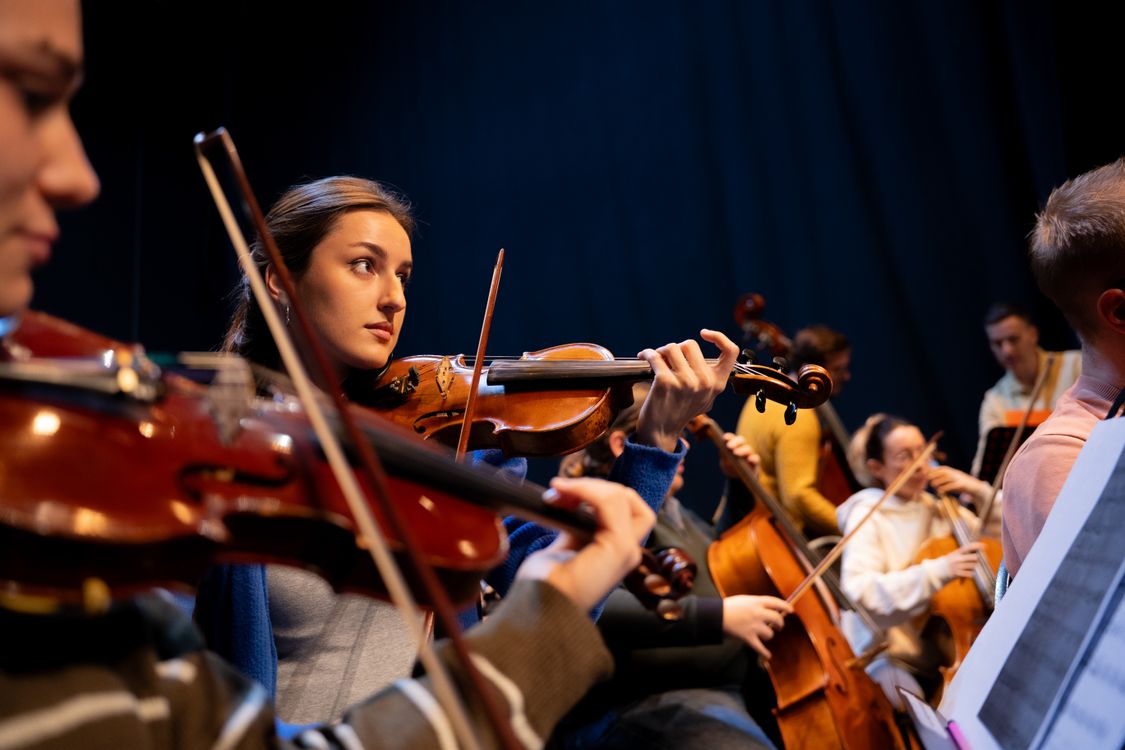
Cover: Božo Gunjajević, source photograph, Pexels License. Image unchanged. Orchestral musicians performing with a violinist in focus. General concert context, not the Warsaw Philharmonic or a verified event.
A philharmonic concert can be an approachable evening even if you cannot name every instrument or read a score. The most useful preparation is practical: choose the kind of programme you want, understand the structure and follow the actual hall's instructions. You do not need to pretend you already know a piece to enjoy hearing it.
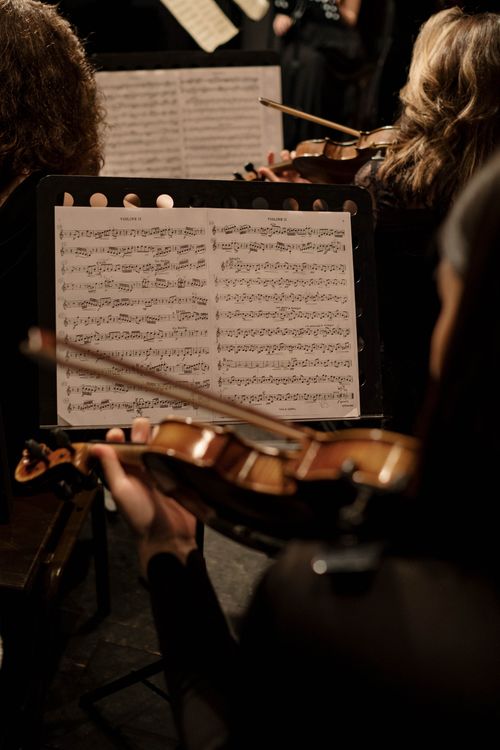
This guide uses Warsaw Philharmonic's own visitor and programme information as concrete examples. Other Polish operators can organise their concerts differently. The photographs illustrate orchestral instruments and performance, not the Warsaw Philharmonic or any specific concert offered for sale.
Choose a programme type before choosing a seat
The current Warsaw Philharmonic programme distinguishes symphonic, chamber, piano-recital and oratorio events, among other formats. Read that label and the performers before assuming every concert in a philharmonic building is a large orchestral evening.
A short event title may not describe the full programme. Open the operator's details and read the works and performers listed. A composer's name on a poster does not mean the whole evening contains only that composer's music.
Use your own interest to narrow the choice: a particular instrument, an ensemble, a composer or simply a format you want to try. This guide does not claim that one category is universally easier for beginners or that a familiar work will be performed in the style of a recording you already know.
Read the works as well as the artists
A concert can contain several works with different performers or forces. Read the list in order where provided, along with any interval information. Distinguish the evening's whole programme from one piece within it.
Warsaw Philharmonic's first-visit guide points listeners towards printed programmes and digital versions on its website. These can help you follow the structure without having to memorise it. Save or read the information before the music begins rather than searching noisily during a quiet passage.
A programme note is optional preparation, not a test. You can read a short description, explore a composer or arrive without extensive background. Do not turn a first concert into an obligation to complete a course in music history before you are allowed to attend.
Understand movements and pauses
The visitor guide explains that many symphonies and concertos contain several movements. A pause between movements can occur before the work is finished. That is why a moment of silence does not always mean the audience is about to applaud or the interval has started.
Use the work's listed structure to orient yourself. If uncertain, wait and follow the room rather than trying to force a decision from a few seconds of silence. There is no need to be embarrassed by not recognising the final movement on a first hearing.
Do not assume that every programme follows the same pattern. A recital, a choral work and an orchestral concert can have different structures. The published details and the operator's announcements are better guides than a general memory of one concert elsewhere.
Treat applause guidance as guidance, not an examination
Warsaw Philharmonic describes the usual convention of applauding after a complete multi-movement work rather than after each movement. It also discusses applause as appreciation. Read this as the operator's explanation of its concert setting, not a national law with a penalty for newcomers.
If you cannot tell whether a work has ended, allow a moment and watch the performers and audience. A printed or digital programme can help. You do not need to copy every reaction immediately or stand because someone in front has stood.
The same guide describes a standing ovation as an expression of a particularly strong response. It does not make standing an obligation for every audience member at every performance. Enjoy the music without inventing a compulsory ritual or judging another listener's enthusiasm.
Check the actual hall and entrance
Warsaw Philharmonic's first-visit page distinguishes the Concert Hall entrance on Sienkiewicz Street from the Chamber Hall entrance on Moniuszko Street. That is a useful example of why an institution's postal address alone may not be your entry instruction.
Read the hall on your ticket and the current operator directions. A programme may also list an event at another venue or a third-party presentation. Do not navigate only to the best-known building because the calendar belongs to a familiar institution.
If you need help inside, ask an usher rather than guessing through a closed door. The Warsaw guide specifically offers ushers' help with entrances and seats. For another operator, look for its own visitor arrangements and access information.
Plan to be ready before the start
The Warsaw guide says visitors can enter up to an hour before a concert and recommends allowing time for the journey. It also notes introductory meetings before Friday concerts as part of a named series. Check the actual event if such an introduction interests you rather than assuming every concert has one.
Separate building entry, finding your seat and the musical start. A start time is not a suggested moment to reach the street outside. Leave room for the steps your actual visit requires, including any ticket collection or access arrangement.
This article does not give a live travel estimate or parking availability. Use current journey information for your departure. A general visitor guide cannot promise that an unfamiliar route or an evening traffic pattern will leave enough time.
Follow the operator's late-entry process
Warsaw Philharmonic explains that late arrivals may be admitted at a convenient moment, usually during applause, with staff directing them to available seats temporarily before they move to their own seats after the interval. That is the operator's process, not permission to open a hall door whenever you arrive.
Wait for staff and follow their instructions. Do not assume your numbered seat gives you immediate entry through a performance or that a visible empty place is yours to use without guidance.
Other Polish venues may have stricter policies. In particular, do not transfer a concert-hall practice to an opera or theatre simply because both sell numbered seats. Read the actual operator's late-entry rules when planning a different event.
Keep the listening space quiet
The Warsaw guide asks visitors to turn off phones and not record or take photographs during the concert. Prepare your ticket display before entering, then follow the performance instructions. A phone used for admission has a different role from a device used during the music.
Think about other avoidable noises, including alarms and packaging. The operator's guide mentions unwrapping individually wrapped sweets beforehand. The principle is to avoid adding sound during the performance, not to create anxiety about every ordinary movement.
If you need help, speak to staff at an appropriate moment. This article does not tell anyone to ignore a personal or medical need for the sake of silence. A general etiquette explanation should not become a judgement about another audience member's circumstances.
Read food, drink and seat instructions
Warsaw Philharmonic says food and drinks belong in its foyer buffets, not in either concert hall. Follow the rule for the space you are using. Do not assume an interval refreshment can be carried back to the seat.
Its guide also notes that seats fold up automatically and can make noise, and advises facing the person you pass when moving along a row. These are practical details for that visitor setting rather than a claim about the furniture in every Polish hall.
If you need to leave during a performance, follow staff guidance and be considerate of those around you. Do not create a universal rule about re-entry from this article; the operator and circumstances determine how it is handled.
Do not assume formalwear is compulsory
Warsaw Philharmonic's own guidance says refined evening elegance is not a requirement and recommends simple, neat clothing in which visitors feel comfortable. That is a useful correction to the idea that a first concert requires buying a suit or high heels.
Read any specific event instructions if the occasion differs. This guide does not make a promise about every gala, private reception or venue in Poland. The operator's information should settle a particular uncertainty, not an invented national dress code.
Choose what lets you sit comfortably and manage your journey. The programme and listening experience are the point of the evening. There is no need to perform expertise through clothing or copy the most formally dressed person in a promotional photograph.
Confirm the ticket, then recheck the event
Match the programme, date, hall and seat before paying. Read the actual sale conditions and concession eligibility rather than assuming a discount or refund rule from another institution. This article quotes no current seat price or availability.
Keep the purchase information and check for operator changes before leaving. A familiar concert title is not enough if the venue or performance details have changed. Ask about any unresolved access or seating need before the plan becomes a commitment.
A workable first concert needs a programme that interests you, the right hall and a little attention to the operator's instructions. You can learn the rest by listening. The programme notes and staff are there to help, not to certify that you were already an expert before you took your seat.
Frequently asked questions
Must I buy formal evening clothes?
Warsaw Philharmonic says refined elegance is not a requirement and recommends neat, comfortable clothing. Check any special event instructions elsewhere.
How do I know when to applaud?
The Warsaw guide describes the usual convention of waiting until a multi-movement work is complete. Use the programme and allow a moment if unsure; it is not an examination.