Medicine Reimbursement Reform: What Patients Should Check
The essentials: The Senate amended Poland's medicine reimbursement reform on 26 November 2026, including its timetable. This is not a new pharmacy price list today. Your entitlement, the applicable reimbursement list and the prescription still determine the terms of an actual refill.
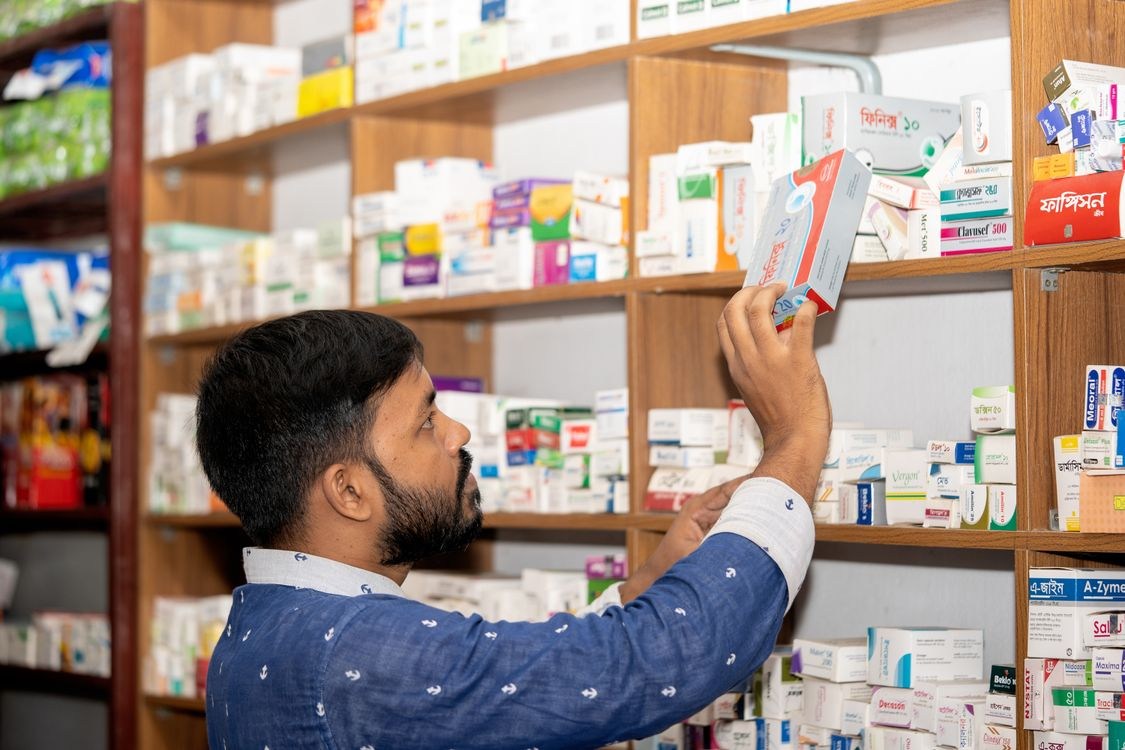
Cover: a pharmacy in Bangladesh, illustrative rather than a Polish pharmacy or evidence of local stock. Photo: Abdul batin / Pexels.
A reimbursement reform, not a new pharmacy price list today
Poland's Senate has approved amendments to a reform of medicine reimbursement, with changes covering the timetable, prescription transitions and patient data. The 26 November 2026 parliamentary update matters for people who regularly buy medicines in Poland, but it is not an instruction to expect a different price for every prescription at the pharmacy today.
The package aims to strengthen medicine supply, support production in Poland and speed access to treatment. It also changes parts of the process for financing therapies and importing medicines for individual patients. For an expat, the useful distinction is between the reform being discussed in Parliament, the current reimbursement list and the conditions attached to their own prescription.
Why January and July dates are both appearing
The Health Ministry's 19 November account of the Sejm's adoption said the law was intended to enter into force on 1 January 2027, with transitional provisions introduced gradually through 1 January 2028. That is an earlier account of the legislation, not a reliable reason to ignore later parliamentary amendments.
The Senate's 26 November report says its amendments concern, among other things, commencement on 1 July 2027 and the ability to dispense prescriptions issued earlier. The Senate adopted amendments rather than accepting the text unchanged. Those amendments return to the Sejm for consideration; the final text, presidential stage and publication must still be checked before treating a proposed date as the settled start of a particular rule.
Do not cancel a medical appointment, delay a refill or assume an existing prescription has expired because a news report mentions July. Transitional rules can distinguish between when a prescription was issued and when it is dispensed. Your pharmacy and prescriber need the actual prescription and applicable final rules, not a guessed deadline based on the headline.
What the package is trying to change
The ministry describes incentives for medicines manufactured in Poland, including lower patient payments for qualifying reimbursed products and faster handling of competing reimbursement applications. It also describes a National List of Critical Medicines, intended to identify active substances important to the country's medicine security.
These are system measures, not a guarantee that a particular brand will be in stock at a particular pharmacy. A critical-medicines list is also different from the reimbursement list which sets the terms on which patients obtain financed products. Being important to supply security and being reimbursed for your diagnosis are separate questions.
The reform includes a simpler process for some reimbursement applications and changes intended to help new treatment programmes start without waiting for avoidable contracting delays. It also provides for patient organisations to participate in price negotiations and coordinating bodies. These are changes to decisions and delivery arrangements around treatment, rather than permission for a patient to choose any medicine and send the bill to NFZ.
Read broad discount claims carefully
The ministry's announcement describes a 30% reduction relative to foreign equivalents for patients choosing qualifying medicines produced in Poland. That is a description of the proposed package. It should not be turned into a promise that all medicines sold by a Polish company, or every box bought in a Polish pharmacy, are 30% cheaper now.
For an individual prescription, the relevant product, reimbursement indication, patient entitlement and payment level still need to be checked. The final legislation and implementation will determine how a new preference applies. Ask about the actual amount you would pay for the prescribed product and any appropriate alternative, rather than calculating a discount yourself from an old receipt.
The Senate also describes an exclusion of over-the-counter medicines from reimbursement within the reform. This does not mean every medicine available without a prescription was previously free, nor that prescription status and reimbursement are the same thing. Treat it as a change to follow in the final package, not a reason to stockpile or stop treatment.

How reimbursement works while the reform progresses
NFZ's patient guidance identifies three important conditions: a right to publicly financed healthcare, inclusion of the medicine on the reimbursement list, and a medical indication matching the scope covered by the list. A medicine's presence on a list does not mean every person can obtain it at the same subsidised price for every use.
The Health Ministry publishes reimbursement lists and amendments. Its list index currently includes the announcement for the list effective from 1 October 2026. Use the applicable list and the prescription's conditions for an actual purchase. A parliamentary announcement about future legislation is not a replacement list.
A reimbursed prescription is dispensed at a pharmacy or pharmacy point with an NFZ contract. The ministry says these pharmacies display information about that contract. If a quoted amount surprises you, ask which product, pack and payment level it reflects and whether your entitlement has been recorded correctly. Do not assume that being a foreign national automatically rules reimbursement in or out.
Why 50% does not always mean half the shelf price
NFZ explains that payment categories operate with financing limits. Its guidance lists free-to-the-limit, a flat-rate category, 50% and 30%. A patient may also pay the difference between the retail price and the financing limit. That is why a medicine marked with a percentage can cost more than the same percentage of the retail price.
NFZ gives a clear example: a product has a retail price of PLN 100, a financing limit of PLN 80 and a 50% payment level. The patient pays PLN 40 for the financed part plus PLN 20 above the limit, a total of PLN 60. This is an explanation of the mechanism, not a quoted price for a medicine currently on sale.
For budgeting, keep the product name, strength, pack size and actual patient price together. Comparing two receipts with different pack sizes or reimbursement indications can be misleading. Ask the pharmacist to explain the amount before deciding that the national reform has already changed your entitlement.
Ask the pharmacist about an appropriate cheaper substitute
The ministry's prescription guidance says a pharmacist must propose a cheaper substitute when it has the same international name, dose, pharmaceutical form and therapeutic indication, subject to a prescriber's restriction against substitution. The marking NZ, from nie zamieniać, means do not substitute.
This is a conversation about a suitable medicine, not an invitation to change a dose or switch treatment on your own. Bring the prescription and ask whether an appropriate cheaper alternative is available under its terms. A similar-looking box or a familiar brand from another country is not enough to establish interchangeability.
If the exact product cannot be supplied, ask the pharmacist what can lawfully be dispensed and whether the prescriber needs to issue or change a prescription. If your condition or treatment makes substitution a concern, take that question to the clinician. This article explains the administration and payment context, not which medicine you should take.
Import approval and reimbursement are different decisions
The reform would extend digital handling of individual-patient imports through Internetowe Konto Pacjenta, IKP, and the System Obsługi Importu Docelowego, SOID. The ministry already explains that requests for products imported for individual patients have generally been issued and handled electronically in SOID since 2021. The news should therefore not be described as Poland inventing electronic medicine imports for the first time.
Its existing import guidance separates permission to import a specified product from permission for its reimbursement. A reimbursement decision is needed to collect the imported product at the applicable flat-rate patient payment. The absence of that reimbursement decision is not itself a reason to refuse to carry out an approved import request.
The guidance also says an import request identifies a specific product. If that product cannot be obtained abroad and a different one is needed, a new request is required. A new request also requires a new reimbursement application if reimbursement is sought. Keep the pharmacy and clinician involved rather than assuming one approval covers any alternative product.
Patient data and people without a PESEL
The Senate committee's 25 November account records work on limiting access to selected data during prescription dispensing and adding the ability to use a passport or another identity document for people without a PESEL number. The plenary report confirms amendments concerning restricted access to selected prescription data. These are legislative developments, not a new requirement to send identity documents to an unofficial website.
For a current appointment or prescription problem, ask the healthcare provider which identifier it needs for your case. Do not postpone care simply because you read about a future PESEL-related amendment, and do not assume that a passport alone establishes entitlement to subsidised treatment. Identity, the ability to issue or dispense a prescription and the right to public financing are related but separate checks.
What to do at your next refill
Take your existing prescription details and the documents relevant to your healthcare entitlement. Ask for the patient price, whether an appropriate cheaper substitute is available, and whether any supply problem needs the prescriber's attention. If you use an individually imported medicine, check both the import request and the separate reimbursement decision.
Follow the final published law and subsequent official implementation guidance for the reform's start dates. The Senate's July proposal supersedes the usefulness of simply repeating the ministry's earlier January timetable, but it is not yet a reason to label every measure effective on 1 July. For today's purchase, the current list, your entitlement and the actual prescription remain the starting point.
Frequently asked questions
Are all medicines 30% cheaper now?
No. The ministry describes a preference for qualifying reimbursed medicines produced in Poland within a reform still passing through the legislative process.
Does 50% reimbursement always mean half the retail price?
No. A financing limit can apply, and the patient may also pay the difference between the retail price and that limit.
Is approval to import a medicine the same as reimbursement?
No. The ministry's guidance distinguishes the request to import a specific medicine from the separate decision consenting to its reimbursement.
Sources
- Senate:26 November 2026 plenary outcome
- Health Ministry:19November Sejm version and timetable
- Senate committee:25November amendments and data protection
- NFZ:current reimbursement principles and financing limits
- Health Ministry:reimbursed prescriptions and substitution
- Health Ministry:individual import and separate reimbursement
- Health Ministry:reimbursement-list announcements
- Senate:how a law is made