Poland Extends Quality-Food Promotion Grants to 22 December
The essentials: The agriculture ministry has extended I.13.3 applications to 22 December 2026. Eligible producer groups can seek reimbursement of up to 70% of eligible campaign costs, up to PLN 1.75 million per operation. This is not household grocery support.
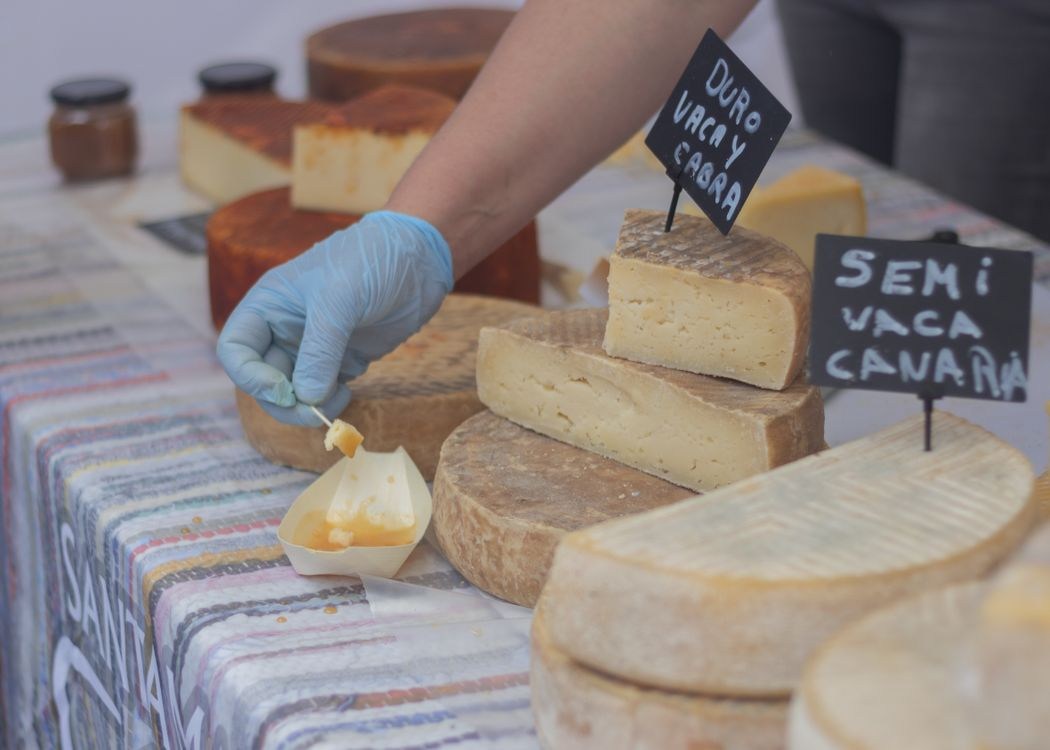
Illustrative cheese tasting at a market outside Poland, not a confirmed participant in the Polish programme. Photo: Ana Belén González Hernández / Pexels.
Poland's agriculture ministry has announced more time for producer groups seeking support to promote food covered by recognised quality systems. Its 26 November 2026 notice extends the I.13.3 application deadline from 7 to 22 December 2026. The call has a PLN 147.15 million budget and a maximum award of PLN 1.75 million for one operation.
This is support for eligible producer groups and their promotional campaigns, not a grocery payment for households or a general advertising grant for any food shop. For international residents, it has two practical angles: a funding opportunity for an eligible Poland-based producer organisation, and a reason to understand the quality labels appearing in food promotions.
The headline percentage is also worth reading carefully. Support is reimbursement of up to 70% of eligible costs, subject to the programme's conditions. It is not a promise that every marketing invoice, shop refit or export idea will receive that percentage.
The newer deadline and the older documents
The ministry's latest announcement explicitly gives 22 December 2026 as the extended deadline. The original ARiMR call page and the regulations linked from the documentation page still show the earlier period, from 22 October to 7 December. Those are different versions of the timetable, not two separate application rounds.
Use the 26 November extension when planning, while checking ARiMR's current call documents and the electronic platform before submission. The older PDF remains useful for the detailed conditions, but its printed closing date should not silently override the newer announcement. This article does not infer a precise closing hour that the extension notice does not state.
Applications are electronic, through ARiMR's PUE service. A paper package or ordinary email is not an equivalent submission route. The published regulations say an application submitted outside PUE is left unexamined, and the platform prevents ordinary applications outside the call period.
Who the programme is actually for
The programme covers groups operating in listed legal forms, including eligible cooperatives, producer organisations, consortia and associations. Merely selling Polish food, running a restaurant or belonging to a business network does not establish eligibility. The group and products have to meet the detailed requirements together.
The rules normally require at least two members producing food or agricultural products covered by the relevant quality systems and holding valid confirmation. There is a specified cooperative exception where the cooperative itself is the producer. For the organisational forms listed in the relevant part of the regulations, at least 60% of the group's membership must be certified producers of the products concerned.
The rules also link production to Polish territory and require the specified Polish seat or, for the relevant consortium or civil-law partnership route, the prescribed member circumstances. An international founder should assess the actual organisation against those conditions rather than assume that either foreign nationality alone excludes it or Polish customers alone make it eligible.
Certificates must cover the products and systems that the proposed campaign concerns. A certificate for a different product is not a substitute. Gather the group's legal documents, membership information and current quality documentation before commissioning a campaign or treating a consultant's eligibility estimate as an award.
Which quality systems count?
The programme names EU systems including organic farming, protected designations of origin, protected geographical indications and traditional specialities guaranteed. It also includes specified national systems, such as integrated plant production, Jakość Tradycja and listed meat-quality schemes. The formal list in the regulations matters more than a general description such as premium, local or traditional.
A producer's own claim that food is artisanal is not, by itself, certification under one of those systems. Nor does a market stall's location establish a product's registered origin or organic status. The group needs the valid documents required for the particular system and product.
For shoppers reading bilingual promotions, the Polish abbreviations ChNP, ChOG and GTS correspond to PDO, PGI and TSG. They describe different types of protection, not a single ladder from ordinary to best. The scheme's specification is the place to understand what is actually controlled.
What the labels do and do not tell a shopper
The European Commission explains that PDO has the strongest geographical link: all production, processing and preparation stages take place in the defined region. For most PGI products, at least one of those stages takes place there. A PGI label should therefore not automatically be read as a guarantee that every raw ingredient came from that area.
TSG protects traditional composition or production methods without requiring the same geographical link. That distinction helps when comparing an origin claim with a traditional-recipe claim. Neither is a personal dietary recommendation, and an appealing promotion does not replace checking the ingredient list and any dietary information you need.
The EU organic logo concerns a separate certified production system. The Commission says its use requires certification and, for the relevant processed products, at least 95% organic ingredients with further conditions for the remainder. The control-body code and agricultural-origin information accompany the logo. A green package, farm photograph or the word natural is not the same evidence.
What a funded campaign can include
The rules list activities such as media advertising, point-of-sale promotion, stands, promotional materials, exhibitions, training and conferences. Necessary translations can also be eligible, which may matter for campaigns addressing consumers in other EU countries or international audiences in Poland.
These activities must form an integrated information, promotion and marketing campaign. A collection of unrelated purchases is not automatically an eligible operation. The funded campaign is restricted to the EU internal market, so a proposed promotion aimed at a non-EU export market needs a different assessment.
The programme does not simply fund commercial brands or trademarks. The agreement sets conditions for how commercial marks may appear in campaign materials. Alcohol-related operations also face specific restrictions and must focus on the quality system and production methods while complying with Poland's alcohol law.
Projects may have no more than four stages, each lasting 90 to 180 days, with the substantive operation completed within 24 months of the agreement. The campaign timetable therefore needs to fit the rules rather than be built around the date a marketing agency happens to have space.
The budget, reimbursement and advance are different
Eligible operation costs are capped at PLN 2.5 million, with reimbursement of up to 70% and support of no more than PLN 1.75 million per operation. Spending has to meet the eligibility conditions, including the relevant starting point tied to the application date. The ceiling is not an automatic cash entitlement.
The regulations provide for a conditional advance of up to 50% of awarded support if it is requested in the application. Security is required, including the specified blank promissory note arrangement. This is not the same as being paid half the entire campaign budget immediately, and an applicant needs to understand the agreement before relying on that cash flow.
General costs have their own limit of 10% of the remaining eligible costs. VAT is addressed under the applicable general guidelines, rather than automatically treated as reimbursable in every case. A realistic budget should separate eligible spending, non-eligible spending, the group's contribution and the timing of payments.
Meeting the conditions does not guarantee selection
The regulations rank operations by points and require at least five points. Criteria include the quality systems involved, the makeup and size of the producer group, and qualifying joint operations by several groups. A complete application can still face competition for the available budget.
The rules specify tie-breaks, including the number of qualifying producer members and then the lower requested support amount where the relevant earlier measures are equal. Do not replace those published selection rules with an assumption that the first application uploaded necessarily wins.
Previous support and overlapping memberships also need checking. The regulations restrict repeated support and applications involving the same members, products and systems in the specified circumstances. A group that has already run a campaign should review those provisions before reusing an old application with a new date.
Keep the submitted campaign budget and supporting records together so the group can explain how each activity relates to the approved operation. The application deadline is only the first checkpoint; the agreement, evidence of spending and later payment requests remain part of the work.
A separate call closes on 10 December
ARiMR is also publicising I.13.4, concerning cooperation among producers in quality systems, with a 10 December 2026 deadline and support of up to PLN 680,000 over four years under its own rules. That is a different intervention. The I.13.3 extension to 22 December does not automatically extend I.13.4.
Before submitting, check the intervention number, applicant, certified products, current deadline, PUE access and authority to represent the group. For an ordinary shopper there is nothing to apply for. The useful response is to distinguish a certified system from a marketing claim, not to expect a discount or household payment because a producer-promotion budget has been announced.
Frequently asked questions
Can households apply for grocery support?
No. This programme supports eligible producer groups and quality-food promotion campaigns.
Does the extension cover I.13.4?
No. The separate I.13.4 announcement gives 10 December 2026. I.13.3 is the call extended to 22 December.
Is a local or natural label enough?
No. The products and group must meet the recognised quality-system and documentary conditions.