Poland Prepares Small Fishing Vessels for 2028 Digital Logbooks
The essentials: Poland says its sea-fisheries amendment awaits the President’s signature. Small commercial vessels are preparing for electronic logbooks from 10 January 2028. Recreational catch reporting through RecFishing is a separate issue and does not replace national fishing permission.
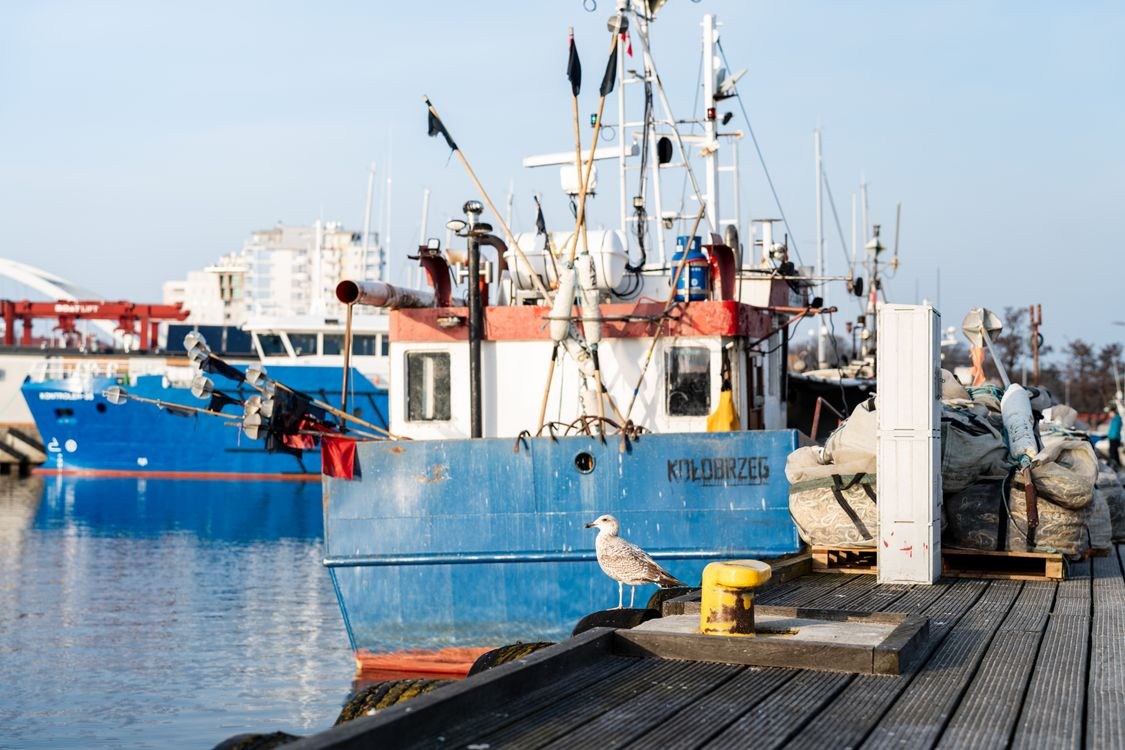
Cover: fishing vessels in Kołobrzeg. Illustrative harbour photograph, not evidence of a vessel’s length, equipment or compliance. Photo: Michał Robak / Pexels.
Poland is preparing small commercial fishing vessels for electronic monitoring and catch reporting, but the latest announcement is not a new requirement for every person taking a fishing rod to the Baltic coast. In a 26 November 2026 update, the agriculture ministry said Parliament had completed work on an amendment to the sea-fisheries and fish-market laws. The amendment was awaiting the President's signature. For small-scale commercial operators, the ministry identifies 10 January 2028 as the start of the electronic fishing logbook described in its announcement.
That timetable must not be confused with RecFishing, the separate system for reporting certain recreational sea catches. Poland's fisheries inspectorate already provides download links and login guidance for that app. For an English-speaking resident planning a coastal fishing trip, the useful distinction is between commercial vessel controls, recreational catch reporting and the national permission to fish. One does not automatically replace the others.
What Poland announced on 26 November
The ministry's update follows meetings with small-scale fishers in Darłowo and Wolin. It describes national preparations for revised EU fisheries-control rules, including electronic monitoring and changes to how commercially caught fish can be weighed. The opening description concerns owners of fishing vessels less than 12 metres long. These are commercial operations, rather than a blanket category covering every small pleasure boat.
The ministry says the Polish amendment still needs the President's signature. Readers should therefore distinguish a completed parliamentary stage from a signed, published and operational national law. The announcement does not establish that all the described domestic changes can already be used. Operators should check the final published provisions and instructions from the fisheries inspectorate before changing their compliance arrangements.
Why 2028 matters for small commercial vessels
According to the ministry, from 10 January 2028 small-scale fishers will use an electronic fishing logbook instead of paper logbooks and monthly catch reports. The Commission will prepare the mobile application described in the update. The wider EU framework combines electronic recording of fishing activity with systems that allow authorities to monitor vessel positions.
These are related functions, but they are not identical. A catch log records fishing information. A vessel-monitoring system concerns a vessel's position and movement. The Commission's explanation describes both, including alternative systems for smaller vessels. Calling everything a fishing app can obscure which obligation applies and which data a particular system collects.
The revised EU control regulation entered into force in January 2024, with different provisions applying in stages. Some measures apply in 2026 and others in 2028. A rule can therefore already exist at EU level while a particular technical obligation has a later application date. The Polish announcement is part of that implementation process, not the beginning of all European fisheries controls.
The under-12-metre boundary needs care
The ministry's introductory description and its weighing explanation refer to vessels below 12 metres. Its shorter passage about the monitoring app uses wording equivalent to up to 12 metres. The Commission's technical explanation and the EU legal text distinguish vessels less than 12 metres from the larger-vessel category. An operator close to the threshold should use the vessel's recorded overall length and the applicable legal provision, not treat a press-release phrase as a measurement rule.
The EU regulation also allows a narrowly conditioned, temporary national exemption from vessel monitoring for some vessels below nine metres. It is not an automatic exemption for all small boats. Conditions include the waters and gear used, time at sea and restrictions applying in the fishing area. A commercial owner should obtain confirmation of any Polish exemption and its conditions rather than assume size alone settles the question.
Weighing fish: simpler does not mean optional
The ministry says the amendment will allow the master of a fishing vessel below 12 metres to weigh fish caught commercially with that vessel using a legally verified scale, without applying for a separate authorisation from the Chief Inspectorate of Marine Fisheries. The important change is who may carry out the weighing under the national arrangements, not permission to stop weighing catches.
A legally verified scale is also not the same thing as any household or market scale. The announcement retains that qualification. It does not give operators a reason to discard weighing records or ignore other landing and sales obligations. Before relying on the simplification, owners should check when the final national provision applies and how their existing procedure fits it.
The ministry also says the changes will lower financial penalties for serious infringements of the Common Fisheries Policy and support continued use of EU fisheries funding. Its announcement does not supply a complete penalty table or an individual funding entitlement. A lower penalty is not the removal of the underlying offence, and eligibility for financial support remains a separate question.
What the ministry says will stay unchanged
The update addresses concerns about fish that remain in nets. It says small fishing units will still be able to bring those fish into ports and landing places. It also says the rules on sorting, weighing and direct sales while fish are being removed from nets will not change. Those statements explain the ministry's position on specific working practices.
They should not be read as a general exemption from the rest of fisheries law, or as authority for recreational anglers to sell catches. The EU regulation maintains a prohibition on marketing or selling catches from recreational fisheries. A commercial fishing operation and a recreational day at sea remain different legal activities even if both use small vessels and return to the same harbour.

RecFishing is a separate issue for recreational anglers
GIRM, Poland's Chief Inspectorate of Marine Fisheries, has a dedicated page for RecFishing. It describes electronic recording of catches of species covered by the relevant EU fishing opportunities, multiannual plans or landing obligations. The page links to the free app in the Google and Apple stores and explains access through EU Login or the listed electronic identity routes.
The Commission's recreational-fishing explanation says the EU reporting framework concerns certain species and applies regardless of the fisher's nationality or fishing mode. It includes shore fishing as well as fishing from a boat, underwater or from ice, where the relevant marine rules apply. Being a foreign resident or visiting tourist is therefore not, by itself, a reason to disregard the requirements.
At the same time, the announcement about commercial logbooks in 2028 is not a reason to postpone checking recreational reporting until then. The Commission's January 2026 questions and answers describe the recreational rollout at that earlier stage. For current Polish access, the inspectorate's page with actual download links is more useful than treating that January rollout language as proof the app is still unavailable.
Reporting is not a fishing licence
The Commission expressly says EU registration does not replace national licensing requirements. GIRM's general recreational-fishing page separately describes permission based on proof of payment for individuals fishing in Polish marine areas. It lists PLN 15 for a week, PLN 25 for a month and PLN 65 for 12 months, plus a separate PLN 50 annual rate for eligible holders of the Large Family Card.
According to that page, validity runs from the payment date. It also tells individuals to carry identification, proof of payment and evidence of any applicable discount. A person planning a later holiday should therefore check the official instructions before paying, rather than assume the period begins on a date selected informally for the trip.
Boat-based recreational fishing can involve additional notification and reporting instructions. GIRM's general page sets out a two-hour advance notification for the specified marine areas and describes reporting after certain catches. Its separate RecFishing page addresses electronic recording. Read those pages together and ask GIRM how the instructions apply to the planned trip if the channels or reporting steps are unclear. Do not assume installing the app cancels every other published duty.
Catch reporting is not permission to catch a species
An app's ability to record a fish does not establish that retaining that fish was legal. Size limits, closed seasons, protected species, bag limits and area restrictions are separate from recording requirements. The Commission makes clear that the recreational reporting changes do not themselves replace conservation rules. Check the rules for the species, place and date before fishing.
For a charter trip, ask the operator which permissions and reporting tasks it handles and which remain personal. For an independent shore trip, identify the competent marine rules before treating inland-fishing advice as relevant. Keep the official guidance available offline where possible, particularly if mobile coverage or access to an identity account could be a problem at the coast.
What to check next
Commercial operators should follow the President's decision, publication of the amendment and GIRM's implementation guidance. The ministry says another meeting for small-scale fishers from the eastern coast is planned for 8 December 2026, but its update is not a public booking confirmation or a complete technical specification for equipment purchases.
Recreational anglers have a different immediate checklist: confirm permission, the applicable species and area restrictions, and the current reporting steps. The central point is simple. Poland's preparation for 2028 commercial-vessel controls does not turn RecFishing into a new universal boat-tracking requirement for everyone enjoying the Baltic coast.
Frequently asked questions
Is this a new tracking app for every recreational angler?
No. The latest ministry announcement concerns small commercial fishing vessels. RecFishing is a separate recreational catch-reporting system.
Can I wait until 2028 to check recreational reporting?
No. GIRM already provides RecFishing download and login guidance. Check the current Polish requirements for the planned trip.
Does RecFishing replace Polish fishing permission?
No. EU registration does not replace national licensing or permission requirements. Species, area and date restrictions also apply.