Is Poland Depressing in Winter? The Real Data and What Helps
The essentials: Winter in Poland is greyer and shorter on daylight than most newcomers expect - Warsaw sees under eight hours of daylight in late December - but official weather data shows milder winters than the stereotype, and the low mood many feel has known, practical countermeasures.
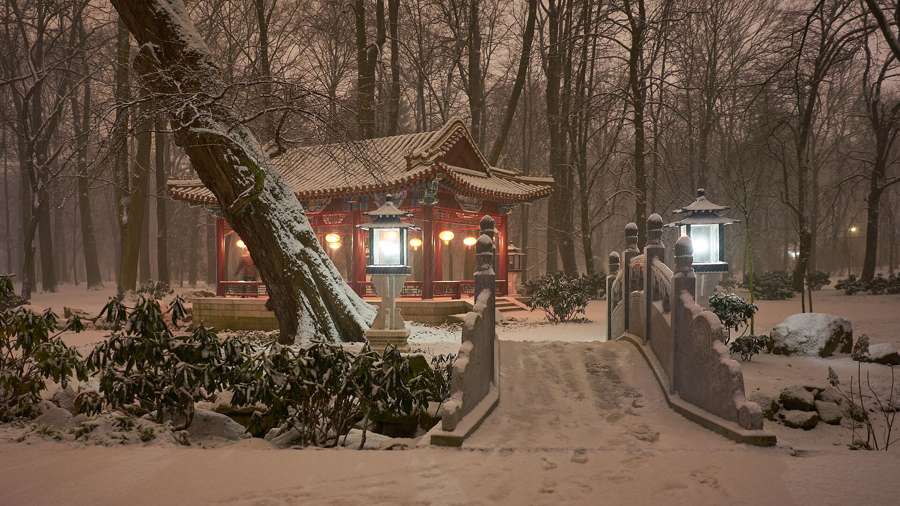
Every October, someone in an expat forum asks the question out loud: is winter in Poland actually depressing, or is that just a stereotype? The honest answer has two halves. The daylight math is genuinely hard - Warsaw's late-December day is less than half the length of its June day. But the cold itself is milder than the reputation, and the low mood that many newcomers feel in their first winter is common, well understood, and manageable with specific habits. Here are the real numbers and the official advice, checked on 21 October 2026.
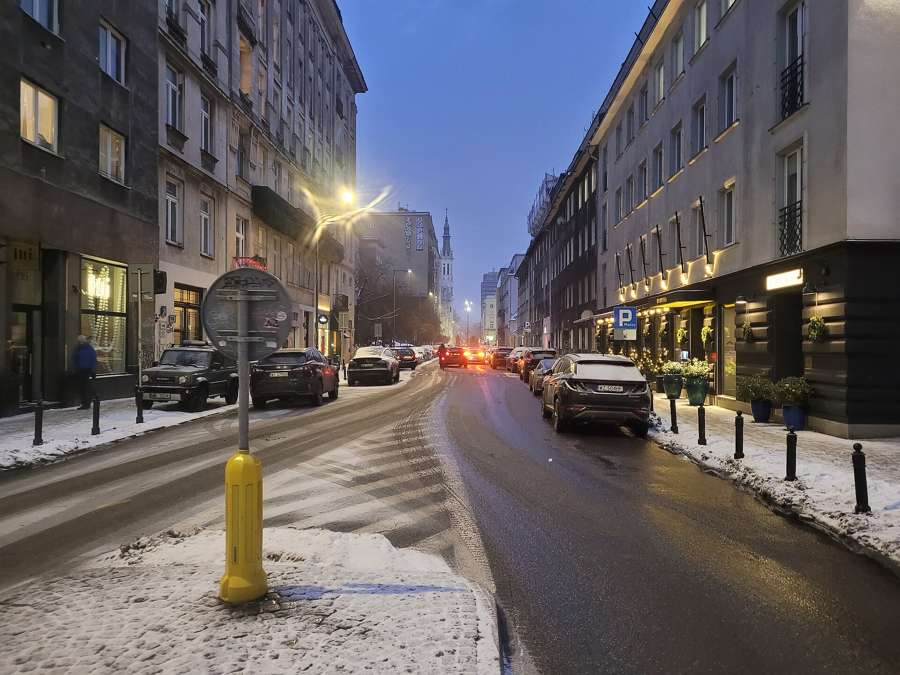
The daylight math, without sugar-coating
Warsaw sits at 52 degrees north, roughly the latitude of Saskatoon in Canada. Around the winter solstice on 21 December, the sun rises at about 7:42 and sets around 15:25, giving the city about 7 hours and 42 minutes of daylight. If you work standard office hours indoors, you can realistically go days seeing the city only in the dark: you arrive before sunrise and leave after sunset. By mid-November the day is already down to about 8 hours 45 minutes, and it does not climb back above 8 hours until mid-January. The real recovery comes in February, when daylight passes 9 hours 56 minutes by the middle of the month and the change becomes noticeable week by week.
The progression through the season looks like this:
- mid-November: about 8 hours 45 minutes of daylight, sunset already before 16:00
- 21 December, the solstice: 7 hours 42 minutes, the darkest point of the year
- mid-January: still only about 8 hours 15 minutes - the mornings recover slowly
- mid-February: about 9 hours 56 minutes, and the evenings visibly stretch
For contrast: on 21 June the same city gets about 16 hours 46 minutes of daylight, with the sun up before 3:15 in the morning. That swing, more than nine hours between the longest and shortest day, is what shocks people arriving from southern Europe, the southern US, or Asia. The first defence is simply knowing it is coming and that it is astronomical, not personal. The second is noticing that the turning point comes early: by the time winter feels endless in late January, the days are already lengthening.
*Data source: solar calculation for Warsaw's latitude (52.23 N), 21 October 2026; IMGW climate bulletins.*
What the weather actually does
The stereotype says months of Siberian frost. Poland's official meteorological record tells a milder story. At the IMGW Warsaw-Filtry station, November 2023 averaged 3.9 degrees C, with ten days of snowfall and six days of lying snow. December 2023 averaged 1.9 degrees C, with thirteen days of rain, eleven days of snowfall and no lasting snow cover. January 2024, the coldest recent month, averaged minus 0.2 degrees C, with an absolute low of minus 13.6 degrees C and fourteen days with snowfall. Then February 2024 averaged a remarkably mild 6.0 degrees C.
The pattern that holds across recent winters: temperatures hover around freezing rather than deep below it, snow comes in spells and often melts into slush within days, and rain is at least as likely as snow. Long-term, Warsaw has been warming - IMGW's climate bulletins put the city's rise at about 2.3 degrees C over the 1851 to 2020 series, the strongest warming in the multi-city dataset - so genuinely brutal weeks are becoming rarer.
What this means practically: a decent insulated jacket, waterproof boots with grip for slush and ice, and layers beat expedition-grade frost gear in most of the country. The mountains and the northeast are a different story, but Warsaw, Kraków, Wrocław and Poznań winters are wet-cold, not dry-cold.
The honest winter complaint is not the cold. It is the grey. Poland's annual sunshine totals 1,700 to 2,200 hours, and relative sunshine - the share of daylight hours when the sun actually breaks through - runs at roughly 35 to 48 percent depending on the region. In the short days of December, that translates into many days when the sky never really brightens. Plan for grey, not for blizzards.
*Data source: IMGW public climate data, Warsaw-Filtry monthly station records 2023-2024, and IMGW "Klimat Polski" bulletin, updated 21 October 2026.*
Why the first winter is the hardest
Long-term residents repeat one piece of advice more than any other: the first winter is the worst, and it does not mean you chose the wrong country. Part of that is physiology - your body has no local rhythm for light this scarce. The bigger part is social. In summer, Polish cities socialise outdoors by default: riverside boulevards, beer gardens, park picnics, open-air events. In November that infrastructure of casual contact switches off, and a newcomer who built their whole social life around it in July suddenly finds the city quiet and their calendar empty. Knowing that the withdrawal is seasonal, and that everyone around you is making the same retreat indoors, makes it far easier to treat February as a finish line rather than a verdict.
What actually helps, according to the official playbook
The Ministry of Health's patient portal publishes prevention guidance for depression that maps almost one-to-one onto winter coping, and none of it is exotic. Sleep enough and keep regular hours. Eat properly. Invest in relationships - winter is when the spontaneous social life of summer terraces disappears, so it has to be scheduled deliberately: regular meetings, clubs, sport with other people. Make time for things you enjoy. And move: the portal notes that regular physical activity supports endorphin production, raises serotonin levels, lowers the stress hormone cortisol, and has a documented anti-anxiety and anti-depressive effect.
The expat-specific additions are about light and logistics. Get outside in the brightest part of the day, which in December means treating a midday walk as an appointment, not a luxury. Keep your home bright and warm without overdrying the air. And plan winter events to look forward to: Christmas markets in December, the ski-trip or thermal-baths weekend in January or February. If you have children, our guide to indoor activities for kids in Warsaw in winter covers the museums and play centres that save family weekends.
*Data source: pacjent.gov.pl depression prevention guidance, checked 21 October 2026.*
When it is more than the winter blues
A low mood on a dark Tuesday is normal. The Ministry of Health lists warning signs that distinguish illness from ordinary sadness: a lasting, unusual lowering of mood; loss of activity and interests; appetite and weight changes; sleep problems; difficulty concentrating; loss of self-acceptance; a sense of helplessness or meaninglessness; and the inability to feel pleasure. If several of these persist, the official advice is unambiguous: do not wait it out.
In Poland you do not need a referral to see a psychiatrist - you can book directly, through the public NFZ system or privately. A family doctor or a psychologist is an equally valid first step. Free phone support exists too: the 116 123 crisis line for adults in emotional crisis works daily from 14:00 to 22:00, and the 116 111 line supports children and young people around the clock, every day of the week. Callers do not need to give a name. And if a crisis ever becomes acute and safety is at stake, it is treated like any other medical emergency in Poland: the 112 and 999 numbers and hospital emergency departments are the route, regardless of documents or insurance.
*Data source: pacjent.gov.pl, "Depression - prevention and where to get help", checked 21 October 2026.*
Frequently asked questions
How many hours of daylight does Warsaw get in December?
Around the winter solstice on 21 December, Warsaw gets about 7 hours 42 minutes of daylight, with sunrise near 7:42 and sunset around 15:25. Days stay under eight hours from mid-November to mid-January and recover past nine hours in February.
How cold is a Polish winter really?
Milder than the stereotype. Official IMGW records for Warsaw show December 2023 averaging 1.9 degrees C and January 2024 averaging minus 0.2 degrees C, with an absolute low of minus 13.6 degrees C. Short cold spells happen, but temperatures around freezing, rain and slush are more typical than deep frost.
What helps with the winter low mood in Poland?
The Ministry of Health's prevention advice: enough sleep, a healthy diet, maintained relationships, time for things you enjoy, avoiding chronic stress, and regular physical activity, which raises serotonin and lowers cortisol. Getting outside at midday maximises your daylight exposure.
Where can I get mental health support in Poland in winter?
You can see a psychiatrist without a referral, publicly or privately. The free 116 123 crisis line for adults works daily 14:00 to 22:00, and children and young people can call 116 111 around the clock. No insurance or name is needed to call. * Photos: Chinese pavilion in Warsaw's Łazienki Park in snow by Radek Kucharski, CC BY 2.0; Mokotowska street in January by Wistula, CC BY-SA 4.0, both via Wikimedia Commons.*