Polish Residence Card: Requirements, Costs and Waiting Times
The essentials: Third-country nationals staying over three months apply via the MOS portal only (since 27 April 2026): 340-640 zl fee plus 100 zl for the card, and proof of insurance, income and address. Warsaw decisions average 394 days; the filing certificate keeps your stay legal.
What a residence card actually is
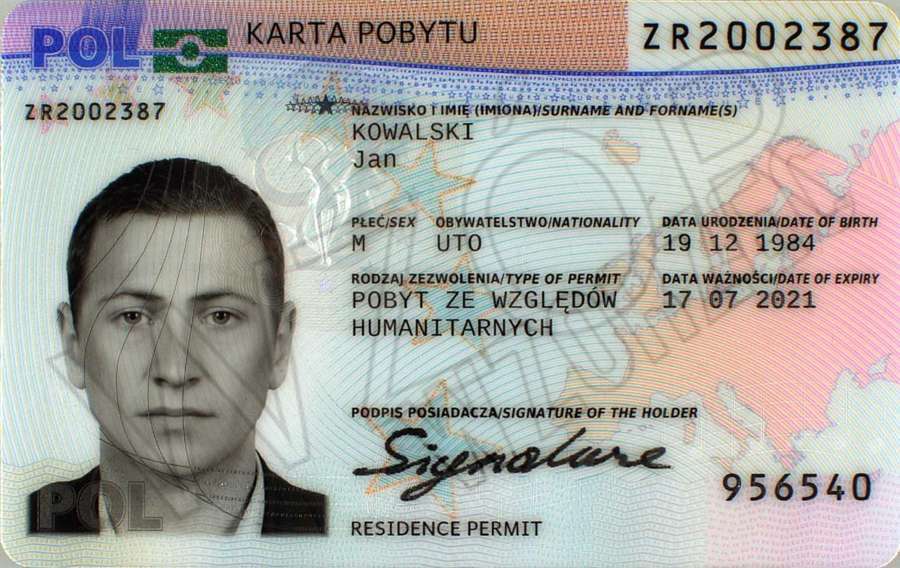
The karta pobytu is the plastic card issued to a foreigner who has been granted a residence permit in Poland. For most expats the relevant permit is the temporary residence permit (zezwolenie na pobyt czasowy), granted when a stay longer than three months is justified by a declared purpose such as work, running a business, studies, highly qualified employment or joining family. The permit is granted for up to three years at a time, and the card is the physical proof of it. Together with a valid passport it allows multiple crossings of the Polish border without a visa, and it lets the holder spend up to 90 days in any 180-day period elsewhere in the Schengen area.
Two groups should not confuse this process with their own. Citizens of the EU, EEA and Switzerland do not need a residence permit at all; they register their stay instead, which is a separate and simpler procedure. British citizens covered by the Withdrawal Agreement also have their own dedicated path. The residence card process described here is for third-country nationals, which includes most Americans, Canadians and post-Brexit Britons moving to Poland now.
Data source: powroty.gov.pl temporary residence permit guidance, legal state dated 2 June 2026; checked 23 October 2026.
The three things you must prove
Whatever the purpose of stay, the voivode handling the case will expect the application to document three things: health insurance as defined by the Polish public healthcare rules or an insurer's confirmation that treatment costs in Poland are covered; a stable and regular source of income sufficient to support the applicant and any dependent family members; and a secured place to live in Poland. A rental agreement, an employer's confirmation and an insurance policy are the ordinary building blocks of the file.
There is one notable exemption written into the rules. A foreigner applying as the spouse of a Polish citizen does not have to show a stable income, health insurance or a secured place of residence. Everyone else should treat those three documents as the core of the application, and should collect them before starting the online form, because the application system asks for scans up front.
Data source: powroty.gov.pl temporary residence permit guidance, legal state dated 2 June 2026; checked 23 October 2026.
Costs as of October 2026
The government fee for a temporary residence permit application is 340 zł. If the application is for the combined temporary residence and work permit, the fee is 440 zł. Permanent residence and long-term EU resident permits cost 640 zł each, although holders of Karta Polaka are exempt from the stamp duty on a permanent residence application. On top of the application fee, the residence card itself costs 100 zł to issue. Changing an existing temporary residence and work permit costs 220 zł.
One detail catches many applicants. The application fee and the card fee are two separate payments made to two separate bank accounts, and neither can be paid inside the application system. Each voivodeship office publishes its own account numbers, and the payment confirmation must be attached to the online application. The tax office guidance accepts an electronic transfer confirmation, a scan or a legible photo of the confirmation, and recommends the electronic version so nothing needs to be delivered on paper later. The transfer title should show the applicant's name.
Data source: Office for Foreigners fee guidance and Podlaski Voivodeship Office fee table on gov.pl; checked 23 October 2026.
Applying in 2026: the MOS portal is now the only door
Since 27 April 2026, applications for temporary residence, permanent residence and long-term EU residence are accepted only in electronic form through the MOS portal (Moduł Obsługi Spraw). An application submitted any other way is left without consideration, so the days of printing the form and queuing at the office are over for most people.
The practical setup takes a few steps before the form itself. The applicant needs a Profil Zaufany (trusted profile) on login.gov.pl, which is also required to open an e-Doręczenia mailbox, the channel the office now uses for official correspondence. The application asks for a compliant digital photo: a sharp, undamaged colour image no older than six months, 684 by 883 pixels and at most 2.5 MB, matching the proportions of the 35 by 45 mm standard. It also asks for a scan or photo of every page of the valid travel document, the two payment confirmations and the documents for the declared purpose of stay. The finished application must be signed with a trusted, qualified or personal signature, and the UPO, the official confirmation of receipt, must download correctly; without it the application was not effectively filed. Once the office registers the case it emails a code that links the case to the inPOL portal, where the status can be tracked.
For work-based applications there is an extra dependency worth knowing about early. When the application requires the employer's annex, the employer must first complete and sign that annex online through a link sent to the employer's email address. Only after the employer finishes does the system let the foreigner submit. Applicants should secure the correct employer email before they sit down to fill anything in.
A few categories still apply on paper: intra-company transferees and long-term mobility cases, family members joining from abroad, and certain Withdrawal Agreement family cases. Everyone else should assume MOS is the only route.
Data source: Mazovian Voivodeship Office MOS announcement and powroty.gov.pl MOS guidance, in force from 27 April 2026; checked 23 October 2026.
One office visit is still required
Electronic filing does not eliminate the personal appearance. After the application is registered, the office summons the applicant with at least seven days' notice to appear in person, present a valid travel document, give fingerprints and leave a signature specimen. What has changed is everything around that visit: documents are no longer accepted at the counter, and any missing papers are supplied electronically through e-Doręczenia within the deadline stated in the summons.
For applications filed during a legal stay, the office issues a certificate confirming that the application was filed and that the stay in Poland remains legal until the final decision. That certificate matters for anyone whose visa or visa-free days run out while the case is pending. It is worth repeating the deadline rule: the application should be filed no later than the last day of legal stay, and a late application does not get the same protection.
Data source: powroty.gov.pl temporary residence permit guidance and Mazovian Voivodeship Office MOS announcement; checked 23 October 2026.
How long the wait really is
There is no single statutory deadline for deciding a residence case. Before deciding, the voivode consults the Police, the Border Guard and the Internal Security Agency on whether the stay poses a security risk, and those services have 30 days to answer, extendable to 60. Time spent fixing formal defects, waiting for the applicant or on court proceedings does not count toward decision deadlines either, which is why quoted averages stretch far beyond the textbook timeline.
The clearest current picture comes from the Ministry of the Interior's July 2026 written answer to a parliamentary question about the Mazovian Voivodeship Office, the busiest foreigners' office in the country. It reports the average processing time for a temporary residence case there rose from 153 days in 2023 to 394 days in 2026. Permanent residence averaged 239 days and long-term EU residence 423 days in 2026. Of the 26,877 decisions analysed, about 48 percent took between six and twelve months, 29 percent took twelve to eighteen months, and 738 cases ran beyond two years. The ministry attributes the longer averages partly to clearing the oldest backlogs and says the MOS portal should reduce errors, correspondence and visits over time.
The planning takeaway for an expat is blunt. In Warsaw, budget a year or more between filing and card in hand, and treat the legal-stay certificate as the document that carries you through the gap. Smaller voivodeships can move faster, but the voivode is assigned by where you live, not by where you prefer to file.
Data source: MSWiA written answer to interpellation 18089, dated 27 July 2026; Mazovian Voivodeship Office waiting-time guidance; checked 23 October 2026.
How to avoid adding months to your own case
Most avoidable delay comes from the applicant's side. File a complete application: the right fee amounts to the right accounts, a photo that meets the pixel specification, every page of the travel document, and the purpose-of-stay documents collected in advance. Watch e-Doręczenia and inPOL rather than a physical mailbox, because a missed summons or a missed deadline for supplementing documents stalls the case. If the employer's annex is required, make sure the employer completes it promptly. And keep the UPO and the case number safe, since they are the proof that the application exists at all.
Data source: Mazovian Voivodeship Office MOS announcement and waiting-time guidance; checked 23 October 2026.
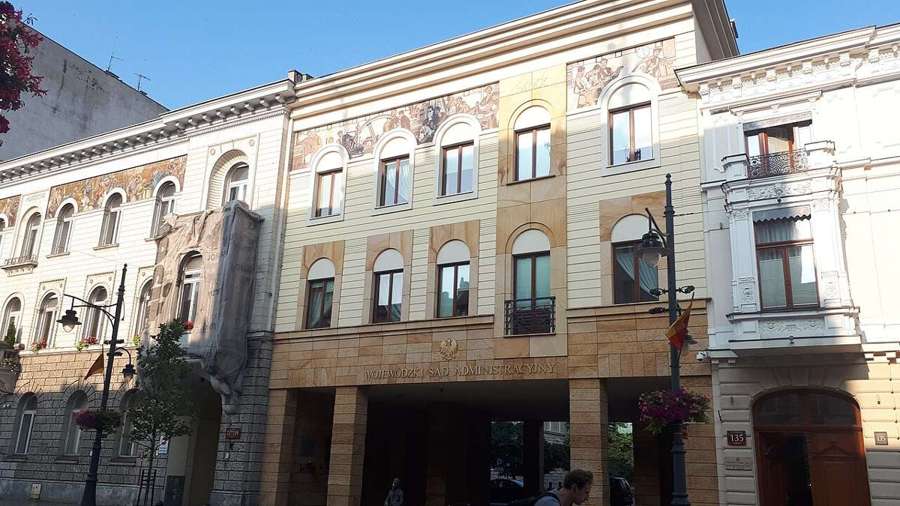
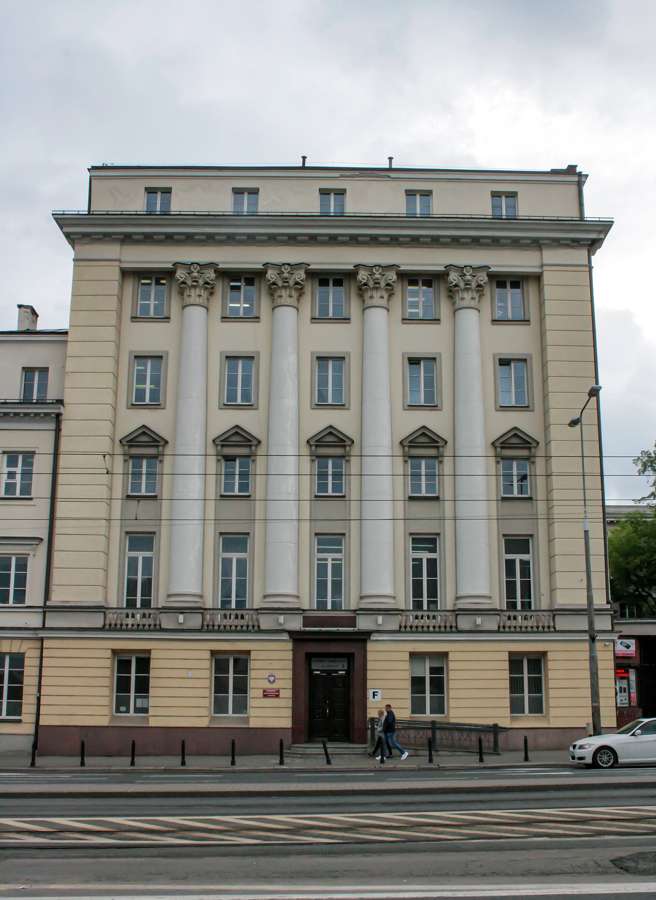
* Photos: cover, the 2020 specimen of the Polish residence card, Polska Wytwórnia Papierów Wartościowych S.A., public domain, via Wikimedia Commons; body, the Mazovian Voivodeship Office building in Warsaw, Mydlowproszku, Wikimedia Commons, CC BY-SA 4.0.
Frequently asked questions
Do EU citizens need a Polish residence card?
No. Citizens of the EU, EEA and Switzerland register their stay instead of applying for a residence permit. The karta pobytu process described here applies to third-country nationals staying in Poland for more than three months.
How much does a Polish residence card cost in 2026?
As of October 2026 the application fee is 340 zł for temporary residence, 440 zł for temporary residence and work, and 640 zł for permanent or long-term EU residence, plus 100 zł for issuing the card itself. The two payments go to two separate bank accounts and are not payable inside the MOS portal.
How long does it take to get a residence card in Warsaw?
Official ministry data from July 2026 puts the Mazovian office's average temporary residence processing time at 394 days in 2026, with most decisions landing between six and eighteen months. A certificate issued after filing confirms the stay is legal until the final decision.
Can I apply for a residence card on paper in 2026?
Generally no. Since 27 April 2026 applications go through the MOS portal only, and other forms are left without consideration. Paper applications remain for specific cases such as intra-company transfers and some family applications filed from abroad.
What happens if my visa expires while I wait?
If the application was filed on time and has no formal defects, the voivode issues a certificate confirming the stay is legal from the filing date until the decision becomes final. Filing after the last day of legal stay does not get that protection, so timing the application matters.