Polish soups for expats: zurek, rosol, barszcz and more
The essentials: Poles traditionally start dinner with soup, and every milk bar serves the classics daily. The ones to know: rosol (Sunday broth), zurek (sour rye, often in a bread bowl), barszcz czerwony (clear beetroot), flaki (tripe), ogorkowa (pickle) and krupnik (barley). Expect 10-20 zl a bowl in a milk bar.
Ask a Pole what dinner starts with and the answer is automatic: zupa. Soup is the traditional first course of the midday meal, the thing grandmothers measure love in, and the backbone of every milk-bar menu in the country. Poland takes its bowls seriously enough that the travel-food guide TasteAtlas keeps a running ranking of them, and the top spots swap places as votes come in - clear red barszcz, porcini soup and zurek all scored 4.3 out of 5 in the cut Wprost reported on 27 September 2026, with rosol just behind at 4.2. An earlier cut, reported by Chillizet on 28 October 2025, had rosol on top with 4.4. Whatever the order, foreigners keep rating Polish soups near the very top of the cuisine - and autumn is exactly when to join them. Here are the bowls worth knowing, what is in them, and how to eat them like you have lived here for years.
Why soup matters here
In Polish homes soup is not a light option or a starter you skip - it is the first half of dinner. The classic family Sunday follows a fixed script: rosol first, then kotlet schabowy with potatoes. Many households still cook Monday's tomato soup on the stock left from Sunday's broth, a habit so common that Akademia Smaku notes it as standard practice in its guide to traditional soups (22.10.2018). Soups also mark the calendar: barszcz with uszka dumplings opens the Christmas Eve table, zurek anchors Easter breakfast, and mushroom soup belongs to autumn.
There is a small irony worth knowing. Poles are proud of their soups, but they eat less of them than they used to - Chillizet's piece on the TasteAtlas ranking laments that soup consumption in Poland is falling even as foreigners rate the bowls so highly. Which means the tradition is increasingly carried by milk bars, restaurants and the determined home cooks you will meet at work and at family tables. Eating soup in Poland is a small act of cultural participation.
The big five you will meet everywhere
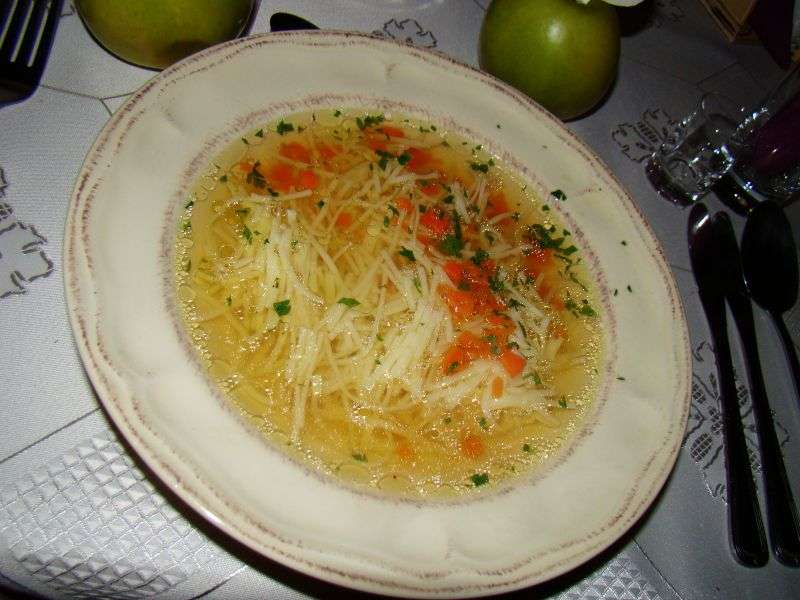
Rosol. The clear golden broth, simmered for hours from chicken - often with beef or turkey bones for depth - with carrot, celeriac, parsley root and leek. It comes with fine noodles, a slice of carrot and a sprinkle of parsley. Poles call it Polish penicillin: it is what appears when you are sick, cold or sad. If you learn to pronounce one soup, make it this one.
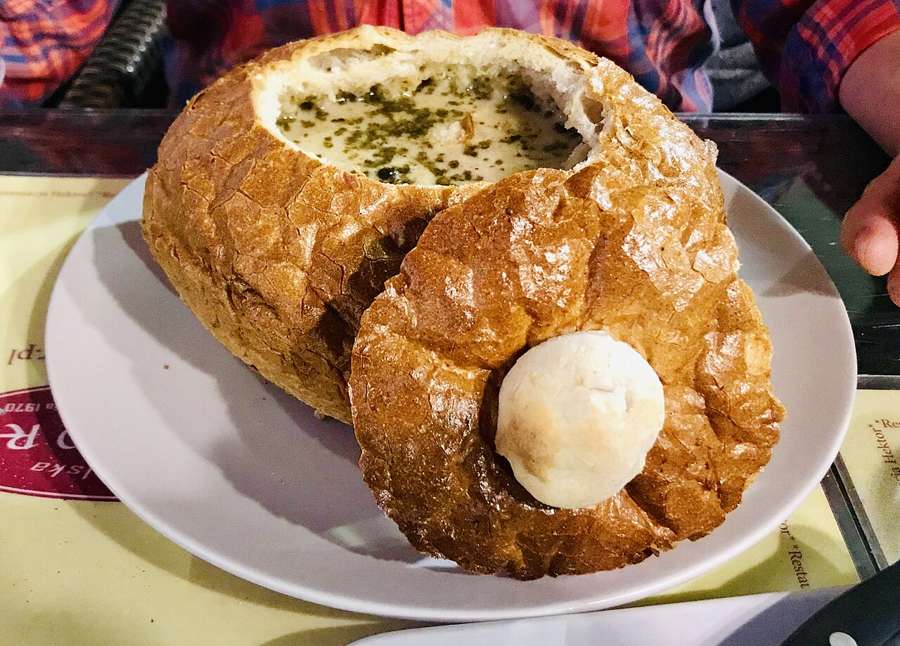
Zurek. The soup foreigners remember. Its base is zakwas, fermented rye flour, which gives a gentle, yoghurt-like sourness no other cuisine quite matches. It arrives thick, with white sausage, bacon and a hard-boiled egg, and in many restaurants it comes inside a hollowed-out loaf of bread - you eat the bowl as you finish. It is the Easter soup, but you will find it year-round. Silesia claims its own celebrated version, and the Wprost report singles out a dedicated zurek restaurant, Zurownia in Katowice, as a place worth the trip.
Barszcz czerwony. The clear, deep-red beetroot soup, sour from beetroot kwas and served either plain or with uszka - tiny mushroom-filled dumplings - or with krokiety, stuffed pancakes. At Christmas Eve it is mandatory; the rest of the year it is the prettiest thing on the menu and the top-rated Polish soup in the September 2026 TasteAtlas cut.
Zupa pomidorowa. Polish tomato soup is not what an Italian expects: it is a mild, creamy bowl made from fresh tomatoes or concentrate on meat or vegetable stock, served with rice or noodles. It is the taste of Polish childhood and the most divisive everyday soup - people argue fiercely over rice versus noodles.
Zupa grzybowa and borowikowa. Poland's mushroom obsession in liquid form. Forest mushrooms - porcini above all - go into a broth so flavoursome it needs no meat stock at all, usually finished with cream and noodles. The porcini version, zupa borowikowa, took second place in the September 2026 TasteAtlas ranking.
The winter warmers
Krupnik. A thick barley soup on bone stock with carrots, potatoes and often smoked meat. It is filling enough to replace a main course - Akademia Smaku makes exactly that point - and it is the standard mountain-hut soup after a winter walk.
Kapusniak. Sauerkraut soup with pork and vegetables, rich and sour, better on the second day. Do not confuse it with its highland cousin.
Kwasnica. The Tatra version: sauerkraut soup from the mountains around Zakopane and famously associated with Zywiec, made with smoked meat and, purists insist, no vegetables at all. It took sixth place in the TasteAtlas ranking and it is the bowl to order in a mountain shelter after skiing.
Grochowka. Pea soup, often with smoked sausage - historically the army soup, thick enough to stand a spoon in. It appears at outdoor events, military picnics and winter markets, sometimes served from field kitchens.
The sour and the brave
Ogorkowa. Pickle soup - yes, soup made from brine-fermented cucumbers, grated into a stock with potatoes and root vegetables. It sounds like a dare and tastes like comfort: gently sour, creamy, deeply Polish. Recipes differ by region - some cooks add the pickle brine, some make it on rosol stock - and it rounds out the top ten in the TasteAtlas ranking. Locals also swear by it as a hangover cure.
Flaki. Beef tripe soup with vegetables, bay leaf, allspice and marjoram, once a fixture at weddings and First Communion parties. It divides the nation - people either adore it or cannot be in the room with it - but it is one of the oldest bowls in the cuisine and the Warsaw style has its own proud history. Try it once, with an open mind and good bread.
Zalewajka. A humble field-workers' soup from the Radomsko area: potatoes, garlic, white sausage and bacon brought together with sour zurek starter. It placed eighth in the September 2026 ranking at 4.1 - proof that the humblest bowls travel furthest.
Czarnina. The connoisseur's rarity from Wielkopolska: a sweet-sour soup made with duck or goose blood, dried fruit and vinegar. It almost vanished and survives in old-cuisine restaurants and regional festivals. You will not stumble into it by accident - seek it out if you want the full map of Polish soup.
The seasonal bowls
Polish soup follows the calendar as strictly as the church year. Spring brings szczawiowa, a bright green sorrel soup with cream and egg, and botwinka, made from young beets and their leaves. Summer means chlodnik litewski, the cold, shocking-pink soup of beetroot, kefir, cucumber, radish and dill that arrived from Lithuanian kitchens and now owns the hot months. Autumn belongs to mushroom soups of every kind. Winter is the season of the heavy sour pots: kapusniak, kwasnica, zurek. If a soup tastes different from your last visit, check the season before blaming the cook.
Cooking them yourself is easier than it looks, because Polish shops sell the hard part. Bottled zakwas - the fermented rye starter - sits on supermarket shelves next to the vinegars, turning zurek into a thirty-minute job, and you will find beetroot kwas for barszcz, jars of sorrel for szczawiowa and pickled cucumbers by the kilo for ogorkowa. Powdered and tinned versions of every classic exist too, and while no Pole will praise them aloud, plenty of student kitchens run on them. If you want to cook from scratch, CookINPolish publishes tested English-language recipes for all ten of its traditional soup picks (07.02.2020).
The regional map
Every region claims a soup as its flag, as Akademia Smaku's regional survey lays out. Silesia owns zurek with cream. Podlasie in the northeast is chlodnik country, often made with young beet leaves. Wielkopolska keeps czarnina alive. Kashubia, by the Baltic, cooks fish soups the rest of Poland barely knows. The Tatra foothills have kwasnica, and Radomsko has zalewajka. Travelling in Poland, ordering the local soup is the cheapest geography lesson there is.
How to eat soup like a local
Start at a bar mleczny. The milk bars - subsidised canteens covered in our milk bar guide - serve rosol, pomidorowa, krupnik and ogorkowa daily for roughly 10-20 zl a bowl, ladled out at cafeteria speed. It is the cheapest and most authentic way to taste your way through the repertoire, and the queues of pensioners and students are the quality certificate.
A few practical words help. Zupa dnia is the soup of the day, usually the cheapest item on any restaurant menu. Na wynos means takeaway, and many milk bars will fill a container. If you want the full show - zurek in bread, flaki done properly, barszcz with krokiety - go to a traditional restaurant and expect to pay 20-40 zl. And one etiquette note that surprises foreigners: bread on the side is normal, butter is not automatic, and leaving a clean bowl is a compliment, not a slight.
One last thing. When a Polish friend invites you for dinner and the first plate is soup, eat it even if you are saving room. The main course will wait. The soup is how the meal says welcome.
Frequently asked questions
What is the most popular soup in Poland?
Rosol, the clear Sunday broth, is the everyday national favourite and topped one TasteAtlas cut with a score of 4.4 (Chillizet, 28.10.2025). A later cut put clear red barszcz first at 4.3, with zurek third (Wprost, 27.09.2026) - the ranking shifts as votes accumulate.
What is zurek and why does it come in bread?
Zurek is a soup built on fermented rye flour (zakwas), which gives it a gentle sourness, served with white sausage, bacon and a hard-boiled egg. Restaurants often serve it in a hollowed-out bread loaf - the bowl is part of the dish and you eat it as you go.
Are Polish soups vegetarian-friendly?
Some are. Barszcz czerwony is traditionally made on a vegetable base, and seasonal soups like chlodnik, botwinka and szczawiowa are meat-free by design. But many broths start from meat bones, so ask before assuming - and note that pomidorowa is often made on Sunday's rosol stock.
Where can I try traditional Polish soups cheaply?
Any bar mleczny (milk bar). These subsidised canteens serve rosol, pomidorowa, krupnik and ogorkowa daily for roughly 10-20 zl a bowl. Restaurants charge more but offer the full show, like zurek in a bread bowl.
What is flaki and should I try it?
Flaki is a beef tripe soup with vegetables and spices - bay leaf and allspice carry it - once a standard wedding starter. Poles either love it or avoid it entirely, but it is one of the most distinctive bowls in the cuisine and worth one honest try.
Which soup should I order first as a newcomer?
Start with rosol if you want comfort, zurek if you want something you cannot get at home, and ogorkowa if you are curious about the famous Polish pickle flavour. All three appear on almost every traditional menu in the country. <em>Cover: Zurek served in a bread bowl - photo by Chris Olszewski, CC BY-SA 4.0, via Wikimedia Commons. Body: Rosol z makaronem in Sanok - photo by Silar, CC BY-SA 3.0, via Wikimedia Commons.</em>