Trains in Poland for expats: PKP Intercity, Polregio, tickets guide
The essentials: Poland has one long-distance operator - PKP Intercity, with EIP Pendolino, EIC, IC and TLK trains, seats assigned at booking - plus regional networks like Polregio. Buy via intercity.pl or Koleo; early booking saves a third. Regional tickets are unreserved, and paper ones must be validated before boarding.
Polish railways confuse expats for one structural reason: there is not one network, there are many, stacked in layers. The fast train between Warsaw and Krakow belongs to one company, the stopping train to a small town belongs to another, and the commuter line to the airport may belong to a third - each with its own tickets, apps and rules. Once you learn the split, the system is cheap, dense and genuinely pleasant - and for the car-free expat it is the difference between knowing three cities and knowing thirty of them. Here is the whole picture: who runs what, where to buy, how to pay less, and the small rules that catch foreigners out.
The long-distance network: PKP Intercity
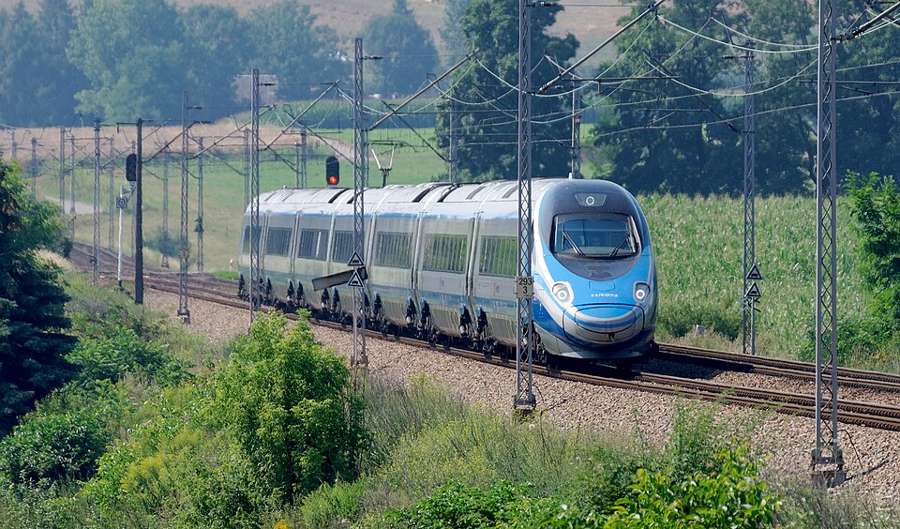
All fast intercity trains are run by one state company, PKP Intercity, in four categories that appear in every timetable. EIP - Express InterCity Premium - is the flagship: the blue Pendolino tilting trains that cover Warsaw to Krakow in about two and a half hours. EIC, Express InterCity, sits a tier below and also handles the international EuroCity services on domestic legs. First class on the EIP and EIC trains is a genuine product: wider seats, quiet carriages on many services, and on the Pendolino a complimentary drink and light meal served at your seat - one of the better-value first-class upgrades in Europe when Promo pricing cooperates. IC and TLK - Twoje Linie Kolejowe, "your railway lines" - are the classic long-distance trains, slower and cheaper, reaching towns the expresses skip.
One rule makes Poland friendlier than Germany or France: every PKP Intercity ticket comes with a seat assigned at booking. There is no separate reservation step, no guessing which carriage is unreserved, and at booking you can pick window or aisle, open-plan or compartment, and a table seat if one is free. Your carriage and seat number are printed on the ticket - find the carriage number on the platform display boards before the train arrives, because Polish platforms are long and boarding time can be short.
Buying tickets and paying less
The official channel is the PKP Intercity site and app - intercity.pl and ebilet.intercity.pl - both with English versions, selling tickets up to 30 days ahead for domestic trains and 60 days for international ones. Tickets live in the app or as a PDF; there is nothing to print and nothing to validate on PKP Intercity services. For anything mixing carriers, use Koleo, the independent one-stop shop that compares PKP Intercity against regional operators on the same screen and sells both in one checkout.
The single biggest money rule: book early. PKP Intercity prices its Promo tickets on a sliding scale, so fares rise as the train fills. In practice, second class is often around a third cheaper bought in advance, and first class on EIP and EIC can drop by half - booking three weeks ahead on the Warsaw-Krakow Pendolino has been shown to save over 120 zl on a first-class seat. There is nothing to select: the cheapest available price is offered automatically on every search. And if plans change, tickets for journeys within Poland can be refunded in full online or at the station up to 15 minutes before departure.
For discounts - student, senior, Karta Polaka, large families - our PKP Intercity discounts guide has the current rules. If your train runs late, compensation is real and worth claiming; our train delay compensation guide walks through it.
The regional networks
Below PKP Intercity sits the regional layer, and this is where the multi-company confusion lives. The biggest player is Polregio, the state regional operator running REGIO, interREGIO and superREGIO trains across the country, with its own ticket site and app at bilety.polregio.pl. Around the big cities, regional government companies run the commuter lines: Koleje Mazowieckie around Warsaw, SKM in the Tri-City, Koleje Dolnoslaskie around Wroclaw, Lodzka Kolej Aglomeracyjna around Lodz, Koleje Wielkopolskie around Poznan. A few private operators run niche and international routes, such as Leo Express on the southern corridor toward the Czech Republic.
Regional trains differ in the ways that matter. There are no assigned seats - sit anywhere. The faster interREGIO and superREGIO services cover long hops between regions for a fraction of express prices, which is why students and budget travelers string them together across the country: slower, but dramatically cheaper than the same journey on an EIC. Tickets are point-to-point and cheap, and paper tickets from a machine or kiosk must be validated before or right after boarding in the small stamping machines, or they are not valid. Many regional lines accept the big cities' integrated tickets inside city limits, and some carriers sell through their own apps only, which is exactly why Koleo exists. For a taste of what regional rail unlocks, our Warsaw day trips by train guide shows the Koleje Mazowieckie network at its best.
Night trains and special cases
Poland keeps a real sleeper network - overnight trains linking the big cities with each other and with Prague, Vienna, Budapest and beyond. For an expat, the overnight train doubles as a hotel night: board after dinner, wake up in another country, and pay less than a flight plus a hotel for the same morning arrival. Sleeper and couchette places always require a reservation, priced by comfort: from around 59 zl for a six-berth couchette to 299 zl for a private single compartment. They sell out before ordinary seats do, so book these first.
If you travel with an Interrail or Eurail pass, Poland is not hop-on territory: you need a seat reservation for every PKP Intercity train, 43 zl on domestic EIP Pendolinos and a few euros on international trains, bookable through the PKP site or interrail.eu. Regional Polregio trains need no reservation - the pass works there as it should.
Bikes travel well: PKP Intercity sells a flat-rate bike ticket at 9.10 zl on all its trains, and most regional trains carry bikes free or for a small fee in marked carriages.
At the station on the day
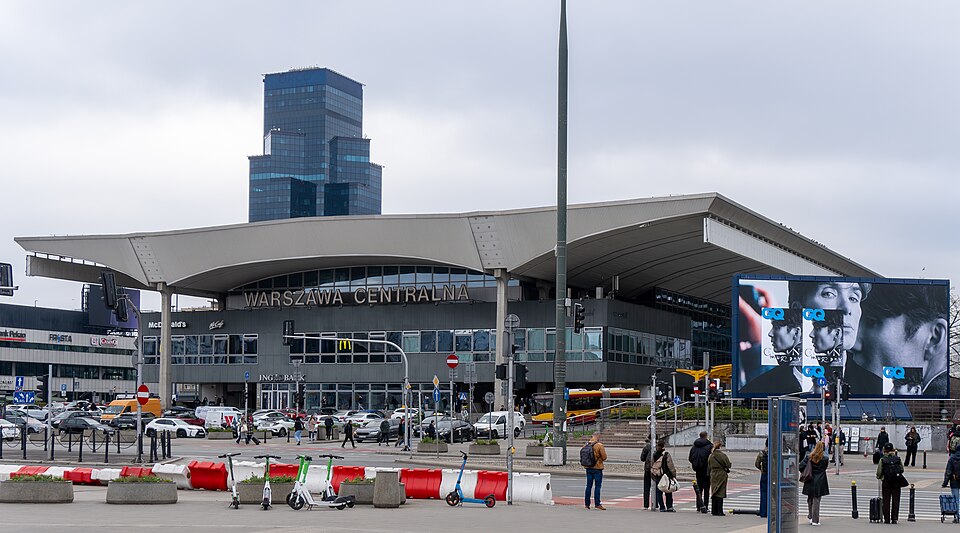
Big-city stations - Warszawa Centralna, Krakow Glowny, Gdansk Glowny, Wroclaw Glowny - are modern, signed in English and full of food. The main departure board lists train number, destination, departure time and platform; your train may appear under a destination beyond yours, so match the train number on your ticket rather than hunting for your town. Arrive 20 minutes early: platforms are announced roughly 10-15 minutes before departure, the underpasses are long, and Polish trains close doors punctually. Ticket machines at stations take cards and switch to English; staffed ticket windows at main stations handle the complicated cases. Conductors check tickets on every long-distance train - have your phone or printout ready, and remember that buying from the conductor on board carries a surcharge except at stations without an open ticket point. In winter, add buffer time: snow and frost slow the network, and a tight connection in January is a missed connection.
Frequently asked questions
What is the difference between EIP, EIC, IC and TLK trains?
All are PKP Intercity long-distance categories. EIP is the fastest, the Pendolino; EIC is a tier below and includes international EuroCity services; IC and TLK are the slower, cheaper long-distance trains reaching smaller cities. Every ticket on all four includes an assigned seat.
Where should I buy train tickets in Poland?
For long-distance trains, the PKP Intercity site or app. For regional trains, the operator's own site or app. For anything mixing carriers, use Koleo, which compares and sells both in one place.
Do I need a seat reservation on Polish trains?
Not with a normal, full-price PKP Intercity ticket - the seat is assigned at booking. Interrail and Eurail pass holders do need reservations: 43 zl on domestic Pendolinos, a few euros on international trains. Regional trains have no reservations at all.
How far ahead should I book?
As early as possible - domestic tickets open 30 days ahead, international 60 days. Promo prices rise as trains fill; booking weeks ahead commonly saves around a third in second class and up to half in first class on EIP and EIC.
Can I take a bike on a Polish train?
Yes, almost everywhere. PKP Intercity charges a flat 9.10 zl bike ticket on all its trains. Most regional trains carry bikes in marked carriages, free or for a small fee.
What if my train is delayed?
Polish and EU passenger rules entitle you to compensation for significant delays - a percentage of the ticket price refunded through a claim to the carrier. The process is straightforward; see our delay compensation guide for the exact steps. <em>Cover: A PKP Intercity Pendolino ED250 near Slomniki - photo by Jakub Halun, CC BY-SA 4.0, via Wikimedia Commons. Body: Warszawa Centralna station in 2026 - photo by Igor123121, CC BY 4.0, via Wikimedia Commons.</em>