Reformer Pilates in Poland: Plan Your First Studio Class
The essentials: Confirm reformer rather than mat Pilates, the studio’s introduction prerequisite and the actual teacher language. Read its group format, clothing rules and booking terms; none is a universal national rule.
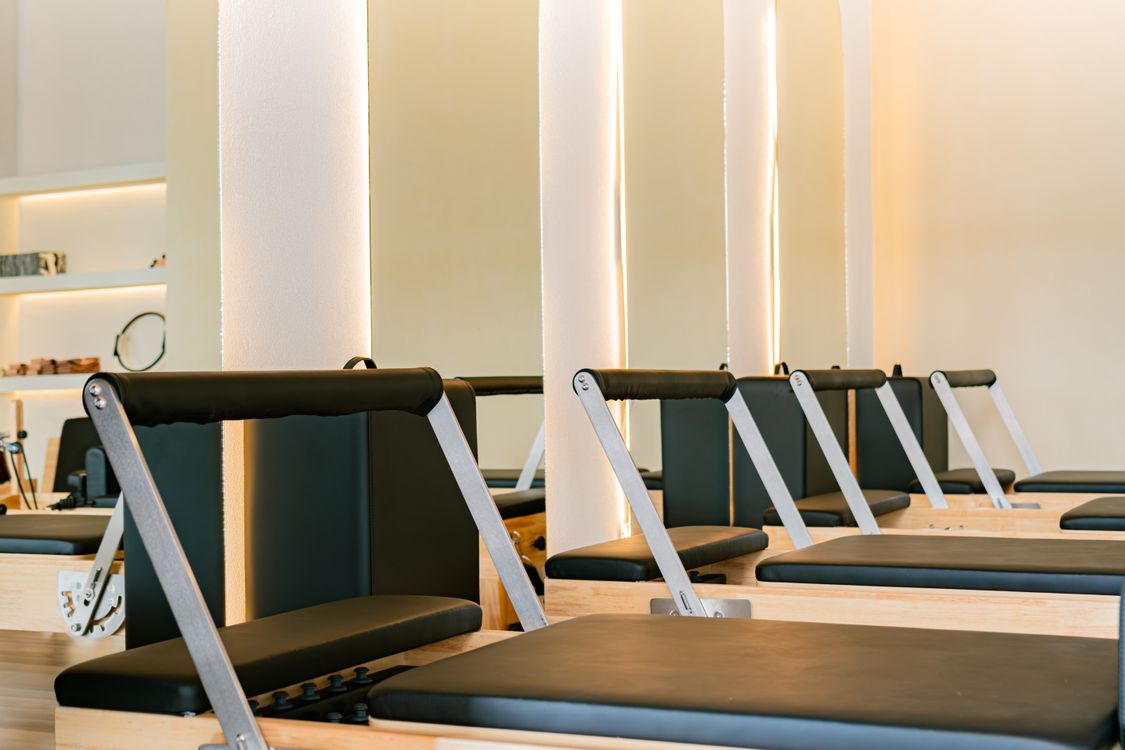
Cover: Paulina Vargas, source photograph, Pexels License. Image unchanged. Reformer machines arranged in a studio. General apparatus context, not a Polish studio or machine-setting instruction.
A reformer class is not simply a mat class in a room with larger equipment. The apparatus, the introduction to its parts and the studio's prerequisites affect what you should book first. In Poland, different operators publish different entry routes, group sizes and clothing rules, so a familiar class name is only the beginning of the decision.
This guide helps you choose and arrange a first reformer session. It does not teach machine settings or exercises, assess medical suitability or promise rehabilitation. Named studios illustrate their own arrangements, not a national standard or a ranking. Photographs show general reformer-studio context, not the Polish operators discussed.
Confirm that the class uses a reformer
Read the full session description. Pilates on a mat and Pilates on a reformer are different offerings, even when an operator teaches both. A photograph of equipment elsewhere on the website does not establish what your selected class uses.
BeShaped Studio's introductory page specifically describes Reformer Pilates Level 1 and the equipment introduction it provides. That is more informative than a broad timetable label saying only Pilates. Find the corresponding detail for the session you want.
Keep the exact class name when asking a question or booking. A pass for one type of session should not be assumed to cover another. This article does not verify any particular pass or promise that a general gym membership includes reformer use.
Look for the studio's first-timer route
BeShaped describes its Level 1 introduction as a required first step at that studio. It explains that the session introduces the equipment and the teaching approach before regular classes. That prerequisite belongs to the operator, not to every reformer school in Poland.
Another studio can use an individual introduction, a beginner group or another assessment of experience. Read what it asks rather than booking a regular session and hoping the teacher can add the missing introduction at the start.
If you have mat-Pilates experience but have not used a reformer, say exactly that. Experience with one format does not answer the apparatus question. Likewise, previous reformer classes elsewhere do not automatically satisfy a studio's own introduction requirement.
Understand what an equipment introduction should clarify
BeShaped's page identifies springs, the platform, footbar and straps among the elements introduced. These names explain why a first session can include orientation rather than only a continuous sequence of movements.
Ask how the instructor will introduce the actual machine and how you should request help. Do not use a written guide, an online clip or a stock photograph to choose a spring setting or adjust a machine before you have been shown the relevant procedure.
This article deliberately gives no configuration instructions. Equipment can differ, and the session's task is not safely reconstructed from a few generic terms. The useful preparation is to book the introduction you need and arrive ready to listen.
Choose between individual and group instruction
An individual session and a group session offer different teaching arrangements. Read how the operator describes each and which one it expects a newcomer to take. Do not assume that a small group is identical to one-to-one attention.
Pani od Pilatesu's FAQ gives maximum reformer-group sizes of seven in Warsaw and five in Grodzisk Mazowiecki. BeShaped's introductory page describes a different maximum group size. These are operator examples, not a legal limit or a guarantee of how full your chosen class will be.
If the amount of personal explanation matters, ask how the first session is organised. A lower headcount can be useful information, but it does not establish the teacher's method or make a medical promise. Select the arrangement you understand rather than treating the smallest advertised number as the whole answer.
Confirm the instruction language for the actual class
Ask whether the session you want is taught in English, Polish or another arrangement. A booking platform available in English does not prove that the equipment explanation and spoken cues will be in English.
Be specific about needing to understand the machine introduction and questions during the session. This is more useful than asking only whether the studio is foreigner-friendly. The relevant confirmation is tied to the instructor and class you will attend.
If the instructor changes, recheck any language arrangement that matters to you. This guide names no studio as guaranteed English-speaking across its whole timetable. Do not rely on copying the next machine as a replacement for understanding instructions.
Read clothing and sock rules instead of assuming them
Studios can differ even on a simple packing question. Pani od Pilatesu advises comfortable clothing and says ordinary short socks can be used if you do not have anti-slip ones. Well Fitness's cited reformer information asks participants to bring anti-slip socks.
Those statements should stay attached to their operators. Do not tell every newcomer that one sock type is always compulsory or always optional. Read the class instructions before buying or borrowing anything.
Check any request about jewellery or loose accessories too. Well Fitness includes that in its preparation advice. The point is to follow the actual studio requirements, not to turn a general clothing paragraph into technical advice about safely operating equipment.
Leave time for a first-visit introduction
Pani od Pilatesu suggests arriving ten minutes early to become familiar with the studio and reformer. Use the time the operator actually asks for, especially if an introduction, registration or conversation is part of the session.
Do not assume a regular participant's arrival pattern is appropriate for your first visit. Finding a locker and finding the right machine are practical steps, while understanding the equipment is part of the lesson arrangement.
If you expect to be late, check the studio's own policy rather than assuming you can join after the apparatus briefing. This article does not promise late admission or that a missed introduction can be supplied without affecting the class.
Separate booking from the entry product
Pani od Pilatesu directs customers from its own timetable or signup route to Fitssey, where they can view the schedule, buy a pass and reserve the class. That is an operator-identified booking relationship, not a reason to trust every unrelated page using a familiar platform name.
Read which product covers the selected class and whether you have completed the reservation. A purchased balance or pass should not be mistaken for a confirmed machine place at a particular time.
This guide does not repeat a broad gym-card tutorial. It also does not assume sports cards are accepted: Pani od Pilatesu's FAQ says it does not accept such cards, while other operators can have different arrangements. Check the actual studio and session rather than carrying a benefit from elsewhere.
Check the exact cancellation route
Pani od Pilatesu's FAQ describes different cancellation cutoffs for group and individual sessions and says cancellations must be made through Fitssey. It explains that a cancelled entry returns to the pass under that process.
The practical lesson is to read both the deadline and the recognised method. A message sent to a teacher is not automatically equivalent to a platform cancellation. Nor should the entry returning to a pass be translated into a cash refund unless the terms actually say that.
Read the current rule attached to your booking before confirming. This article does not impose that studio's cutoff on all reformer classes or promise the consequences of a late cancellation elsewhere. Save the resulting confirmation when you cancel.
Keep health concerns outside marketing promises
Studio descriptions can include broad statements about strength, mobility or comfort. This guide does not repeat them as clinical evidence or decide whether a group class is appropriate for a particular injury, pregnancy or health condition.
If such a concern affects your choice, seek qualified advice and explain the practical requirement to the operator privately. Ask what format it can actually provide, without treating the presence of a machine or a beginner label as a safety certificate.
A small group and a welcoming teacher do not turn a general class into prescribed rehabilitation. If you need a clinical service, establish that separately. Do not buy an ordinary pass because an advertisement sounds like an answer to a medical question.
Ask how progression is decided
An introduction can help the teacher explain what follows, but one completed class should not be treated as automatic approval for every advanced session. Ask how the operator labels levels and recommends the next step.
BeShaped's page describes a conversation after the introductory class about continuing. That is a useful model of a practical discussion, not a promise that every person progresses at the same rate or needs a fixed number of visits.
Consider whether you understood the cues, could ask questions and liked the teaching arrangement. These observations can guide another booking without pretending they measure a health result. There is no need to commit to a long programme before those basic questions are answered.
Make the first purchase match the first lesson
Before paying, confirm reformer versus mat, any introduction prerequisite, the instructor-language arrangement, the individual or group format and what equipment explanation is included. Then check the entry product, clothing requirements and cancellation route.
This is a more useful checklist than trying to memorise machine settings in advance. A first class should be booked with enough clarity that the introduction can happen as intended, not improvised from incomplete assumptions at the door.
The outcome is an informed studio visit, not a promise of fitness or recovery. Use the actual operator's instructions, ask about unresolved apparatus or communication needs and let the teacher introduce the equipment in person. A promotional photograph can show the setting, but it cannot supply that first lesson for you.
Frequently asked questions
Can I join any reformer class because I have done mat Pilates?
Not automatically. Explain your experience and follow the selected studio’s actual introduction and level requirements.
Are anti-slip socks compulsory everywhere?
The cited operators give different sock advice. Check your actual class rather than treating one studio’s rule as national.