Return Tax Relief in Poland: 85,528 zł Exempt Income for 4 Years
Short answer: If you moved your tax residence to Poland after 31 Dec 2021 and meet the conditions, ulga na powrót exempts up to 85,528 zł of income a year for four consecutive tax years.

Poland has a tax exemption for people who move their tax residence to Poland, called ulga na powrót, or the return relief. Despite the name, it is not limited to Poles coming home. This guide follows the Polish tax administration page on the relief (podatki.gov.pl, published 15 December 2025 and updated 6 October 2026), as read on 19 October 2026.
Who can use it
The relief applies if you moved your place of residence to Poland after 31 December 2021. If you moved earlier, you cannot use it. All conditions must be met together. According to the page, they are:
You became a Polish tax resident as a result of the move. You had no place of residence in Poland during the three calendar years before the year of the move, nor from the start of the move year until the day before the move. You have an eligible tie, listed on the page as: Polish citizenship, a Karta Polaka, or citizenship of another EU or EEA state or Switzerland; or residence in an EU or EEA state, Switzerland, Australia, Chile, Israel, Japan, Canada, Mexico, New Zealand, South Korea, the United Kingdom or the USA without a break for at least three years; or residence in Poland for at least 5 calendar years before that three-year period. You hold a residence certificate or other proof of where you lived for tax purposes. And you have not already used the relief, in whole or in part.
What it does
The relief exempts from tax certain income, up to a limit set in the personal income tax act. You can use it for four consecutive tax years, counted from the start of the year in which you moved to Poland, or from the following year.
Which income is exempt
The page lists income from an employment relationship, from a zlecenie contract between an individual and a business, from a property owner or manager for services used only for that property, or from a business in inheritance. It also lists the maternity allowance and business activity taxed on the tax scale, at the 19% flat rate, at the 5% IP Box rate, or by registered-revenue lump sum. The relief does not cover income under management contracts, managerial contracts or similar agreements.
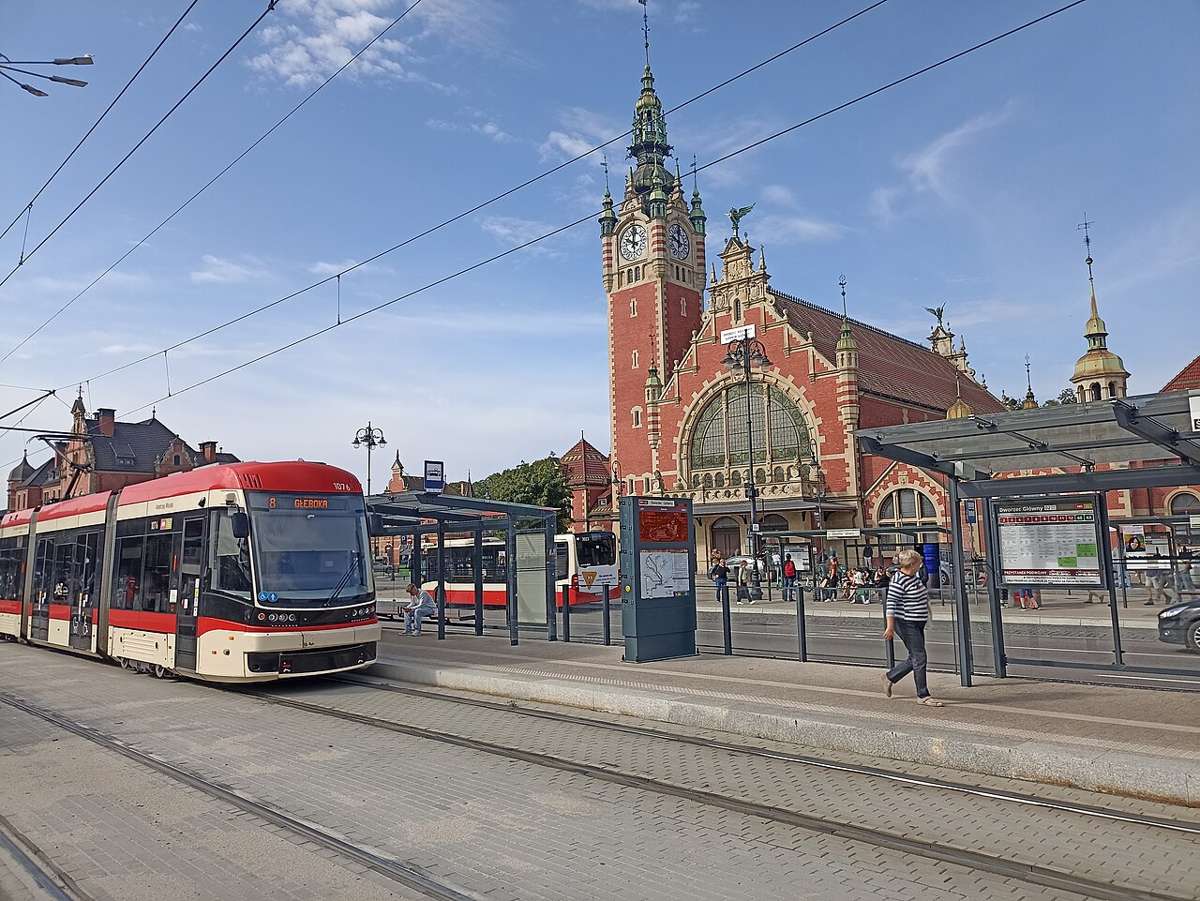
* Photos: night view of Warsaw city centre, CC0, and Gdańsk Główny railway station with tram, CC0, both via Wikimedia Commons.
The limit
Exempt income is capped at 85,528 zł per tax year. The tax office stresses that this is one combined limit for four reliefs: the return relief, the working seniors relief, the 4+ family relief and the relief for the young. If you use more than one in the same year, the total exempt income cannot exceed 85,528 zł.
Proving your right to it
You must show the right to the exemption when the tax office asks. Use a foreign certificate of residence, or other documents that show where you lived abroad, for example an employment contract, a foreign tax return or a rental agreement for a flat abroad. If a document is in a foreign language, the office may ask for a Polish translation.
How the exemption is applied
You can apply it during the year. If an employer pays you, the employer can apply the exemption on the basis of your declaration that you meet the conditions. The declaration must contain the clause "I am aware of the criminal liability for submitting a false declaration" and state the first and last year of use. The employer applies it from the month after you submit it at the latest. You can also submit the declaration on form PIT-2, part G, ticking the return-relief exemption and giving the years.
If you run a business or pay tax yourself during the year, you can leave the exempt income out when calculating your advance payments, starting with income from the start of the year.
If the relief was not applied during the year, you can still use it in your annual return. Exempt income goes in part D of PIT-37, PIT-36 or PIT-36L, or part C of PIT-28.
Do you have to file a return?
If you run a business, yes, even without taxable revenue. If you do not, having only exempt income does not itself create a duty to file. A duty appears if you have other taxable income, want an overpayment refunded, want the extra child-relief refund up to the social and health contributions paid on the exempt income, or must add back earlier deductions you can no longer claim.
What it means for expats
The relief is aimed at people arriving from the countries listed above, so check your own country and years of residence against the list before relying on it. Ask your employer about the declaration when you start, because applying it from the first payslip avoids waiting for a refund. Keep proof of your previous residence, since the tax office can ask for it later.
The page refers to the tax office's explanatory notes of 29 April 2021 on tax residence for how residence is determined. For borderline cases, ask a tax adviser.
Frequently asked questions
How much income does the return relief exempt?
Up to 85,528 zł per tax year, according to the tax office. The limit is shared with the working seniors, 4+ family and young people reliefs.
How long can I use it?
For four consecutive tax years, counted from the start of the year you moved to Poland or from the next year.
Does my employer apply it automatically?
No. The employer can apply it only on the basis of your written declaration, or your PIT-2 form with the relevant box ticked.
Do I need a residence certificate?
You need proof of where you lived for tax purposes, such as a foreign certificate of residence. The page also accepts documents such as an employment contract, a foreign tax return or a rental agreement abroad.