St Martin's croissant (rogal świętomarciński): Poznań, 11 Nov
Short answer: The rogal świętomarciński is a 200-250 g poppy-seed croissant eaten in Poznań on 11 November. Its name has been an EU protected geographical indication since 30 October 2008.
On 11 November, Poles celebrate Independence Day. In Poznań and the surrounding region, the same date is also St Martin's Day, and it has its own food: the rogal świętomarciński, a crescent-shaped pastry filled with white poppy seed. In 2026 the date falls on a Wednesday, a public holiday, so this guide explains what the pastry is, why its name is protected by the European Union, and how to tell a genuine one from an imitation. The facts come from the EU's published product specification, the Polish Agricultural and Food Quality Inspection and the local certification body.
What it is
According to the specification published in the Official Journal of the European Union, the rogal świętomarciński is a croissant coated with icing and sprinkled with chopped nuts. It weighs between 200 and 250 g and fits within a square of about 14 by 14 cm, with a height of about 7 cm at its thickest point. The surface is dark golden to light brown, the dough is cream-coloured and the filling is beige. The baked dough is flaky and elastic, with visible layers, and close to the middle there are rolls of dough interspersed with the poppy-seed filling. According to the specification, the filling is moist and the taste is sweet with a slight almond note.
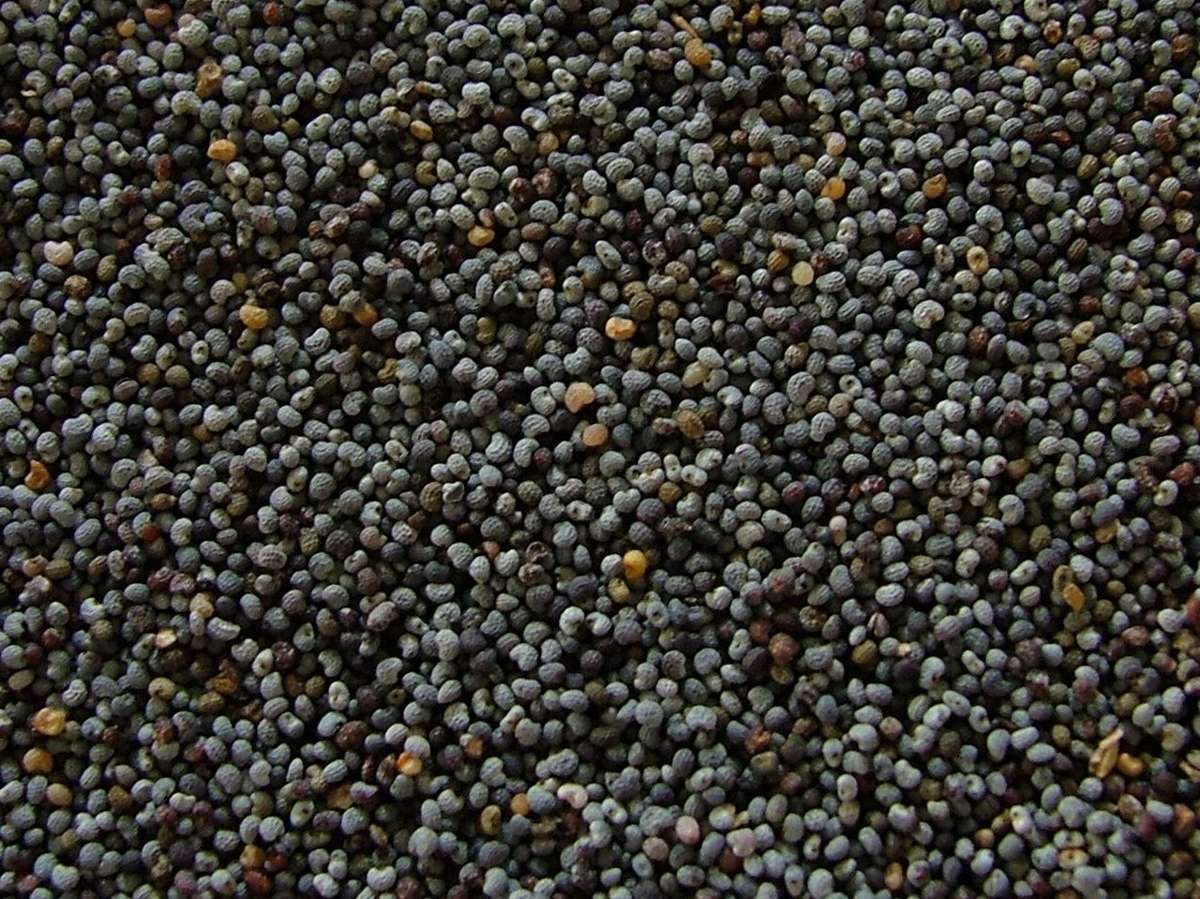
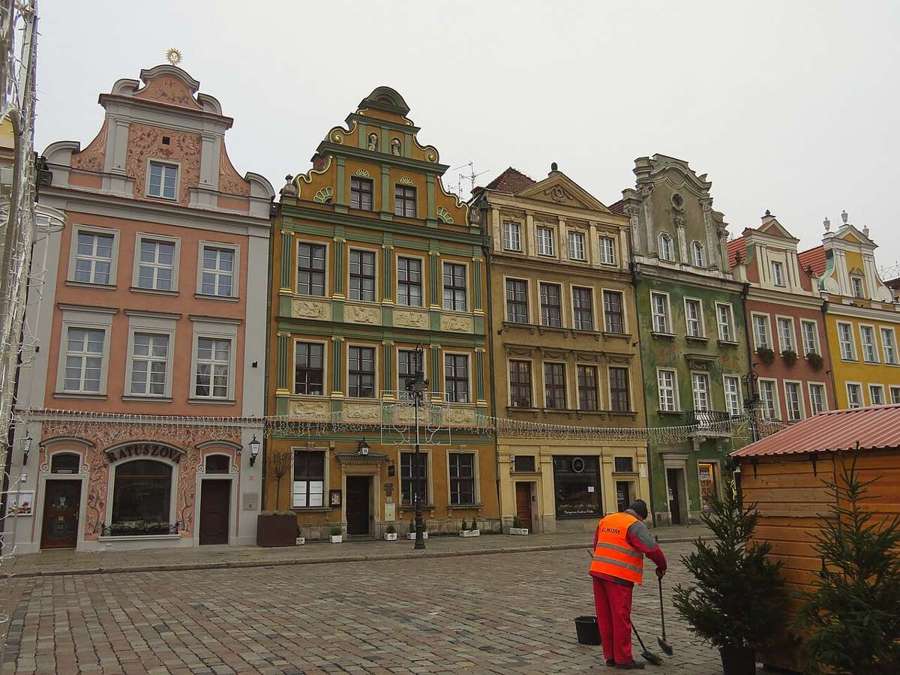
* Photos: Poznań Old Market Square and poppy seeds, Wikimedia Commons, CC0 / public domain.
The ingredients
The specification lists these ingredients:
- Dough: wheat flour, margarine, milk, eggs, sugar, yeast, salt and lemon flavouring.
- Filling: white poppy seeds, sugar, crumbs, egg mass, margarine, raisins, nuts, fruit in syrup or candied fruit (sweet cherries, pears, orange peel) and almond flavouring.
- Decoration: icing and chopped nuts.
The document also says the flour should contain more than 27% of elastic gluten, which makes the dough easier to roll and gives the flaky texture. It states that white poppy seeds are a special and rare ingredient and that the white-poppy-seed filling distinguishes the rogal from other sweet pastries. The application's history section says that bakers began replacing an almond filling with a white-poppy-seed one after the post-war period, when almonds became hard to get.
Why the name is protected
The name was entered in the EU register of protected designations of origin and geographical indications by Commission Regulation (EC) No 1070/2008 of 30 October 2008, as a protected geographical indication (PGI, in Polish ChOG). The Polish inspection (IJHARS), which supervises the certification of PGI products in Poland, describes it as a product whose name is protected by the EU register.
What this means in practice, according to the specification, is that these steps must take place in the defined area: preparing the yeast dough, the croissant dough and the poppy-seed filling, filling and shaping into a crescent, baking and decorating. The area is the city of Poznań, the Poznań district and a list of other districts of the Wielkopolska region, 26 districts in total according to IJHARS. A bakery outside it cannot sell its pastry under this name.
How to spot a genuine one
- Packaging. The specification says the rogal may be sold without packaging. If it is packaged, the label must carry the PGI symbol and the words "Protected geographical indication".
- Local certificate. According to the Poznań certification website, a bakery that wants to call its pastry "świętomarciński" must obtain a numbered commercial quality certificate, and a chapter of Poznań's traditional rogal oversees the process. Ask a bakery to show it.
- Origin. A rogal made outside the designated area is not entitled to the name.
The legend and the day
IJHARS recounts a local legend: during a sermon in the parish of St Martin, which called on believers to help the poor as the saint did, a Poznań confectioner named Józef Melzer handed out trays of his pastries to the needy, and other bakers followed in the following years. The inspection adds that other legends exist, among them one about a horseshoe lost by St Martin's horse, and says that it is impossible to say which is true. It also notes that Poznań pastry shops are busy on 11 November.
Practical notes for expats
- 11 November 2026 is a Wednesday and a public holiday, so many shops are closed. Our guide to public holidays and shopping Sundays explains the trading rules. Check the opening hours of the bakery you plan to visit.
- The pastry is made with milk, eggs, wheat, nuts and almond flavouring, so people with allergies should ask the seller about ingredients.
- Rogale are sold around the date in Poznań and in other towns of the region. Look for the PGI label or the local certificate.
Frequently asked questions
What is a rogal świętomarciński?
A flaky croissant of 200-250 g filled with white poppy seed, covered with icing and chopped nuts, traditionally eaten on 11 November, according to the EU specification.
Is the name protected?
Yes. It has been a protected geographical indication in the EU since Commission Regulation (EC) No 1070/2008 of 30 October 2008.
Where can it be made?
In the city of Poznań and in districts of the Wielkopolska region listed in the specification, 26 districts in total according to the Polish inspection IJHARS.
How do I recognise a genuine one?
Packaged rogale must carry the PGI symbol and the words "Protected geographical indication". Certified bakeries in Poznań also hold a numbered quality certificate.