Rydlówka Kraków: Free Tuesdays, Tickets, Hours and Access
The essentials: Rydlówka opens Tuesday-Wednesday and Friday-Saturday 09:00-16:00, Thursday 09:00-18:00; Sunday-Monday closed. Tuesday is free but tickets depend on capacity. Standard/reduced admission is 22/16 PLN. Arrange wheelchair entry in advance.
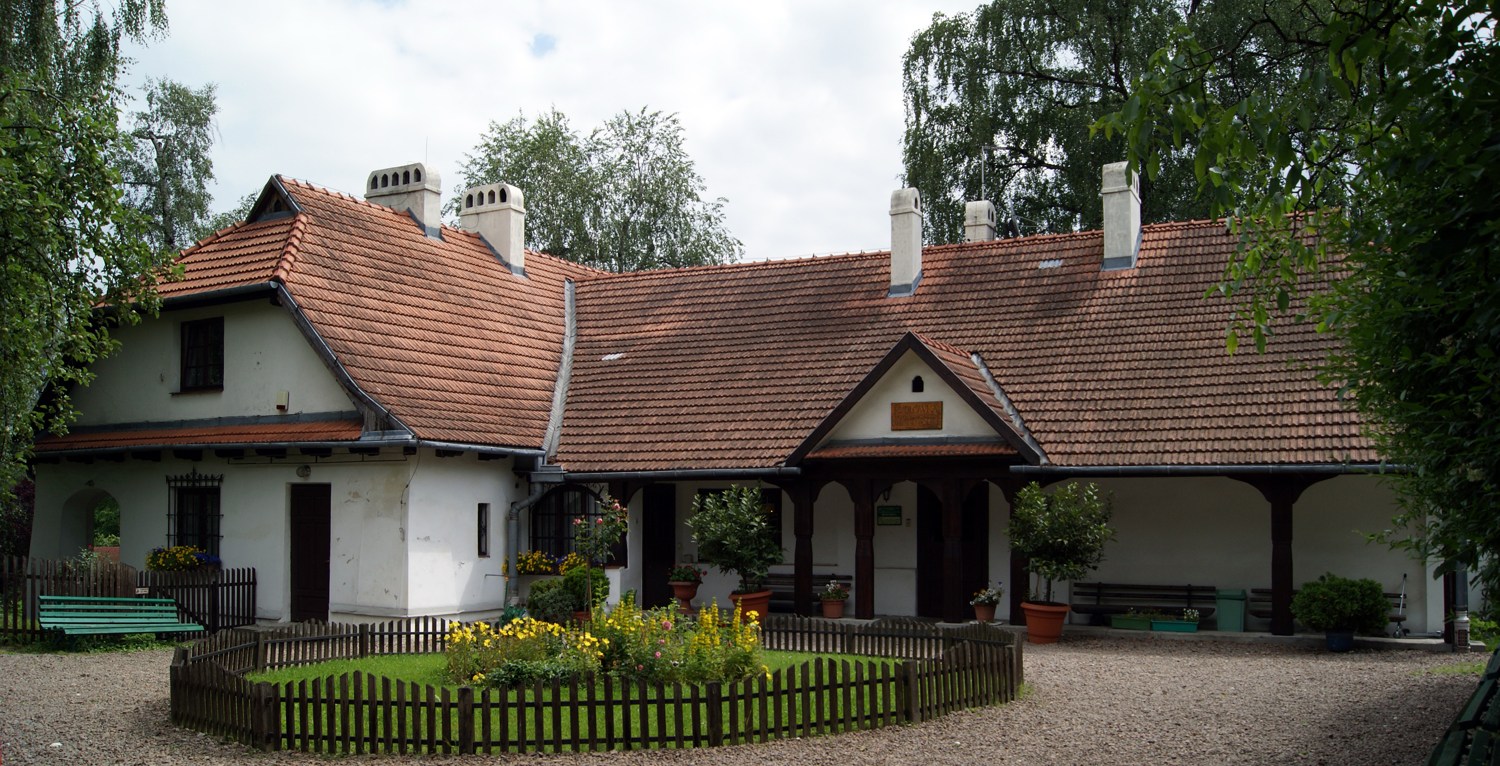
Cover: Rydlówka, photographed on 15 June 2012. Archival summer view, not current conditions. Photo: Zygmunt Put / Wikimedia Commons, CC BY-SA 4.0. Resized and recompressed under the same licence.
Rydlówka is the Kraków museum for understanding how a real wedding in Bronowice became Stanisław Wyspiański's drama Wesele. It is also a practical visit with several details worth getting right: the normal free-entry day is Tuesday, Sunday and Monday are closed, and wheelchair visitors should arrange the alternative approach from ul. Władysława Żeleńskiego 37 before arriving. The main visitor address is ul. Włodzimierza Tetmajera 28, 31-352 Kraków. This is not a city-centre branch at the museum's main headquarters.
Opening hours and last admission
The current Rydlówka branch page gives Tuesday-Wednesday 09:00-16:00, Thursday 09:00-18:00 and Friday-Saturday 09:00-16:00. Sunday and Monday are closed. Thursday is therefore the regular longer day, not a different free-entry day. Check exceptional notices before travelling, particularly if fitting the visit around work or another museum. One branch's opening pattern does not establish the hours of the rest of Muzeum Krakowa.
Individual visitors must enter at least thirty minutes before closing; groups must enter at least sixty minutes before closing. On a normal 16:00 closing day, that means 15:30 individual last entry and 15:00 group last entry. On Thursday, the corresponding cutoffs are 17:30 and 17:00. These are the latest admission limits, not recommended arrival times for anyone who wants a relaxed look at the rooms and paintings.
The branch also flags an early close at 14:00 on 18 December. Applying its normal entry rule would mean 13:30 for individuals and 13:00 for groups that day, but confirm the arrangement when reserving. The published closed dates include 24, 25, 26 and 31 December, plus 1 and 6 January. Use the museum's holiday-hours notice alongside the branch page, rather than assuming the weekly timetable overrides Christmas and New Year exceptions.
Tuesday is free, but a ticket still matters
The museum names Tuesday as the free-admission day. It says tickets are available through the museum's ticket site and, subject to availability, at the desk on the day. Free does not mean unlimited space or an automatic place for a group. If Tuesday is your only opportunity, check the booking options before making a long journey. A ticket or reservation should name Rydlówka, not another branch with a similar free-day policy.
For paid admission, the branch lists 22 PLN standard and 16 PLN reduced. The family ticket costs 44 PLN, but it is defined by particular combinations: two adults with one or two children up to age sixteen, or one adult with two or three children up to age sixteen. Do not treat it as an unrestricted pass for any family size. If a child is near the age boundary or your party has a different composition, confirm the right ticket combination.
The general group rate is 16 PLN per person and the school-group rate is 11 PLN per person. The page defines the latter for groups of primary, secondary and art-school pupils and students. Card discounts are also listed, including Karta Dużej Rodziny and Karta Krakowska rates. Those prices depend on entitlement; they are not automatic discounts for all residents or all people travelling with children. Have the relevant card or proof ready and check the conditions.
Do not confuse current prices with the 2027 notice
A museum tariff notice dated 17 November 2026 concerns prices applying from 1 March 2027 to tickets bought from 20 November 2026. That purchase date does not make every future tariff the price of an ordinary visit today. Check both the visit date and the price shown for the selected ticket. Advance sales and current admission are different cases.
For Rydlówka, that future notice retains the 22 PLN standard, 16 PLN reduced and 44 PLN family figures, but lists a 12 PLN reduced-group rate. The current branch page lists the school-group ticket at 11 PLN. A school organiser should therefore verify the visit date, ticket category and quoted total instead of combining figures from the two lists. This guide's current school-group figure is the one on the branch page, not the future reduced-group rate.
Guiding is separately listed at 280 PLN. Educational workshops also have their own charging terms, including a group minimum shown on the branch page. Admission, guiding and a workshop should not be rolled into one assumed package. Ask what is included, which languages are available, how many people can join and how the booking works. A free Tuesday admission ticket does not itself reserve an English guide or a workshop.
The real house behind the fictional wedding
The museum's history page explains that Włodzimierz Tetmajer built the original house in 1894 on land bought from his father-in-law, Jacenty Mikołajczyk. Bronowice Małe was then a village outside Kraków; it is now within the city. The house attracted artists and writers interested in village life and folk culture. Its later name can obscure that earlier ownership.
The wedding of Lucjan Rydel and Jadwiga Mikołajczykówna took place here in November 1900, when it was still the Tetmajers' house. The museum's chronology places the celebrations across 20-24 November. Rydel bought the house in 1908, and a remodelling completed in 1912 gave it its present form. That sequence prevents a common misunderstanding: the wedding did not take place in a house Rydel had already bought for his family.
The museum opened in 1969, and its history is tied to both the Rydel family and the continued interpretation of Wesele. The building is not simply a stage set. Equally, every feature of the display should not be treated as an untouched survival from the wedding. The exhibition deliberately brings together family evidence, art and the later theatrical imagination. Those layers are part of the point of visiting.
How to read the exhibition
The permanent-exhibition description separates family history from the real and legendary wedding and from the theatre. In the Dance Room, family portraits, keepsakes and furniture establish the household context. The museum identifies Wyspiański's portrait of Lucjan Rydel with Primavera and portraits of Jadwiga among the works presented. Other Young Poland artists connect the domestic setting with the wider artistic life of Kraków.
The room presented as the stage setting is reconstructed from Wyspiański's stage directions for Wesele. That is a useful distinction to carry through the visit: compare the author's written setting with the surviving place, rather than assuming every staged arrangement documents exactly how the house looked during the wedding. The adjoining family material and photographs provide another kind of evidence about the people behind the literary characters.
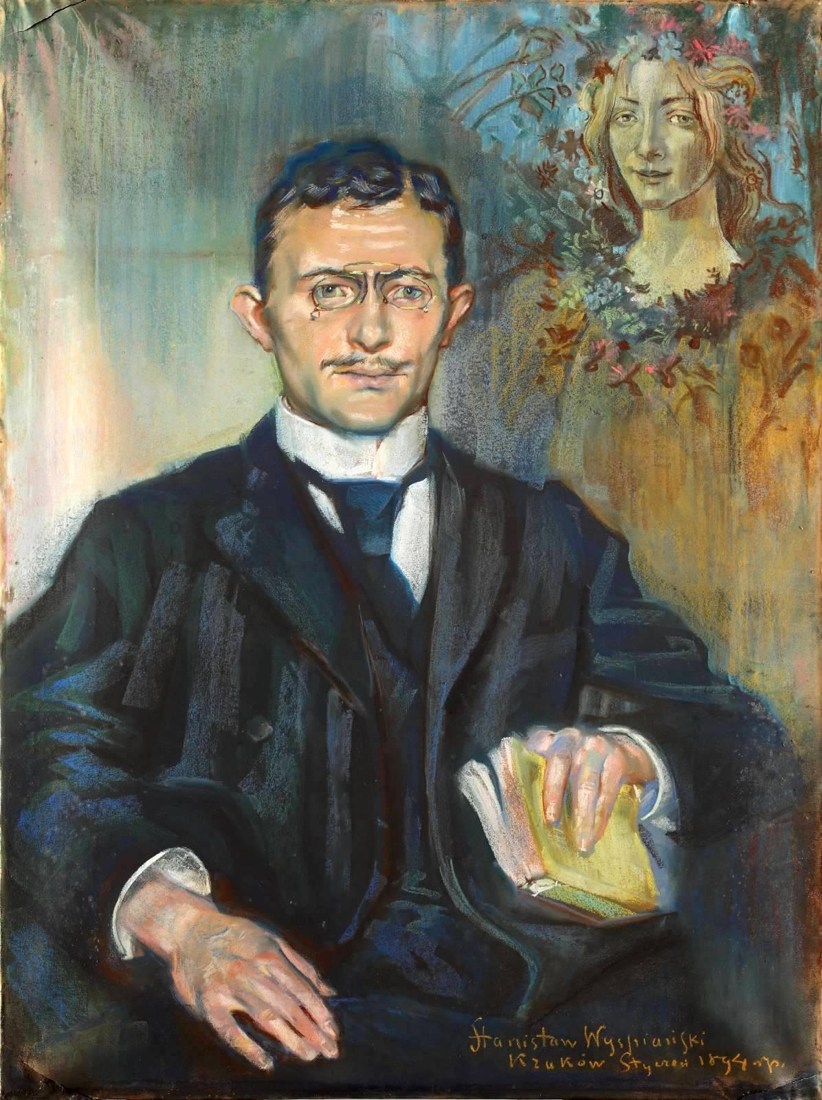
You do not need to arrive with a complete reading of the drama memorised. A practical approach is to keep separate questions in mind: who lived here, what happened at the wedding, and how did the play transform it? Look for an object or portrait that answers each one. That gives a first visit structure without turning a literary museum into a test of Polish-language knowledge. Ask staff about interpretation in your preferred language rather than assuming every label or service is translated.
Wheelchair access requires the right approach
The branch asks wheelchair visitors to contact it in advance so entry can be arranged from ul. Władysława Żeleńskiego 37. The museum's branch-facilities page says the exhibition entrance is from the porch side, warns that the forecourt is gravel and offers help crossing it. It also lists an adapted toilet. These are practical arrangements, not a reason to arrive unannounced at a different gate and assume it will be ready.
When contacting the branch, explain the chair or walking aid you use and ask where to meet staff, which entrance will be opened and whether the entire intended route suits your needs. The published offer of help with gravel does not make the surface smooth. Check the journey from your vehicle or stop to the agreed entrance as well as access inside the building. The main postal address and the alternative access approach serve different purposes.
The newer accessible-exhibition page describes audio description, tactile graphics and sensory aids for exploring the setting and selected works. Ask how to obtain or use them and whether advance arrangements are needed. Their existence does not establish English audio description, unrestricted touching of original objects or every possible form of hearing support. Staff can help match the actual resources to the visitor's requirements.
Getting there and choosing a visit
The branch's directions page suggests trams to Bronowice Małe followed by a walk along Zielony Most, Katowicka and Tetmajera. Check current tram routes and disruptions with the transport operator before leaving; the museum's directions do not establish today's departure times. Allow time for the walk instead of equating arrival at the tram terminus with arrival at the ticket desk.
For a quiet first visit, choose a normal opening day, arrive well before last entry and decide whether you need a guide or access arrangements before buying the ticket. Call 12 265 10 15 for branch questions. Tuesday is the published free option; Thursday offers the longer regular afternoon. Whichever you choose, check the holiday notices and the selected ticket date. The strongest reason to go is the chance to see a real family home, its art and a famous theatrical story in conversation, without confusing one with the other.
Frequently asked questions
Is free Tuesday admission guaranteed without a ticket?
No. The museum offers Tuesday tickets online and remaining places at the desk on the day. Capacity still applies.
Can a wheelchair visitor use the normal street entrance?
The museum asks visitors to arrange the alternative approach from ul. Władysława Żeleńskiego 37 in advance. Contact 12 265 10 15. The forecourt is gravel and staff offer help crossing it.
Do the announced 2027 prices apply to a visit now?
The November 2026 notice concerns visits from 1 March 2027 and tickets bought from 20 November 2026. Check the visit date. The current branch lists the school-group rate at 11 PLN, while the future reduced-group rate is 12 PLN.