Sugar in Poland: Crystal, Powdered and Gelling Products
The essentials: Kryształ is crystalline sugar, drobny means fine and puder is powdered sugar. Cukier żelujący is a formulated gelling sugar. A small Żelfix additive packet is a different item that calls for separate sugar; a matching ratio does not make them interchangeable.
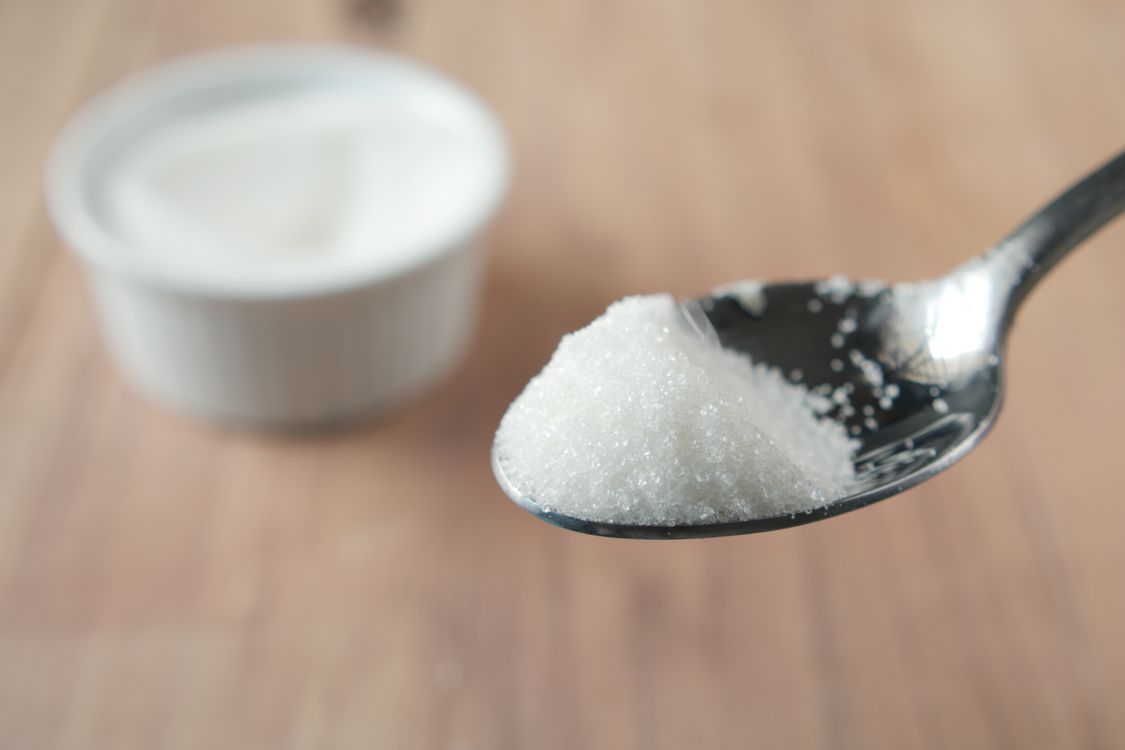
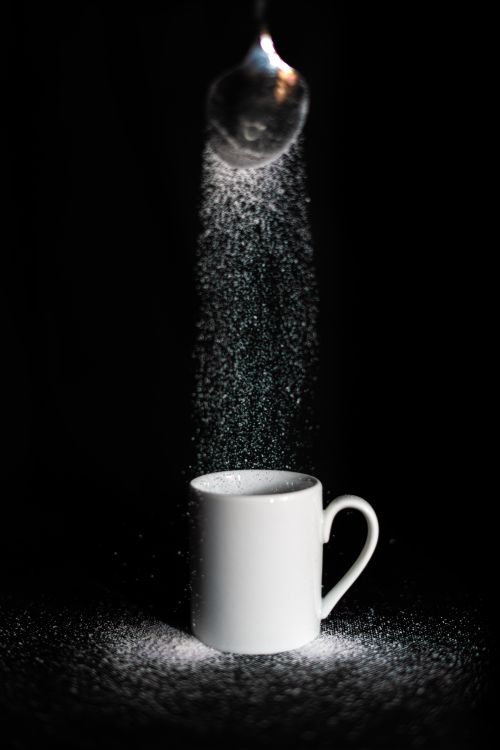
Cover: Towfiqu barbhuiya, source photograph, Pexels License. Image unchanged. White sugar on a spoon. Illustrative context, not a cited brand or gelling formulation.
On a Polish baking shelf, cukier is only the beginning of the product name. Kryształ, drobny, puder and żelujący point to different forms or formulations, and they are not interchangeable simply because the main ingredient is sugar. The distinction becomes especially important when a recipe calls for icing sugar or when a preserving product carries a ratio such as 2:1. That number needs to be read with the identity of the product, not on its own.
The practical approach is to separate ordinary sugar forms from formulated gelling products. First identify what is actually in the packet. Then check the use described by that producer. The examples here explain those purchasing differences without turning them into a universal baking substitution chart or instructions for making shelf-stable preserves.
Kryształ identifies the familiar crystalline form
Polski Cukier's retail range lists white crystalline sugar, cukier biały kryształ, separately from fine white sugar, white cubes and white powdered sugar. That catalogue structure is useful for an English-speaking shopper: these are distinct forms within the same producer's range, not simply several decorative names for the same bag. If your recipe specifies a form, retain that part of the name on your shopping list.
Diamant's Cukier Biały provides a simple ingredient example. The producer lists a 1 kg pack with cukier biały as its ingredient and suggests uses including drinks, cakes, desserts and preserves. That makes it an ordinary white-sugar product, not a gelling mixture. A picture of fruit or a suggestion to use sugar in preserves would not by itself mean pectin or another gelling ingredient has been added.
This is an important distinction at a seasonal display. Ordinary sugar and a gelling sugar can both be sold beside fruit jars, but their formulations have different jobs. Read the complete product name rather than deciding that any sugar found in the preserving section will do the same thing. The word żelujący changes the question from the physical form of sugar to a product formulated for a particular use.
Drobny and puder are not synonyms
Drobny means fine, while puder identifies powdered or icing sugar. Polski Cukier lists biały drobny and biały puder separately. When an English recipe calls for icing sugar, searching only for fine sugar can therefore lead to the wrong form. Conversely, a recipe naming a fine crystalline sugar should not silently become a request for powdered sugar because the translated grocery results put both in the same category.
Diamant's 500 g Cukier Puder page describes the product as very finely ground crystalline sugar and lists its ingredient as white sugar. The producer suggests it for decorating desserts and making icing, as well as for particular creams and baking uses. That is a specific example of powdered sugar without another ingredient listed. It is not evidence that every bag of icing sugar from every brand has an identical formulation.
The page also illustrates why a search-result heading is not enough. Its main product name identifies Cukier Puder 500 g even though an additional heading on the page says Cukier Drobny. Match the main product identity and ingredients rather than relying on one shortened heading. If an online shop's translated title is unclear, inspect the packet description before treating a powdered product as fine granulated sugar.
Choose for the recipe rather than guessing a swap
A familiar English name can hide a recipe's actual requirement. Write "cukier puder" when you need powdered sugar and keep "drobny" when the recipe depends on fine crystals. If you are comparing a Polish product with one used abroad, compare the named form and the ingredients, not just the colour of the sugar. A white appearance does not distinguish a fine crystalline product from a powder in a compressed catalogue photograph.
This guide does not offer a cup-for-cup replacement rule. The purpose is to avoid making a substitution by accident. If your recipe gives a weight and names a form, preserve both instructions. Deciding to use a different form is a change to the recipe, not merely a translation. That is particularly worth remembering when a grocery substitution arrives under the broad English label "white sugar".
Cukier żelujący is a mixture, not a crystal size
Diamant's Cukier Żelujący 2:1 is a 500 g product. Its listed ingredients are sugar, pectins as a gelling agent, citric acid as an acidity regulator, and vegetable oils from palm kernels and rapeseed. The producer specifies one kilogram of fruit with half a kilogram of this gelling sugar. The packet therefore combines sugar with other ingredients and carries a product-specific fruit-to-product relationship.
That explains why żelujący should not be read as an alternative texture like puder. It describes a formulated use. A 500 g pack of ordinary white sugar and a 500 g pack of this gelling sugar do not contain the same ingredient mixture. If your shopping list says only "500 g sugar", adding the gelling version changes what you are buying, even though sugar remains the first ingredient and both packages may show similar baking imagery.
The ratio is a useful buying cue, but it is not a stand-alone method. It does not tell you every processing step, every permitted fruit variation or the storage conditions of a finished preserve. Keep the current pack's directions with the product. This is an ingredient-identification guide, not advice that a particular ratio makes a home preserve safe to store under any conditions.
What changes between Diamant 2:1 and 3:1
Diamant's Cukier Żelujący 3:1 is also sold in a 500 g pack, but the producer specifies one and a half kilograms of fruit with that pack. Its ingredient list includes sugar, pectins, citric acid, the stated vegetable oils and the preservative potassium sorbate. That last ingredient is not listed on the producer's 2:1 page. The difference is therefore more than a larger numeral printed on a similar-looking bag.
These examples show why "take whichever ratio is available" is not a neutral shopping substitution. The intended fruit quantity changes, and the formulations described by the producer differ. Match the exact product named by your chosen instructions. Do not use the 2:1 fruit quantity with a 3:1 packet simply because the net weight is the same, or assume that identical weights mean identical gelling ingredients.
Nor should the ratio become a health ranking. It identifies the producer's intended relationship between fruit and product, not a complete judgement about the finished food. A recipe, fruit choice and method still matter. For buying purposes, record the brand, ratio and product type together. "Diamant gelling sugar 2:1, 500 g" is a much clearer instruction than "a small bag of preserving sugar".
A gelling additive is a different shopping item
Dr. Oetker's Żelfix 2:1 provides a useful contrast. Its product page identifies a 40 g packet, with sugar, pectin, dextrose, citric acid and sorbic acid listed as ingredients. The page's basic description pairs the product with one kilogram of fruit and half a kilogram of separately added sugar. The small packet is therefore an additive used alongside sugar, not a 500 g bag supplying the same mixture as Diamant's gelling sugar.
Both products can display 2:1, which is exactly why reading the ratio alone is insufficient. One is a gelling-sugar product with a 500 g net weight; the other is a 40 g additive for a preparation that also calls for ordinary sugar. Treating a packet of Żelfix as if it were the sugar portion would misunderstand what is in the shopping basket. Treating the additive and gelling sugar as interchangeable by weight would be another unsupported change.
Dr. Oetker's page also contains differing quantities in its larger-batch tip compared with its basic description. That is a reason not to scale a recipe from a headline or combine instructions from different sections. Use the instructions for your exact current packet and chosen recipe; if they conflict, resolve that conflict with the producer before proceeding. This guide deliberately does not turn those pages into an expanded-batch recipe.
Ingredients settle questions the front cannot answer
The examples show why the ingredient list remains useful even when you know the product family. Diamant's named powdered sugar lists white sugar, whereas its named gelling sugars list pectin and other ingredients too. Its 3:1 page lists potassium sorbate. Żelfix lists sorbic acid and dextrose among its ingredients. These are descriptions of specific products, not claims about every powder, every gelling sugar or every additive sold in Poland.
Likewise, do not assume an additive is simply "pure pectin" because pectin is the reason you are buying it. The Żelfix example contains several ingredients. If you need a particular formulation, inspect the actual item rather than applying a generic label to the entire shelf. For any dietary or allergy requirement, use the full current ingredient and allergen information for that packet, rather than extrapolating from another product in this guide.
A shopping note that prevents the wrong purchase
For ordinary baking, preserve the requested sugar form: kryształ, drobny or puder. For a fruit preparation, preserve the full product identity as well as the ratio: gelling sugar or separate gelling additive, brand and packet size. Check whether the directions call for ordinary sugar in addition to the packet. Those details prevent two products carrying the same ratio from being treated as the same ingredient.
Keep the distinction between choosing an ingredient and following a preserving method. A packet's name and ratio help you buy the intended product; they do not replace the complete directions or settle safe storage questions. You can make a much better shelf decision without making any promise about the finished preserve. The goal is a shopping basket that matches your chosen recipe, with no accidental switch from ordinary sugar to a formulated mixture.
Frequently asked questions
Is cukier puder the same as cukier drobny?
No. Puder identifies powdered or icing sugar; drobny means fine. The cited producer lists them separately.
Can a 2:1 gelling additive replace 2:1 gelling sugar by weight?
Do not assume so. The cited additive is a 40 g packet used alongside separately added sugar; the cited gelling sugar is a 500 g formulated product.