Going to the Theatre in Poland: Language, Surtitles and Tickets
The essentials: Choose the production and exact showing, then confirm the performance language, English surtitles and seat visibility. An English theatre website does not mean the play is performed or translated in English.
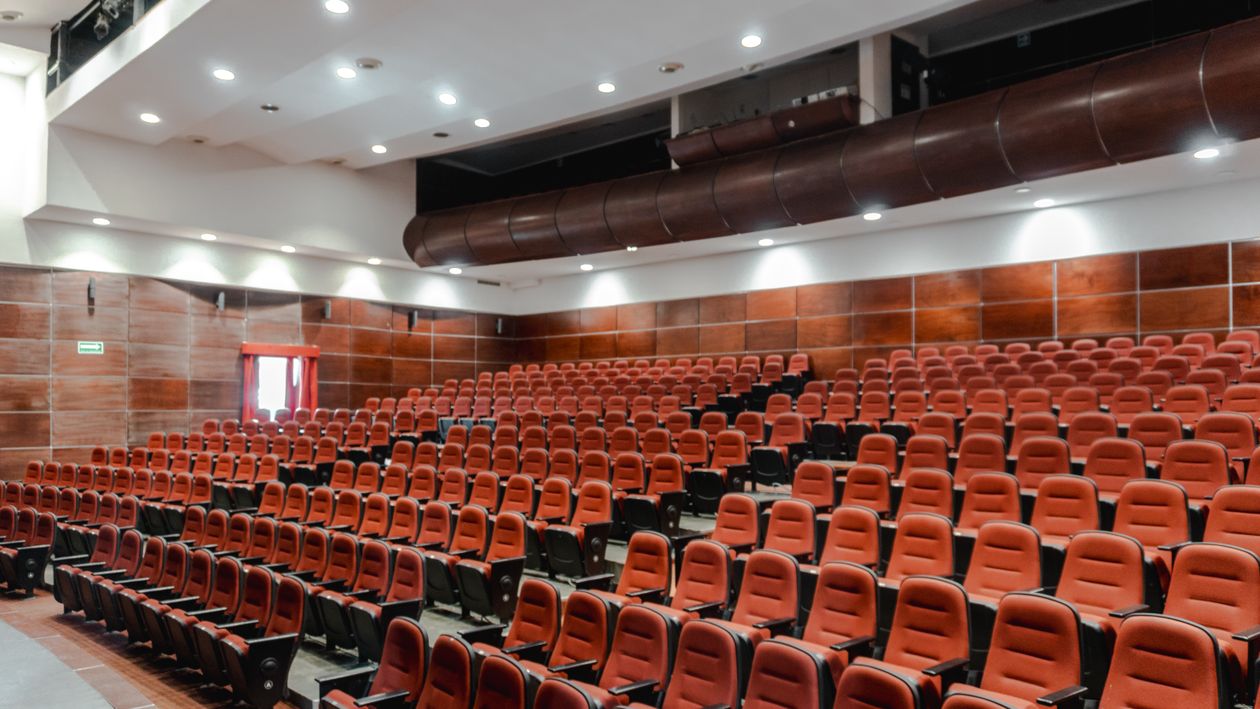
Cover: Heber Vazquez, source photograph, Pexels License. Image unchanged. An empty auditorium with red seats. General theatre context, not a photograph of the Polish venues discussed.
You do not need to wait until your Polish is fluent before investigating the theatre. You do need to distinguish an English-language website from a performance you can follow. The useful information belongs to the production, date, stage and translation arrangements, not simply the theatre's name.
This guide covers spoken-theatre planning, with concrete Warsaw operator examples and a method you can use elsewhere in Poland. It is not a current list of available seats or a recommendation that a particular play suits everyone. The photographs show general auditorium context, not the Polish venues discussed below.
Start with the production, not just the play title
A familiar title does not tell you the performance language or staging. Find the theatre's own description of the production and the exact date in its repertuar, or programme. Keep the title, date, time and stage together while checking the details.
An English description can help you understand the premise, but it does not establish English dialogue or English surtitles. Look for an explicit statement. If the information only identifies the original author or an English title, the performance language remains a separate question.
This matters when the same work is staged by different companies. Do not carry the language or translation arrangements from one production to another. A friend's experience of a familiar play elsewhere is useful conversation, not confirmation of the performance you are about to buy.
Look for the language of the surtitles
Napisy w języku angielskim means surtitles in English in this context. A statement about Ukrainian surtitles is different. A page saying English and/or Ukrainian needs to be connected to the particular showing and the language actually offered.
Teatr Powszechny in Warsaw publishes a dedicated page for performances with surtitles. It explains that it organises shows with English and/or Ukrainian text and lists particular performances. That is a useful model: language support can be attached to a showing rather than assumed throughout the repertoire.
Do not treat a translated summary as live translation during the performance. It can help with preparation, but it will not necessarily carry the spoken text as the actors perform. Choose the arrangement you need rather than assuming one form of English information supplies another.
Choose a seat from which you can read
Visibility of the actors and visibility of the text are related but separate questions. Teatr Powszechny explains that its surtitles are displayed above the stage portal and recommends farther rows, VIII to XIV, for better visibility. That is the theatre's own advice, not a national rule for all auditoriums.
Use the current seating information for your production. A close seat may sound attractive but still require an awkward reading angle. A more expensive category does not, by itself, prove that a translation screen is easy to see.
Ask a focused question before buying if you depend on the text: can the English surtitles be read from this exact row and seat for this performance? Keep the answer with the booking information. Do not rely on the possibility of moving after arrival or taking an empty seat without staff agreement.
Check the stage and entrance
A theatre can use more than one performance space. Scena means stage, while duża scena and scena kameralna identify different kinds of named spaces. Read the actual venue and address attached to the event rather than navigating only to the institution's main building.
Teatr Polski in Warsaw publishes separate box-office locations for its main and chamber stages. Its ticket page also says it does not sell or reserve tickets for touring performances outside its own premises. These details show why a theatre's name alone is not the whole arrival plan.
For another theatre, look for its own instructions. Do not copy the entrance, box-office location or opening arrangement from the example here. The stage printed on your event information is the right starting point for the practical check.
Read length, intervals and content information
Find the stated running time and whether it includes a przerwa, or interval. Do not assume a play lasts about as long as a film with the same title. A multi-part production can make a different demand on your evening and concentration.
Read any production-specific notices about content, lighting or sound. This guide does not decide what is appropriate for a child or someone with a particular sensory need. An age recommendation and a technical access arrangement answer different questions.
If you need to leave by a fixed time, check the current duration rather than reconstructing it from an old review. Ask the theatre about an unresolved timing issue before committing. A promised train connection should not depend on an invented end time.
Buy through the operator's route
Start from the theatre's own event page and follow its stated purchase route. Teatr Polski identifies Bilety24 as its online sales partner and says the Kup bilet button by the specific event leads into that system. A different domain is not automatically a problem when the theatre itself identifies it.
At the same time, a search advertisement or resale listing is not proof of the same relationship. Match the title, stage, date and seat before paying. This article does not verify any particular seller, checkout or ticket currently offered.
Check the final amount, including any service fee shown during selection. Teatr Polski states that its online ticket route includes a handling charge disclosed during the purchase process. Do not turn the headline seat price into a promise about the final checkout total.

Understand normal and concession tickets
Normalny usually identifies the standard ticket, while ulgowy refers to a concession. Eligibility and acceptable documents are the operator's rules, not something to assume from your age, occupation or a discount you received elsewhere.
Teatr Polski says people using concession tickets must show the relevant proof before entry and can be refused the concession without entitlement. Read the current conditions before choosing the cheaper category for yourself or another person.
A school, student, senior or other offer may have its own dates, channels and exclusions. This guide does not reproduce a whole discount table that can change. Keep the actual eligibility statement with the selected ticket instead of relying on the broad word ulgowy.
Read the purchase channel's change rules
Do not assume online theatre tickets come with a general change-of-mind return period. Teatr Powszechny distinguishes stationary sales from online purchases. Its published rules describe different treatment and allow online returns or exchanges for cancellation or repertoire changes rather than ordinary changes of plan.
Teatr Polski also says online tickets are not returnable for a simple change of mind, with cancellation or repertoire-change exceptions described on its page. These are concrete operator examples, not a claim that every Polish theatre has identical terms.
Before paying, read the terms attached to your actual sale. A box-office purchase and an online purchase may not follow the same route. Save the ticket, proof of purchase and applicable instructions rather than assuming the theatre can rearrange any seat later.
Treat language access and other access needs separately
English surtitles do not establish step-free access, a hearing loop, audio description or any other support. Read the theatre's accessibility information for the performance and your route to the selected seat. A general accessible-building statement is not a detailed plan for every space.
Explain the function you need when asking for help. If the text is essential, name its language and ask about screen visibility. If you need an accessible route or designated seating, ask about that separately before selecting an ordinary seat on the map.
Do not assume that a translation arrangement includes information about important sounds or visual action. This guide does not classify the accessibility service of an unidentified showing. Its purpose is to keep distinct needs visible in the planning conversation.
Prepare the visit without turning it into homework
Read the theatre's own short description if you want to know the premise. Decide how much plot detail you prefer before opening a full synopsis. Understanding the basic setting may help, but it does not substitute for translation when you need to follow spoken dialogue.
Keep the ticket and arrival instructions available before leaving. Check whether the operator accepts a mobile ticket, requires collection or has another procedure. Do not use one theatre's electronic-ticket policy as evidence for every theatre in Poland.
If you are meeting others, share the exact stage and meeting point. A broad plan to meet at the theatre can fail when people use different entrances. Clear event information matters more than a long list of invented national etiquette rules.
Recheck the actual showing before leaving
Consult the operator for changes to the production or date you selected. A page remaining online does not prove the show is proceeding unchanged. Keep any notification from the purchase channel and check how the theatre says cancellations or repertoire changes are handled.
If the promised language arrangement is unclear or has changed, ask before making the journey. Do not silently replace a translated showing with another date and assume it will be equivalent. The language support may have been the reason the outing was possible.
A practical first theatre visit has four firm anchors: the actual production, the right language arrangement, a readable seat and the correct stage. The rest of the planning follows the operator's current instructions. That approach opens up the repertoire without pretending that every play in an English-language listing is performed in English.
Frequently asked questions
Does an English website mean the play is in English?
No. Find an explicit statement about the performance language or the language of surtitles for the actual production and showing.
Is the front row best for reading surtitles?
Not automatically. Teatr Powszechny recommends farther rows for its overhead text; ask the actual operator about your exact seat.