Tofu in Poland: Natural, Smoked and Marinated Products
The essentials: Naturalne identifies a neutral starting flavour, wędzone points to a smoked product and marynowane identifies a marinade. Check the actual formulation and recipe separately: a flavour name does not establish firmness or a universal preparation method.
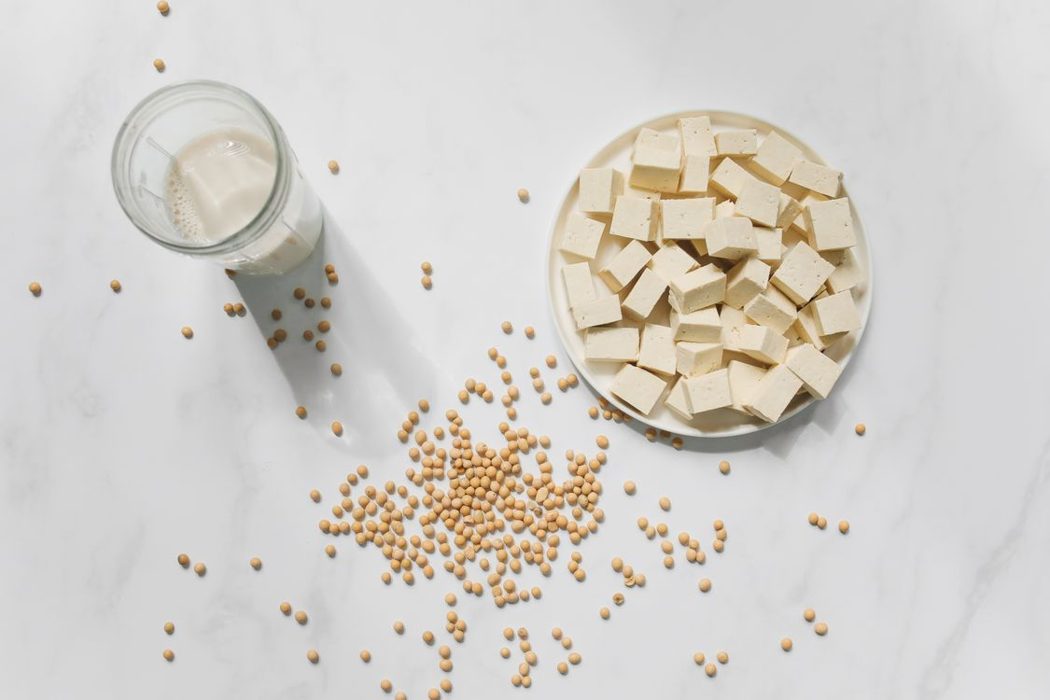
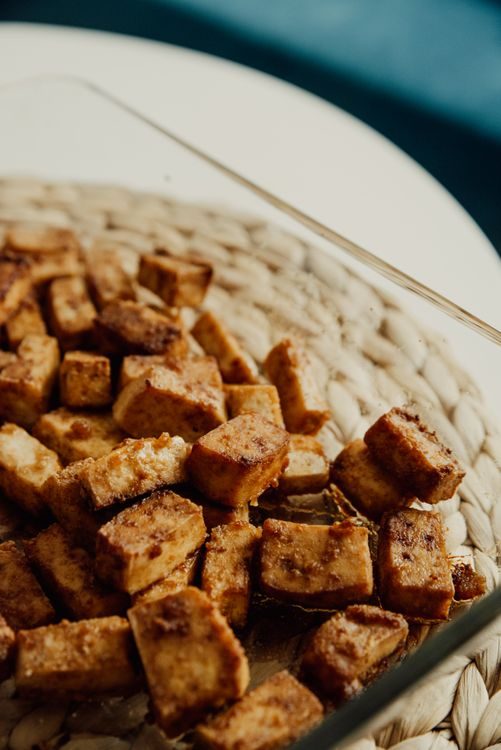
Cover: Polina Tankilevitch, source photograph, Pexels License. Resized and JPEG-compressed. Tofu cubes, soybeans and a glass on a light surface. Illustrative context, not a cited brand or verified firmness.
Tofu in a Polish shop can be a neutral ingredient, a smoked block or a product already combined with a named marinade. The words naturalne, wędzone and marynowane are useful, but they do not describe every property you might need for a recipe. A plain flavour does not prove a particular firmness, and a flavoured product is not automatically a neutral block with a small garnish added.
Start with the recipe's job: do you want to supply your own seasoning, choose a smoky flavour, or buy a prepared marinade profile? Then compare the actual product description and ingredients. Lunter's household and professional ranges provide concrete examples. Pack sizes and product lines remain identified below so a catering formulation is not quietly assigned to a smaller packet.
Naturalne is a flavour starting point, not a complete texture specification
Lunter's international page for its natural tofu lists 160 g and 180 g formats and describes a neutral-tasting product suitable for marinating, grilling, blending or desserts. Its ingredients are stated as 57% soybeans, water and calcium. The page's English ingredient wording is brief. It does not identify a particular calcium compound, so there is no basis here for naming one or deriving a factory method from it.
That example explains the appeal of a natural product when you want to choose the seasoning yourself. It also shows the limit of the word naturalne. A neutral flavour does not tell you whether the exact block is the texture an unfamiliar recipe expects. If a recipe specifies firm, extra-firm or silken tofu, retain that requirement and look for supporting information on the exact packet rather than treating naturalne as a translation of all those terms.
The producer's suggested blending and grilling uses demonstrate versatility, not a promise that every method will give the same result or that every natural tofu can replace every other type. A recipe built around a very soft ingredient and one built around cubes that hold their shape are asking different questions. Match those requirements before you decide that a plain-looking block is a direct substitute.
A producer's suggested use is not a universal preparation rule
Lunter suggests marinating its natural product, but that is not an instruction that every tofu must be marinated before use. Nor does it establish a universal pressing, freezing or draining routine. The product's flavour description and suggested uses help you choose it; the actual packet and recipe determine the preparation you intend to follow. This guide does not invent a standard treatment for the entire tofu aisle.
That distinction is helpful if you are new to the ingredient. You can buy a neutral product because you want to add your own sauce without assuming it must undergo a long ritual before it can fit any dish. Equally, a recipe may depend on a particular preparation for its result. Preserve that requirement rather than replacing it with a generic rule taken from a different product or cooking style.
Wędzone: a specific smoked product example
Lunter Professional's Wędzone Tofu 1,000 g is described as smoked over beech wood. Its listed ingredients are 57% soybeans, water and salt, with beech-wood smoke stated separately. The producer suggests warm and cold uses, including sandwiches, curry, vegetarian chilli and breaded preparations. These are facts about the professional product, not evidence that every smoked tofu in Poland uses beech wood or the same formulation.
For shopping, wędzone is therefore a useful route towards an already smoky flavour. If your recipe expects a neutral base, selecting smoked tofu is a flavour change, not just another size of the same ingredient. If you specifically want smoke in the dish, it may reduce how much of that flavour you need to create elsewhere. The decision should follow the named product and your recipe, not an assumption that a darker block is simply more cooked.
Keep the catering format clear when comparing products online. A 1,000 g professional block can have its own formulation and suggested uses. A household packet from the same brand may look similar, but this page alone does not prove identical ingredients, salt or texture. Find the exact item you will buy before transferring a detailed ingredient statement from one product line to another.
Marynowane can include a meaningful portion of sauce
Lunter Professional's Marinated Tofu in Soy Sauce 1,000 g gives a concrete example of marynowane. The producer describes the tofu as marinated and baked in soy sauce. Its ingredient structure is stated as 92% tofu and 8% marinade. The marinade lists water, fermented soy and wheat ingredients, salt, onion, rapeseed oil, garlic, spices and herbs. This is a formulated product, not an unseasoned block accompanied by an optional serving suggestion.
The producer suggests frying, baking or grilling it and presents it for both Asian-inspired and other dishes. That helps explain the intended convenience: a flavour profile has already been chosen. It does not mean the same marinade will suit every sauce or that the product can be substituted for natural tofu without changing a recipe. If your plan includes a separately measured marinade, compare what is already in the packet before adding another one automatically.
The percentage structure is also worth preserving accurately. The page gives a tofu component and a marinade component; a percentage shown inside the tofu description is not automatically the final product's soybean percentage. Do not flatten a nested ingredient statement into a new whole-pack claim. For a buying decision, recognising that this is 92% tofu with an 8% named marinade is enough without inventing further arithmetic.
Sweet Chilli is a different actual recipe
Lunter's household TOFU MARYNOWANE SWEET CHILLI 180 g is a separate formulation. The producer states 88% tofu and 12% marinade. The marinade includes water, rapeseed oil, sugar, salt, natural flavourings, spices including ginger and chilli, dried onion, garlic and tomatoes, spice extracts and maize starch. The tofu component's own ingredient statement also includes calcium. These details should stay attached to this exact product.
That is a useful contrast with the professional soy-sauce product. Both are marinated tofu, but their marinade shares and ingredient profiles differ. The sweet-chilli name is not merely a colour variation on the soy-sauce packet. Someone who wants ginger and chilli may prefer that prepared profile; someone planning a different sauce may want a neutral product instead. Neither decision requires a nutritional ranking or a claim that one product is more authentic.
The household page suggests uses such as pad Thai, wraps and stir-fry dishes, with quick pan preparation or grilling. Those are the producer's intended-use examples, not a recipe tested by this publication. They tell you what kind of convenience the packet offers. They do not establish an exact cooking time for every pan, a universal spice level or the results of using the product in another recipe.
Flavour names do not establish equal seasoning strength
Natural, smoked, soy-sauce and sweet-chilli products make different flavour decisions. A shopper can compare those decisions without pretending that every manufacturer uses a common strength scale. Wędzone identifies a smoke-related style; marynowane indicates a marinade; sweet chilli names a particular flavour profile. None of those words tells you precisely how salty, sweet or spicy every competing product will taste.
Use the actual ingredient list and producer description as your starting point. If a flavour matters strongly to your recipe, do not accept a substitute solely because both packets are marinated tofu. A soy-sauce version and a sweet-chilli version may contain different sauce ingredients and proportions. Choosing between them is a recipe decision, not an English-to-Polish translation problem that disappears once you recognise the word tofu.
This is especially relevant when buying through a translated grocery app. A shortened title may show only the brand, tofu and weight, hiding the variant in a smaller line. Open the complete product identity before ordering. The visible front photograph can help, but the written flavour name and ingredients are the useful evidence. A similar-coloured sleeve is not a reliable way to repeat a favourite purchase.
Match the texture requirement separately
The examples explain formulations and uses, but they do not establish a complete firmness ladder for Polish tofu. If a recipe specifically calls for silken tofu, investigate that exact type rather than assuming a natural block will blend into an identical result. If it needs a firm cube, look for a product whose own description supports that use. Do not infer texture solely from whether the flavour is plain or smoked.
Nor does the presence of a marinade reveal whether a product needs pressing before a particular recipe. Pressing, freezing and draining can change a cooking method; they should not be added automatically to every product based on general tofu advice. Use the selected product's directions and the recipe as a complete plan. This guide helps you buy the intended starting ingredient, not standardise every possible preparation.
A clear shopping note avoids accidental recipe changes
Write naturalne when you want to investigate a neutral flavour, wędzone when you want a named smoky product, and the full marinade name when you want a prepared profile. Keep the brand, product line and size alongside that description. If a recipe has a texture requirement, record it separately rather than expecting the flavour word to carry both meanings.
The aim is a repeatable choice, not a perfect universal definition of tofu. A producer's natural block, professional smoked product and household sweet-chilli recipe can all be useful for different meals. Matching the actual formulation and intended use lets you decide which work the packet has already done and which choices you still want to make yourself. That is a better starting point than treating every block on the shelf as the same ingredient in different packaging.
Frequently asked questions
Does natural tofu always mean firm tofu?
No. The flavour description does not establish every texture requirement. Check the exact product when a recipe specifies firm or silken tofu.
Are all marinated tofu products the same apart from flavour?
No. The cited soy-sauce and sweet-chilli products have different marinade shares and ingredient profiles, and belong to different product lines.