Tourist Tax in Poland 2026: Opłata Miejscowa Limit 3.46 zł a Day
Short answer: The opłata miejscowa is capped at 3.46 zl per day in 2026 (4.89 zl in spa protection areas). Each town sets its own rate, charged per started day for stays over one day.
Many visitors and new residents are surprised by a small extra line on a hotel or guesthouse bill in Poland: the opłata miejscowa, usually translated as the local (or tourist) fee. It is a local charge, set by each municipality within a national ceiling. This guide explains who pays it, how much it can be in 2026, when you are exempt, and how it differs from the spa fee. It uses the tax portal podatki.gov.pl (published and updated 15 December 2025) and the Minister of Finance notice on the 2026 ceilings (Monitor Polski 2025 poz. 726, dated 1 August 2025).
What the fee is
According to podatki.gov.pl, the opłata miejscowa is a local fee that you pay if you stay longer than one day for tourism, rest or training purposes in a locality with scenic or climatic value. It is paid by individuals, for every started day of stay, and only when the stay is longer than one day.
The purpose of the stay must be tourist, leisure or training. The municipality collects the fee on its own territory. A municipality may charge it only if it has a locality with favourable climate, landscape value, or conditions that allow such a stay, for example suitable tourist infrastructure.
How much can it be in 2026?
The municipal council sets the daily rate in a resolution (uchwała). The rate cannot exceed the upper limit that the Minister of Finance announces every year in Monitor Polski. For 2026, the notice of 1 August 2025 (Monitor Polski 2025 poz. 726) lists these ceilings in art. 19 pkt 1 of the local taxes and fees act:
- 3.46 zł per day for the standard opłata miejscowa;
- 4.89 zł per day for the opłata miejscowa in an area of spa protection.
These are ceilings, not fixed prices. Your town can charge less. The notice itself is a list of figures with article references, so the matching of amount to fee type is also described by secondary summaries of the notice; check the rate in the resolution of the town where you stay. The ceilings are updated each year, so a stay in 2027 may fall under a different limit.
Who collects it and how you pay
The council decides the deadline and the method of payment in its resolution. It may order that the fee is collected by an inkasent (collector). According to the tax portal, the collector is usually the person or company that provides your accommodation, such as a hotel, guesthouse or private room owner. The collector takes the fee from you and passes it to the municipality.
In practice this means the fee often appears as a separate item on the invoice or is paid at check-in. If you do not see it, ask the host, because the rules depend on the town's resolution.
Who does not pay
Under the statutory exemptions listed on podatki.gov.pl, you do not pay the opłata miejscowa if you:
- are a member of the staff of diplomatic missions or consular offices (and others treated equally under international agreements and custom), on condition of reciprocity;
- are staying in a hospital;
- are blind or have a significant degree of disability (together with a guide);
- are part of an organised group of schoolchildren or young people.
You also do not pay if your stay does not exceed 14 days and is connected with official or work duties, for example a business trip. The portal gives the example of being on a delegation.
Owners of holiday houses (domy letniskowe) do not pay it if they stay there without a tourist, leisure or training purpose, for example when they come only to carry out renovation work.
The municipal council may introduce other exemptions on its territory. That is why two towns can treat the same guest differently, for example families with small children or seniors. Check the local resolution on the municipality's website or in its public information bulletin.
Local fee or spa fee
A municipality cannot charge the opłata miejscowa if the opłata uzdrowiskowa (spa fee) is already charged in its area. It collects only one of the two. The spa fee applies in recognised spa localities, and the ceiling for it is a separate figure in the same Monitor Polski notice. This article does not cover the spa fee amount, so check it with the spa town if you plan a stay there.
Tips for expats and visitors
- Expect the fee in localities with scenic or climatic value and tourist infrastructure. A municipality that does not meet the conditions cannot charge it.
- If you rent a room long-term and the stay is not for tourism, rest or training, the statutory definition of the fee does not fit. If your landlord tries to charge it, ask which municipal resolution applies.
- Keep the invoice. It shows the number of days and the amount, which helps if there is a dispute with the collector.
- If you are on a work trip of up to 14 days, say so at check-in and keep the delegation papers.
The rules and ceilings above are as of 16 October 2026 and come from sources dated 2025. Because ceilings change yearly and each town sets its own rate, confirm the current figure with the municipality where you will stay.
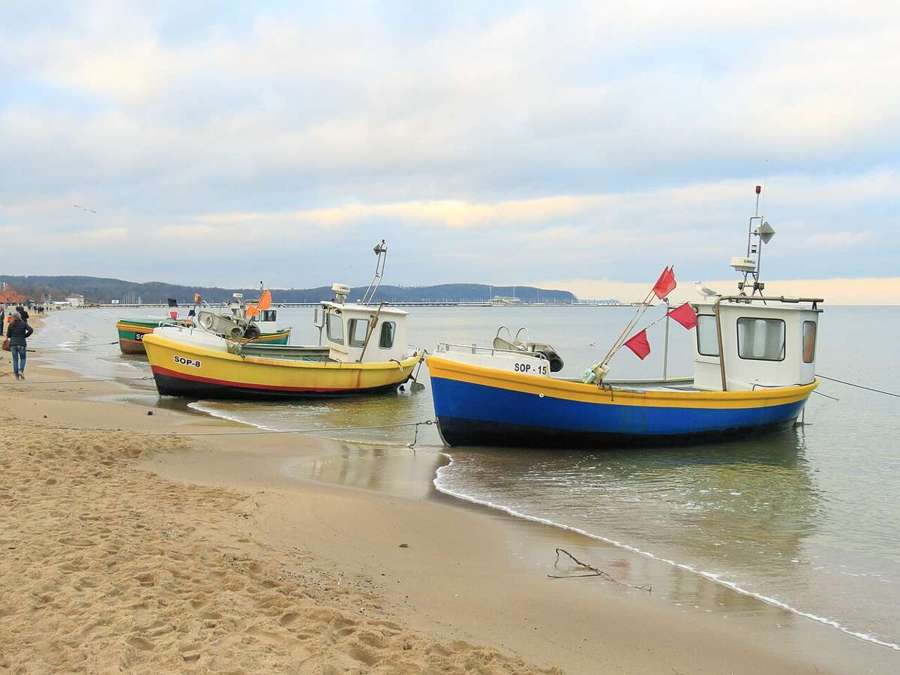
* Photos: Ustka beach on the Baltic Sea (CC0) and the Ugory hill in Zakopane (CC0), both Wikimedia Commons.
Frequently asked questions
How much is the tourist tax in Poland in 2026?
The national ceiling is 3.46 zł per day for the standard opłata miejscowa and 4.89 zł in a spa protection area, according to Monitor Polski 2025 poz. 726. Each town sets its own rate at or below that limit.
Do children pay the local fee in Poland?
Statutory exemptions cover organised groups of schoolchildren and young people. Other cases, such as families with small children, depend on the exemptions in the local council's resolution.
Do I pay the fee for a one-night stay?
Podatki.gov.pl says the fee applies when you stay longer than one day, charged for every started day. Ask your host or the town office how a short stay is counted locally.