Unused and expired medicines in Poland: safe disposal
The essentials: Use a designated local collection point, not an ordinary household bin or drain. Not every pharmacy participates. Keep medicines contained and check separate rules for sharps and mercury thermometers.
The medicine drawer is easy to overlook when you move to Poland. You may have half-used packets from another country, drops opened months ago, or an old prescription that is no longer part of your treatment. These do not belong in an ordinary rubbish bag or down the sink. But "take them to a pharmacy" also needs a qualification: you need a designated collection point, not necessarily the nearest pharmacy.
Poland's Ministry of Health directs people to special containers available in some pharmacies and other designated places, and says municipal websites should identify local collection points. The practical route is to check your gmina or city waste service, confirm what the chosen point accepts, and keep medicines separate from needles and other medical waste.
This guide was checked on 26 October 2026. It is about household disposal, not changing treatment or disposing of waste from a clinic or business. Ask a pharmacist or clinician before deciding that medicine you still need should be discarded.
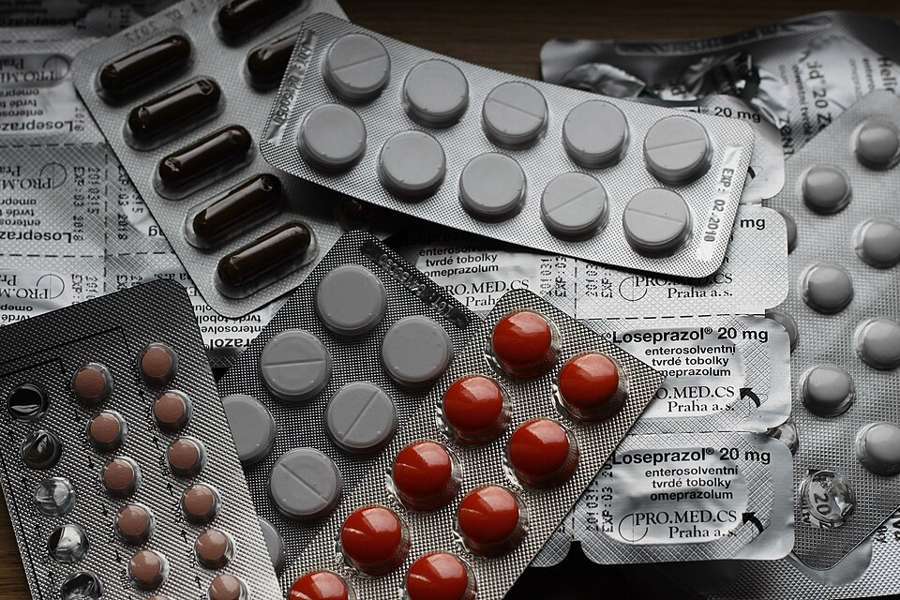
Cover photograph: illustrative blister packs, author unknown, Wikimedia Commons, CC0. The packaging is not presented as Polish stock, proof of expiry or a treatment recommendation.
Start by checking what you actually have
Read the expiry date and, where relevant, the period after opening. The pharmacist-authored Gdzie po lek guide identifies several reasons a medicine may no longer be suitable: expiry, being open longer than the leaflet allows, inappropriate storage or unhygienic handling. An unopened-looking packet is not a reliable guarantee after a temperature or moisture problem.
Keep uncertain medicines apart from those you are currently taking. If you cannot identify a product, the label is damaged or you do not understand the instructions, ask a pharmacist rather than guessing from the colour or shape of a tablet. A photograph can help explain the issue, but do not transfer unidentified pills into another medicine's box.
For refrigerated products or anything that has been left in a hot car, describe what happened and ask for advice. Do not assume putting it back in the fridge restores its suitability. Equally, do not interrupt essential treatment without arranging clinical advice or replacement supply. Disposal advice is not a substitute for a medication review.
Find a designated collection point
Search your municipality's website for przeterminowane leki, expired medicines, or zbiórka leków, medicine collection. Useful additional terms are wykaz aptek, list of pharmacies, and PSZOK, the municipal selective waste collection point.
A sensible sequence is:
- Open the municipal or official waste-operator page, not only a search-result snippet.
- Check whether it lists participating pharmacies, a fixed collection site or a mobile collection service.
- Confirm that your item is accepted and how it should be packaged.
- Check the location and collection arrangements before travelling, especially with unusual or hazardous items.
The Ministry's wording is "some pharmacies", not every pharmacy. A pharmacy without a collection container is not automatically the wrongdoer because it cannot take your bag. Ask where the nearest participating point is, or return to the municipality's current list.
At a collection point, ask staff where the medicines go rather than leaving them on a counter or beside a full bin. If a container is unavailable, keep the bag secure and find another confirmed route. Do not leave hazardous waste outside a closed pharmacy.
Keep the medicine contained
Do not push tablets out of their blisters or pour syrups into the sink to make the packaging easier to recycle. Gdzie po lek specifically advises leaving tablets in blisters and liquids in their bottles. Łódź's municipal guidance likewise says liquid medicines should be tightly closed.
The receiving scheme may ask you to remove outer cardboard packaging and paper leaflets. Check its instructions and separate those clean paper items where appropriate. Keep the immediate packaging that contains the medicine intact. If something is leaking or broken, contact the collection point for handling instructions before carrying it in an ordinary shopping bag.
Do not assume every medical-looking item belongs in the same container. A box containing tablets, an empty inhaler, a used injection pen and a thermometer can contain several different waste streams. Explain the exact item to staff. A rule about sealed medicine bottles does not establish how to handle a pressurised device, a sharp or a broken mercury thermometer.
While you are preparing disposal, keep everything away from children and pets. The Ministry recommends original, closed packaging and keeping medicines away from moisture, sunlight and unsuitable temperatures. Those are useful safety habits while you arrange a collection trip too.
Never flush medicines or put them in ordinary household bins
The Ministry says expired medicines should not be put in the rubbish. The Kraków city guide explains that improper disposal can contaminate soil and groundwater and create risks for people and animals. Gdzie po lek also warns against flushing medicines or pouring them into wastewater.
That means no toilet disposal, no sink disposal and no mixing tablets into the normal mixed-waste bin. Do not dissolve or crush them to make them disappear. Keep them in a secure container until you can use the local collection route.
The fact that the outer box is paper does not make a partly full blister a paper-recycling item. Sort the outer packaging and the medicine separately according to the collection scheme. For completely empty packaging, use your local sorting guidance rather than assuming the same rule applies to every blister, bottle or tube.
Needles and syringes need their own route
Used needles, syringes and prefilled syringes are not ordinary loose additions to a medicine-return bin. Łódź's medicine-container instructions explicitly exclude them, as does the pharmacist-authored guide. They can injure someone handling the waste.
Ask your healthcare provider or municipality about the correct household-sharps container and disposal point. Do not put loose sharps in a bag of medicines, handle them unnecessarily or try to separate a needle simply to fit a collection box. Follow the specific handling instructions supplied for your device and collection service.
Local options are not uniform. Kraków's MPO says its staffed collection vehicles near Eko-pudełka collect medicines, syringes and prefilled syringes. Warsaw's municipal PSZOK/MPSZOK page lists needles and syringes among the mobile service's accepted categories. Neither statement means you should put them into an unattended pharmacy medicine bin or a general street container.
If you inject medicine regularly, arrange the disposal route before the container fills. Ask what happens on holidays, how to package it for transport and what the service accepts. Avoid discovering at the pharmacy door that your usual medicine-return route cannot take sharps.
Mercury thermometers are not medicine
An old thermometer can end up in the same cupboard as medicines, but it needs a separate check. Warsaw's current pharmacy-collection page says mercury thermometers are not collected in pharmacies and directs people to PSZOK or MPSZOK, safely packaged in a tightly closed jar or container.
Łódź's municipal page describes a different local arrangement: selected pharmacies accept mercury thermometers. This is a reason to check your city rather than copy another city's rule. Confirm the specific point and whether it accepts the item in its current condition.
A broken mercury thermometer is a spill problem as well as a disposal problem. Do not treat it as a normal bag of medicine returns. Seek the relevant local safety instructions before handling or transporting it. This article does not give a mercury-cleanup procedure, and a pharmacist's medicine container is not a general hazardous-material drop-off.
City examples: use the scheme, not an old address list
Kraków: the city's 10 August 2026 guide directs residents to participating pharmacies, MPO vehicle visits near Eko-pudełka and PSZOK facilities. Its PSZOK instructions say to show proof of the waste-management fee for the previous month, or rent payment where waste is included; electronic proof is accepted. Check the operator's current requirements and hours before going. The city's article contains seasonal hours, so those should not be reused as a year-round timetable.
Warsaw: the city maintains a participating-pharmacy list and a PSZOK/MPSZOK information page. Use the current list and collection schedule rather than a saved older PDF. Mercury thermometers and sharps need the separate handling checks described above.
Łódź: the city publishes designated pharmacies for medicines and distinguishes those that accept mercury thermometers. Its medicine guidance allows tightly closed liquids and excludes sharps and dressing materials from the medicine containers. Confirm the current destination for anything outside that list.
These are examples of how to find the right route, not a national guarantee that every resident can use every city's facilities without conditions. Outside those cities, start with your own gmina. If you rent and need proof of a waste fee, ask the landlord or administrator what document shows it.
Useful Polish at the counter
You can ask: Czy przyjmują Państwo przeterminowane lub niepotrzebne leki? This means, "Do you accept expired or unwanted medicines?"
For a more specific question: Czy mogę oddać leki w blistrach i szczelnie zamknięte syropy? means, "Can I hand in medicines in blister packs and tightly closed syrups?"
For sharps, ask separately: Gdzie mogę bezpiecznie oddać zużyte igły i strzykawki z domu? This means, "Where can I safely hand in used needles and syringes from home?" Keep the categories separate even if you ask both questions during the same visit.
Before leaving, make sure you understand which items the point has actually accepted and which remain your responsibility. A clear local answer is more useful than carrying the same mixed bag from pharmacy to pharmacy.
Frequently asked questions
Does every pharmacy in Poland take expired medicines?
No. The Ministry points to special containers in some pharmacies and other designated places. Check your municipality's collection list and confirm the chosen point accepts your items.
Should I empty tablets from blisters or pour out syrups?
No. Keep tablets in their blisters and liquids in closed bottles. Follow local instructions for separating outer cardboard and paper leaflets.
Can I put used needles in the medicine-return bin?
Do not mix loose sharps with medicines. Ask your municipality or healthcare provider for the correct container and a confirmed sharps collection route.
Are mercury thermometers accepted at pharmacies everywhere?
No. Warsaw directs them to PSZOK/MPSZOK, while Łódź describes selected pharmacy collection. Check the current local rules and seek specific instructions for a broken thermometer.
Should I discard medicine just because I no longer recognise it?
Keep it separate and ask a pharmacist to help identify it and assess whether it is suitable. Do not guess, take unidentified tablets or interrupt necessary treatment without advice.
Sources
- Ministry of Health, storage and disposal (22 November 2017; checked 26 October 2026)
- Kraków city disposal guide (10 August 2026; checked 26 October 2026)
- MPO Kraków medicine collection (checked 26 October 2026)
- Agnieszka Soroko, pharmacist, Gdzie po lek (24 April 2023; checked 26 October 2026)
- Łódź municipal medicine and thermometer collection (checked 26 October 2026)
- Warsaw pharmacy collection (updated 10 August 2026; checked 26 October 2026)
- Warsaw PSZOK and MPSZOK (updated 27 January 2026; checked 26 October 2026)