Your First Vet Visit in Poland: Records, Costs and Communication
The essentials: Choose a practice for the species and problem, confirm communication and arrival arrangements, bring the full history and obtain individual preparation instructions. Agree the scope and cost discussion, then leave with written treatment and follow-up information.
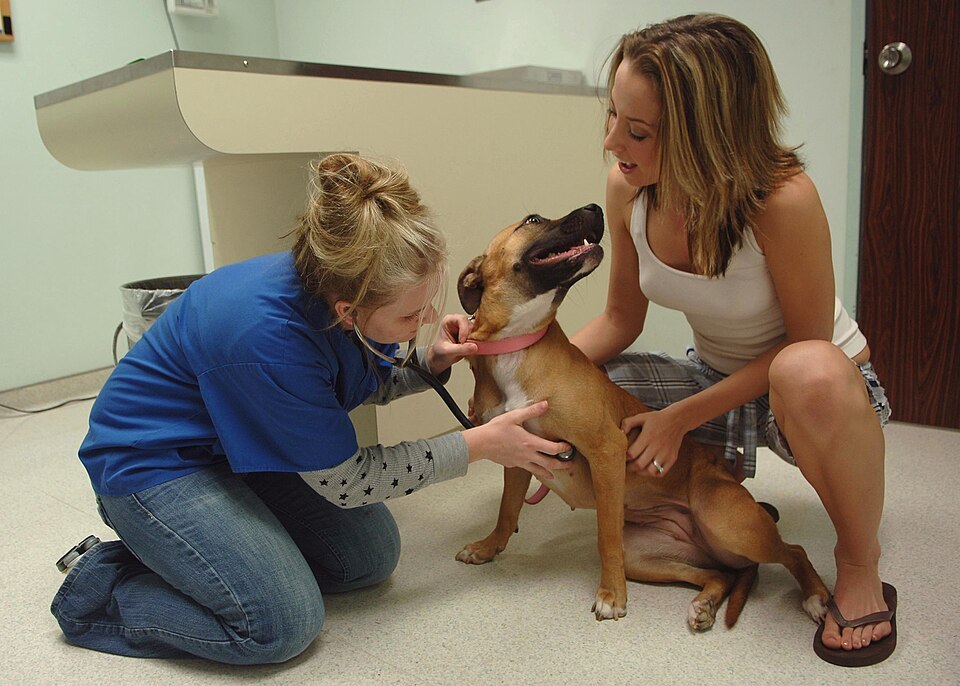
Illustrative historical veterinary check at Yokota Air Base, May 2007, not a Polish practice. U.S. Air Force photo by SrA Veronica Pierce / Wikimedia Commons, public domain in the United States as a U.S. government work. Resized.
A first veterinary appointment after moving to Poland is easier when you arrive with the animal's history, a clear description of the problem and a plan for communication and costs. An English-language website is a useful starting point, but it does not establish that every clinician, appointment or overnight service will be available in English.
In Polish, weterynarz means veterinarian, wizyta means appointment and książeczka zdrowia is a health booklet. This guide uses professional, regulator and clinic pages checked on 27 October 2026. It is an appointment-planning guide, not a diagnosis, a treatment plan or a substitute for urgent veterinary assessment.
Choose the practice for the animal and the problem
Ask whether the practice treats your animal's species and the type of problem you need assessed. A general consultation, specialist referral, diagnostic test and emergency admission are different appointments. Explain the reason when contacting reception rather than booking whichever slot appears first online and hoping it covers everything.
For practice information, WET Systems has a public search for veterinary establishments, including filters for round-the-clock duty and facilities with passport-issuing veterinarians. Use it as a discovery and verification aid, then confirm the current service directly with the clinic. A directory entry does not establish today's staffing, waiting time or the availability of a particular specialist.
Ask for an English-speaking appointment explicitly. If you need an interpreter or translated records, discuss that before the visit. For a complex history, send a concise summary through the clinic's verified channel if requested. Do not post identifiable medical records, your address or contact information in a public recommendation group merely to find a practice.
Distinguish a scheduled visit from emergency care
If the animal may need urgent help, contact a veterinary emergency service rather than waiting for a routine slot or using this article to judge severity. Describe the current problem and follow the service's arrival instructions. Ask where to go, which species it accepts and how the overnight admission process works.
A 24-hour label does not mean every service runs all night. AniCura's Polish FAQ says its round-the-clock emergency clinics provide emergency care and look after hospitalized animals overnight, while specialist consultations have separate availability. It also says phones are not staffed at night in that emergency mode. Learn the chosen facility's direct emergency route in advance rather than depending on a routine reception call being answered.
Clinic procedures differ. Teodorowscy's FAQ asks owners to call ahead for emergencies where possible and says acceptance depends on the team and current capacity. These are provider descriptions, not a guarantee of a bed or immediate treatment at any named branch. If a service cannot accept the animal, ask for the appropriate next destination promptly.
Bring records that tell a useful story
Bring the health booklet, passport if relevant, vaccination history, previous test results, imaging reports and treatment summaries you have. Ask whether the clinic needs original image files as well as written reports. A list of dates and diagnoses is easier to use than a phone gallery of unlabelled screenshots.
KoniczynaVET's first-visit guidance asks for previous medical documents and a health booklet where available. Zviropolis's specialist-visit page asks for history including medications, supplements, previous illnesses and injuries, test results and procedures. Organize these chronologically and identify which records belong to which animal, especially if you have several pets.
If records are in another language, ask what translation is needed. Keep the original terminology and units with any summary rather than changing them from memory. A short English or Polish overview can help communication, but it should not replace the actual laboratory report or prescription. Ask your previous veterinarian how records can be transferred through a suitable private channel.
Describe observations, not an online diagnosis
Write down when the problem began, what changed and whether it is constant or intermittent. Note relevant eating, drinking, toileting, activity and behaviour changes. KoniczynaVET specifically recommends preparing symptom, diet, bowel-movement and urination information so stress during the appointment does not make you forget important details.
Bring a complete list of current medicines, supplements and other products, including their packaging or clear labels where useful. Record what has actually been given and when, rather than only the product you originally intended to use. Tell the veterinarian about previous reactions and anything you are unsure of.
A short video can help explain an intermittent event if it was safe to record. Teodorowscy mentions recordings when preparing for a neurological consultation. Do not delay care or provoke symptoms to make a better video. Report changes since booking, including apparent improvement, and let the veterinarian decide how those observations affect the assessment.
Get individual preparation instructions
Ask the practice what to do about food, water and usual medication for this animal and this appointment. Do not apply a generic fasting instruction to every species, age, condition or reason for visiting. Tell reception or the clinician about relevant health needs so the preparation advice can be checked.
The pages reviewed show why this matters. Some clinic guides give fasting instructions for tests or procedures, while Teodorowscy says its neurological consultation does not require fasting unless instructed otherwise. KoniczynaVET says the veterinarian arranging an ultrasound provides instructions tailored to the animal. This article deliberately gives no universal fasting duration.
Similarly, ask whether samples are needed and how to collect, store and deliver them for the proposed test. Do not turn up with an old or unsuitable sample because another clinic's general FAQ mentioned it. For sedation, imaging or surgery, obtain the actual pre-procedure instructions and check anything you do not understand directly with the treating team.
Make transport and waiting manageable
Ask about a suitable carrier, lead or other handling arrangement before travelling. AniCura's preparation guide recommends a lead or carrier and familiar items to reduce travel stress. Tell the practice about fear, difficult handling or previous incidents so staff can advise on arrival and waiting arrangements.
Do not improvise calming medication or change existing treatment without veterinary instructions. Zviropolis advises discussing stressful travel or aggression with the clinic. If the animal needs a particular entrance, separate waiting space or help getting out of the vehicle, ask what the location can actually provide rather than assuming those facilities exist.
Allow time for registration and bring the owner or keeper details the practice requests. A booked time may still be approximate: AniCura explains that emergencies can change the order and timing of consultations. Plan practical matters such as transport home and availability for a longer assessment without treating the appointment as a guaranteed short stop.
Discuss the scope and costs before additional work
Ask what the consultation covers, which tests or procedures are proposed and what the current estimate includes. A phone quote for a basic visit is not necessarily the total for treatment. AniCura says the full cost cannot be determined reliably before examination because the animal, problem, tests and treatment affect it.
Tell the veterinarian if cost affects the decisions you can make and ask about priorities, alternatives and the consequences of waiting. Agree how additional work and an increased estimate will be discussed. For admission or a procedure, confirm who can authorize decisions and which contact number will be reachable while the animal is at the practice.
Check accepted payment methods and request the invoice details before payment if needed. If you have pet insurance, ask the insurer about coverage, documents and reimbursement before assuming direct settlement. AniCura's FAQ notes that many insurers reimburse the keeper after invoices and a treatment summary are supplied. The policy and clinic arrangements, not the fact you hold insurance, determine the route.
Leave with instructions you can follow
Ask for a written summary covering findings, treatment, medicines, follow-up and what to do if the animal changes or worsens. Repeat the plan back in your own words if language is a concern. Check the product, amount, route, timing and duration with the veterinary team rather than guessing from an unfamiliar abbreviation.
Clarify which results are still pending, who will contact you and when to ask if you have heard nothing. Record any review appointment or referral and obtain the documents needed for another practice. A test being performed does not mean every result has been interpreted and discussed before you leave.
For suspected problems after a medicine, seek veterinary advice about the animal's care. Poland's medicines regulator, URPL, also describes routes for reporting suspected veterinary-medicine adverse events to the responsible company or regulator. Reporting is a safety process, not a replacement for assessment or a reason to alter the treatment plan on your own.
Useful Polish for arranging the visit
Czy lekarz mówi po angielsku? asks whether the veterinarian speaks English. To pierwsza wizyta w tej przychodni means this is the first visit at this practice. Mam dokumentację poprzedniego leczenia says you have records of previous treatment. State the species and reason for the visit clearly.
Jak przygotować zwierzę do tej wizyty? asks how to prepare the animal for this appointment. For the estimate, Co obejmuje ta cena? means 'What does this price include?' Before leaving, Proszę o pisemne zalecenia asks for written instructions. The goal is a plan you understand, with the right contact and records for the next step.
Frequently asked questions
How do I ask for an English-speaking veterinarian?
Ask Czy lekarz mówi po angielsku? and confirm the exact appointment, clinician and branch. An English website does not guarantee English is available for every service.
Should every pet fast before a vet visit?
No universal preparation rule is given here. Ask the treating practice for instructions for the species, condition and planned appointment, including food, water and usual medication.
What records should I bring?
Bring available health booklet or passport, previous treatment summaries, test results, imaging reports and a complete medicine and supplement list. Ask whether original imaging files or translations are needed.
Does a 24-hour clinic offer every specialist overnight?
Do not assume so. Confirm emergency admission and specialist availability separately. Reception phones may not be staffed overnight at some emergency practices.
Will my pet insurer pay the clinic directly?
Check with both the insurer and practice. You may have to pay first and submit invoices and a treatment summary for reimbursement, subject to your policy.
Sources
- WET Systems veterinary-establishment search, checked 27 October 2026
- KoniczynaVET first-visit guidance, checked 27 October 2026
- Zviropolis specialist-visit preparation, checked 27 October 2026
- AniCura Poland appointments, emergency scope, costs and insurance FAQ, checked 27 October 2026
- Teodorowscy clinic FAQ, checked 27 October 2026
- URPL veterinary-medicine safety and adverse-event reporting, includes 15 May 2024 webinar, checked 27 October 2026