Vinegar Labels in Poland: Spirit, Wine and Apple Varieties
The essentials: Read the full edible-product name and acidity before comparing bottles. Spirit, apple and wine vinegar examples differ; a percentage marked acidity is not drinking-alcohol content. Follow the actual product and intended-use information.
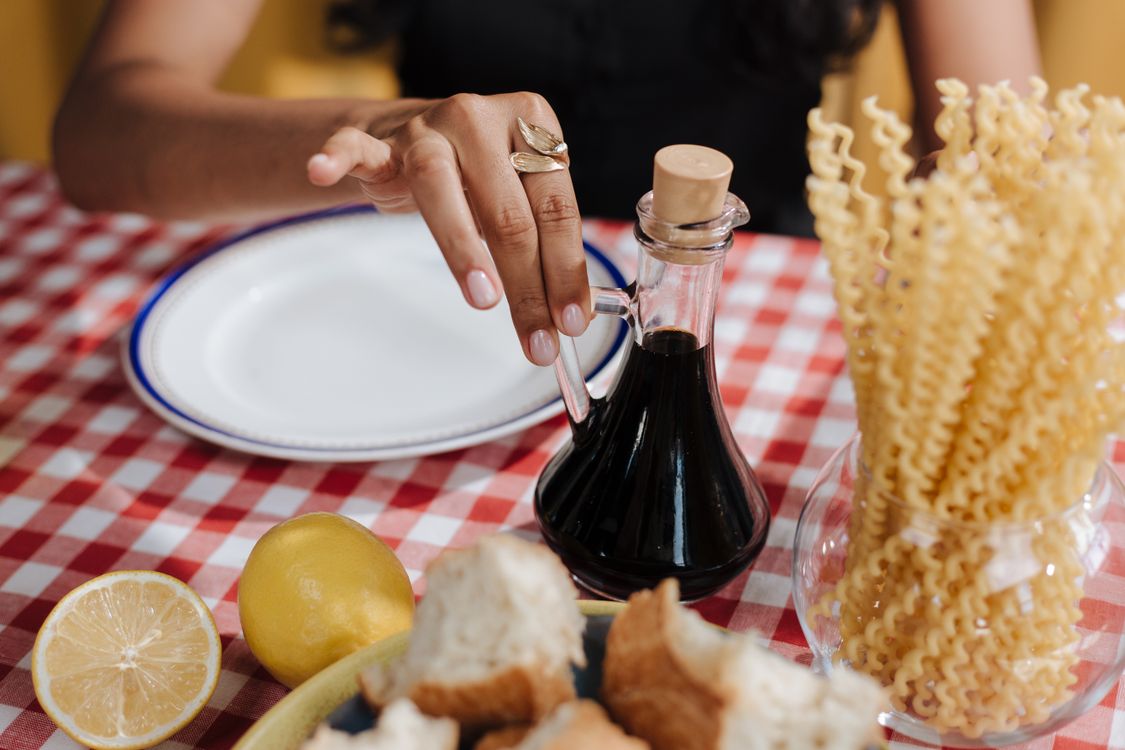
Cover: Ron Lach, source photograph, Pexels License. Image unchanged. A person reaching for a vinegar bottle at a table. Illustrative food context, not the cited Polish products.
The word ocet helps you find vinegar in a Polish shop, but it does not tell you everything about the bottle. Spirit, apple and wine vinegars have different product descriptions, and the prominent percentage may describe acidity rather than the amount of fruit or alcohol. A dark bottle or an Italian-looking label is not enough to identify what is inside.
This guide concerns edible vinegar and label reading. It gives no cleaning, concentration-mixing, medicinal or home-preservation instructions. Named manufacturers provide examples of their own products, not a national recipe or a recommendation. The photographs show general vinegar-table context, not verified examples of the Polish products discussed.
Start with the actual food name
Look beyond the brand for ocet spirytusowy, ocet jabłkowy or ocet winny. Spirytusowy identifies spirit vinegar, jabłkowy apple vinegar, and winny wine vinegar. Additional wording may tell you the source wine, whether a product is filtered, or whether it has been combined with other ingredients.
Keep the complete name when comparing bottles. A glaze, sauce or dressing presented beside vinegar may be a different food. Its appearance and shelf location do not establish that it can be treated as a bottle of plain vinegar for every purpose.
The useful question is not simply whether the front label contains a familiar word. Ask what the product is actually named, what its composition or description says, and what the manufacturer instructs. Those pieces of information should agree before you assume two bottles are equivalents.
Understand the Polish restriction on the name ocet
Polish labelling rules reserve the name ocet for products obtained from agricultural raw materials exclusively through the biological processes of alcoholic and acetic fermentation. The amendment introducing that wording also says the name is not used for a mixture of vinegar and food-grade acetic acid, E260.
That is more specific than saying vinegar is merely any sour liquid. It also means a label-reading guide should not treat a solution of acetic acid as automatically the same product. The rule concerns the name and production basis; it does not supply a universal recipe for every vinegar variety.
The restriction comes from the amended Polish food-labelling regulation, not a manufacturer's advertising. A particular import or unusual product can raise further regulatory questions; this guide does not adjudicate an individual bottle's legality from a photograph or a shortened online description.
Read spirit vinegar's percentage as acidity
Jamar describes its spirit vinegar example as 10% acidity. This is a useful real product example because the number is prominent and easily misread. It should not be explained as 10% drinking alcohol, 10% spirit remaining in the bottle, or 10% of a named fruit.
The Polish word kwasowość means acidity. Read it together with the product name. An English-language recipe that simply says vinegar may not be referring to the same acidity as the Polish bottle you are holding. The percentage is therefore a functional piece of product information, not decoration.
This guide gives no dilution formula or preservation recipe. If a recipe depends on a specified vinegar strength, use instructions from an appropriate reliable source and match the actual product. A bottle's familiar name alone does not establish that a substitution will work as intended.
Distinguish apple vinegar from apple-flavoured assumptions
Jamar's apple-vinegar range gives examples at 6% acidity. Its ordinary apple vinegar is described as made from apple wine through fermentation and filtration. That grounds a distinction from its spirit-vinegar example without claiming that every apple vinegar in Poland has identical production details.
Read the actual manufacturer's wording. Jabłkowy points you towards apple vinegar, but extra ingredients, filtering and other product choices still need checking. An apple image does not replace the food name or establish an exact percentage of apple juice in the finished bottle.
Do not turn producer language about natural ingredients into a medical claim. This guide does not recommend drinking vinegar for a health purpose, compare health benefits, or infer suitability for a condition. Its task is to help you buy the named food you intended.
Filtered and cloudy are descriptions, not a quality contest
The same producer distinguishes filtered apple vinegar from a cloudy, unfiltered example with sediment. That is useful evidence that a cloudy appearance can be an intentional product characteristic in a specifically described vinegar. It is not proof about every cloudy bottle you might encounter.
Read terms such as filtrowany and niefiltrowany alongside the particular product information. Do not diagnose a bottle's condition from a stock image or assume that clearer always means better. Equally, a general description of natural sediment should not override a damaged seal or the actual manufacturer's advice.
Keep claims narrow. If a manufacturer explains sediment for one product, attribute the explanation to that product. It does not establish a general rule about freshness, microbial safety, authenticity or health value for every vinegar sold in a similar bottle.
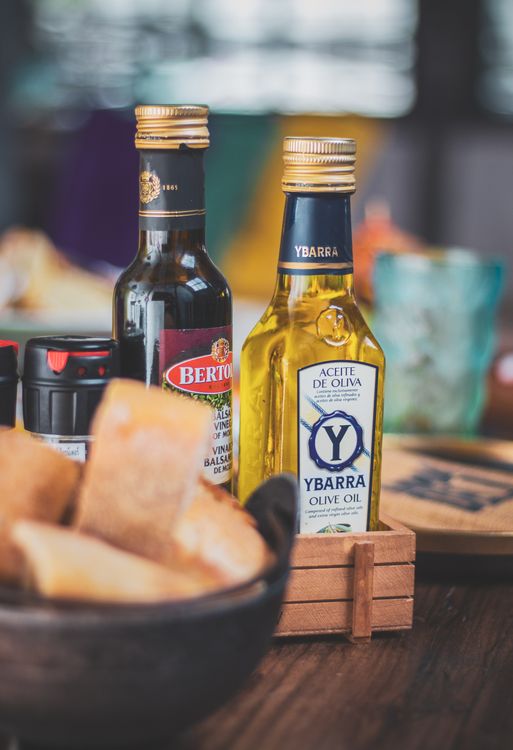
Read wine vinegar's source wording
Kamis describes its white-wine vinegar example as made from grape wine through natural fermentation and gives a 6% product. The phrase z białego wina identifies white wine as the source. That is more precise than treating every pale vinegar as interchangeable because its colour is similar.
A wine-vinegar label can therefore answer both a source question and an acidity question. Read those independently. Colour does not tell you the percentage, and a percentage alone does not tell you whether the starting material was apple wine, grape wine or another agricultural source.
Some manufacturer pages include broad nutritional or health-sounding language. This guide uses them for product identity and stated acidity only. It does not repeat claims that one concentration is friendlier to the body or that a wine vinegar supplies a meaningful personal health benefit.
Check ingredients without assuming every bottle needs a list
The EU food-information framework provides a specific ingredients-list exemption for fermented vinegars derived exclusively from a single basic product, provided no other ingredient has been added. The European Commission explains that condition in its discussion of the food-information rules. It is a narrow exemption, not a rule that vinegar labels never need ingredients.
Consequently, the absence of a separate list is not automatically evidence of missing information. Conversely, an ingredients list on a compound or flavoured product can be important. Read what is supplied rather than judging compliance from the length of the back label alone.
Do not use the exemption to invent the composition of a particular bottle. If the product's description leaves an important uncertainty, ask the manufacturer or choose one whose actual information answers your question. A general legal exception cannot confirm an individual recipe.
Keep allergen information separate from general expectations
If you have an allergy or intolerance, inspect the actual information on the bottle and any relevant manufacturer statement. The name wine vinegar or apple vinegar does not independently settle every ingredient or allergen question. Nor does a short online product description replace the supplied label.
This guide does not certify any of the example products as allergen-free. A manufacturer's broader range can contain different formulations, and a familiar front label is not a guarantee that a replacement bottle has the exact composition of your previous purchase.
When asking for clarification, identify the exact product, pack and label rather than just the brand. That gives the producer a meaningful question. A vague request about whether all vinegar contains a particular substance can miss the actual bottle you are trying to assess.
Compare the product before comparing the price
Two bottles with different sizes, names and acidities are not necessarily equivalent purchases. Establish the food identity first, then compare the stated quantity and price on an appropriate basis. A larger bottle does not settle whether it is the vinegar your intended use requires.
Avoid converting the label into a homemade strength-adjustment exercise. A price comparison can tell you what a bottle costs; it cannot validate a substitute in a preservation process or supply missing recipe instructions. Keep those questions with the appropriate recipe or specialist source.
For a routine shopping note, record the full name and acidity, not merely vinegar. If you liked a particular apple or white-wine vinegar, keeping that detail helps you identify a similar product next time without assuming a dark or clear appearance is enough.
Read storage and intended-use information on the actual bottle
Follow the product's supplied storage and use information. This guide does not assign every vinegar the same opened-bottle lifetime or promise that all formulations behave alike. Added ingredients and a different product identity can make a general assumption unhelpful.
Keep edible food products separate from household chemicals when selecting and storing them. The shopping task here is to find a properly identified food, not to repurpose an unknown liquid. If a bottle does not clearly answer that basic identity question, choose another product or seek clarification.
A reliable first purchase is therefore straightforward: read the food name, identify the source description, note acidity, and inspect any ingredients, allergen and use information. That sequence preserves the differences between spirit, apple and wine vinegar without attaching unsupported health claims or unsafe substitution advice.
If someone else is shopping for you, send the complete name and acidity from the bottle you want. That is a clearer request than asking for the usual vinegar and expecting the shopper to infer which source, strength or formulation you meant.
Frequently asked questions
Does 10% on spirit vinegar mean drinking alcohol?
Jamar describes its cited 10% product by acidity. Read the actual label rather than interpreting that figure as drinking-alcohol content.
Must every vinegar carry an ingredients list?
A specific EU exemption covers fermented vinegars derived exclusively from one basic product with no other ingredient added. It does not cover every vinegar-based mixture.