Wdzydze Skansen in Winter: Weekday Tours and Christmas Visits
The essentials: Wdzydze museum opens Monday–Friday 10:00–15:00 in November and December. Guided starts are 10:00, 12:00 and 14:00; choose an earlier tour. Listed admission is PLN 22/16/10. Ordinary winter weekends are closed. The Christmas-week free day is 23 December 2026.
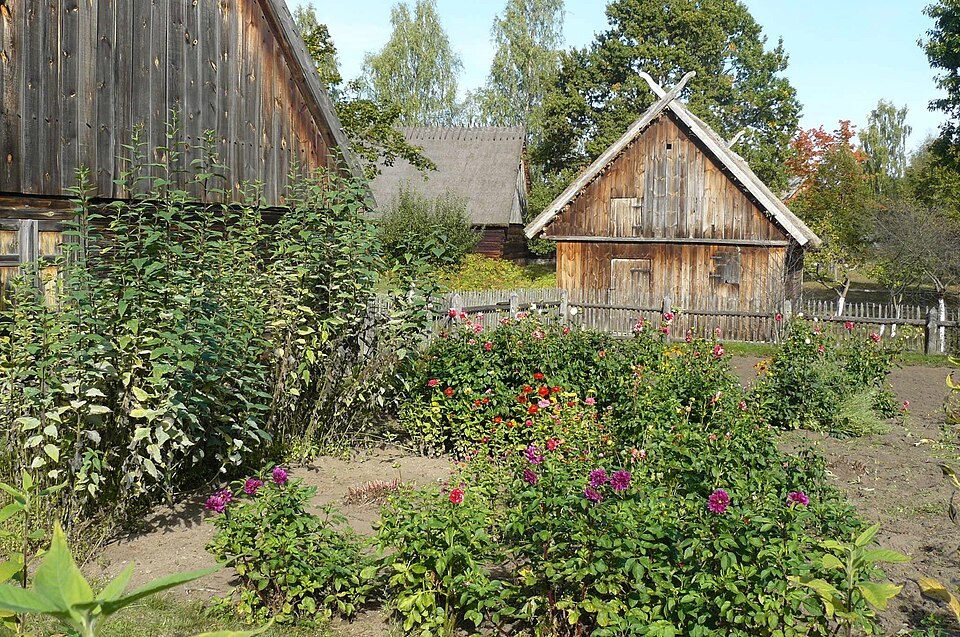
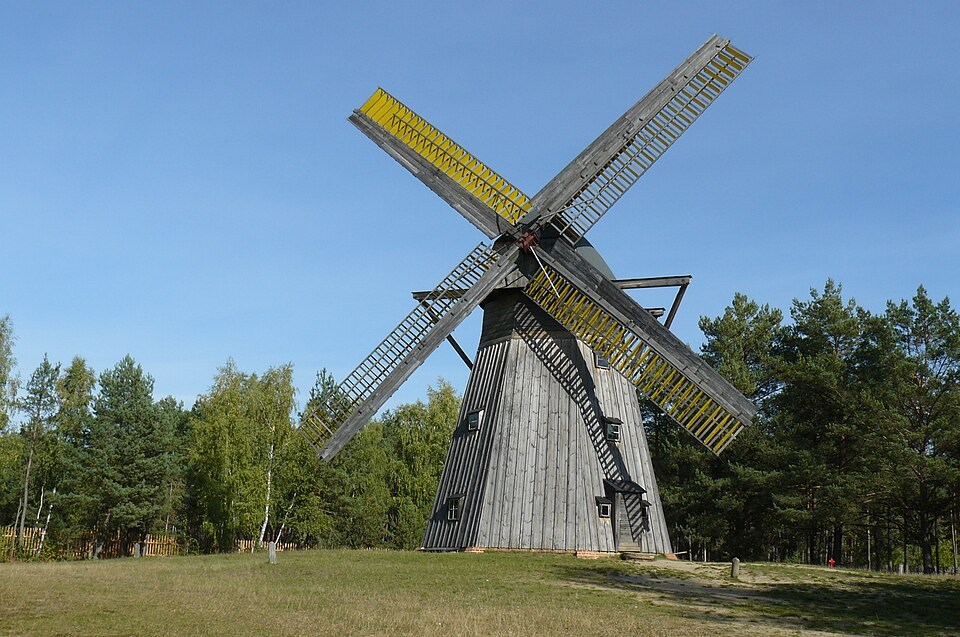
Cover: wooden museum buildings and a garden at Wdzydze on 2 October 2014. An archival exterior, not a winter-condition check. Photo: MOs810 / Wikimedia Commons, CC BY-SA 4.0. Resized and recompressed under the same licence.
A winter museum visit, not a weekend lakeside stop
Wdzydze's Kashubian Ethnographic Park remains a worthwhile winter destination, but its timetable reverses the pattern many visitors expect. In November and December it opens on weekdays, not ordinary Saturdays and Sundays. Selected buildings are shown with a guide, while the grounds and other available objects can be explored independently. That makes choosing the right day and departure more important than planning a long list of nearby attractions.
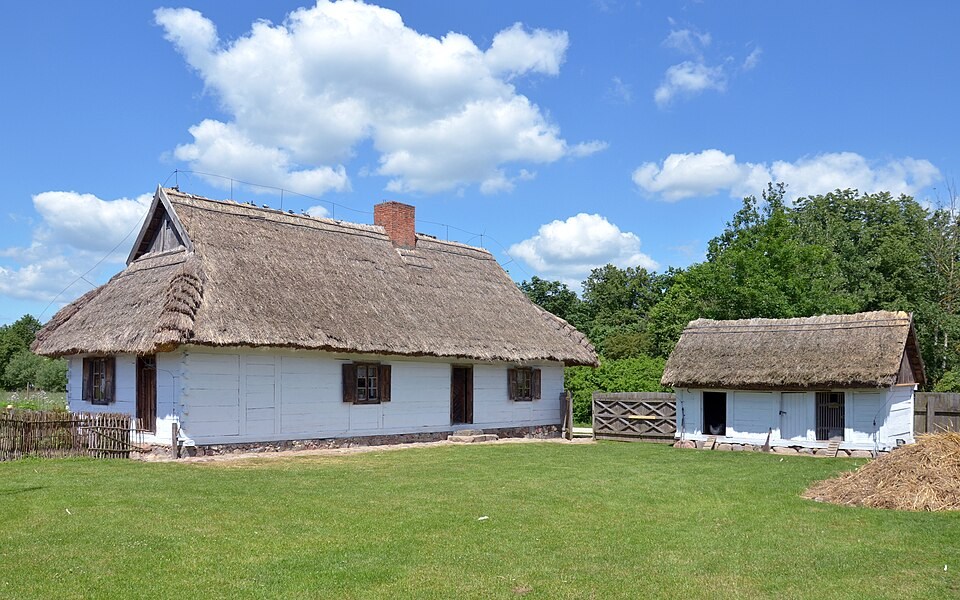
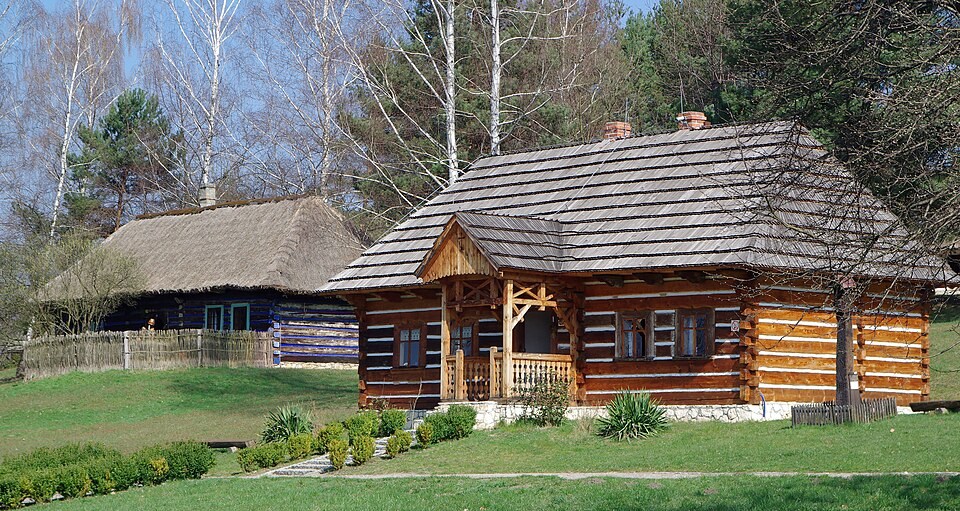
The museum stands beside Lake Gołuń at Teodory i Izydora Gulgowskich 68. Its collection brings together buildings from Kashubia, Kociewie and the Tuchola Forest region. These are related parts of Pomerania, not interchangeable names for one village tradition. Houses, farm buildings, churches, windmills, a school and workshops give a winter visit more substance than a walk past picturesque wooden walls.
This guide was checked on 28 November 2026 against the museum's current visitor information, homepage, 2026 events calendar, visiting rules and March 2026 access declaration. The November and December arrangements below should not be carried unchanged into spring or summer.
Pick a weekday and an early guided departure
The published November–December opening hours are Monday to Friday, 10:00–15:00. Ordinary weekends are closed for museum visiting. The current homepage and practical-information page list guided starts at 10:00, 12:00 and 14:00 in these two months. Search snippets and some older visitor summaries still show hourly departures. Use the current museum pages rather than planning around an extra 11:00 or 13:00 tour.
The operator describes a guided visit as approximately ninety minutes, with the guide included in admission. It also lists a 14:00 start alongside a 15:00 closing time. Those statements do not explain the late tour's actual finishing arrangements. Choose 10:00 or 12:00 for a less uncertain plan; if 14:00 is your only option, ask the museum how that departure works before travelling. Do not assume permission to stay until 15:30.
The ticket desk stops selling admission thirty minutes before closing, which means 14:30 on an ordinary 15:00 winter closing day. The rules also allow some interiors to close fifteen minutes before the museum does. Neither cutoff is a recommended arrival time. A late ticket purchase leaves very little of a large open-air collection to see.
January, February and March have their own published departure pattern, currently hourly from 10:00 to 14:00 on weekdays. April has a different opening week again. If you are using this article for a later trip, reopen the museum's visitor-information page and check the month rather than treating the November timetable as a permanent winter rule.
Tickets, free Thursdays and holiday exceptions
The museum's current public ticket page lists PLN 22 standard admission, PLN 16 reduced and PLN 10 special admission. It describes reduced eligibility for pupils, students, teachers and lecturers, people over 65, pensioners and other listed categories. The special category includes people with disabilities and their carers, Karta Dużej Rodziny holders and several other specified groups. Bring the document supporting your category and let the desk apply the correct rate.
Children under seven are listed for free admission. That is different from the separate rule requiring children under thirteen to be accompanied by an adult. Do not read either age threshold as a general promise that all children enter free. The complete eligibility list is on the museum page; a family with mixed ages should check each person's category.
Admission to the permanent exhibition is normally free on Thursdays. The museum's explicit 2026 notice moves the Christmas-week free day to Wednesday, 23 December, because Thursday, 24 December is closed. The same website still contains 2025 footer text, so use the dated 2026 notice rather than copying last year's replacement dates.
The current closure notice lists 24, 25 and 26 December, as well as 1 and 6 January. November closures include 1 and 11 November. A Christmas-programme date range does not override these closures or open ordinary winter weekends. The museum's visiting rules say no admission ticket is needed on the weekly free-exhibition day, but paid workshops and specially arranged activities should not be assumed free.
Under the published visiting rules, tickets are bought on site, with cash, card or BLIK accepted. Admission is for one entry and tickets are non-refundable. A dated tariff order is also listed in the museum's public-information bulletin, but its attachment could not be inspected for this guide. The prices above are those displayed on the museum's own visitor page, not a claim that the inaccessible attachment was checked.
What the guide and the collection add
The museum began in 1906 through the work of Teodora and Izydor Gulgowski. Its first collection occupied an eighteenth-century farmhouse bought from a local resident. Household objects, ceramics, glass paintings and embroidered caps helped tell a story that went beyond the architecture itself. The founders' work also connected museum collecting with local craft and embroidery.
Today the grounds cover about 22 hectares. The operator describes more than fifty buildings, with a recent anniversary account giving fifty-nine. That scale is a reason to select a route, not a challenge to enter every building. A guided winter visit introduces selected interiors; it does not mean every door across the site will be open, heated or staffed.
Look for differences in how buildings were used. A school, a smithy and a farmhouse answer different questions about work, learning and daily life. The museum's wider collection includes houses and farm structures from several regions and periods, from the seventeenth to the twentieth century. Ask which interiors are included that day and which objects can be visited independently afterwards.
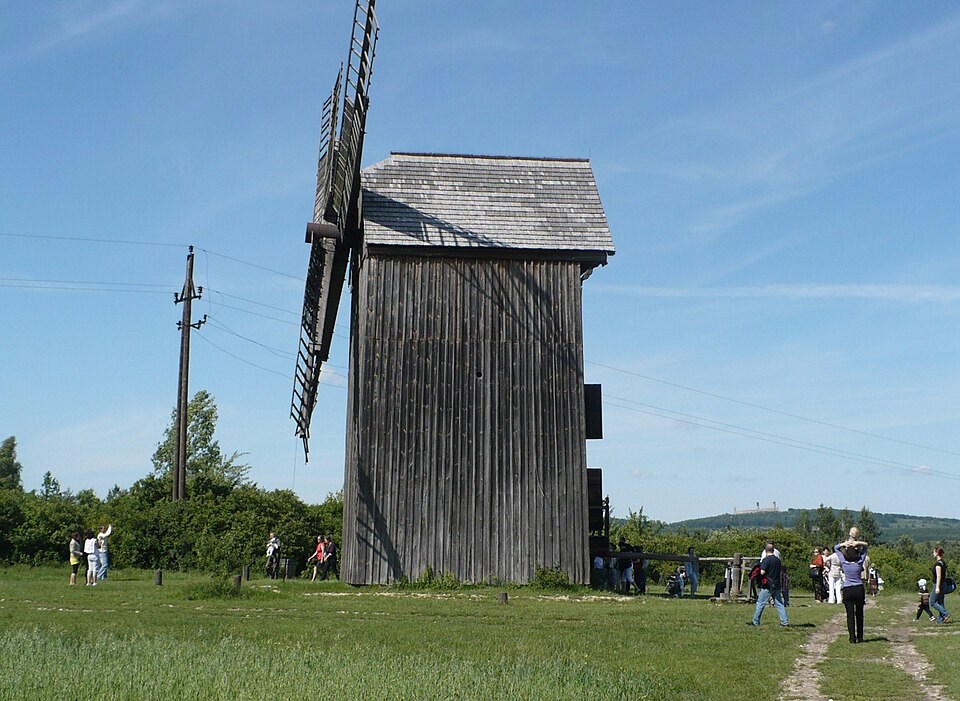
The standard information suggests roughly three hours for independent visiting, compared with about ninety minutes for the guided part. These are planning estimates rather than a required pace. An early departure leaves room for a shorter outdoor circuit afterwards, while someone who tires quickly can agree priorities before the guide starts. Do not assume machinery or windmill demonstrations happen during an ordinary winter visit.
Christmas programmes need their own check
The 2026 calendar lists Gwiôzdka jidze przez Wdzydze from 24 November to 31 December, combining interactive visiting about Christmas customs with Christmas-in-Kashubia workshops. It separately lists Godë, the ceremonial decoration of cottages and the church, from 14 December 2026 to 29 January 2027. These are different programme windows. A late-November visit should not be sold as seeing decorations whose published start is in mid-December.
The calendar also lists a St Barbara's Day Mass at noon on 4 December in connection with the church from Swornegacie. Worship is not the same thing as a museum tour or a workshop booking. If an activity is the main reason for your journey, confirm the date, language, capacity, booking requirement and price directly with the museum. An ordinary admission ticket is not evidence that a separate class is reserved.
English-speaking visitors should make the same distinction about guiding. The winter pages describe included guided visiting but do not establish that every scheduled departure is led in English. Ask about the language of the actual departure. English information elsewhere on a website, or an audio-download icon, is not a substitute for confirming the spoken tour you intend to join.
Access depends on the route and the weather
The museum's access declaration, prepared on 31 March 2026, is unusually specific about physical barriers. Paths may be uneven, muddy or slippery, especially during rain or snow. Old buildings can have narrow entrances, high thresholds, low ceilings and steps. An accessible ticket desk therefore does not mean an accessible route through every interior.
The ticket desk is in the inn from Rumia, known on signs as karczma z Rumi. The main approach includes paving. An alternative partly unpaved approach from the car park leads to a second entrance on the building's left side, where there is a ramp. The declaration also lists a ramp at the cottage from Osiek. Portable ramps at the church from Swornegacie need to be requested several days ahead.
Two designated accessible parking spaces are opposite the museum entrance. The declaration lists five adapted toilets: by the car park, in the Rumia inn, in the Osiek cottage, by the school from Więckowy and by the cottage from Stara Huta. Ask which are on your intended winter route and available that day, rather than relying on a distant toilet halfway across the grounds.
Assistance and guide dogs may enter the museum's buildings. Ordinary pet dogs are welcome on a lead outdoors but cannot enter exhibition buildings, apart from the permitted passage through the Rumia inn. That matters if everyone in your party wants to take the interior tour: do not arrive expecting a pet to accompany the whole group inside.
The declaration does not currently offer an on-site or online sign-language interpreter. It describes benches and the restaurant as summer provisions. Bring warm waterproof clothing, allow a shorter route if conditions demand it and confirm any essential rest or food stop before relying on it. A quiet winter day can still involve substantial outdoor exposure.
Make the arrival and family plan practical
Use the museum entrance at Gulgowskich 68, not another attraction elsewhere in Wdzydze. The operator lists free parking for museum visitors, including cars and coaches. This guide has not verified a live bus timetable or a workable return connection. If travelling without a car, establish both directions for your exact weekday before fixing a guided departure around an assumed service.
For children, ask whether the interactive Muzeum do zabawy? exhibition in the Osiek cottage is included in that day's accessible route. The visiting rules identify it as the exception where designated exhibits may be touched. That is not permission to handle objects in other furnished rooms. The museum also describes loan pushchairs for children under seven, but winter path conditions can still make wheeled travel difficult.
A sensible plan is to arrive before a 10:00 or 12:00 departure, confirm the day's interiors and language at the desk, take the guided part and then decide how much outdoor walking suits the weather. Check the free-day or holiday notice immediately before leaving. That approach leaves the visit about Kashubian life and buildings, rather than discovering at the gate that a summer weekend plan does not work in winter.
Frequently asked questions
Is Wdzydze museum open on winter weekends?
The published November–March opening week is Monday to Friday, 10:00–15:00, subject to holiday closures. Do not use the summer weekend timetable for a winter visit.
Does the 14:00 tour finish after closing?
The museum lists a 14:00 departure, approximately ninety-minute guiding and 15:00 winter closing without explaining the late-tour format. Choose 10:00 or 12:00, or ask the museum how the last departure works.
Are Christmas workshops included in ordinary admission?
The calendar lists interactive visiting and workshops but does not establish a reserved place or price for your visit. Confirm the programme, booking requirement, language and cost separately.
Sources
- Museum: current winter departure notice
- Museum: hours, listed ticket prices and 2026 free-day notice
- Museum: 2026 programme calendar
- Museum: March 2026 access declaration
- Museum: visiting rules, entry and interior cutoffs
- Museum: collection and educational offer
- Wdzydze Landscape Park: collection and interactive exhibition
- Tripto: independent October 2026 visitor summary