Tokarnia Skansen in Winter: Tickets, Monday Walks and Access
The essentials: Tokarnia ethnographic park opens 09:00–15:00 in November–March. Monday entry is free except holidays, but interiors, guides and the cash desk are unavailable that day. Winter tickets are PLN 20 adult, PLN 15 reduced or PLN 50 for the 2+2 family product. Foreign-language guiding is separate and needs arranging.
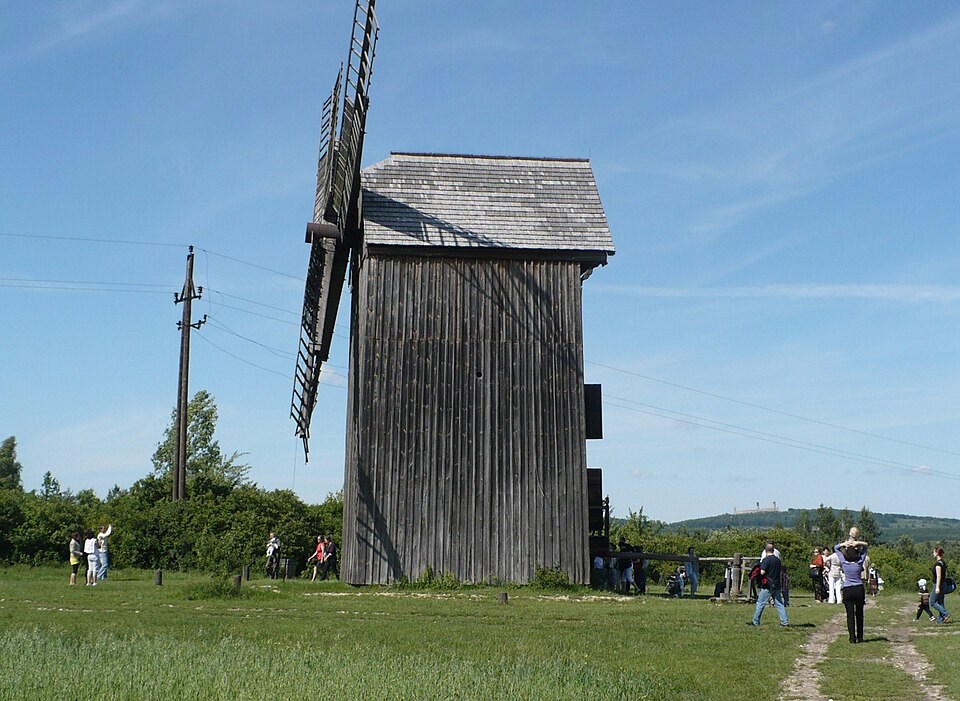
Cover: the windmill from Grzmucin in Tokarnia on 14 June 2009. An archival exterior, not a winter-condition or current-access check. Photo: Michał Derela / Wikimedia Commons, CC BY-SA 4.0, selected from the available licences. Resized and recompressed under the same licence.
Choose between a free walk and a fuller museum visit
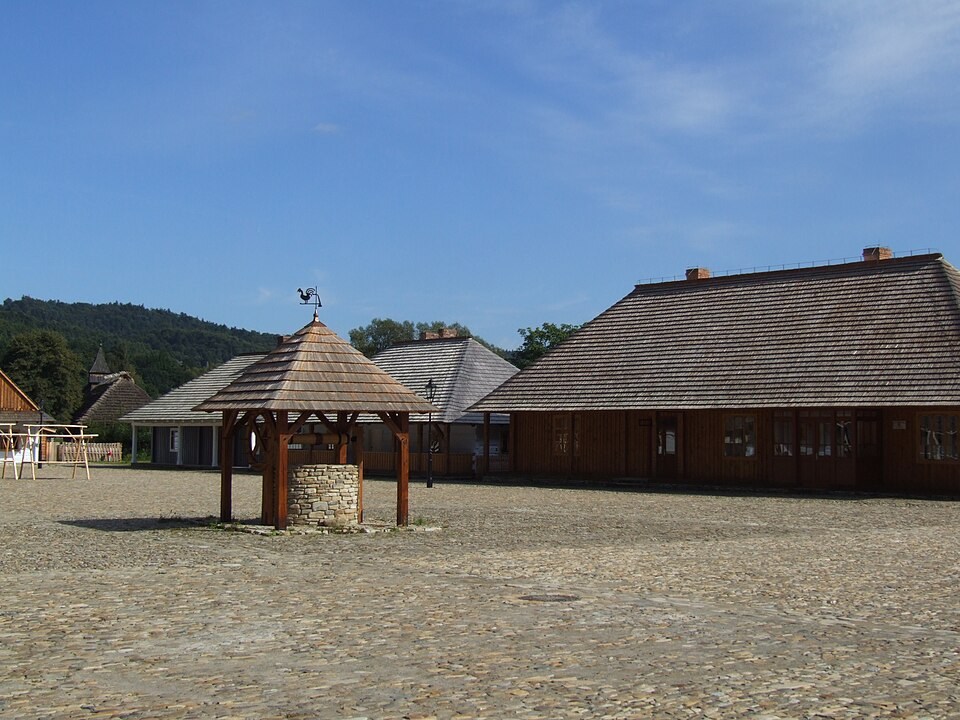
Tokarnia's ethnographic park is an outdoor museum of villages and small-town life from the Kielce region. It is large enough to reward a focused visit rather than a hurried attempt to see every building. In winter, the most useful first decision is whether you want a free Monday landscape walk or a paid visit on a day when interiors and booked services can be available.
The distinction is explicit in the museum's current information. Monday admission covers the permanent display of traditional buildings from outside, without entering interiors. The museum's October 2026 pre-visit guide also says the cash-desk building is closed and museum guides are not present on Mondays. A free day is therefore a different product, not the full ordinary visit at a lower price.
This guide was checked on 28 November 2026 using the operator's tariff, opening hours, education pages, visiting rules and pre-visit guide. An attractive photograph does not establish that a cottage, mill or manor will be open on your date. If one particular interior matters, confirm it before travelling.
Find the park in Tokarnia, not the museum office in Kielce
The park is at Krakowska 109, Tokarnia, in the municipality of Chęciny. The museum's administrative address at Jana Pawła II 6 in Kielce is not the skansen entrance. Check the town as well as the street before arranging a taxi or meeting friends.
The operator places the park about twenty kilometres from Kielce, near the S7 route towards Kraków. Its pre-visit guide describes a large free parking area with seven designated spaces for disabled visitors. That is a description of the provision, not a live parking-space count.
After the large wooden museum gate, the ticket desk is in the historic granary from Chęciny on the right. The approach continues across a small paved area towards ticket-control turnstiles. For wheelchair users and visitors with pushchairs, a side gate runs alongside them and is opened by staff on request.
The ticket desk's published mobile number is +48 515 458 649. The park also lists +48 41 315 41 71 and +48 519 467 107. Use the desk for opening and ticket questions; when asking about a guide or a specific access arrangement, explain the date and what you need to see.
Winter closes earlier than a summer day out
From November through March, the current opening page gives 09:00–15:00 Tuesday to Sunday. Monday's free outdoor visit is also listed at 09:00–15:00. On paid visiting days, the cash desk operates from 08:30 to 14:30. Its earlier opening does not mean the park opens at 08:30.
Likewise, the desk's 14:30 closing is not a sensible starting point for a complete visit. The pre-visit guide suggests about three hours for a walk around the whole skansen, with shorter routes possible. A booked guided route lasts up to two hours. Arrive with enough daylight and museum time for the route you actually want.
The museum explains its changing seasonal hours partly through the lack of lighting across the grounds. Treat winter closing as a real limit rather than expecting an illuminated evening walk between cottages. Check the weather and ground conditions separately, especially when frost, snow or rain would affect your route.
The current closure list includes 1 and 6 January, Holy Saturday, Easter Sunday and Easter Monday, Corpus Christi, 1 and 11 November, Christmas Eve and 25–26 December. Some named holidays can be opened by a separate director's order. Monday free admission excludes holiday Mondays, so do not assume that a bank holiday creates an extra free visit.
Winter tickets and named-card discounts
The November–March tariff lists adult admission at PLN 20 and reduced admission at PLN 15. A family ticket described as 2+2 costs PLN 50. Children under seven enter free. Check the family product's conditions for your party rather than assuming it covers any group of four.
Several special prices depend on specific cards. Winter admission for Karta Dużej Rodziny holders is PLN 10, for Karta Seniora holders PLN 7, and for holders of the Tokarnia resident card PLN 3. These are named-card products, not a promise that every older visitor, large family or person staying locally receives the same price.
The tariff says statutory reduced and free admission requires the relevant documents. If your entitlement rests on a document issued abroad, ask whether it is accepted before buying. Do not assume a foreign student or senior card has the same status as the Polish document named by the museum.
For an ordinary winter visit, use the dedicated current tariff rather than copying an admission figure from an education activity's description. Some education sections give different pupil prices and different free-carer ratios. Those details may relate to particular activities or older arrangements. Ask for the total for your actual group instead of combining the cheapest figure from each page.
A guide needs a booking, and language needs confirmation
The published Polish guide service costs PLN 300 for up to thirty people, lasting up to two hours. Foreign-language guiding costs PLN 350 for up to ten people or PLN 400 for up to twenty-five, also up to two hours. These are service charges separate from admission tickets.
The foreign-language tariff does not guarantee an English guide on demand. Request English, the group size and the intended route when contacting the museum. Ask which interiors are included and whether the planned route suits the ages and mobility needs of the party.
The education page asks for advance arrangements with the education department on weekdays from 07:00 to 14:30. Its thematic-tour instructions call for a written order at least a week before the agreed date and say groups without that written form are not accepted. Treat an enquiry or a price list as preparation, not a confirmed reservation.
Ask for the applicable booking and cancellation terms in writing as well. The education instructions and the wider paid-services rules do not present one identical notice period, and the wider rules describe a non-refundable thirty-percent deposit with limited exceptions. A change of plans should not be based on an assumption of free cancellation.
Read a regional landscape, not a row of isolated houses
The museum describes more than sixty-five hectares and over eighty historic structures, arranged to represent settlement patterns from different parts of the Kielce region. Its plan separates small-town, upland, Świętokrzyski, loess, manor-and-farm and Vistula-area sectors.
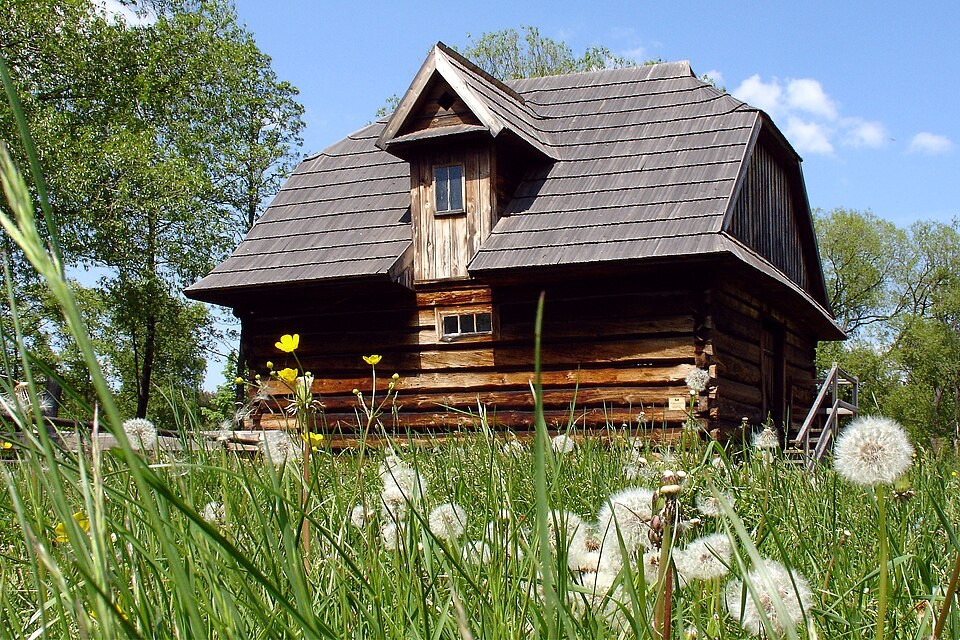
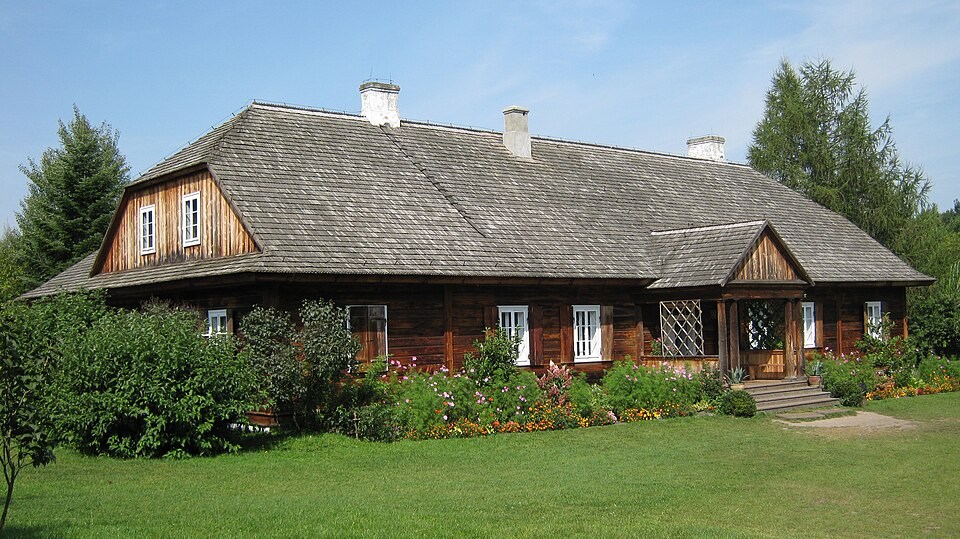
That arrangement is part of the subject. Look at how homes, workshops, stores and farm buildings relate to one another, and how the setting changes between a village farm and a manor household. A shorter walk through contrasting sectors can make more sense than collecting photographs of every roof.
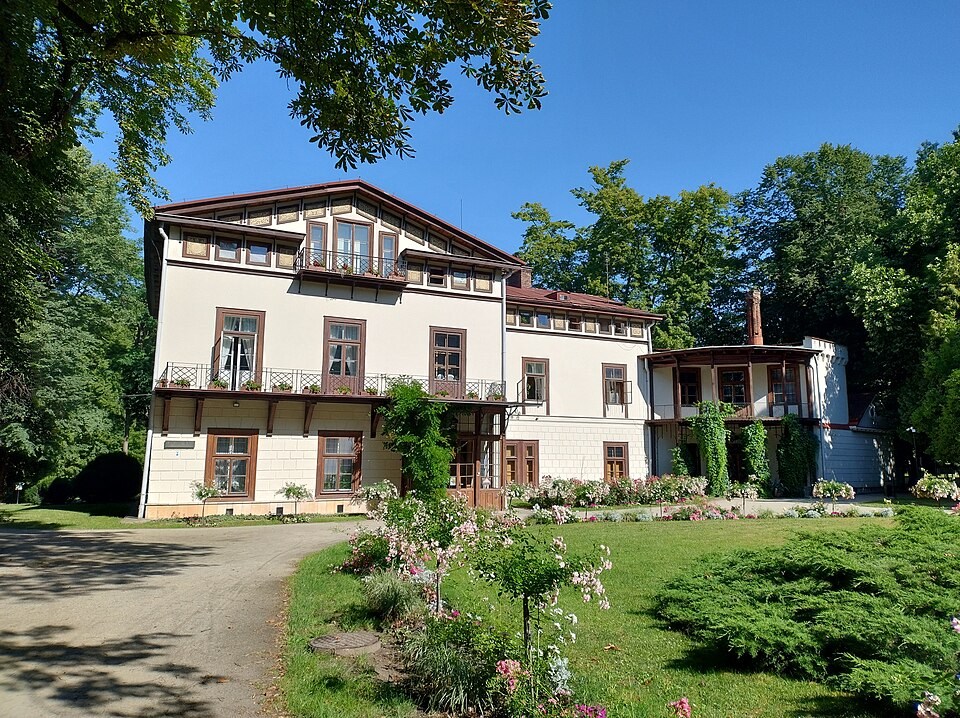
The operator identifies the manor from Suchedniów, the church from Rogów, windmills and watermills among the park's attractions. Its thematic tours explore daily and festive life, disappearing trades, religious imagery and textile-making. Those are useful ways to choose a focus when arranging a guide.
Do not read a sector description as an opening guarantee. The visiting rules allow buildings to be withdrawn because of repairs, construction or rentals. The pre-visit guide also says some interiors are seen through a wooden barrier and not every building is open all the time.
Access starts with the surface and the chosen buildings
The October 2026 pre-visit guide is more useful for practical access planning than a generic accessibility label. It describes split-granite paving near the entrance followed by partly hardened earth routes, with gravel, grass and wooden surfaces elsewhere. A side gate at the turnstiles helps with entry, but it does not make every path or interior step-free.
The visiting rules warn about high thresholds, low doorways, steep stairs, slopes and steps, particularly after rain. Historic rooms can also be dim. Tell staff which mobility equipment you use and ask which buildings can be reached and entered on the proposed route.
Adapted toilets are listed near the main entrance and in the manor-and-farm sector. Ask where they sit relative to your shorter route and whether both are available that day. Planning around a known toilet and a manageable return distance may be more useful than trying to reach the farthest object on the map.
The tariff includes a tourist transport-cart rental, but that is not evidence of a wheelchair loan. If you need a mobility aid or help with a particular threshold, ask specifically. Do not rely on a similarly named rental item to solve a different access need.
Tactile and sensory visits are a specific offer
The pre-visit guide identifies a sensory room in the cottage from Nasiechowice in the upland sector. It is the designated exhibition space where visitors can touch selected objects while learning their use. That does not extend permission to handle furniture, tools or museum animals elsewhere.
Tactile guides can be borrowed at the ticket desk. The education page also describes an adapted guided visit using raised illustrations, spoken descriptions and selected objects such as an old iron or washboard. That service is about two hours for up to ten participants, with up to ten accompanying carers. Ask about its price, availability and language rather than assuming the ordinary foreign-language tariff settles every detail.
For visitors sensitive to sound, the pre-visit guide warns about groups, maintenance activity and potentially loud Sunday folklore events. Toilet hand dryers can also be noisy. Check the event calendar, bring whatever hearing protection helps, and agree a quieter route if needed. A large outdoor site is not automatically a silent one.
Do not depend on the seasonal bus in winter
The museum's pre-visit guide says the seasonal T bus from Kielce runs in the visitor season, generally on Sundays and selected holidays, and does not run outside that season. It is therefore not a dependable winter connection simply because a summer travel article mentions it.
The guide points to private buses on the Kielce–Jędrzejów corridor and other regional services, but no live departure or return timetable was verified for this guide. Check the operator, exact stop and both directions for your date. Wolica railway station is described as about three and a half kilometres away, which still leaves a separate onward journey.
A practical winter plan is to settle transport first, choose Monday only if an outdoor walk is enough, and arrange any guide or essential interior before travelling. Arrive early at Krakowska 109, use the current tariff and keep the route realistic for the light and ground conditions. Tokarnia offers a substantial picture of regional life without needing every building to be part of the same visit.
Frequently asked questions
Are interiors open on the free Monday?
No. The museum limits Monday entry to the outdoor permanent display of traditional buildings. Its October 2026 pre-visit guide says the cash desk is closed and museum guides are absent that day.
Does the seasonal T bus run to Tokarnia in winter?
The museum says the seasonal T bus does not operate outside the visitor season. Check regional transport and the return journey for your actual date rather than relying on a summer route description.
Is the park fully wheelchair accessible?
No such guarantee is established. Staff can open a side entrance gate, but the museum describes uneven paving, earth and grass paths, high thresholds and steep steps. Discuss the exact route and buildings in advance.
Sources
- Museum: winter tariff and guide fees
- Museum: current opening hours and holiday closures
- Museum: October 2026 pre-visit guide, access and seasonal transport
- Museum: park description, sectors and contact
- Museum: visiting rules
- Museum: guide services, adapted visits and advance orders
- Museum: paid-service booking and deposit rules