Witness and victim protection in Poland: what the 2026 text says
Short answer: Poland's act on protection and help for victims and witnesses offers police protection during hearings, personal protection and relocation help when life or health is at risk. The regional police commander decides within 14 days.
Most expats in Poland will never need the law on protection and help for victims and witnesses. It is meant for the rare case where someone faces a real threat to life or health because of a criminal case. Still, it is useful to know it exists, what it covers and who decides. On 8 October 2026 the Marshal of the Sejm published a consolidated text of the act of 28 November 2014 on protection and help for the victim and the witness (Dz. U. 2026 poz. 1306), reflecting the legal position as of 30 September 2026. The notice says the only amendment included is the one from the 2024 Criminal Code amendment act, which took effect on 13 February 2025. This is a reading copy, not a new law.
This article describes what the act says. It is not legal advice. If you are in danger now, contact the emergency services at once.
Who the act is for
The act covers a victim or a witness, and their closest persons, when a criminal or fiscal criminal proceeding is going on or has ended and there is a threat to life or health. The measures can also start before the proceeding begins, if the threat appears during operational work or preliminary checks. Closest persons are defined by reference to the Criminal Code. In assessing the threat, the police look at the person's characteristics and circumstances, the link with the offender, the type and circumstances of the offence and the offender's motive.
The text I checked does not mention nationality or foreigners at all. It speaks of the victim and the witness. So the act does not say that a foreigner is treated differently, but it also does not describe special rules for non-residents, for example on language help. For that, other laws on the rights of crime victims apply.
Three types of measures
The act lists three measures.
Protection during a procedural step. Police officers can be present near the protected person during a hearing or other step, and on the way there and back. It can be granted when life or health is under threat.
Personal protection. This needs a high level of threat and a need for long protection. The act ties it to cases heard in the first instance by a regional court, and to certain offences in the Criminal Code (art. 197 paragraphs 1, 1a and 2, and art. 207), and in particularly justified cases to other cases too. It can mean a permanent or temporary presence of officers nearby, temporary observation of the person and the surroundings, pointing out safe places and safe ways of moving, and setting the scope and manner of the person's contact with others.
Help with changing the place of residence. This is the strongest measure. It also needs a high level of threat and a need for long protection, and it applies when other measures may not be enough. It can include a temporary flat, help renting a flat, help with moving and setting up, and help with important life matters connected with the move.
Money and health care
A person who gets help with changing the place of residence and has no income, or cannot work because of the threat, can get financial help. It can cover basic living needs, all or part of the cost of a temporary or rented flat, and the cost of health care if the person is not covered by compulsory health insurance. The monthly help for basic needs is capped at 3,500 zloty, and at 2,000 zloty for a minor. Payments for rent and damage to the flat are deducted. Help with health care is limited to the monthly voluntary health insurance contribution calculated from the average monthly wage described in the health care act.
Psychological help
Where there is a threat to mental health, the authority running the case, or the court, must tell the victim or witness about the option of psychological help from organisations funded by the Victims Assistance and Post-penitentiary Fund, with a list and contact details. On the person's request, the authority or court calls such an organisation to give help within 14 days of the call.
Who decides and how fast
Measures are granted by the voivodeship police commander (in Warsaw, the Capital City police commander) for the area where the protected persons live. Each of those police headquarters has a coordinator for protection and help. The request is made in writing by the victim or witness, through the authority or court running the case, which may add a written opinion. The authority or court can also file the request, but only with the person's consent.
The commander must issue the decision within 14 days of receiving the request, and the decision is enforceable immediately. If the request is refused, the person has 7 days from the notice of refusal to ask for reconsideration. A repeated request without new circumstances is not examined. In particularly justified cases, measures can apply until the request is examined.
Before measures start, an adult protected person signs a written undertaking to follow the rules and recommendations. People under personal protection or relocation help must give the police information needed to carry it out, including on family and social contacts, property and health. A psychological examination can be done only with consent. Measures are set for a fixed time and can be extended with the person's consent.
Secrecy
Taking evidence aimed at revealing that protection was granted, or how it is carried out, is not allowed. Information about it is protected under the law on protection of classified information.
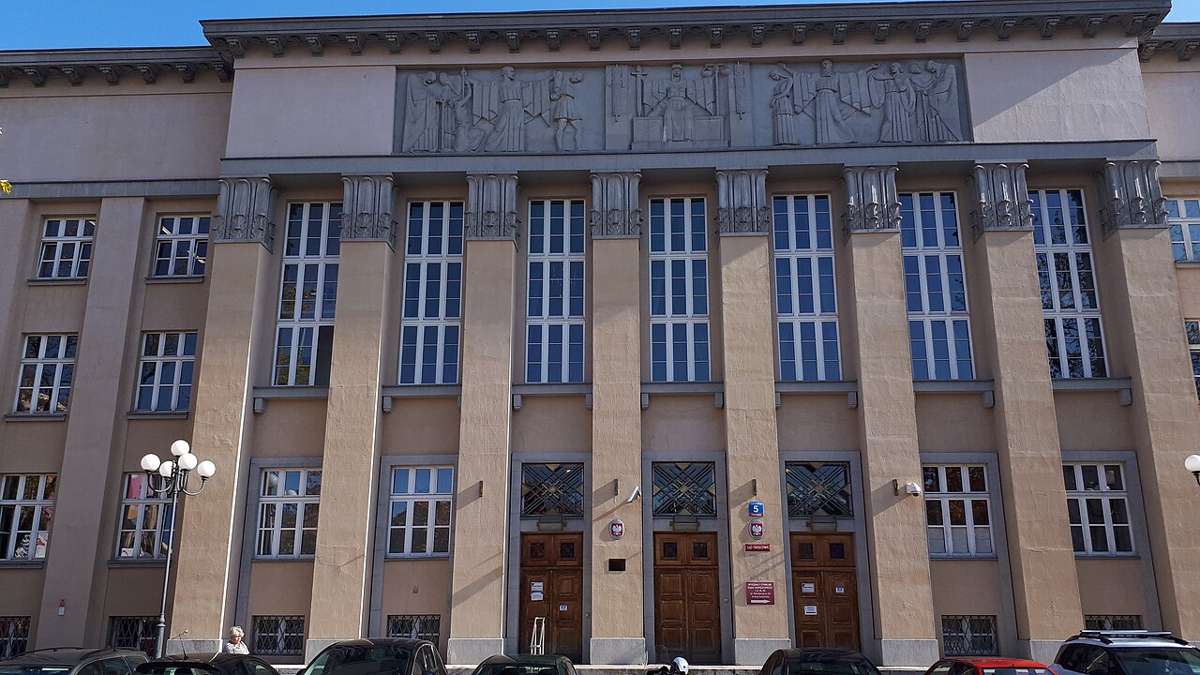
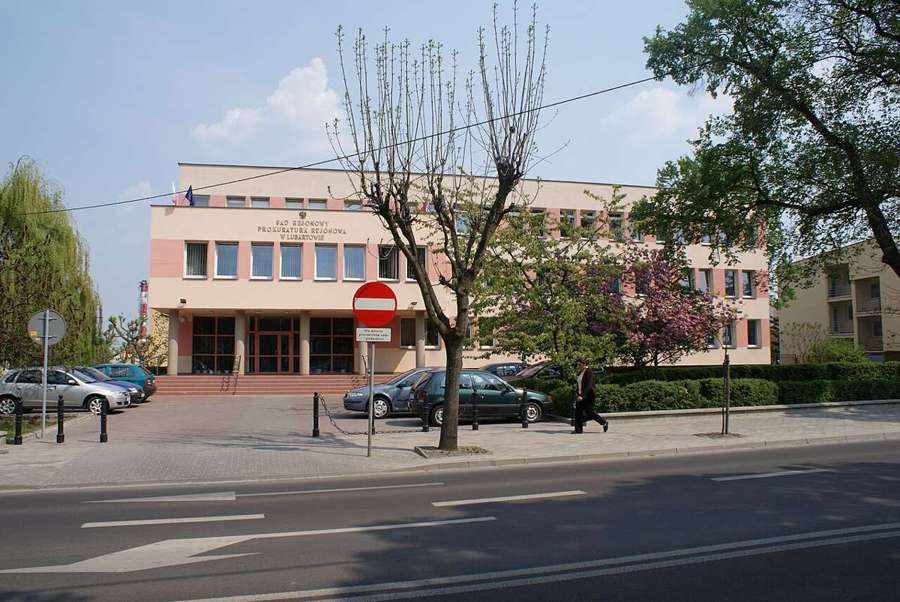
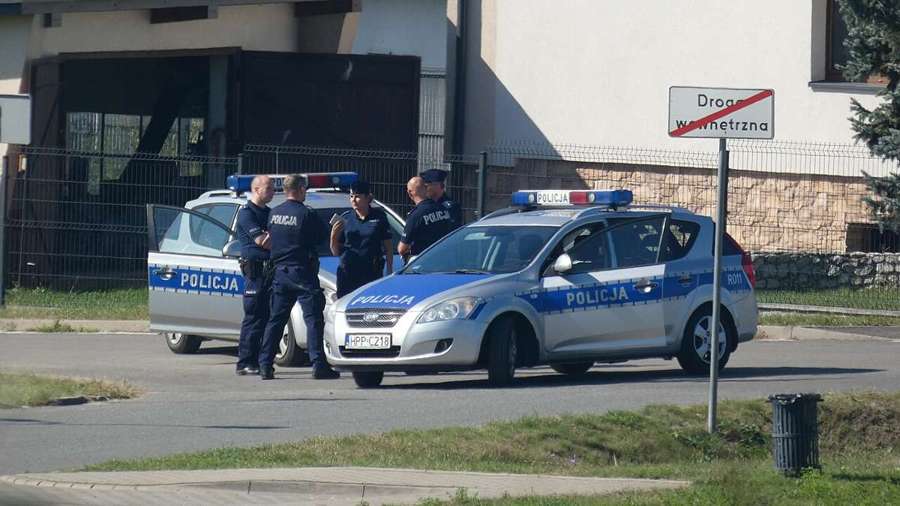
* Photos: Police at a flood barrier, Poland 2024, and District Court in Lodz, both CC0, Wikimedia Commons. Illustrative.
Frequently asked questions
Who grants witness and victim protection in Poland?
The voivodeship police commander (in Warsaw the Capital City police commander) for the area where the person lives, on a written request. The decision is due within 14 days (Dz. U. 2026 poz. 1306, art. 3 and 12).
How much financial help can a protected person get?
Help for basic living needs is capped at 3,500 zloty a month, or 2,000 zloty for a minor, and applies only to people given help with changing their place of residence who have no income or cannot work because of the threat (art. 7).
What if the request is refused?
The person can ask for reconsideration within 7 days of the notice of refusal. A new request with no new circumstances is not examined (art. 12).