Włocławek Museums: Winter Tickets, Free Friday and Branch Access
The essentials: Włocławek city museum branches normally open Tuesday 10:00-17:00, Wednesday-Friday 10:00-16:00 and weekends 11:00-16:00 in winter. Arrive one hour before closing. Friday admission is free; guiding is separate. Zbiory Sztuki lists 28 November 2026 as closed.
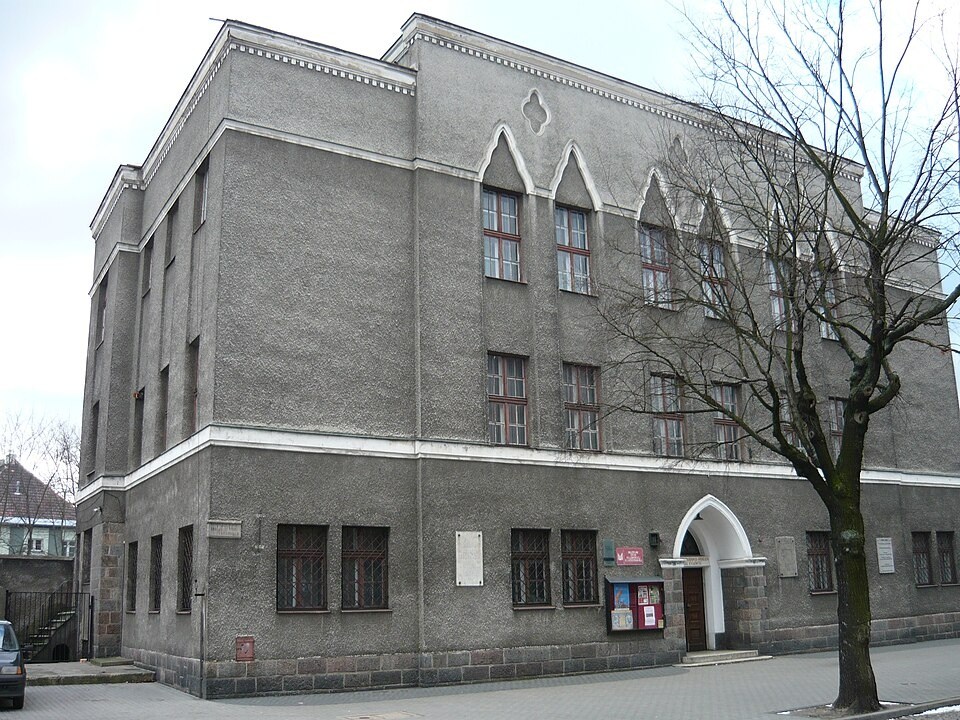
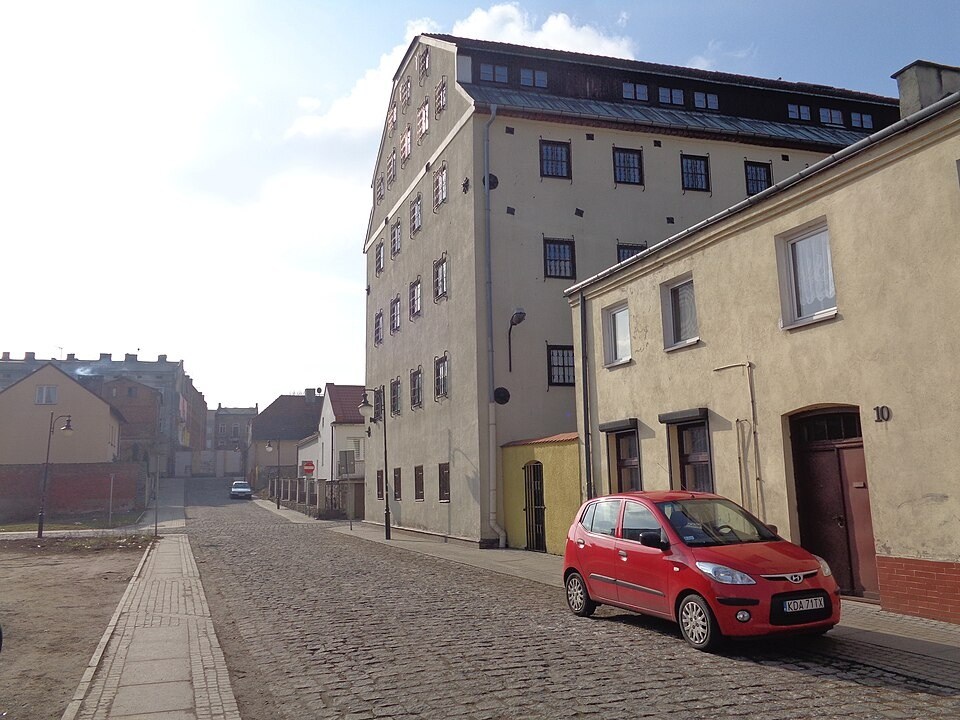
Cover: main regional museum building in February 2011, not a current access diagram. Photo: Mariochom / Wikimedia Commons, CC0. Resized and recompressed.
Włocławek's regional museum is not one building with a single collection. The Muzeum Ziemi Kujawskiej i Dobrzyńskiej has separate city addresses for faience and portraits, local history, ethnography and art. Choosing the right door matters more than buying the cheapest ticket: the famous painted ceramics are in the main building, while the city's chronological history is at Szpichlerna 19.
This guide checks the museum's own information on 27 November 2026. The immediate weekend exception is important: Zbiory Sztuki lists Saturday 28 November 2026 as closed, despite its usual Saturday opening. Other branches have their own dated exceptions. Use the consolidated opening-hours page before travelling rather than assuming a timetable on an individual branch page tells the whole story.
Choose a collection before choosing a ticket
Gmach Główny, Słowackiego 1a: start here for Włocławek faience and the Gallery of Polish Portraits. The building was designed by Stefan Narębski and constructed in 1925-1930 specifically for the museum. Its ceramics display explains production and decoration rather than presenting only the familiar blue floral souvenir style. This is the most direct choice if a plate, jug or family collection first made you curious about the city.
Muzeum Historii Włocławka, Szpichlerna 19: choose this for a chronological introduction to the city and surrounding region. The museum occupies connected historic houses near Stary Rynek. Its nine thematic spaces move from prehistory through medieval Włocławek, industrial growth, independence, war and the Polish People's Republic. This is a different ticket and entrance from the main building.
Muzeum Etnograficzne, Bulwary im. Marszałka Józefa Piłsudskiego 6: this is the separate ethnographic branch. Its riverside address can fit a city walk, but do not assume that an attractive granary exterior means an entire interior is accessible without stairs. The museum's access statement distinguishes the ground-floor permanent display from upper floors.
Zbiory Sztuki, Zamcza 10/12: this art branch occupies an adapted nineteenth-century granary. Its permanent displays include Stanisław Zagajewski's ceramic sculpture and the Kujawy Gallery of Polish Art of the nineteenth and early twentieth centuries. It is not the address for the main faience exhibition. For the publication weekend, the listed 28 November closure rules out the normal Saturday plan here.
Winter hours and the one-hour arrival deadline
For the four Włocławek city branches, the published winter season runs from 1 November to 31 March. The usual timetable is Tuesday 10:00-17:00, Wednesday-Friday 10:00-16:00 and Saturday-Sunday 11:00-16:00. Mondays are closed. These are routine hours, not a guarantee against a branch-specific closure or an event replacing ordinary admission.
The museum states that visiting is possible no later than one hour before closing. Plan to enter by 16:00 on Tuesday and by 15:00 on the other normally open winter days. This is not a suggestion to arrive at 15:55 for a building that closes at 16:00. Allow additional time if you need help at the desk, concession checks or a conversation about which rooms you can reach.
The consolidated page includes dated exceptions absent from some individual timetable pages. For example, it lists the main building and ethnographic branch as closed on 7 and 21 November, and Zbiory Sztuki on 14 and 28 November 2026. The earlier dates are past exceptions, not continuing closures. Check the specific date again for a later visit. Annual holiday closures are listed separately, including 1 January, 6 January, 1 May, Corpus Christi, 15 August, 1 November, 11 November and Christmas Day, with Easter-related exceptions too.
Tickets: 10 zł is not the price of every branch
The current official ticket table lists 10 zł standard and 7 zł reduced for the main building, ethnographic museum and Zbiory Sztuki. The History Museum costs 14 zł standard and 9 zł reduced. These are branch prices. The cited table does not establish one city-wide combined ticket, so budget for separate admissions unless the ticket desk confirms another current offer.
As a planning calculation, the main building plus History Museum would be 24 zł for two standard admissions or 16 zł for two qualifying reduced admissions. That is arithmetic using the listed branch rates, not a package sold by the museum. The difference is useful when deciding between one focused collection and a longer day with two stops.
Fridays are marked free admission in each city branch's tariff. That does not make a paid guide or workshop free. Check the conditions of any temporary exhibition or separately advertised event rather than treating the Friday row as an unlimited all-services pass. Ordinary Friday winter hours still end at 16:00, with the one-hour arrival rule.
The museum lists reduced categories including pupils, students, doctoral students and teachers, explicitly including foreign pupils and teachers, as well as people over 65, pensioners and disabled visitors with carers. A qualifying document and identity document are required. Being a foreign resident is neither a blanket discount nor a reason to assume you cannot qualify. Bring evidence appropriate to your category and ask the desk if your document needs clarification.
Families, groups and the guide-fee trap
The Karta Dużej Rodziny rates have an unusual stated condition: admission together by at least two adults with three children or young people under 18. The main building, ethnographic museum and art branch list 7 zł per adult and 4 zł for children aged 7-18; the History Museum lists 9 zł and 5 zł. Do not assume those figures apply to every family size merely because someone holds a card.
The free-admission list includes young children using the Polish wording do lat 7. If a child's seventh birthday makes the boundary relevant, ask the museum rather than relying on an approximate English translation. The page also lists other free categories, including Karta Polaka holders, with documentary requirements. Free admission and entitlement to a service are separate questions.
For organised groups, the table specifies a minimum of 15 people for school and excursion-group rates. At the three 10 zł branches these are 5 zł per school participant and 7 zł per excursion participant; the History Museum lists 6 zł and 9 zł. A small group of friends should not budget using a school-group rate.
Staff guiding is separately priced at 50 zł in the main building, ethnographic museum and art branch, and 80 zł in the History Museum. The general notes say Tuesday-Thursday, 10:00-14:30; the History Museum's own table says Tuesday-Friday for its guide service. Because those statements differ, confirm the available day and fee directly when arranging a History Museum guide. There is no verified promise here of an English-language guide, walk-in availability or an included audio guide.
What makes the faience stop worth choosing
The main building's permanent display covers Włocławek faience from 1873 to 1991. The museum describes 432 pieces representing different production periods and techniques, including stencil decoration, ceramic transfers, relief, flowing glazes and hand painting. Functional objects sit alongside decorative and commemorative pieces. That variety helps distinguish a local industrial story from a shelf of interchangeable souvenirs.
Look at shape as well as surface decoration: how an everyday vessel differs from a display object, and how the same material supports different jobs. Archival photographs and explanatory panels cover production history and the Faience Biennial. The portrait gallery adds another way into Polish culture, with works ranging from the nineteenth century into the twentieth. Neither collection requires treating the visit as a shopping trip, and the exhibits are not a promise that matching pieces are for sale.
History or sculpture for the second stop?
The History Museum is the stronger pairing if you want to understand where you are living or visiting. Its chronological route links archaeology with later city life, including factories and the post-war period. Its branch page also lists a photographic exhibition about the 14th Infantry Regiment from 10 November 2026. No closing date was established in the checked material, so confirm that temporary display is still running if it is your main reason to come.
Zbiory Sztuki offers a different contrast: Zagajewski's ceramic compositions, masks and imagined animals rather than decorated domestic faience. The museum describes eight monumental altar compositions alongside other sculpture. The Polish art gallery brings recognised names together with artists connected to Kujawy. Choose this pairing for an art-focused day, but avoid the specifically closed Saturday 28 November and verify later dates before setting off.
Accessibility: a ramp does not mean every gallery
The museum's published architectural statement describes serious limits. The main building has thresholds, permanent exhibitions on the first and second floors, no lift, no adapted toilet and no changing table. At the History Museum there is an entrance ramp, an adapted toilet and access to ground-floor displays, but no lift between exhibition levels. The ethnographic and art branches also describe ground-floor access rather than a complete step-free route through every exhibition.
The same statement warns that access with pushchairs or metal-framed carriers is restricted by room layouts. Guide dogs are permitted, and chairs can be provided on request. Confirm your specific route, toilet needs and any help before travelling; a general modernisation description is not proof of full accessibility. For the main building call +48 54 232 32 43, for the History Museum +48 54 232 67 53 and for Zbiory Sztuki +48 54 232 50 61. The published access contact is +48 54 232 30 01.
A realistic first visit
Choose one primary collection and treat a second as optional. Friday can reduce admission costs, but its earlier final-entry time still governs the day. Tuesday offers the latest regular winter closing time. Check the consolidated timetable, save the exact branch address and carry concession documents. For a wider city plan, see our Włocławek weekend guide; for buses, use the separate Włocławek transport guide. Museum tickets do not include transport.
Frequently asked questions
Does one ticket cover all Włocławek museum buildings?
The official tariff lists separate branch prices; no combined city ticket was established. Main building 10/7 zł, History Museum 14/9 zł.
Is a guide free on Friday?
No. Guiding is separately priced and requires checking availability. The History Museum guide-day statements conflict, so confirm directly.
Are all galleries step-free?
No. The main building has no lift; other city branches describe ground-floor access and stairs to higher displays. Confirm your route before travelling.
Sources
- Current branch tickets, concessions and guide-fee conflict
- Consolidated winter hours and dated 28 November closure
- Main building, faience and portraits
- History Museum exhibitions and address
- Art collections and Zagajewski sculpture
- Architectural accessibility by branch
- Branch contact numbers
- Current notices and branch navigation