Wołomin Nałkowski Museum: Free Sundays, Tickets and Ramp Access
The essentials: The museum at Nałkowskiego 17 opens Tuesday-Sunday 10:00-15:00. Individual tickets cost 10/5 PLN; Sunday entry is free, but guided groups pay separately. Arrange the portable entrance ramp ahead. A November 2026 notice gave 12 November as reopening after exhibition work.
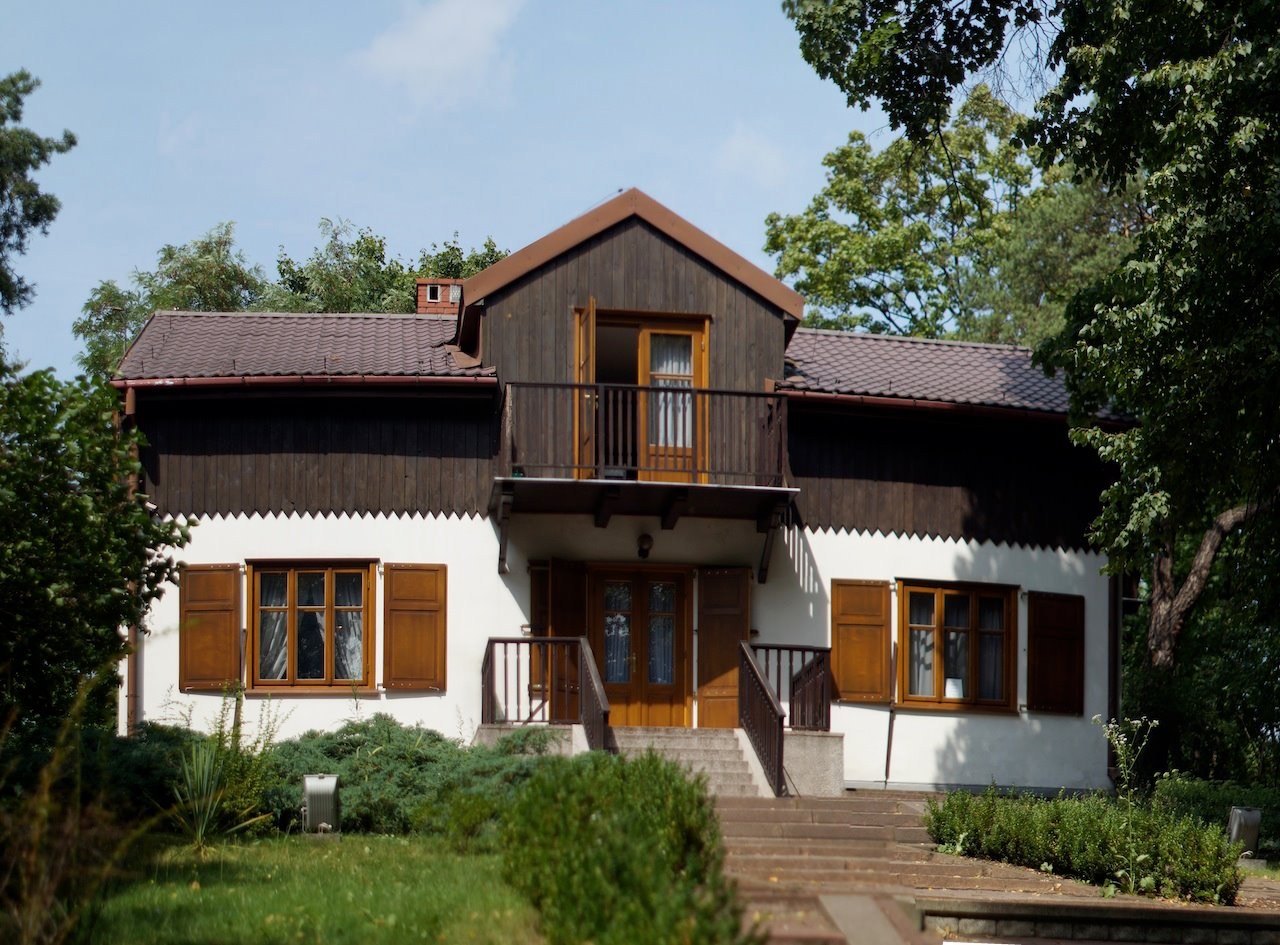
Cover: the Nałkowski museum in Wołomin, photographed 10 August 2012. Archival summer view, not current conditions. Photo: Bartnikj / Wikimedia Commons, CC0 1.0. Resized and recompressed.
The Nałkowski family museum in Wołomin is a small house with a larger story than its size suggests. Known as Dom nad Łąkami, the House above the Meadows, it connects writer Zofia Nałkowska with her father Wacław's work in geography and education, her mother Anna's intellectual work, and her sister Hanna's sculpture. For an English-speaking visitor, the most useful starting point is the family and the house, rather than an assumption that you need to know every book before arriving.
It is also a visit where the details matter. Ordinary Sunday admission is free, but Sunday guided groups have separate charges. The exhibition is on the ground floor, but the entrance has steps and requires a portable ramp for wheelchair access. A November 2026 closure notice also superseded the earlier installation dates still visible on the homepage. Read the practical distinctions below before setting off.
Opening hours, address and the latest reopening notice
The museum is at ul. Wacława Nałkowskiego 17, 05-200 Wołomin. Its current website footer gives regular visiting hours as Tuesday to Sunday, 10:00-15:00. The municipal cultural directory independently lists the same hours. Monday is outside the regular opening week. Do not interpret a 15:00 closing time as a suggested arrival time: the sources checked do not give a separate current individual last-admission rule.
The important recent update is the museum's notice dated 2 November 2026. It said the building would remain closed through 11 November while staff prepared the permanent exhibition again, with reopening on Thursday 12 November 2026. This is more recent and more specific than the homepage's earlier installation notice covering 3-8 November. Those are past interruptions, not a reason to assume the museum is still closed at the end of November.
For a date-specific visit, nevertheless check the museum's latest announcements. Holiday schedules and installation work can interrupt normal hours. A page titled “Godziny pracy muzeum” concerns Easter and May holidays in 2025, so it is not a December 2026 calendar. Likewise, the October 2026 temporary exhibition advertised on the homepage should not be treated as an exhibition guaranteed to remain open now.
Individual tickets: 10 PLN, 5 PLN reduced and free Sunday
The museum's own current footer lists 10 PLN normal admission, 5 PLN reduced admission and free admission on Sundays. These are the individual-visit figures. If you are choosing a low-cost weekend outing, Sunday is therefore the clear option in the published regular timetable, provided there is no special closure for your date.
The pages checked do not set out a complete current list of reduced-ticket eligibility or a complete payment-method policy. Bring the document that supports any discount you intend to claim and ask staff before relying on it. An old reopening announcement discusses cashless payment and timed entry in the context of pandemic restrictions. It would be misleading to copy those 2021 arrangements into a present-day visit plan without fresh confirmation.
There is a similarly important limit to the word “free”. It describes ordinary Sunday admission, not every service that happens inside the building. Organised groups with a guide have their own Sunday tariff. A family arriving independently should not be told that it must pay the group fee, and a group arranging a guided visit should not assume that Sunday removes that fee.
Guided groups and school visits have a separate tariff
The museum's official Oferta page lists guided group visits lasting up to 60 minutes, with a maximum of 25 participants. For Tuesday-Saturday visits it gives 15 PLN per person, or 10 PLN reduced. These figures should not be confused with the 10/5 PLN individual admission printed in the footer.
For Sunday guided groups, the offer lists 100 PLN for a group of up to 20 people and 150 PLN for a group of 21 or more. The same page's 25-person maximum still matters. If your group is larger, ask the museum about a suitable arrangement rather than extrapolating a price or assuming everyone can enter together.
School lessons and workshops are each listed at 10 PLN per pupil, including admission and a guide. The museum says lessons and workshops run Tuesday-Friday, 10:00-14:00. Booking a school activity is a different task from buying a walk-in ticket: discuss the age group, topic, participant count and language with staff before planning transport around it. An English-language guide or lesson is not confirmed by the published offer.
Why this house matters
The museum's historical account dates the house to 1895, when Wacław Nałkowski built it on a sandy, pine-covered plot near Wołomin. The family called the place Górki, the little hills. Its later literary name came from the landscape and from Zofia's Dom nad łąkami, published in 1925. This was a modest family project financed under pressure, not a grand country estate built around a collector's fortune.
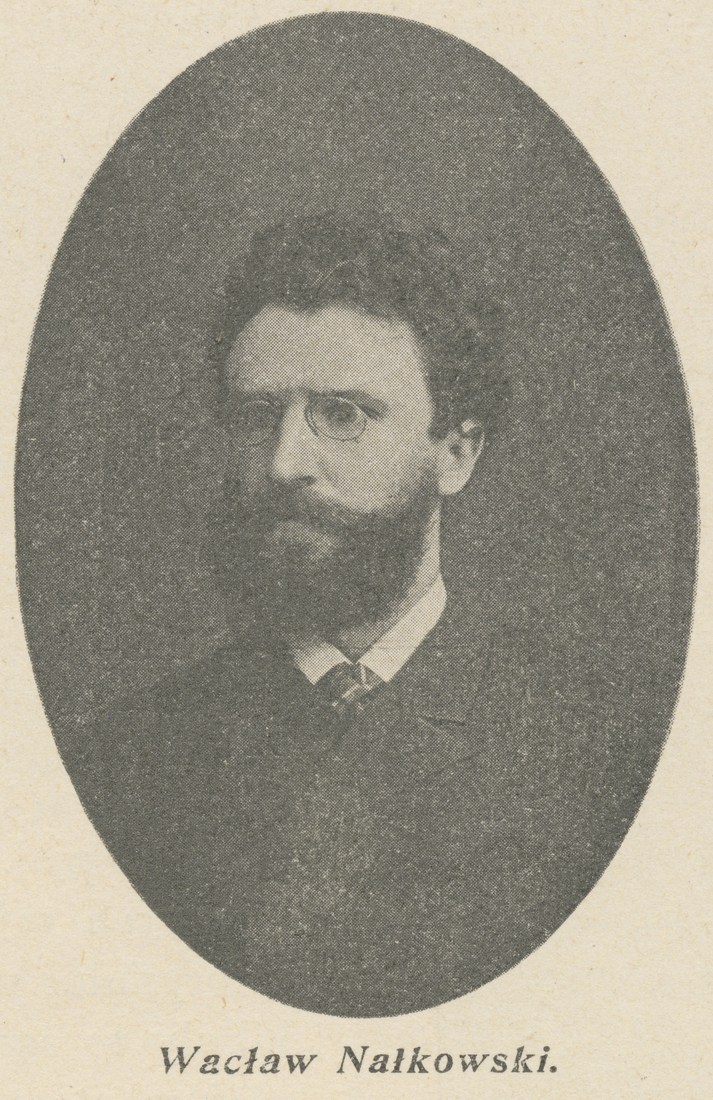
The household worked together. The museum describes Anna as an author of geography textbooks and records the daughters helping their father by taking dictation, translating geographical work, preparing indexes and planning illustrations. That changes how to look at the house. It was a place where family life, education and paid intellectual work shared the same limited space.
For a first visit, use that shared work as your thread. Look for how geography and literature intersect, how the family used the garden, and how a house becomes a recurring image in writing. You do not need to turn the visit into a test of literary knowledge. Choose one connection you can follow closely, then use the museum's reading material to continue afterwards.
A preserved place, but not an untouched time capsule
The family sold the house in 1937 because of financial difficulties. The museum's account says it survived the Second World War, then deteriorated after being used as housing for several families. This history matters when looking at the building: what visitors see is the result of rescue and museum work, not a house left unchanged since the Nałkowskis walked out.
A separate museum-published account by curator Jolanta Pol describes the long campaign to save the house and establish the museum, which opened in 1992. Its anniversary material also documents damaged post-war views, restoration and later room arrangements. If a photograph or display looks like a historical domestic scene, keep the difference between original objects, later arrangement and archival evidence in mind.
The garden belongs to this story too. The museum identifies a maple on the highest terrace as one planted when the Nałkowskis laid out the garden after the house was built. Its page combines historical recollections with dated photographs of the tree and terraces. That provides a useful reason to spend part of your visit outside, when conditions permit, rather than treating the park solely as the way to the entrance.
Wheelchair access: contact staff before arrival
The museum's architectural accessibility declaration describes park approaches from Nadłąkowa, 1 Maja and Wacława Nałkowskiego streets. It places visitor parking by the Nadłąkowa gate. The exhibition is on the ground floor, but the north-side entrance has four steps. Staff deploy a portable access ramp for wheelchair users and a threshold ramp at the entrance.
That is assisted access, not a permanently step-free front door. The declaration says internal door openings are at least 90 cm wide and doors are not automatic. It also says a visitor with a disability can, by prior arrangement, drive up from Nałkowskiego Street and park in front of the entrance. Contact staff in advance to agree the approach and ramp assistance that suit your chair and circumstances.
An adapted toilet is listed outside the museum building, in the park. Assistance and guide dogs may enter. The declaration lists a Braille exhibition guide, but says there is no induction loop and no Polish Sign Language interpreter. The declaration was prepared in March 2021; use these details to ask precise questions, rather than assuming that every arrangement is unchanged or that every mobility aid will fit without discussion.
A practical plan for an English-speaking first visit
Start by checking the date and contacting the museum if you need a guide, a ramp or language support. The published telephone number is 22 786 22 19. Use the official website for current announcements and contact details. Confirm transport separately for your travel day; the museum pages checked do not establish a current rail itinerary or a reliable station-to-door walking time.
Inside, focus on the relationship between the family and the place instead of trying to absorb every name. Outside, allow weather and the ground conditions to decide how much time you spend around the terraces and park. The summer cover photograph is useful for recognising the building, not for judging November surfaces, foliage or access conditions.
If you want something to read before or after the visit, the museum provides an official Dom nad łąkami e-book page, published in September 2025. It is a direct connection with the house's literary identity, although the page does not establish an English translation. A free Sunday visit, a focused look at the family story and some reading afterwards make a more realistic plan than arriving with unconfirmed expectations about guided English tours or holiday opening.
Frequently asked questions
Is a Sunday guided group visit free?
No. Individual Sunday admission is free, but the official group offer lists 100 PLN for up to 20 people or 150 PLN for 21 or more, with a 25-person maximum.
Is the entrance permanently step-free?
No. The 2021 declaration describes four entrance steps, with a portable ramp and a threshold ramp deployed for wheelchair users. Arrange assistance with staff.
Was the November2026closure extended?
Yes. A 2 November 2026 notice superseded earlier installation dates and announced closure through 11 November, with reopening 12 November 2026. Check current announcements for any visit-specific change.
Sources
- Museum: current individual hours and tariff
- Municipality: hours and location
- Museum: November2026reopening notice
- Museum: group and school offer
- Museum: architectural access declaration2021
- Museum: history of the house
- Museum: rescue and establishment
- Museum: historical maple and garden
- Museum: official e-book