Woodworking Workshops in Poland: A Beginner’s Guide
The essentials: Choose a taught beginner session rather than assuming hourly access includes training. Confirm the project, materials, safety-language support, insurance, accepted place and cancellation and collection terms.
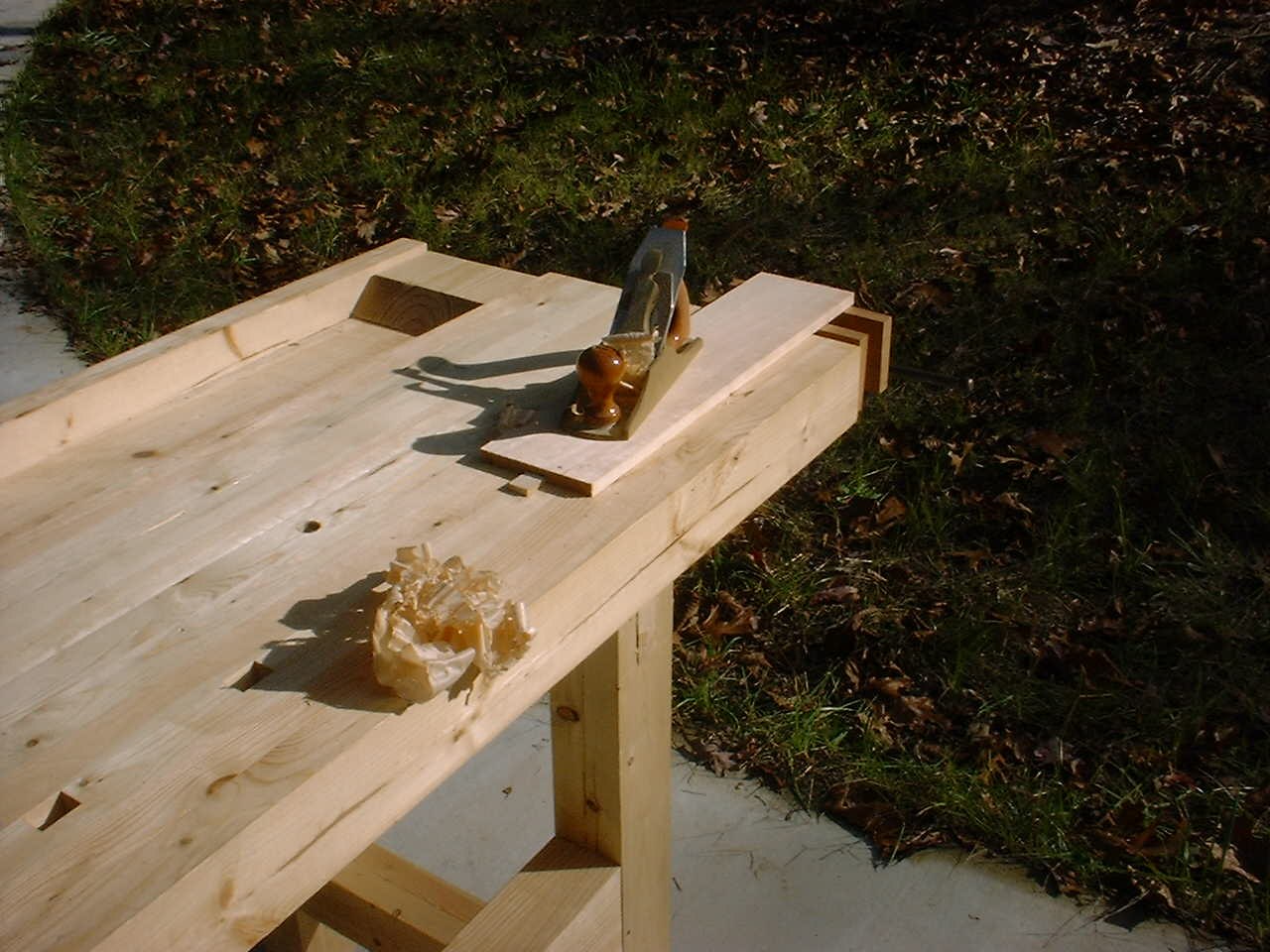
Bench dog in use, 15 November 2000. Bob Key / Wikimedia Commons, released into the public domain by the author. Resized and re-encoded. Historical contextual illustration, not a Polish workshop or tool-use instruction.
If your home in Poland has no room for tools, a woodworking workshop can offer a way to try making something without turning your flat into a worksite. The important first choice is the format. A taught beginner session, a longer course and an open workshop do not offer the same support or access.
This guide uses six primary provider pages checked on 28 October 2026. They illustrate questions to ask before booking, not a list of confirmed available places. One example is a past FabLab event, and two rules documents sit in dated upload folders. Their details should not be treated as a current calendar or a legal ruling.
Start with the format, not the equipment list
Search for warsztaty stolarskie dla dorosłych for adult woodworking workshops, kurs stolarski for a course, or otwarta pracownia for an open workshop. A pracownia na godziny generally signals access charged by time, but you still need to check who can use it and what instruction is included.
Pracownia CECH's workshop-by-the-hour page says it is for people with at least basic tool knowledge, for example after its introductory workshop. It is not advertised as an unrestricted substitute for a beginner lesson. A room with many tools is not necessarily a place where a first-time visitor can start independently.
Fabryka Stolarzy's rules make another distinction: someone wanting to carry out an individual project independently in its workshop must complete its basic woodworking course. That is the provider's entry condition, not a statement that one short course qualifies you to use machinery anywhere else.
Choose a realistic first project with the instructor
Decide whether you want to follow a prepared project or discuss something of your own. A small object can be a useful way to find out whether you enjoy the setting before committing to a large piece of furniture. Ask what can reasonably be completed during the selected session, including instruction and cleanup.
Makers Club's adult woodworking and carving page welcomes beginners as well as people with experience. It invites participants to bring an idea and says a wooden object for repair or modification may also be brought. That invitation is not confirmation that every damaged item or ambitious design will be accepted.
Send the organiser a description, dimensions and photographs if requested. Ask whether the task fits the session and whether it needs more visits, specialist work or materials not included in the fee. A workshop is a learning setting, not a promise that the teacher will finish a repair for you.
Check the length rather than guessing from the title
A listing can contain conflicting duration information. Makers Club's page, dated 8 February 2026, describes four hours in its main text but later says five hours, from 10:00 to 15:00. Confirm the selected date's actual start and finish directly. This guide deliberately does not choose one of those conflicting durations.
Ask how much of the time is demonstration, individual work, waiting for a shared tool and cleanup. A course covering several visits may fit a more involved aim, while a one-off session can be enough to decide whether you want to continue. Neither description guarantees a particular finished object.
Also confirm the actual venue. CECH's page places its workshop in Złotoria, while Makers Club describes its adult sessions in Żory. A search result grouped under a nearby large city is not a reliable journey plan. Use the organiser's confirmed address and arrival instructions.
Separate included supplies from your own project costs
Ask what the price includes: programme materials, timber, consumables, protective equipment and teacher time. Fabryka Stolarzy says it supplies materials for its programme and that participants use materials prepared by the organiser. It also says additional material charges may apply to individual projects.
Master Wood's published rules similarly describe prepared programme materials, with a separate quote and additional material charge for an individual piece. Choosing your own design can therefore change the cost even when a course advertises materials included. Ask for the total for your agreed project before paying.
CECH describes a basic allowance of sandpaper, screws and glue for workshop-by-the-hour use, with paints, varnishes, oils and other materials available at extra cost. Its page also distinguishes the charge for using a thickness planer from ordinary workshop time. Do not assume all equipment and finishes share one rate.
Open workshop does not mean a full taught course
A FabLab Warszawa open-workshop listing for 23 February 2026 offers a useful historical example of a different format. It welcomed people without experience but explicitly said the session was not a complete woodworking course. It focused on advice, experiments and small projects rather than large or commercial production.
The same listing required visitors to consult the person in charge before working and said some machines could be operated only by that person. It asked participants to bring seasoned, dry, clean material and said no materials could be bought there. These were conditions of that listed event, not a promise about all future FabLab sessions.
Before attending a current open session, find its own date and rules. Check whether booking is needed, how access is shared and what happens if the workshop is full. A historical no-registration listing is not permission to arrive whenever the building is open.
Make language and safety instruction part of the enquiry
Ask whether you can understand the briefing, demonstrations and instructions in English or another language you use confidently. An English booking reply does not establish that the person supervising your session can explain everything in that language. This matters more than whether the activity seems visually straightforward.
Confirm the required clothing and which protective items are supplied. CECH advertises aprons and protective equipment. SToGlarnia's rules also describe work clothing and supplied basic protection. Get instructions for your exact session and equipment rather than copying an outfit or technique from a photograph.
This article does not teach machine operation. Follow the on-site instructor's rules, use only the tools they allow and ask whenever a demonstration or instruction is unclear. A general course description cannot tell you which protective equipment is appropriate for a particular machine or task.
Check insurance and practical access before payment
Some providers require a personal accident policy, often labelled NNW. Fabryka Stolarzy's general rules make this compulsory for its courses and voluntary for workshops. Master Wood's reviewed document says it is compulsory for both. Confirm which category you are booking and what proof is required.
Do not assume an existing policy meets that requirement. Ask the organiser what it expects, then check the actual policy with its insurer if needed. Neither the word insured nor a workshop ticket establishes what a policy covers. This guide does not compare insurance products or recommend a policy.
Ask about stairs, toilets, seating, workbench arrangements and any access adjustment you need. If your plan involves a bulky item, confirm delivery, unloading and storage before bringing it. The fact that a studio can host classes does not establish accessible entry or space to store your furniture.
Know what confirms your place
Keep the accepted session, participant name, payment requirement and confirmation together. SToGlarnia's rules say a paid order places the participant on the workshop list, while enquiries through Messenger or other remote channels are considered individually and do not guarantee a reservation.
Master Wood describes payment plus a return email confirming the reserved date. Fabryka Stolarzy describes a deposit and allocation by order of payment, with a minimum group needed for a workshop to run. An enquiry answered positively is not necessarily a completed booking.
Ask when the organiser will confirm that a minimum group has formed and what happens if it cancels. The reviewed Fabryka Stolarzy and Master Wood rules describe refunds or another date when a group does not proceed. That does not mean the same flexibility applies when you decide not to attend.
Read cancellation terms without assuming a free change
Fabryka Stolarzy's published rules describe its deposit as non-refundable and say a participant cancelling after payment does not receive a refund. They mention making up a session only if another group has space and not after the course has ended. Those conditions are not an unconditional right to reschedule.
SToGlarnia's PDF contains a potentially confusing boundary: it asks for cancellation at least three days before the workshop, describes deductions from refunds, and then says cancellation three days before or later receives no refund. Ask for the exact deadline for your booking rather than deciding that the boundary day is free.
These are descriptions of posted operator terms, not an assessment of your legal rights in a dispute. Request the current agreement for the selected session. If two versions differ, ask which applies before paying, rather than combining favourable clauses from different documents.
Plan collection and respect the room's privacy rules
Fabryka Stolarzy and Master Wood both state that work should be collected within seven days after the course. Ask whether your piece can go home at the end, needs another visit or has a separate collection arrangement. Confirm its size and how you will transport it instead of assuming delivery is included.
Ask before photographing or filming. Fabryka Stolarzy's course rules prohibit taking photos, recording and using phones during training. SToGlarnia says it photographs workshops and asks participants who do not consent to image sharing to tell the organiser before the start. Those are different studio policies.
A useful first enquiry is: "I am a beginner and want a taught session, not independent machine access. Can I follow the safety briefing in English, what is included, and can we agree a suitable project?" Add the practical questions about confirmation, insurance, cancellation and collection. Clear expectations leave you free to focus on the class itself.
Frequently asked questions
Can a complete beginner rent workshop time?
Check the specific entry rules. Some hourly workshops require basic tool knowledge or an introductory course; a taught beginner session is a different format.
Are timber and finishes included?
Confirm the agreed project. Prepared course materials can be included while individual designs, finishes or particular equipment cost extra.
Will the class be in English?
Ask specifically about the safety briefing, demonstrations and individual instructions. An English enquiry reply is not proof of English-led teaching.
Do I need personal accident insurance?
Some reviewed providers require an NNW policy. Confirm the rule for your course or workshop and check whether any existing policy meets it.
Can I take my project home immediately?
Ask before booking. Confirm completion, collection deadlines, transport and any storage or delivery arrangement rather than assuming same-day collection.
Sources
- Fabryka Stolarzy course and workshop rules, undated; checked 28 October 2026
- Pracownia CECH workshop by the hour, undated; checked 28 October 2026
- SToGlarnia workshop rules, hosted in an April 2024 folder; checked 28 October 2026
- Master Wood course rules, hosted in a February 2026 folder; checked 28 October 2026
- FabLab Warszawa open workshop, past event 23 February 2026; checked 28 October 2026
- Makers Club adult workshop page, dated 8 February 2026; checked 28 October 2026