Zamość Weekend Guide: Poland's Perfect Renaissance Ideal City
The essentials: Zamość is a UNESCO-listed Renaissance ideal city: a perfect 100 m square, Armenian merchant houses, intact bastions, and museums from 14 zł (Arsenal) and 19 zł (Muzeum Zamojskie, two-day ticket). Direct trains run from Warsaw via Lublin.
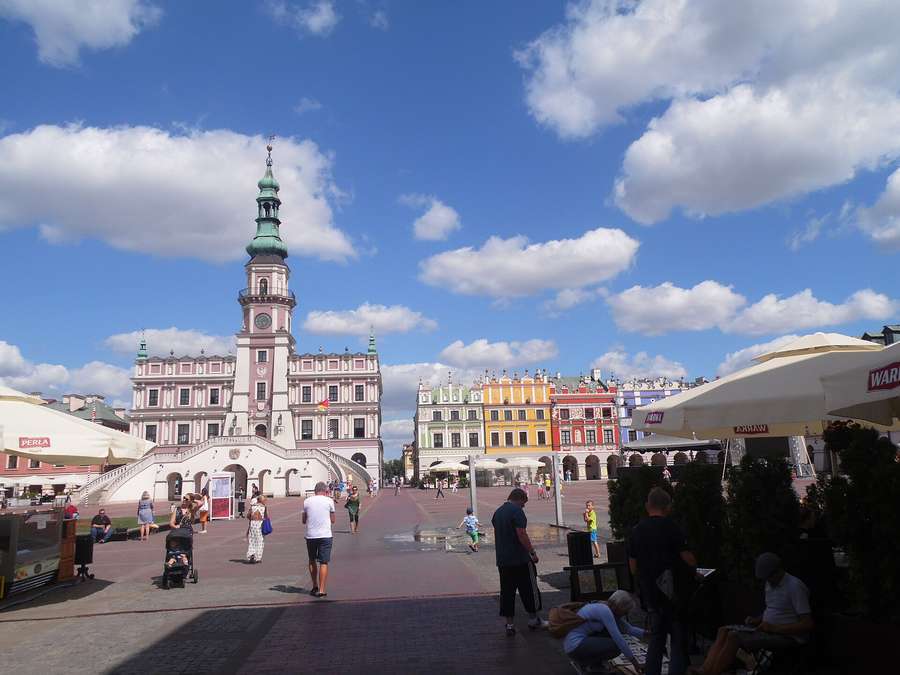
Zamość is the city Poland built to prove it could out-Renaissance Italy. Founded in 1580 by the chancellor Jan Zamoyski and designed in one sweep by the Paduan architect Bernardo Morando, it is a complete, planned ideal city that survived the centuries almost intact, a UNESCO World Heritage Site since 1992 and still one of the least crowded great sights in the country. The perfect square, the pastel Armenian houses, the town hall's fan-shaped stairs and the ring of bastions make a weekend here feel like walking through a drawing that came true. This is the plan.
Getting there
Zamość lies in Poland's southeast, about ninety minutes from Lublin by road or rail, with direct InterCity trains linking it to Warsaw through Lublin. The station is a twenty-minute walk from the old town, and the city is small enough that you will not touch a bus: everything that matters sits inside or beside the old bastion ring. Drivers reach it comfortably from Lublin and Rzeszów, and the Roztocze forests begin just beyond the suburbs, which makes Zamość the natural base for the region's national park as well.
The Great Market and the town hall
Everything starts on the Rynek Wielki, a perfect 100-by-100-metre square laid out by Morando and kept intact ever since; UNESCO lists the whole old town, square, fortifications and all, as a single World Heritage monument. The pink town hall rises on its north side behind the famous fan-shaped staircase, the city's signature photograph, and the square's edges hold the Armenian tenement houses, a row of merchant palaces in green, gold and red whose carved attics and arcaded fronts housed the Armenian trading families Zamoyski invited to his new city. The square is not a museum set: the arcades hold working cafes and shops, students from the local colleges cut across it, and the pigeons own it at dawn. Come twice, once in the morning emptiness and once at dusk when the facades warm up. Then look at the details Morando hid in plain sight: the square is laid so the town hall tower sits exactly on the axis of the founder's palace, the side streets run in a strict grid that modern traffic still follows, and every arcade arch repeats the same measured rhythm. It is architecture as a political argument, a magnate's claim that the Commonwealth could produce a city as rational and beautiful as anything in Italy, and four and a half centuries later the argument still stands.
The museums: what it costs
The city's two museum anchors are the Muzeum Zamojskie, in the former Armenian houses on Ormiańska street, and the Arsenał, the Museum of Fortifications and Weaponry set in the old arsenal building. At the Muzeum Zamojskie, tickets cost 19 zł normal and 12 zł reduced or group, with Large Family Card holders paying 12/8 zł; the ticket is valid for two days. At the Arsenał, a single-object ticket costs 14 zł normal and 9 zł reduced, and a combined ticket for three objects costs 32 zł normal and 20 zł reduced. Both museums open Tuesday to Sunday, 10:00-16:00 in the off-season and 10:00-17:00 from May to September, and both close on Mondays. At the Arsenał, hourly historical film and militaria shows run through the day, and the weaponry collection, from sabres to armoured vehicles outside, makes it the family favourite.
Data source: Muzeum Zamojskie and Arsenał official hours-and-tickets pages (muzeum-zamojskie.pl, muzeumarsenal.pl), checked 22 October 2026.
The fortress ring
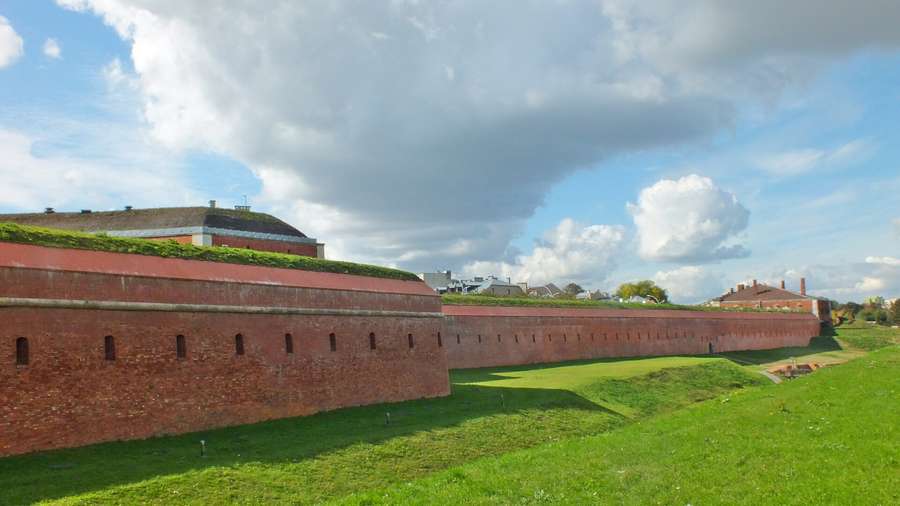
Zamość was built as a fortress as much as a city, and the bastion ring survives in longer stretches than almost anywhere in Poland. Walk the curtain walls by Bastion VII, where the restored casemates and the wide moat lawns show the scale of the 16th-century design, then follow the ring past the old gates, the Lublin and Lviv gates, each a small monument in itself. The fortifications tell the city's harder stories too: besieged by Cossacks, Swedes and Austrians, turned into a tsarist citadel in the 19th century when the whole town became a military zone, and scarred in the 20th century by the Nazi terror of the Zamość region, remembered at the Rotunda martyrdom museum south of the centre. The contrast between the ideal-city beauty and that history is part of what makes Zamość stay with you. The walk itself is easy: the ring is now partly park, with lawns in the moats and paths along the crests, so an hour's stroll covers the best stretches without any sense of a route march.
Cathedral, synagogue and the ideal-city idea
Beyond the square, the cathedral holds Zamoyski's tomb and a grand collegiate interior, and the restored Renaissance synagogue, one of the finest surviving in Poland, tells the story of the Sephardic community the founder also invited. The Zamoyski Palace, the founder's residence on the square's axis, and the former academy building complete the founding family's quarter, and the streets between them keep Renaissance house after Renaissance house, many still carrying their original attic gables. What lifts the whole visit is the idea underneath: this was a planned utopia, a private city built by one magnate as a centre of trade, learning and toleration, with its own academy printing books in several languages. Zamoyski invited Armenians, Jews, Greeks, Scots and Italians to settle, and the street plan still reads as the manifesto it was.
Roztocze on the doorstep
Zamość is also the gateway to Roztocze, the wooded hill country southeast of the city with its own national park. Zwierzyniec, half an hour away, is the classic start: the park's famous echo ponds and the gentle trails through beech and fir, with the Tanew river waterfalls, the Szumy, an hour further on for a longer day. In autumn the Roztocze forests are among Poland's best mushroom grounds, and the villages keep the timber-church architecture of the borderland. Regional trains and buses cover Zwierzyniec from Zamość, so the nature day needs no car.
With children
Zamość works beautifully for families: the square is a safe, car-free playground with room to run, the Arsenal's weapons and armour grab every age, the bastion moats and casemates are made for exploring, and the town zoo, one of Poland's oldest, fills an afternoon. The flat old town is pram-friendly, prices across tickets and restaurants run well below the big-city standard, and the two-day museum ticket lets you split visits around naps without paying twice. The food story helps too: the region's kitchens serve the borderland's mixed table, Ukrainian-influenced borscht and dumplings beside Polish classics, and the arcaded cafes do the slow, cake-heavy afternoons that travelling children forgive everything for.
A realistic weekend plan
Day one: arrive by midday, loop the Great Market and the Armenian houses, the town hall stairs, coffee in the arcades, then the bastion ring at golden hour and dinner under the arcades. Day two: the Muzeum Zamojskie in the morning, the Arsenal after lunch, and either the synagogue and cathedral or a half-day run to Zwierzyniec's ponds before the evening train. Everything runs on walking shoes and appetite, and if you can time it, the city's summer festivals, from the Hetman Fair to the jazz weekends, fill the square without ever overwhelming it. Allow the town the full two days; Zamość rewards slowness in a way few Polish cities do.
Frequently asked questions
How much do Zamość's museums cost?
The Muzeum Zamojskie costs 19 zł normal and 12 zł reduced, valid two days. The Arsenal costs 14 zł normal and 9 zł reduced for one object, or 32/20 zł for all three. Both close on Mondays; off-season hours are 10:00-16:00.
Why is Zamość a UNESCO site?
It is a nearly perfectly preserved example of a late-16th-century planned Renaissance ideal city, designed by Bernardo Morando for Jan Zamoyski from 1580, with its original grid, town hall, bastion fortifications and merchant houses intact.
How do I get to Zamość from Warsaw?
Direct InterCity trains run from Warsaw to Zamość via Lublin; from Lublin the trip is about ninety minutes by train or car. The station is a twenty-minute walk from the old town.
Can I combine Zamość with nature?
Yes. The Roztocze National Park begins at Zwierzyniec, about half an hour away, with pond walks and forest trails, and the Tanew river's Szumy waterfalls make a longer day trip.
Is Zamość crowded?
Rarely. Despite UNESCO status it sees a fraction of Kraków's or Gdańsk's visitors, so the square, museums and walls stay calm even in summer, and off-season you may have whole bastions to yourself. * Photos: Cover - Zamość's Great Market with the town hall and Armenian houses by Antekbojar, CC BY-SA 4.0, via Wikimedia Commons. Body - the curtain walls at Bastion VII by Teresa Łuka, CC BY-SA 3.0 PL, via Wikimedia Commons.