Zielona Góra Wine Country Weekend: Vines, Palms and a Free Museum
The essentials: Zielona Góra, Poland's small wine capital, pairs a vineyard hill with a tropical palm house, a regional museum (25 zł, free Sundays, closed Mondays) and a wine centre in nearby Zabór. Direct trains run from Poznań, Wrocław and Szczecin.
Zielona Góra calls itself Poland's wine capital, and it is one of the few cities where the claim is more than marketing: vines climb a hill inside the city limits, a wine museum keeps six centuries of local vintners' history, and every September the whole old town turns into a grape festival. Off-season it is a gentle two-day escape into the Lubuskie lakeland forests, with the palm house greenhouse for cold days and the region's wine story for flavour. It is also one of the least touristed regional capitals in Poland, which means honest prices, no queues, and the pleasant sense of being let in on something. Here is the plan.
Getting there
Zielona Góra sits on the railway between Wrocław and Szczecin, with direct connections from Poznań and Wrocław; the station is about twenty minutes on foot from the old town, or a short bus ride. By car it is roughly two hours from Poznań or Wrocław and under three from Berlin via the A2 corridor. The centre is compact and walkable, though the wine attractions spread across the Wine Hill and the village of Zabór, fifteen minutes away, where a car or a local bus helps.
The Museum of the Lubuskie Region
Start at the Muzeum Ziemi Lubuskiej on Aleja Niepodległości, the regional museum whose collections run from medieval sacred art to the town's wine and distilling past. The wine thread is the one to follow: Zielona Góra grew rich on vines, and by the 19th century its merchants were bottling sparkling wine that made the town famous across Germany; the museum keeps the cellars' memory alive alongside the region's art and archaeology. Tickets cost 25 zł normal and 20 zł reduced, with an audio guide included in the price; guided tours in Polish cost 150 zł per group and in English, German, Russian or Ukrainian 200 zł. The museum opens Tuesday to Sunday 11:00-17:00 and stays closed on Mondays, and on Sundays entry to the permanent exhibitions is free for everyone. Plan one to three hours; the last entry is about 45 minutes before closing.
Data source: Museum of the Lubuskie Region official visiting page (mzl.zgora.pl/zwiedzanie), checked 22 October 2026.
Wine Hill and the Palmiarnia
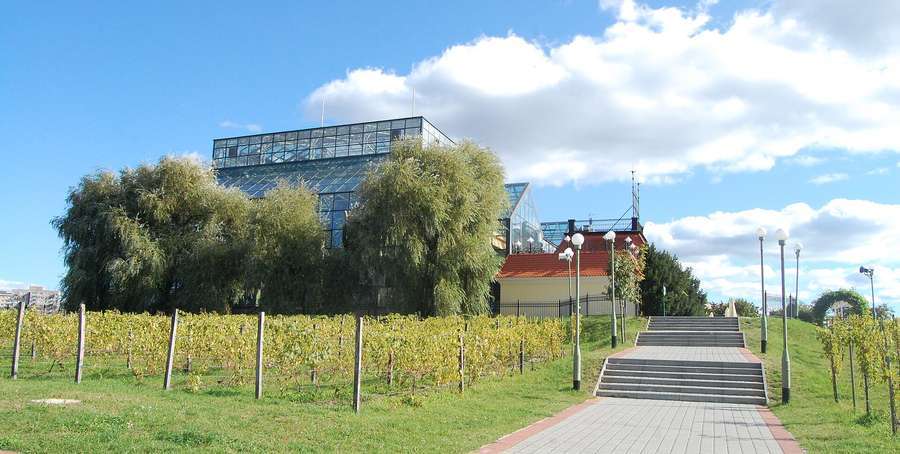
The Palmiarnia Zielonogórska, the city palm house, sits on Winnica, the Wine Hill, and the pairing is the point: a glass tropical house full of palms, aquariums and a cafe, standing above a small working vineyard with views over the city. Inside, the climate zones step from palms through Mediterranean shrubs to a pond level where koi and terrapins drift under the glass, and the elevated terrace looks straight down the vine rows. It is compact rather than vast, an hour rather than a day, but on a wet October afternoon that warm, humid, green-smelling hour is worth the trip by itself. It is the best cold-weather attraction in town, a warm green hour when the forests outside are grey, and the vineyard terraces below it are the most photogenic proof that the wine-capital slogan is literal. The hill works as a half-day on its own: greenhouse, terrace walk, and a slow lunch with the panorama. In autumn the rows turn yellow and rust, and the view from the upper path, vines in front, the city's towers behind, is the single photograph that explains what this place is.
Zabór and the wine country
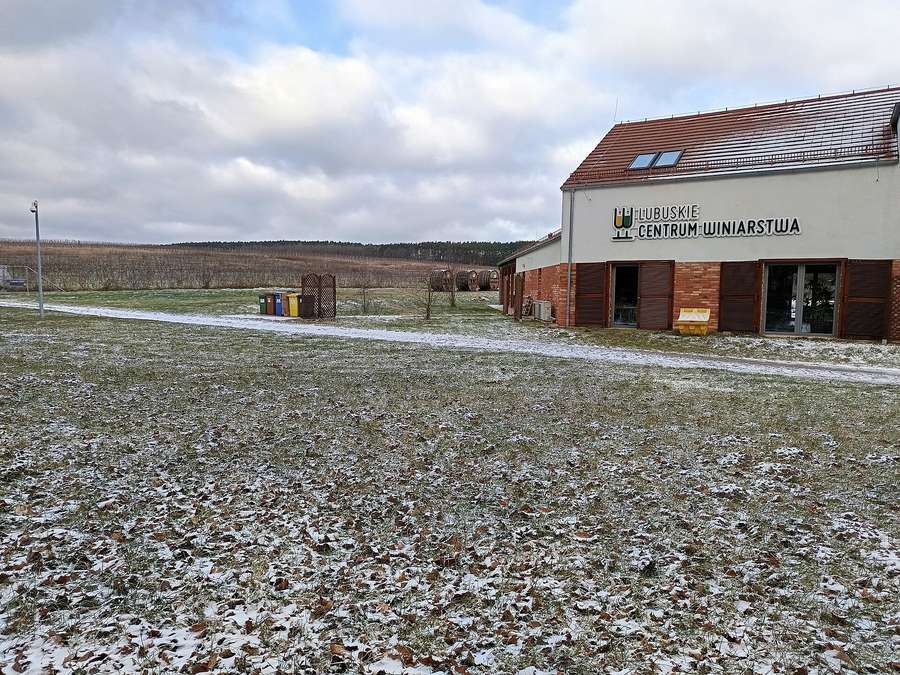
Fifteen minutes from the centre, the village of Zabór holds the Lubuskie Centrum Winiarstwa, the region's wine centre and museum of winemaking, set among its own vines on the open plain. This is where the wine story gets serious: the Lubuskie region's winegrowing goes back to medieval monastic vineyards, collapsed under 20th-century borders and wars, and has been rebuilt over the last two decades by a new generation of small producers whose whites, especially solaris and riesling, now win national medals. The centre's exhibition walks through the full cycle, from pressing vats and coopers' tools to the social history of the harvest, and its own rows of vines outside make the lesson tangible. The wider Lubuskie wine map now runs well beyond Zielona Góra, with estates scattered through the moraine hills towards Gorzów and the Oder, so keen visitors can treat the city as a base for two or three days of vineyard appointments rather than a single afternoon. Tastings at local vineyards are usually arranged directly with producers, and September's Winobranie, the annual wine festival, fills the old town with stalls, parades and open cellars. Off-season, call ahead: the smaller estates are working farms, not walk-in attractions. The festival itself, one of Poland's oldest harvest celebrations, is worth planning a trip around if crowds do not scare you: nine days of grape parades, a wine market, concerts and the slightly surreal sight of an entire city centre licensed to taste. For the rest of the year the wine trail is a quiet pleasure of appointments, farm gates and winemakers who have time to talk.
The old town and the Bachusiki
Zielona Góra's old town is modest after the war losses, but it keeps one charming scavenger hunt: the Bachusiki, small bronze statues of Bacchus figures scattered around the centre, each with its own theme, which children and adults alike end up hunting between cafes. The hunt is free, self-guided and strangely addictive; by the third statue you will find yourself planning the route to the fourth. The Stary Rynek square, the medieval town walls' surviving fragments and the promenade along the former ramparts make a compact evening loop, and the local dining leans into the wine theme with tasting menus and cellared regional bottles at prices well below the big-city standard. The Lubuskie table adds its own accents: river fish from the Oder and the Bóbr, forest mushrooms in season, and the heavy, satisfying cooking of the old German-Polish borderland.
With children
The Palmiarnia is the family anchor: tropical plants, aquariums and a glasshouse maze that works in any weather, plus the vineyard hill to run around outside. The Bachusik statue hunt keeps the old-town walk interesting for younger legs, the regional museum's Sunday free entry softens the budget, and the forests of the Lubuskie lakeland around the city offer mushroom picking in autumn, a local obsession that children take to immediately. In summer the city beach on the nearby lakes adds swimming to the mix, and the region's network of marked cycling paths through the lakeland forests makes an easy two-wheel day out.
A realistic weekend plan
Day one: train in, old town loop with the Bachusik hunt, the regional museum in the afternoon, dinner with local wine in a cellar restaurant. Day two: the Palmiarnia and Wine Hill in the morning, Zabór and the wine centre after lunch, and the evening train home. In September, book far ahead and surrender to the festival crowds; the rest of the year you will have the vines, the palms and the cellars largely to yourself.
Frequently asked questions
How much does the Zielona Góra regional museum cost?
Tickets for the Muzeum Ziemi Lubuskiej cost 25 zł normal and 20 zł reduced, audio guide included. It opens Tuesday to Sunday 11:00-17:00, closes on Mondays, and Sunday entry to the permanent exhibitions is free.
Is Zielona Góra really a wine region?
Yes, on a small scale. Winegrowing around the city dates to medieval monastic vineyards, the modern revival has produced dozens of small estates and medal-winning whites, and the city keeps a working vineyard on its Wine Hill plus a wine museum in nearby Zabór. Expect boutique bottles and farm-gate tastings rather than a Bordeaux-style industry.
When is the Zielona Góra wine festival?
Winobranie, the annual wine festival, takes place each September and fills the old town with wine stalls, parades and concerts. Off-season, the vineyards and the wine centre in Zabór are quieter and tastings need arranging directly with producers.
Is Zielona Góra good for families off-season?
Yes. The Palmiarnia palm house with its aquariums works in any weather, the Bachusik statue hunt animates the old town, Sunday museum entry is free, and the surrounding forests are prime autumn mushroom ground.
How do I get to Zielona Góra without a car?
Direct trains link Zielona Góra with Wrocław, Szczecin and Poznań, and the station is a twenty-minute walk or short bus ride from the old town. The centre, museum and Wine Hill are walkable; only the Zabór wine centre really needs a bus, taxi or car. * Photos: Cover - the Palmiarnia Zielonogórska palm house and vineyard on Wine Hill by Pluszooowa, CC BY-SA 3.0 PL, via Wikimedia Commons. Body - the Lubuskie Wine Centre in Zabór by Fry72, CC BY-SA 4.0, via Wikimedia Commons.