ZUS data for bank loans from 1 Nov 2026: one-time consent, 4 items
Short answer: From 1 November 2026 ZUS can give a bank or business partner four items from a payer's contribution account, only with the payer's consent, which covers a single access.

What changes on 1 November 2026
From 1 November 2026, a bank, loan company or business partner can ask ZUS for the state of a business owner's contribution account, but only with the owner's consent. The rule comes from an amendment to the Social Insurance System Act dated 12 September 2025 (Journal of Laws 2025, item 1413). It was published on 20 October 2025 and enters into force on the first day of the month after 12 months from publication, which is 1 November 2026, according to eli.gov.pl.
It applies to anyone registered with ZUS as a contribution payer, including self-employed people. The Act does not distinguish by nationality.
Who can ask and why
Under the new Article 50(28) of the Act, ZUS provides data free of charge, on an electronic request, to:
banks, financial institutions, credit institutions and loan institutions as defined in Article 4 of the Banking Law;
legal entities, organisational units and individuals who are entrepreneurs.
Each group may use the data only for a stated purpose. A bank or lender may use it to process the payer's application for a loan, credit or another service under Articles 5 and 6 of the Banking Law. An entrepreneur may use it to verify the payer's financial and economic situation, for example before signing a contract.
The data is released only in electronic form, in line with personal data protection rules (Article 50(29)).
What they can see
The law lists four items from the contribution account:
the tax number (NIP) or REGON number. If the payer has neither, or only one, the PESEL number, or the series and number of an ID card or passport;
the short name or the first name and surname;
the settlement period;
the state of settlement of contributions due, which ZUS is entitled to collect.
According to a commentary by devstockacademy.pl dated 5 October 2026, which cites the government's reasoning for the bill, the last item covers social insurance, health insurance, the Labour Fund, the Solidarity Fund and other funds, so the recipient learns whether there is an arrears or overpayment for a period. The law itself does not list income, wages or employee names. The data may be given only "to the extent necessary" for the application or verification.
The passport and PESEL fallback matters for foreigners. A payer without a Polish tax number can be identified by PESEL or by passport number.
Consent is for one use
Under Article 50(30), the consent entitles the recipient to a single access to the data. If a bank wants to check again, for example for a second loan, it needs a new consent.
Article 50(31) allows two routes. The payer can give consent to the bank or business partner, which passes it to ZUS together with its request. Or the payer can give consent directly to ZUS. The consent must contain the payer's data and:
for an individual: first name and surname and PESEL, or if there is no PESEL, the series and number of an ID card or passport;
for any other entity: its name and NIP or REGON number.
ZUS must record the consent and the details of the person or entity that received it on the contribution account (new point 4 of Article 45(1)(3)).
What is not yet clear
As of 5 October 2026, devstockacademy.pl reported that ZUS had not yet published a description of the service or form for giving consent. We did not find an official ZUS instruction as of 17 October 2026. Check the ZUS site and your bank before 1 November.
The same source says the certificate of no arrears (zaświadczenie o niezaleganiu) remains, and that the new consent works alongside it. We could not confirm this in the text of the Act, which does not mention certificates.
What to do as a business owner
If you plan to apply for a business loan or leasing after 1 November, expect the bank to offer the ZUS consent route. Read what you are consenting to. Only the four listed items may be shared, once.
Pay or arrange any arrears before applying. A contribution arrears will be visible to the lender. ZUS can answer questions about your account and payment plans.
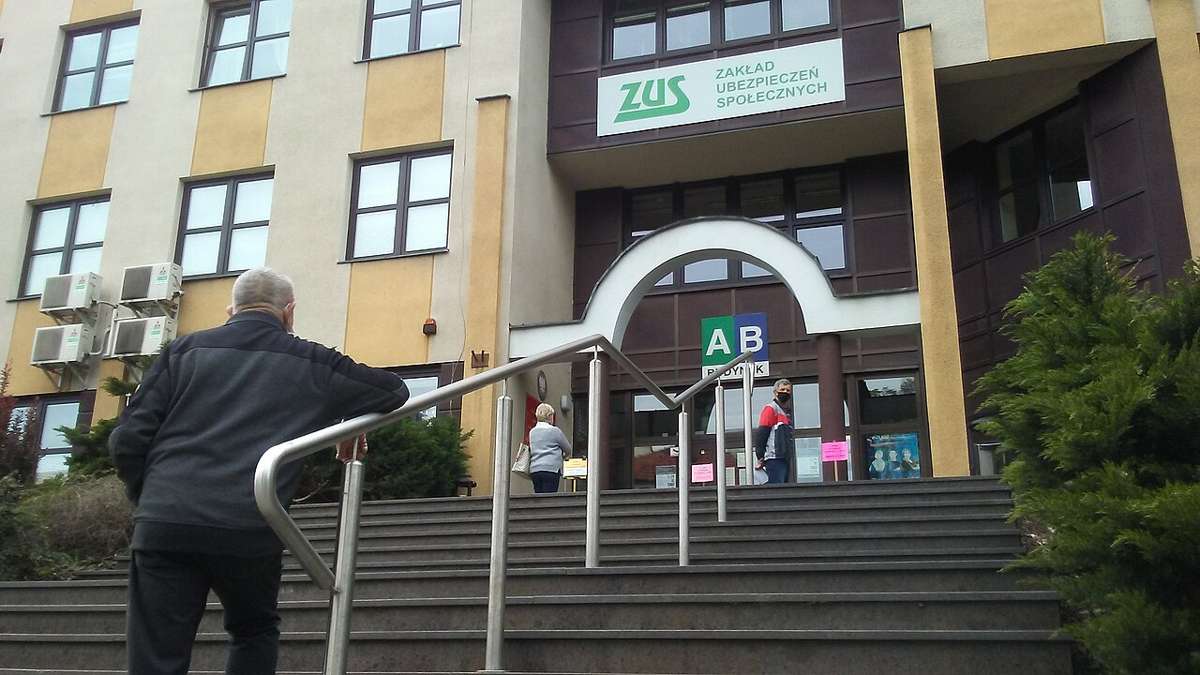
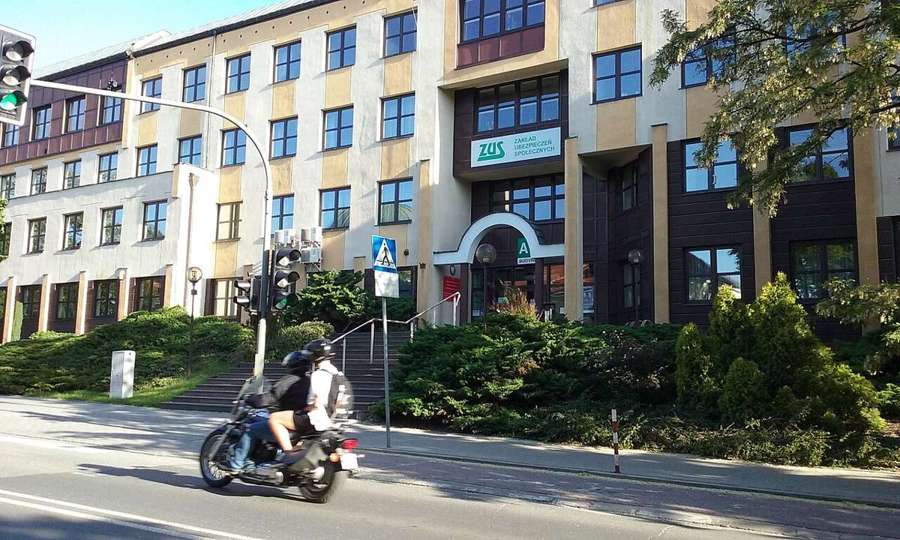
* Photos: ZUS building and a queue outside the ZUS office in Tomaszów Mazowiecki, both public domain via Wikimedia Commons. The images are illustrative.
Frequently asked questions
Can a bank see my ZUS data without asking me?
No. The Act requires the payer's consent, and the consent covers one access to the data.
What data can the bank get?
Your identifier (NIP or REGON, or PESEL or passport number if you have neither), your name, the settlement period and the state of settlement of contributions due. Income and wages are not on the list.
Does it apply to foreigners with a business in Poland?
The Act speaks of contribution payers in general. A payer without a NIP or REGON can be identified by PESEL, ID card or passport number.
Do I still need a certificate of no arrears?
The law does not say. A commentary dated 5 October 2026 says the certificate stays. Ask your bank which it will accept.