Basket-Weaving Workshops in Poland: Choosing a First Class
The essentials: Choose the object and stages you want to learn, then confirm the base, materials, language, current date, group status and terms. Historical programme examples are not live availability.
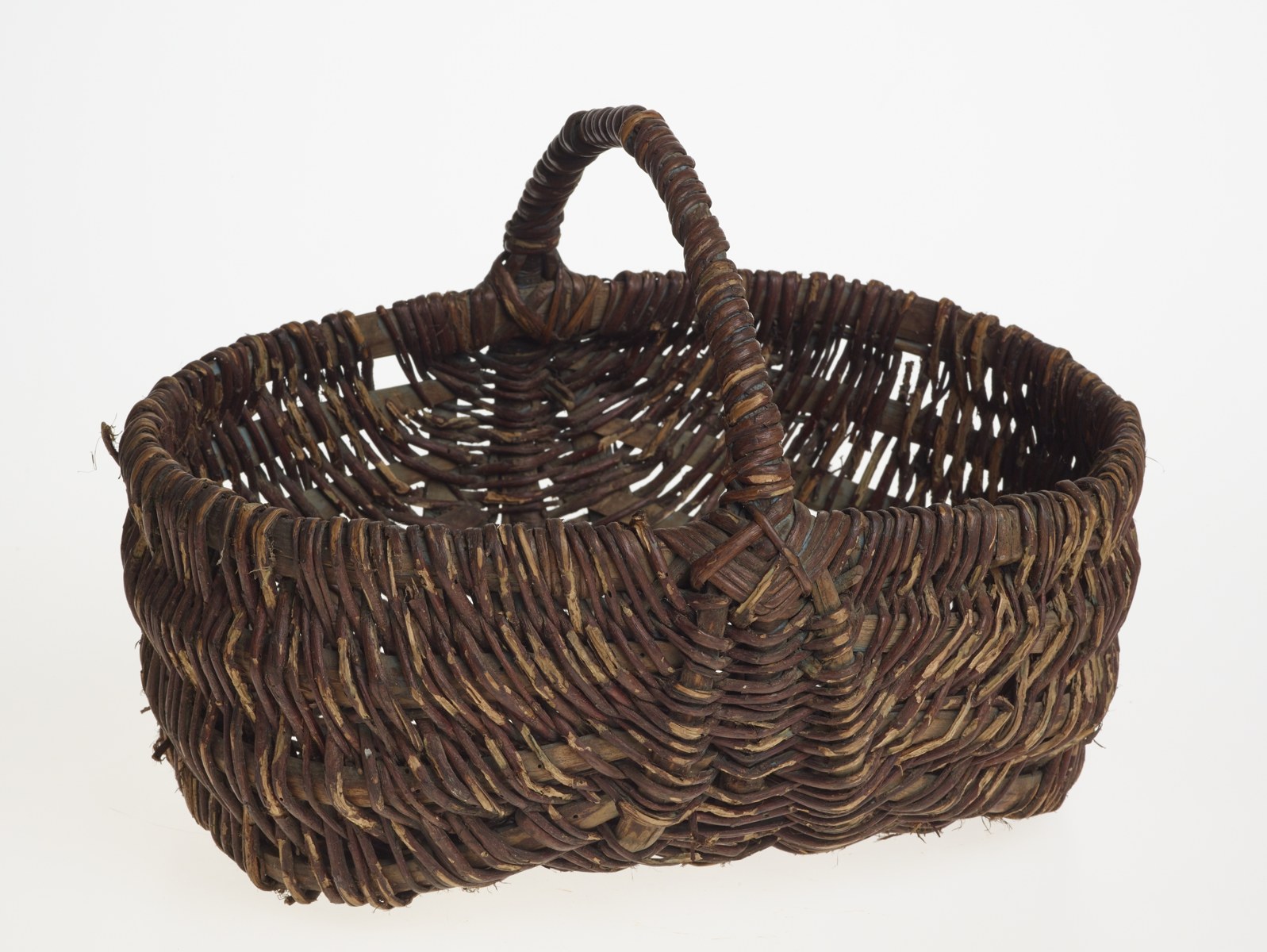
Historical French basket from the Musée de Bretagne collection, early 20th century, not a reviewed Polish workshop project. Unknown author / Wikimedia Commons, CC BY 4.0. Camera metadata records 20 December 2023. Resized and re-encoded.
A basket-weaving workshop in Poland can mean making the sides of a basket on a prepared base, building a small form from willow, or joining a regular group that explores several materials. Those are different experiences, even when every booking page uses the word "beginner". For an expat trying a local craft, the useful first question is what you will actually do during the session.
This guide compares seven primary pages from six providers and institutions, checked on 29 October 2026. It is a programme comparison, not a ranking based on personal attendance or a list of available places. The dated one-off examples below are historical. A recurring timetable is also not proof that a group has opened, has room or accepts people halfway through a course.
Start with the base of the basket
Siostry Plotą's Mój Pierwszy Kosz description specifies a plywood base approximately 30 centimetres across. Participants add the uprights, work through weaving patterns and finish the rim, with some choice of final form. That makes the starting structure clear. If your goal is to learn how to weave a basket's base from willow, this particular description does not promise that stage.
A past workshop at WSCKZiU nr 1 in Poznań gives another explicit prepared-base example. Its 25 March 2026 session focused on walls and shaping using a simple repeating weave, with no previous experience required. The date has passed, but the format illustrates a useful question for any new booking: is the base supplied ready-made, partly prepared or woven by you during class?
Prepared components are not a shortcut you need to avoid. They may be exactly what lets a first session focus on one manageable process. The mismatch happens when you expect an introduction to every stage and discover that several have been done beforehand. Ask for a short description of your own tasks rather than relying on the name of the finished object.
Choose the material and form together
Żywa Pracownia's historical 22 February 2025 programme described unpeeled willow and small baskets with round bases, approximately 20-25 centimetres across. It also discussed natural variation in colour and texture. This is a different material brief from assuming every class uses uniform pale rods or a plywood base. The page is a past example, not an upcoming February workshop.
Centrum Kultury w Żyrardowie describes willow as the main material in its regular programme, with straw and bulrush introduced later as participants progress. It lists baskets, containers, trays and decorative forms, including different base shapes and techniques using plywood. Treat that as a range within a programme, not a promise to complete every object during your first meeting. Ask which material and project a new participant begins with.
The Polish terms wiklina and plecionkarstwo are useful search words, but a title alone does not settle the material. Send the teacher a description of the kind of basket you want to make. Ask whether it fits the session's prepared materials, skill level and time. Do not collect or bring branches unless the organiser has agreed what is suitable and needed.
One day, repeated meetings or an arranged group?
The Siostry Plotą first-basket page describes a six-hour session, including a break. Its wider programme also advertises individual, paired, family and regular-group formats. Those are choices to enquire about, not interchangeable bookings. A one-off introduction may suit someone testing the activity; repeated meetings may suit someone who wants practice over time and a recurring local routine.
Żyrardów's page lists separate Tuesday and Wednesday groups from 17:00 to 20:00, with registration from September 2026. It explicitly says a group opens only after reaching a minimum number of participants. Before planning your week around it, ask whether the chosen group is actually running, whether a beginner can join now and what the payment period includes. Do not assume a monthly programme is a drop-in.
Wiklina Leszno describes training for organised groups of 5-25 people, with dates and a quotation arranged directly. Its programme covers theory, materials, tools, practical work and safety. This is useful if you are organising a group, but it is not evidence of a public single-person class you can book tomorrow. Ask whether an individual route exists rather than treating a group-training page as a ticket calendar.
Read the calendar as carefully as the programme
Siostry Plotą's reviewed first-basket page lists 26 September and 19 October 2026, while its overview lists 26 September and 18 October 2026. Both October dates are already past as of this guide, but the disagreement is a reminder not to silently choose one when arranging a future edition. Ask the provider to confirm the exact date and start time in your booking confirmation.
Yellow Willow's Poznań basket workshop page is dated 1 July 2024 and describes a 7 July event. It is a historical 2024 example, despite remaining visible in search results. Related links on that page can mention other years without updating the main event. Before using any craft listing, check the publication date, the event date and whether the booking section actually belongs to the same edition.
Confirm language, demonstrations and individual help
The reviewed programme text does not establish an English-taught session. Ask whether English is available throughout the practical work, including explanations about tools and handling materials. An English reply to an enquiry is not proof that the instructor can provide the whole lesson in English. Equally, a Polish website does not prove an English arrangement is impossible. Get a specific answer.
A useful enquiry says: "I am a complete beginner. Can you explain the steps and help me individually in English, and which parts of the basket will I make myself?" If you are comfortable watching Polish demonstrations with occasional English help, explain that instead. If a friend would interpret, check whether that works for the instructor and whether the friend needs a separate place.
Ask about the physical setup without medical promises
Descriptions of a relaxing activity are not an assessment of whether the work suits your hands, reach, vision or stamina. Ask the teacher about the movements involved, how much assistance is available and whether the project can be adapted. This guide does not repeat provider claims about rehabilitation or promise health benefits. If you have a health concern, obtain appropriate advice rather than treating a craft programme as a recommendation.
Also ask about the room, stairs or lift, chairs, workbench height, lighting and breaks. Wiklina Leszno's programme specifically includes safety and ergonomics, but a listed topic is not an independent safety inspection. Ask what clothing and footwear the selected class requires and which tools you will use under supervision. Do not arrive with your own sharp tools unless the organiser has requested them.
Find out what is included and what goes home
Siostry Plotą's overview says necessary tools and materials are provided and participants take their finished work home. Żywa Pracownia's historical description likewise included materials and tools. That does not mean you receive a tool kit to keep. Confirm whether equipment is borrowed, what materials are included for the chosen project and whether a different size or design changes the total.
Ask about the finished object's dimensions and how to transport it, especially if you are continuing by train or visiting the city for the day. Confirm whether anything remains to be finished or cared for after class. Do not assume a decorative basket is suitable for food contact, outdoor exposure, a particular load or use by children. Ask the instructor about the intended use and care of your actual materials and finished piece.
Family places and booking terms are product-specific
Yellow Willow's historical 2024 listing described children attending with adults and a shared-basket booking arrangement. That does not establish today's policy or another provider's age limit. Ask whether children can attend the exact session, whether adult and child make one object or two, and how places are counted. A general family-workshop heading does not answer those details.
Before paying, confirm the current total, minimum-group condition, cancellation and date-change rules, and what happens if the organiser cancels. Yellow Willow's old page contains cancellation wording, but it should not be copied into a new booking or another studio's terms. Keep the description and confirmation for the edition you buy. Avoid non-refundable travel arrangements based only on an undated programme or an unconfirmed group.
A practical first choice
Choose a manageable object and a process you want to learn, then check the base, material, teaching language and total time. A prepared-base workshop, a small willow project and a regular mixed-material group can all be sensible starting points for different goals. The best match is the one whose current confirmation answers your questions, not the one displaying the largest or most elaborate basket.
Frequently asked questions
Will I weave the basket base myself?
Not necessarily. Some reviewed formats explicitly begin with a prepared or plywood base. Ask which stages you will do yourself.
Do I need to bring willow or tools?
Several programmes provide tools and materials. Ask the selected organiser before bringing branches or equipment.
Can the workshop be taught in English?
The reviewed text does not establish an English session. Ask about explanations and individual help throughout the practical work.
Can I join the regular Żyrardów group now?
The page describes a recurring programme subject to a minimum group size. Confirm it is running, has room and accepts beginners joining now.
Are the dated workshops in this guide upcoming?
No. The dated 2024, February 2025 and March, September and October 2026 examples are historical. Confirm a current edition directly.
Sources
- Siostry Plotą first basket, past September/October 2026 dates; checked 29 October 2026
- Siostry Plotą programme overview, undated; checked 29 October 2026
- WSCKZiU nr1 Poznań, past 25 March 2026 workshop; checked 29 October 2026
- Żywa Pracownia, past 22 February 2025 workshop; checked 29 October 2026
- Centrum Kultury Żyrardów, registration from September 2026; checked 29 October 2026
- Wiklina Leszno organised-group programme, undated; checked 29 October 2026
- Yellow Willow, past July 2024 event, published 1 July 2024; checked 29 October 2026