Calligraphy Workshops in Poland: Choosing Your First Class
The essentials: Choose between a sampler, a focused script workshop and a longer course, then confirm the tool, language, meeting dates, kit contents and cancellation terms for a current session. Historical examples are not live availability.

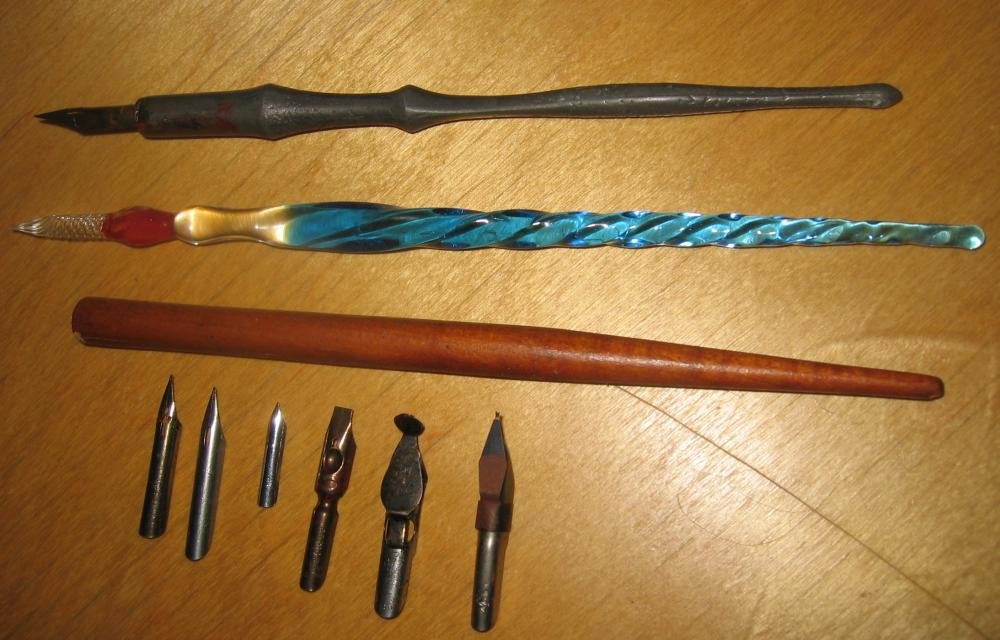
Pen-and-ink still life. Joanna Kosinska / Wikimedia Commons, CC0 1.0. Published 30 January 2017; camera metadata records October 2015. Resized and re-encoded. Contextual illustration, not a reviewed workshop or kit.
A calligraphy workshop in Poland can be a sampler of different pens, a brush-pen introduction, a focused lesson in one script or a course lasting several meetings. All may be advertised as suitable for beginners. Choose by the writing you want to explore and the tools you want to try, rather than treating every attractive alphabet as the same subject.
This guide uses six primary programme pages checked on 28 October 2026. Several describe past events, including Nice Letter's May and September 2026 workshops, Paperiada's August 2026 session and CEKUŚ's October 2026 event. They illustrate different teaching formats, not places currently available to book.
Start with the script and the tool
Useful search terms are kaligrafia for calligraphy, stalówka for a nib and obsadka for its holder. A listing mentioning brush pens is describing a different tool from a session centred on a metal nib and holder. Ask which tool participants actually use, not simply which instruments appear in the photographs.
Nice Letter's past Warsaw introduction on 12 September 2026 was designed for people unsure where to start. Its description offered a demonstration and tests of different tools and scripts, followed by discussion of paper and writing liquids. That is a useful format if your first goal is discovering which approach you enjoy.
The same studio's past Łódź workshop on 16 May 2026 was more specific: modern calligraphy using a pointed, flexible nib, with basic exercises, lowercase letters, first words and an introduction to capitals. Choosing a focused class like that means spending your time on one approach rather than sampling everything.
Ask the teacher to show an example of the script covered in the selected session. If you want to write names, a short quotation or a particular alphabet, say so before booking. A programme on Latin letters does not establish instruction in every writing system or a promise to cover every character in your intended text.
Consider a brush-pen or historical-script class
Ostrowskie Centrum Kultury's Paperiada event on 22 August 2026 described a beginner session using brush pens, with materials to take home. It is a historical example of a class where a pen-shaped brush tool, rather than a dip-pen kit, was the main instrument. Confirm the tool and kit for any new edition.
CEKUŚ's completed 17 October 2026 workshop in Nakło Śląskie centred on Latin uncial and offered paper, pens and inks, leading to a small take-home work. It explicitly said previous experience or already beautiful handwriting was not required. A named historical script can therefore still be a beginner option.
Centrum Kultury Podgórza's 2026/2027 programme focuses on pismo rondowe. Its detailed outline describes a straight holder, a broad-cut nib and ink, then progresses through letters, joining, spacing, composition and a final short text. Read that actual programme rather than translating a script name into whichever style you already recognise.
These examples are not a ranking of scripts. A sampler suits uncertainty; a focused class suits someone drawn to a particular look; a longer course gives more meetings to work through one programme. Ask what a complete beginner can reasonably practise and finish during the time offered.
Compare one workshop with a course cycle
The two reviewed Nice Letter events each described four hours. The Paperiada session also ran for four hours. By contrast, Centrum Kultury Podgórza describes a six-meeting cycle with ninety minutes per meeting. A course and a single afternoon should not be compared only by the word “beginner”.
The Kraków outline gives each meeting a purpose, from tools and initial strokes through letters and a final project. If you want that kind of sequence, ask for the exact meeting dates and whether sessions depend on previous work. If the cycle has started, check whether joining late is possible and what support is available.
The Kraków page's broad displayed date range does not itself supply the six actual meetings. It also gives conflicting minimum ages: sixteen in the introductory text and eighteen in another field. Ask the centre to confirm both the calendar and admission rule rather than choosing whichever detail suits you.
For any short workshop, check whether the advertised hours include breaks, whether you need to arrive early and what happens if you cannot finish the final piece. An organiser saying people sometimes stay longer is not an unlimited extension of the booked teaching time or a reason to plan a late arrival.
Check the kit you can keep
Nice Letter's past Warsaw introduction explicitly listed a starter set with a nib, holder, ink, models and exercises. Its Łódź programme described a different kit, including a two-in-one holder and exercise sheets. The lesson is to read the selected event's inclusion list rather than assuming every class from the same studio has identical equipment.
FEBLIK's Wrocław modern-calligraphy listing describes a box with basic worksheets, a holder, two nibs, black ink, paper samples and other textures and decorative materials. That is a provider's published package, not an independent assessment of the products' durability or their suitability for every later project.
Ask which items are yours afterwards and which are only available to try during class. “All materials supplied” can mean you do not need to bring anything, without necessarily meaning every demonstration tool goes home with you. If a continuing practice kit matters, get its contents clearly confirmed.
Also ask whether the exercises and any promised follow-up notes are printed, emailed or available through a group. Confirm when and how you receive them. Do not buy a large set of pens in advance if the class supplies its own tools and the teacher can help identify what you need for the chosen script.
Ask for language and practical support
An English booking reply does not establish English teaching. Ask whether demonstrations, explanations and individual feedback can be given in English throughout the selected class. If worksheets contain Polish instructions, ask whether the teacher can explain them or provide another format.
If you are left-handed, mention it and ask how the teacher supports your writing position and the selected tools. If you need a particular seating arrangement, clearer sight of demonstrations or step-free access, describe that requirement before paying. Do not infer those arrangements from a photograph of a spacious table.
Ask what clothes and personal items the organiser recommends bringing. You can specifically check whether there is a risk of staining clothes and whether protection is supplied. This is a class-selection guide, not a tool-cleaning or ink-handling tutorial; follow the teacher's instructions for the materials actually used.
For a personal project, bring a short sample text rather than confidential documents. If you hope to make wedding place cards or a gift, ask whether the workshop covers that task and what is realistic. A first class should not become a deadline-dependent order for a finished batch of professional work.
Read booking terms without filling the gaps
Centrum Kultury Podgórza says its course requires registration and full payment before the cycle begins, and that it starts after a minimum group has formed. It reserves the possibility of cancellation or an agreed date change if too few people register. Ask when your course is confirmed before planning other arrangements around it.
The reviewed FEBLIK Wrocław page says the studio may cancel up to three days beforehand if the minimum group is not reached and describes trying to move a participant to a later date. That wording alone is not an unconditional cash-refund promise or a complete account of participant cancellation rights.
Ask for the conditions covering the exact booking: cancellation by you, cancellation by the organiser, transfers, date changes and what happens if no replacement date works. Save those terms with the selected date and confirmation. This guide describes published programme wording, not a legal judgment about consumer rights.
Past event pages can remain visible with detailed programmes and prices. The Nice Letter, Paperiada and CEKUŚ examples here are past by the check date. Use their descriptions to ask better questions, then find a current session through the organiser. Do not assume that an old ticket page means a new edition is running.
Make the first session useful afterwards
Before leaving, ask which exercises to repeat, which paper suits the provided tool and where to find the correct examples for the script you studied. If feedback after class is included, clarify its channel and limits rather than treating general support language as unlimited private lessons.
Ask about packing any wet work or ink supplied to take home, and about care of the actual tools in your kit. If you do not want your face or personal text used in publicity photographs, say so. Finally, keep the teacher's recommended next step small enough to follow: a particular exercise and a short materials list are more useful than buying equipment for several scripts at once.
A clear booking should name the tool, script, beginner level, teaching language, meeting dates, kit contents and cancellation terms. With those settled, you can choose a sampler, a focused workshop or a course without expecting one afternoon to teach every kind of beautiful writing.
Frequently asked questions
Do I need beautiful handwriting before attending?
Several reviewed programmes explicitly welcome beginners. Check the selected script and programme rather than treating everyday handwriting as an admission test.
Are brush-pen and metal-nib workshops the same?
They use different tools. Ask which instrument and script the selected class teaches, especially if you want to continue with the kit afterwards.
Will I get a calligraphy kit to keep?
Some reviewed descriptions explicitly list starter kits. Confirm take-home contents separately from demonstration tools and materials supplied for use in class.
Can the lesson be in English?
Ask about demonstrations, explanations, worksheets and individual feedback throughout the session. An English payment reply is not proof of English teaching.
Are the dated examples in this guide upcoming workshops?
No. The dated May, August, September and October 2026 examples are historical. Confirm a current edition and available place directly before booking.
Sources
- Nice Letter past Warsaw introduction, 12 September 2026; checked 28 October 2026
- Nice Letter past Łódź modern calligraphy, 16 May 2026; checked 28 October 2026
- FEBLIK Wrocław modern-calligraphy programme, undated; checked 28 October 2026
- Centrum Kultury Podgórza programme, 2026/2027; checked 28 October 2026
- Paperiada past event at OCK, 22 August 2026; checked 28 October 2026
- CEKUŚ past uncial workshop, 17 October 2026; checked 28 October 2026