Linocut Workshops in Poland: Choosing Your First Printmaking Class
The essentials: Choose the object you want to print, then confirm beginner instruction, language, included materials, take-home items, access and cancellation terms for a current session. Historical listings are examples, not available dates.
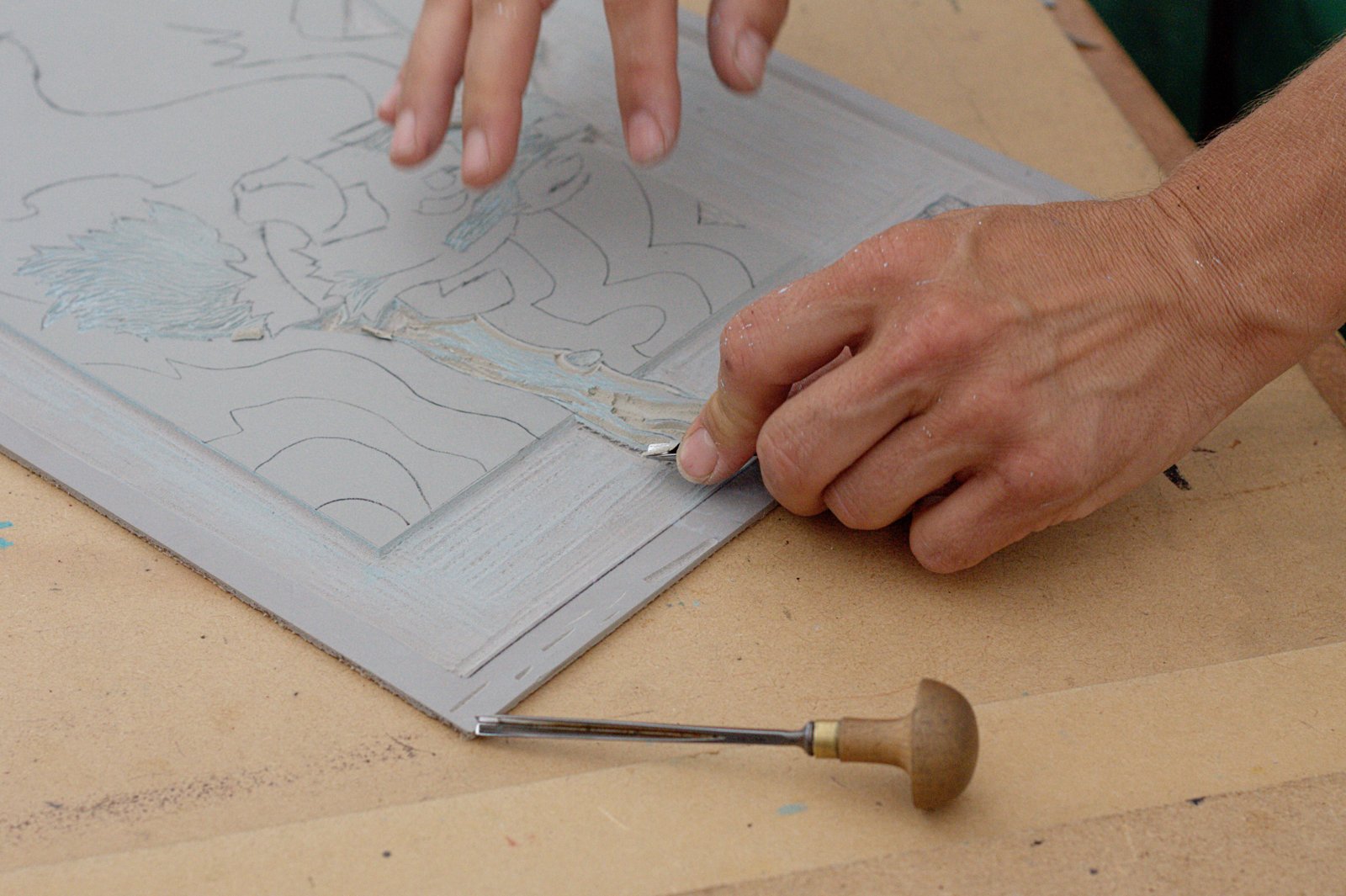
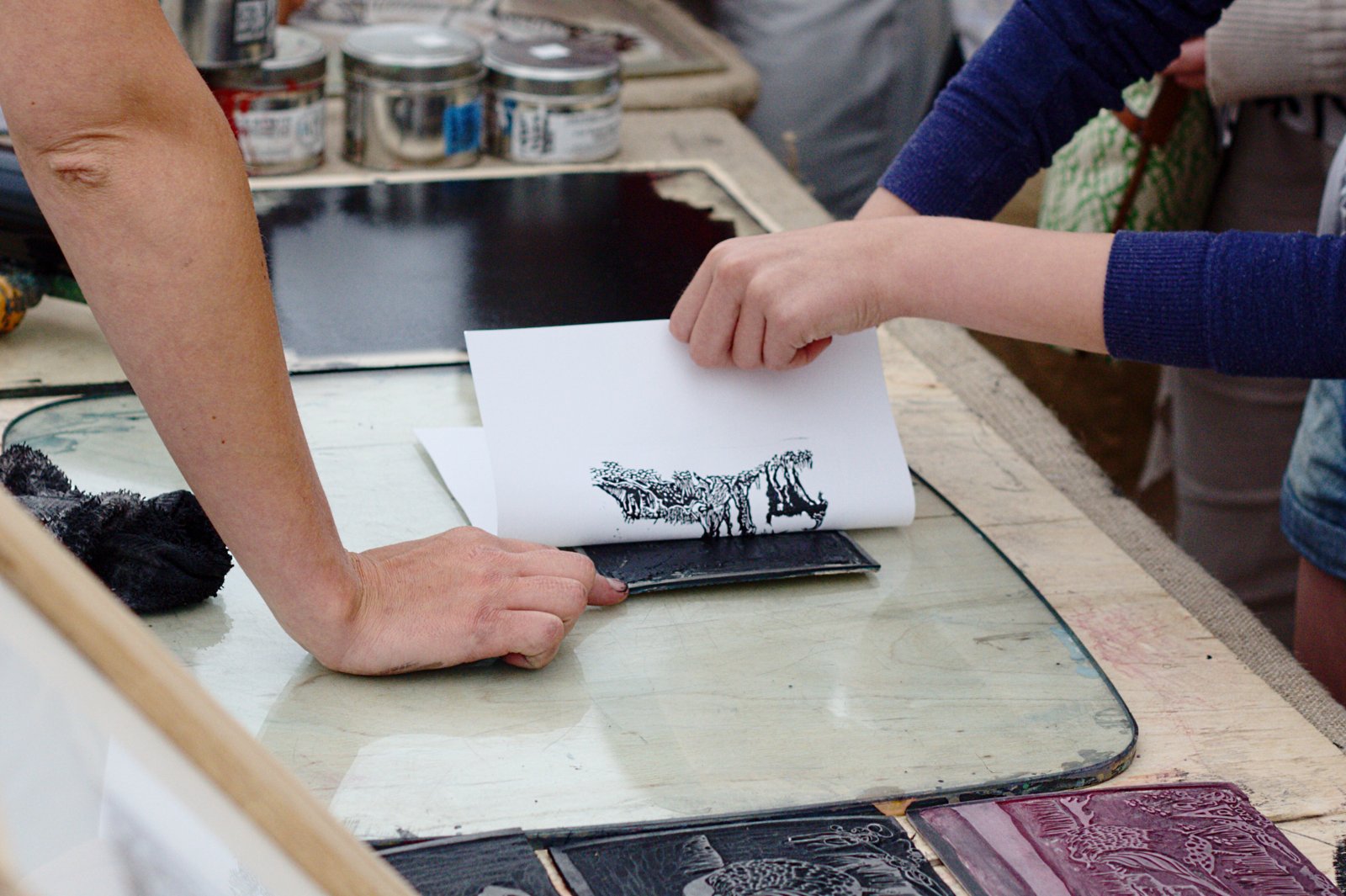
Preparing a linocut design, 11 August 2013. Zephyris / Wikimedia Commons, CC BY-SA 3.0. Resized and re-encoded; adaptation under the same licence. Historical contextual illustration, not a reviewed Polish workshop.
A first linocut workshop in Poland can end with a paper print, a bookplate, a notebook cover or a printed bag. Those are different projects, even when every listing uses the same word: linoryt. Choose by the object you want to make and the help you need, rather than by a dramatic photograph of an experienced artist's work.
The provider pages below were checked on 28 October 2026. They show useful differences in programmes, materials and booking arrangements. They are not a list of confirmed upcoming sessions. In particular, the dated Lublin, Gdańsk and LVVIA examples are past events. Use them to understand the format, then check a current date directly.
Understand the words before choosing a class
Linocut is a form of relief printing: the design is cut into linoleum and printed from its raised surface. Warsztaty Kultury in Lublin explains that distinction on its bookplate workshop page. This is not the same as simply painting a picture onto a bag, buying a ready-made stamp, or attending a general drawing class.
Useful listing words include matryca for the printing block, odbitka for a print and dłuta for the cutting tools. An ex libris is a bookplate identifying a book's owner. You do not need a complete technical vocabulary before attending, but knowing which item is the block and which is the finished print makes inclusion lists much clearer.
For a first session, look for an explanation of the whole project: choosing or preparing a design, making a block and producing a print with guidance. A programme centred on one stage may suit someone who already has experience. Ask whether a complete beginner can finish the advertised object within the booked session.
Choose the finished object, not a generic promise
Joanna Komorowska's Warsaw programme is explicitly beginner-focused and describes a notebook decorated with a personal print, plus one print mounted in a clip frame. Its plant-theme examples come with a pattern bank, while the page also offers help with another motif. This is a useful format for someone who wants a defined object rather than an open-ended printing session.
The same page describes 3.5 hours and groups of two to five people aged 16 and above. That is the published programme description, not proof of the group size or availability on your chosen date. Confirm whether the session you are buying follows that format and whether the teaching language suits you.
MAYBE FOR YOU in Wrocław describes taking home both a print and the block. It mentions printing on paper or fabric, but also says the time and price depend on the specific programme. Check the selected meeting, not only the headline. If you particularly want a fabric item, ask which item is provided and which version of the class includes it.
LVVIA's page, showing a past 19 October 2026 session, distinguishes paper printing from an optional cotton-bag upgrade. Its examples include a postcard, wall graphic or bookmark. The practical lesson is that a photograph of a printed bag does not establish that the basic booking includes a bag. Check the selected product option before paying.
Decide how much design preparation you want
Some people want to arrive with nothing more than an idea. Others already have a drawing they hope to print. Joanna Komorowska provides plant-pattern starting points and support with a participant's own composition. LVVIA encourages inspiration such as sketches, drawings or photographs and also describes ready-made patterns.
The Gdańsk library's August 2026 workshop notice encouraged preparing a project beforehand and suggested a simple, strongly contrasting motif. That was advice for that past programme, not a requirement for every class. Ask the current organiser whether preparation is optional and whether they can help simplify your idea during the session.
If your project contains a name, initials or a short phrase, tell the teacher before finalising it. Ask for help with how the design will appear in the finished print. A reference image on your phone is a discussion aid, not a promise that a detailed design can be completed in a short introductory class.
For a personal or work-related design, send only what is needed to discuss the project. You can ask about size and complexity without sharing confidential documents, customer details or an entire folder of family photographs. If you want to print someone else's artwork or a company mark, settle permission separately rather than assuming that a workshop booking supplies it.
Check what materials included actually means
The reviewed programmes often include materials, but their lists are not identical. Joanna Komorowska lists linoleum, tools, inks, trial paper, a handmade notebook, framing materials and packing. FEBLIK's Goga Gallery listing in Poznań describes access to linoleum, cutting tools, printing inks and paper needed to make prints.
Access during class is different from taking tools home. Before buying a starter kit, ask what you will borrow, what you will use up and what will belong to you afterwards. A clear take-home list might include the block, a specified object and prints. It does not automatically include the gouges, roller or other workshop equipment.
Also ask whether test prints count towards any stated total, whether extra paper is included and whether a second fabric item is possible. These are questions for the selected organiser, not reasons to assume an extra charge. They help avoid arriving with a plan that needs materials outside the advertised project.
Ask about instruction, language and access
A friendly English email does not establish that the class itself is taught in English. Ask whether the teacher can explain the tools, demonstrate the process and give individual feedback in English throughout the session. If the group is Polish-speaking, clarify how that help fits into the shared lesson.
For a first class involving cutting tools, choose a taught session rather than assuming that open studio access includes instruction. Ask how beginners are introduced to safe tool handling and how the teacher checks their work. This guide is about choosing a class, not a substitute for the instructor's demonstration or a cutting tutorial.
Age limits vary in the examples. The Warsaw page says 16 and above, while the Poznań listing says 14 and above. Warsztaty Kultury's past bookplate event was for adults. A parent should check the selected event's age and supervision rules instead of treating a general family-friendly photograph as admission permission.
For access, describe the practical requirement: step-free entrance, lift, seated working height, extra lighting or help following a demonstration. The Poznań listing places its studio on the second floor; that alone does not establish whether there is a usable lift. Ask about the route to the actual room, not simply whether the building has an entrance.
Read booking terms as carefully as the programme
Joanna Komorowska's page sends registrations through FEBLIK. That makes the selected booking page and its terms important as well as the artist's description. Keep the date, venue, project option and confirmation together so you know which arrangement you bought.
The FEBLIK Goga Gallery page states that a participant can change the date until seven days before the workshop, subject to places being available, and says withdrawal is not available under its stated terms. It also allows the studio to cancel for insufficient participants up to three days before the event and describes trying to move the place to a later date.
That wording is not a general promise of a cash refund or an automatic replacement session. If the possibility of organiser cancellation matters to you, ask what happens if no alternative date works. This is a description of one listing's wording, not a legal judgment about consumer rights or a rule shared by every provider.
Check whether your payment confirms a place, whether a minimum group applies and how cancellations must be communicated. If you are visiting from another city, settle those points before arranging the rest of the outing. Do not assume that submitting an enquiry form reserves a seat.
Plan clothes, packing and the journey home
Joanna Komorowska recommends comfortable clothing that can get dirty and describes help packing the finished work into a bag. Use that as a prompt to ask your organiser about clothes, aprons and packing, not as evidence that every ink washes out or every studio supplies protection.
Ask when the printed items can be handled, whether any work must stay to dry and whether flat protective packaging is provided. A take-home promise in one programme does not settle drying or collection arrangements in another. Mention if you need to travel straight afterwards or cannot return for collection.
Before leaving, check which objects are yours and ask for any care instructions for a fabric print. Confirm whether the organiser plans to photograph participants or their work, and say if you do not want your face or a personal design used publicly. Keep that discussion separate from permission to attend the class.
Use past listings without mistaking them for availability
Warsztaty Kultury's Lublin bookplate workshop took place on 1 March 2025. The Gdańsk library notice covers August 2026 workshops, and LVVIA's reviewed option shows 19 October 2026. All are historical by this guide's check date. They demonstrate different projects and preparation expectations, not dates you can now book.
Your final message can be short: ask for a beginner session in your preferred language, the finished object, included materials, take-home items, exact meeting time and booking terms. Add any access requirement and whether you need same-day collection. Once those answers agree with the selected booking, you have a clearer basis for choosing than a page full of impressive prints.
Frequently asked questions
Do I need drawing experience for a linocut workshop?
Several reviewed programmes welcome beginners and offer patterns or design help. Check how much preparation the selected teacher expects and whether your idea fits the session.
Are printing tools included?
Several providers supply tools for use during class. That does not mean you take the tools home. Confirm materials and take-home items separately.
Can I print a tote bag instead of paper?
Some programmes offer fabric printing or a separate bag option. Check the actual product selection rather than assuming a photographed bag is included.
Can I attend in English?
Ask about English demonstrations, tool explanations and individual help throughout the class. An English booking reply does not establish the teaching language.
Will I take my prints home the same day?
Some programmes explicitly describe take-home work. Ask your organiser about drying, protective packing and any later collection before arranging your journey.
Sources
- Joanna Komorowska Warsaw programme, undated; checked 28 October 2026
- MAYBE FOR YOU Wrocław programme, undated; checked 28 October 2026
- LVVIA past workshop option, 19 October 2026; checked 28 October 2026
- Gdańsk library past workshops, August 2026; checked 28 October 2026
- FEBLIK Goga Gallery programme and booking terms, undated; checked 28 October 2026
- Warsztaty Kultury past bookplate workshop, 1 March 2025; checked 28 October 2026