Stained-Glass Workshops in Poland: Choosing a First Class
The essentials: Choose the process and time commitment first, then confirm English instruction, age rules, materials, supervision, current dates and collection terms. Programme descriptions are not live availability.
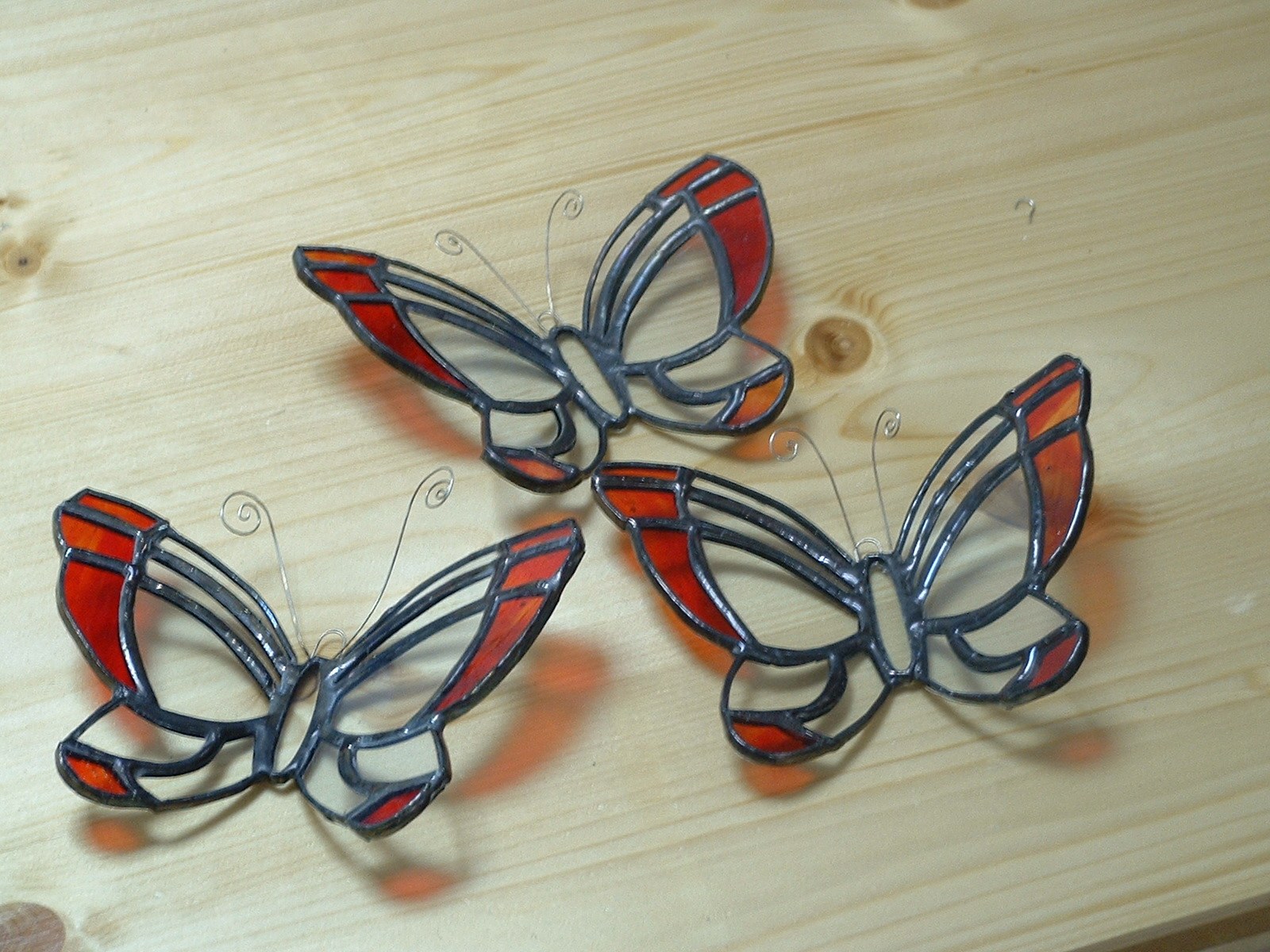
Finished copper-foil glasswork, contextual illustration rather than a reviewed class. Photo: Rickjpelleg; glasswork by the photographer's daughter, unnamed on the source page. Wikimedia Commons, CC BY 2.5. Uploaded 17 December 2005; exact capture date uncertain because source relies on camera metadata. Resized and re-encoded.
A stained-glass class can be a short introduction with a small finished ornament, a day spent learning several stages of glasswork, or a longer course with more room for design. For an expat looking for a creative activity in Poland, those differences matter more than the most impressive photograph on the booking page. Choose the experience you want to have, then check the language, supervision, materials and actual date.
This guide compares six published programmes checked on 29 October 2026. They are examples of different formats, not a ranking based on attendance or a list of available places. Several pages are undated, one announces a new date to come, and Sztukarnia still displays March and April 2026 weekends that are already past. Contact the organiser before arranging travel or paying.
Start with the process, not the word "Tiffany"
The reviewed providers use Tiffany terminology for programmes involving copper foil and soldering, but that does not mean every participant does the same tasks. Po-widoki makes the distinction particularly clear: its longer introduction describes transferring a pattern, cutting, grinding, wrapping, soldering and finishing. Its shorter flower workshop starts with prepared, ground glass elements and focuses on assembling and finishing them.
Neither format is automatically the better first class. Prepared pieces may fit someone who mainly wants to explore colours and make an object during a shorter visit. A longer process may suit someone who wants to understand how a design becomes a set of glass pieces. Ask which stages you will practise yourself, which are demonstrated and which are completed beforehand. Do not infer that from a photograph of someone holding a tool.
Three useful formats to compare
A museum visit with a small project: Kraków's Muzeum Witrażu describes shortened and standard workshops, with approximately one or two hours of practical work respectively, preceded by a museum and workshop tour. Its overall duration table says two or three hours. The smaller version has two glass elements; the standard version has five. The page lists Polish and English and says participants take the object away in protective packaging.
A focused one-session introduction: Pracownia Śliczności's FEBLIK listing describes an adult beginner session with support through the stages and a project developed from the participant's idea. Materials and tools are included. Po-widoki offers a different comparison within one provider: a shorter flower format and a longer beginner project selected from proposed designs. Check the specific product rather than assuming a studio has one universal programme.
More time for the whole sequence: Sztukarnia's Warsaw page describes a two-day adult course covering glass selection, cutting, grinding, copper foil, soldering, wire details and finishing. Fundacja AlterEdu describes a six-hour introduction with a similar sequence. These descriptions help explain the format, but neither establishes a current place. Sztukarnia's listed March and April 2026 dates are historical; ask for a new edition and its terms.
Decide what "my own design" should mean
Creative freedom can mean choosing colours within a supplied pattern, adapting an idea with the teacher, or developing a composition from scratch. FEBLIK's Pracownia Śliczności description says it does not impose finished patterns and will help adapt an idea to the possibilities of glasswork. Po-widoki explicitly offers a choice of simple proposed patterns for its longer class. These are different promises, not evidence that one provider is more creative.
Pomykała Studio's botanical and collage programme is different again. It describes enclosing selected plants, photographs or graphics in glass, with materials available and help throughout a three-hour beginner session. Its page says a new date will be announced. If that is the look you want, ask about a current edition; do not book a different class assuming botanical materials will be included. Send a reference image only after asking whether the idea fits the session.

Separate workshop time from the total visit
A two-hour experience and two hours at the workbench are not interchangeable. The museum example includes a tour and a coffee break as well as practical work. Sztukarnia lists daily start and finish times with a note about a half-hour break. Before choosing between programmes, ask for the total arrival-to-departure time and the practical teaching time. This is especially useful if you are fitting the activity around work or childcare.
For a multi-day course, confirm every meeting date and whether attendance at all sessions is expected. Ask what happens if the group works more slowly, if an object is unfinished at the scheduled end, or if you miss one meeting. A page that describes a finished object does not establish an unlimited right to stay late. Leave travel plans flexible until you know the finishing and collection arrangements for your selected edition.
English teaching needs a specific answer
Muzeum Witrażu explicitly lists English among its workshop languages. That is a useful starting point, not a reservation for an English session on any date. Ask whether the selected booking includes English explanations during the practical work as well as the tour. For other providers, the reviewed programme text does not establish an English teaching arrangement. An English email response alone does not settle that question.
A clear enquiry might say: "I am a beginner and need instruction and safety explanations in English throughout the workshop. Is that possible for this session, and which stages will I do myself?" If a friend plans to interpret, check whether an extra person can attend and whether that changes the group size or cost. Do not arrive assuming the teacher can teach two language groups at once.
Ask about supervision and access before paying
The reviewed programmes describe cutting, grinding or soldering in various combinations. This article is a booking guide, not an instruction sheet for those activities. Fundacja AlterEdu and Sztukarnia explicitly include safety rules in their programmes. The museum lists aprons and protective glasses; Pracownia Śliczności lists several protective items. These are provider statements about provision, not an independent assessment that a session suits every participant.
Ask the studio directly about its equipment, materials, ventilation, protective measures and clothing requirements. If you have a health concern, obtain appropriate professional advice rather than relying on a craft listing. Po-widoki describes lead-free solder, but that wording is not a blanket statement that no other precautions are needed. For access needs, ask about stairs, seating, workbench height, lighting, breaks and the tasks you would be expected to perform.
Age limits belong to the chosen programme
The museum's workshop page says adults and young people from age 13. Po-widoki describes adult-only workshops, and the reviewed Pracownia Śliczności listing also targets adults. Sztukarnia labels this particular course for adults. Do not turn the lowest age found on one site into a general rule for stained-glass classes across Poland. A studio may have separate programmes with different tasks and supervision.
If booking with a teenager, state their age and ask about attendance, a guardian's role and which practical stages they can do. If the organiser offers an alternative family activity, compare its actual materials and process rather than assuming it is a shorter version of the adult course. Get the answer for the exact session before buying places for a group.
Check what leaves the studio with you
Several reviewed descriptions promise a take-home object, but tool access is not tool ownership. Po-widoki lists tools and materials as supplied; FEBLIK describes access to tools; neither wording alone means a starter kit goes home. The museum explicitly includes protective packaging. Ask other providers whether packaging is provided and whether the finished piece will be ready to travel immediately or needs later collection.
Also ask what the object is intended for and how to care for it. Do not assume a decorative piece is suitable for food contact, outdoor exposure, a child's room or a particular hanging position. Ask the maker or instructor about suitable use and fittings. If travelling afterwards, describe your transport plans and ask about packing. Finishing the class and transporting the piece without damage are separate practical questions.
Read the selected booking terms, not the generic FAQ
Before paying, confirm the current total, included materials, project limits, language, date, venue and cancellation rules. Pracownia Śliczności's FEBLIK page says the studio may cancel up to three days before a session if the minimum group is not reached and will try to move the place to a later date. That statement is not a promise of a cash refund or your own right to cancel at the same deadline.
Sztukarnia's page also includes information about semester-course withdrawal. Do not apply that automatically to a two-day glass course. Ask for the terms attached to the product you are actually buying. For a gift voucher, check expiry, booking restrictions and whether the recipient can obtain an English session before choosing it. Keep the programme description and confirmation, and avoid non-refundable travel arrangements based solely on an undated listing.
A practical first choice
Start with your available time, the process you want to try and the language you need. Then compare a small guided project, a one-session studio introduction and a longer course. Choose the programme whose current written confirmation answers those questions. A modest project with clear instruction and realistic timing is a better match than an ambitious photograph attached to a session you do not understand.
Frequently asked questions
Do all beginner classes include cutting glass?
No. Po-widoki distinguishes a longer process from a shorter flower workshop using prepared, ground elements. Ask which stages you personally practise.
Can I take a stained-glass workshop in English?
Muzeum Witrażu lists English. Confirm the language for the selected booking, including practical and safety explanations. Other reviewed pages do not establish English teaching.
Can children join an adult workshop?
Age rules vary. The museum lists age 13 and above; other reviewed programmes target adults. Confirm the exact session and guardian arrangements.
Will I take the piece home immediately?
Several providers describe take-home objects. Confirm finishing, packaging and collection arrangements for your selected class rather than assuming every object travels immediately.
Are these confirmed upcoming classes?
No. This guide compares published programmes checked on 29 October 2026. Sztukarnia displays past March/April 2026 dates; other pages may be undated or awaiting a date. Confirm availability directly.
Sources
- Muzeum Witrażu workshop programme, undated; checked 29 October 2026
- FEBLIK Pracownia Śliczności programme, undated; checked 29 October 2026
- Sztukarnia programme, past March/April 2026 dates; checked 29 October 2026
- Po-widoki workshop formats, undated; checked 29 October 2026
- Pomykała Studio botanical/collage programme, new date pending; checked 29 October 2026
- Fundacja AlterEdu beginner programme, undated; checked 29 October 2026