Breakfast Mixtures in Poland: Musli, Granola and Crunchy
The essentials: Choose dry breakfast mixtures by their actual recipe: raisin-and-almond musli, tropical fruit mixtures, classic crunchy and fruit or chocolate granola can contain different cereals, fruit forms and smaller additions.
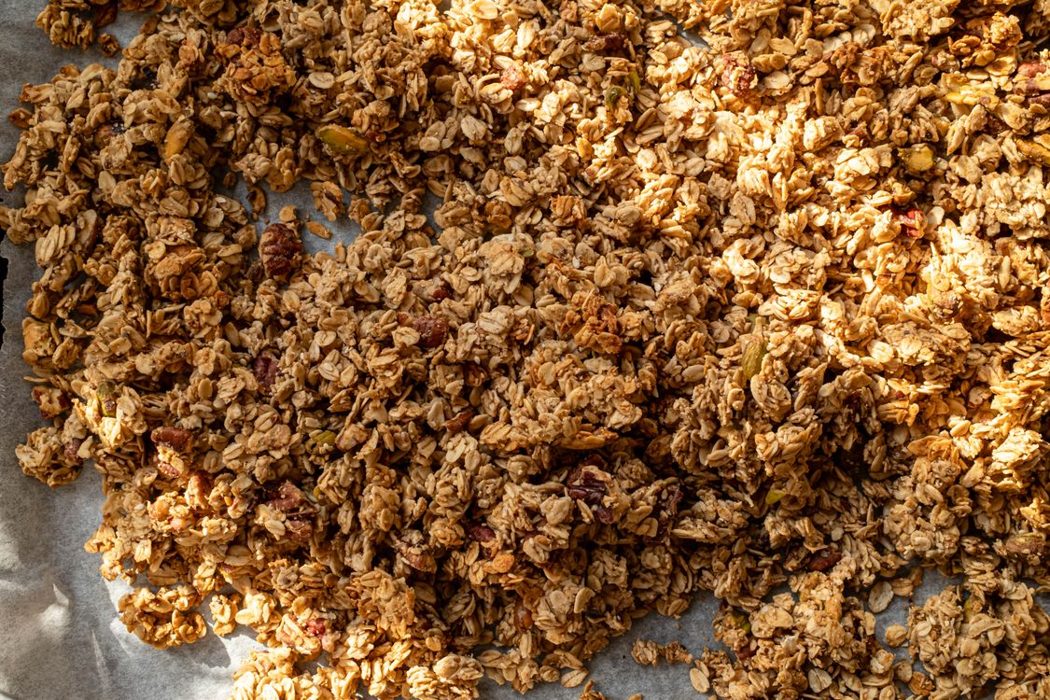
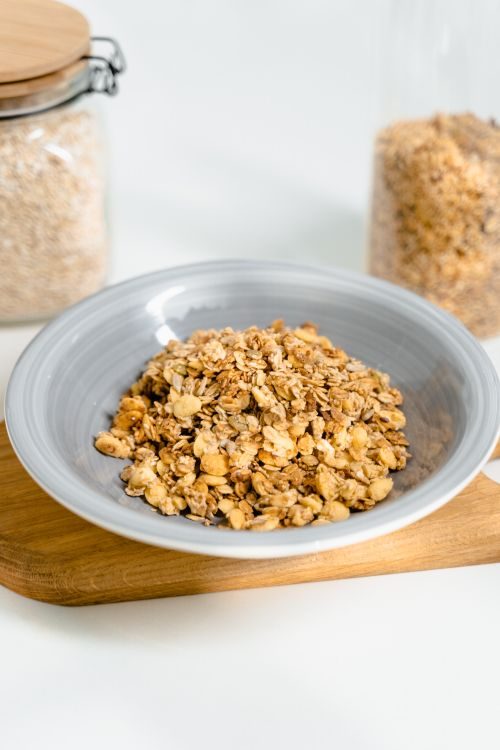
Cover: Pincalo, source photograph, Pexels License. Resized and JPEG-compressed. Granola spread across a tray. Illustrative dry-mixture context, not a cited Sante product, verified ingredients or manufacturing process.
The dry breakfast-mixture shelf in Poland can offer musli, crunchy and granola with quite different combinations of cereal, fruit, nuts, chocolate and smaller additions. A tropical name, a chocolate picture or a familiar bag colour does not tell you the full mixture. The useful choice is what you want in the ready-to-eat bowl: a raisin-and-almond mix, a more varied fruit mixture, a crunchy cereal base or a product with biscuits, marshmallows and chocolate components.
Sante's producer pages and its own shop provide concrete examples. This guide stays with those dry ready-to-eat formulations and their suggested serving uses. It does not define universal manufacturing categories, rank breakfast products by healthfulness or explain how to cook porridge. The job here is choosing the actual mixture rather than treating several differently formulated bags as one cereal with interchangeable flavour names.
Musli tradycyjne: a named raisin-and-almond mixture
Sante's Musli tradycyjne 350 g lists wholegrain oat flakes 50%, raisins 25%, wheat, almonds 4%, barley malt extract and sea salt. The raisins have their own parenthesised ingredient statement, including one or more of the vegetable oils named by the producer. That is the cited product's mixture, not a formula this article applies to every bag called traditional musli.
The raisin and almond shares help identify a meaningful buying choice. If those are the pieces you want in a ready breakfast, keep both in the note rather than writing only fruit musli. A bag with several tropical fruits or a chocolate component will not quietly reproduce this particular composition. The brand name alone is also too broad when the same producer offers many different mixtures.
Sante suggests serving the product with a plant drink, milk or yoghurt. Those are the producer's use ideas, not a required cooking sequence or a fixed liquid-to-cereal ratio supplied by this guide. Choose the serving context you intended and read the current bag's information. No claim is made that the mixture has been personally tasted or tested in a particular yoghurt dessert.
Tropical musli contains more than one kind of fruit preparation
Sante's Musli tropikalne 350 g lists wholegrain oat flakes 38.2% and a dried-and-candied fruit mixture 22.5%. That fruit component names dried dates, candied pineapple and candied papaya. The date component includes rice flour, while the candied fruit statements include sugar and, for the pineapple, citric acid. The written ingredients therefore reveal more than the broad tropical-fruit title.
The producer describes this product as including classic crunchy as part of the mixture. Its list also names wheat, maize grits, cane sugar, barley and maize flours, non-hydrogenated palm fat, barley malt extract, cane molasses, glucose syrup, sea salt, flavouring and soy lecithins. These details identify a mixed ready breakfast with several components, not simply a bag of loose dried fruit scattered over cereal.
The 22.5% figure belongs to the named combined fruit mixture. The page does not give a separate share for each of the three fruits in that statement, so this guide does not divide it equally or invent an individual pineapple percentage. If one fruit is the deciding feature for you, inspect the exact list and keep the product name rather than assuming every tropical mixture contains the same selection.
Classic crunchy is a particular cereal recipe
Sante's Crunchy klasyczne 350 g describes a strongly crunchy, toasted breakfast product. Its ingredients group cereal products together and state wholegrain oat flakes 55.6%, flour 11% from barley and maize, and maize grits 1.8%. It also lists cane sugar, non-hydrogenated palm fat, glucose syrup, cane molasses, coconut flakes, sea salt, flavouring, soy lecithins, cinnamon and barley malt extract.
Klasyczne therefore does not mean a flavourless product with only one cereal ingredient. Coconut and cinnamon are part of this named list. That matters if you want a crunchy base for a bowl with additions you choose yourself: read the background ingredients as well as the large title. A familiar texture description does not erase the flavour choices already present in the bag.
The producer's description supports a crunchy or toasted character for this example. It does not establish an industry-wide rule that every product called crunchy is manufactured in exactly the same way or has a particular cluster size. This guide uses the maker's description to identify the product's intended texture without converting it into a universal definition or a promise about every spoonful.
Fruit Crunch&Go includes several fruit forms
Sante's own shop describes Granola Crunch&Go Owocowa 380 g as a baked mixture with a light, biscuit-like structure. Its ingredient list gives a combined fruit mixture 12.4%, then separately describes dried fruit 9.7%, freeze-dried fruit 2% and candied pineapple 0.7%. These named forms are useful to a shopper who wants more than a general fruit flavour.
The dried-fruit statement names raisins, banana, sweetened cranberry and apple, each with its own component information. The freeze-dried group names blackcurrant, redcurrant, raspberry and cranberry. The list also gives narrower cranberry figures inside the longer ingredient description. Keep those numbers in their source context rather than adding overlapping groups and subcomponents into a new total that the producer did not state.
This is a different mixture choice from the tropical musli's dates, candied pineapple and papaya. A shopper who wants currants and raspberry in the mix has a concrete reason to investigate this product; someone who wants the tropical combination has another. The guide does not rank one preservation form as better or promise how intensely any individual fruit will taste in a particular bowl.
The fruit granola's small additions change the mixture
The fruit Crunch&Go list also names an almond-and-hazelnut mixture, with the hazelnuts described as caramelised, plus biscuits and marshmallows. The biscuits include their own flour, sugar, butter, milk and other ingredients. The marshmallow component includes gelatin among its listed ingredients. These are actual parts of this named recipe, not decorative pieces assumed from a serving picture.
That makes the product a different choice from a simple fruit-and-nut mixture, even if both are served from a bag into a bowl. If biscuits or marshmallows are part of the texture you want, the full list helps identify them. If you expected only cereal and fruit, the same list corrects that expectation before purchase. Neither reaction requires turning the comparison into a health judgement.
The producer's shop suggests milk, a plant drink, yoghurt or kefir and also says the product can be eaten directly from the pack. Those are uses for this ready mixture. The guide does not turn them into a recipe requiring a precise serving weight, make dietary-suitability assurances or infer the absence of other ingredients from a front-of-pack fruit photograph.
Chocolate Crunch&Go has separate chocolate components
The chocolate Crunch&Go 380 g page describes a baked cereal mixture with two types of chocolate and a nut-and-peanut mixture. Its detailed ingredient list states chocolate 7.3% and milk chocolate 3%, each followed by its own component list. The page's shorter promotional text says 10% chocolate. This guide preserves the detailed figures rather than silently forcing the list into the rounded headline.
The chocolate component and the milk-chocolate component do not have identical ingredient statements. The latter includes milk ingredients and named vegetable fats in varying proportions. Those details belong to the compound chocolate ingredients, not a new claim about the percentage of every fat in the whole breakfast mixture. Read them at the level where the producer places them.
The nut-and-peanut mixture is stated as 2.2% and names hazelnuts, peanuts and almonds. That is another meaningful distinction from the fruit variant's almond and caramelised-hazelnut description. A chocolate title alone does not tell you this selection. Keeping the actual product identity helps avoid assuming two bags in the same range contain the same nuts with only the fruit exchanged for chocolate.
Read beyond the headline component
The chocolate mixture also lists ingredients such as butter, honey, coconut flakes, cocoa and named sweeteners in the longer formulation. These details show why the large chocolate percentage is only one part of the buying decision. It is not a complete summary of the product or proof that everything else is an unflavoured cereal base.
Likewise, a product name such as granola does not settle whether the jar or bag contains biscuits, marshmallows, nuts or a particular chocolate recipe. The examples here span overlapping names on the producer's own pages. Read the detailed product rather than inventing a strict legal or manufacturing boundary between musli, crunchy and granola that the cited sources do not establish.
Choose the combination you actually want to repeat
For a raisin-and-almond mixture, investigate the traditional musli's stated shares. For dates, pineapple and papaya, retain the tropical product identity. For a crunchy cereal recipe with coconut and cinnamon, check the classic crunchy. For dried, freeze-dried and candied fruits plus extra textural components, read the fruit Crunch&Go list; for its chocolate counterpart, retain the separate chocolate and nut components.
Save the full product name, size and the components that mattered when you found a mixture you liked. Confirm the current bag before buying again because a short store title can omit a variant or carry an incomplete description. The goal is a repeatable dry breakfast choice, made from the actual written formulation rather than a colour, a broad category name or a universal rule that the sources never supplied.
Frequently asked questions
Does tropical musli mean only dried fruit and cereal?
Not in the cited Sante example, which includes candied fruit and a crunchy component as well as other listed ingredients.
Does every granola have the same smaller additions?
No. The cited fruit Crunch&Go includes biscuits and marshmallows, while its chocolate counterpart has separately listed chocolate and nut components.