Buying a Used Car in Poland: Tax, Insurance and Registration
The essentials: Four steps follow a used-car purchase in Poland: file PCC-3 and pay 2% of market value within 14 days, keep OC insurance continuous from day one, and register at your district vehicle office within 30 days. Registration costs 160 zł with new plates; foreigners need a zameldowanie and legal-stay document.
The paperwork is a sequence, and the order matters
Buying a used car in Poland is refreshingly straightforward: a private sale needs no notary, prices are negotiable, and the second-hand market is huge. What catches foreigners out is not the purchase itself but the paperwork that follows it. Polish law gives you three separate deadlines after the money changes hands, run by three different institutions: the tax office wants its 2% within 14 days, the insurance clock starts on the day of purchase, and the vehicle office expects a registration application within 30 days. Miss any of them and the fines start at 250 zł and climb to 1,000 zł.
This guide walks through the four steps in the order you will meet them: the sale contract, the PCC tax, the mandatory OC insurance, and the registration. All rules below were verified against gov.pl service pages, the tax authority's guidance and the Insurance Guarantee Fund (UFG) on 24 October 2026.
Data source: gov.pl vehicle registration and PCC-3 service pages, podatki.mf.gov.pl PCC guide, ufg.pl OC guidance, powiat government notices on registration fines; checked 24 October 2026.
Step 1: Get a proper sale contract
The foundation of everything else is the written sale contract, the umowa kupna-sprzedaży. A private sale between two individuals does not need a notary or any official form, but the paper you sign should carry the date, both parties' full names and identity document numbers, the car's VIN and registration number, the agreed price and the seller's declaration of ownership. Take the seller's data exactly as they appear in the registration certificate, the dowód rejestracyjny, and keep the seller's signature on the same page as the price. The contract is your proof of ownership for the tax office, the insurer and the vehicle office, so you will show it at every step that follows.
Before you sign anything, run the car through the free government history check at historiapojazdu.gov.pl, which shows its registration history, inspection records and recorded mileage. Our guide to checking a used car in Poland for free explains exactly how to read that report. If you are the one selling an old car to fund the new one, the seller has duties too: report the sale within 30 days or risk a 250 zł fine, as covered in our car sale reporting guide.
Data source: gov.pl vehicle registration service page on proof-of-ownership documents; checked 24 October 2026.
Step 2: Pay the 2% PCC tax within 14 days
A private used-car purchase triggers the civil law transactions tax, PCC. The buyer owes 2% of the car's market value - not necessarily the price written in the contract. If the tax office decides the declared value is below market, it can reassess the value itself and charge the difference plus interest, so a suspiciously low contract price is a tax risk, not a saving.
You settle PCC with the PCC-3 declaration, filed at the tax office for your place of residence within 14 days of signing the contract. The fastest route is online: the form is available in the e-Deklaracje service on podatki.gov.pl and can be signed with a trusted profile (profil zaufany) or qualified signature. On a car with a market value of 18,000 zł the tax is 360 zł, and you can pay it by transfer to the tax office's account.
Two situations remove the tax entirely. First, if you buy from a VAT-registered dealer and the sale is documented with a VAT invoice, the transaction falls under VAT instead and no PCC is due - which is why dealer purchases come with an invoice rather than a private contract. Second, buyers with a moderate or severe disability certificate, or a mild certificate linked to musculoskeletal conditions, are exempt when buying a passenger car for personal use. In both cases you skip PCC-3 altogether.
Data source: gov.pl PCC-3 service page (rates, 14-day deadline, e-Deklaracje) and the Ministry of Finance guide to PCC on car purchases (2% rate, market-value rule, exemptions); checked 24 October 2026.
Step 3: Sort the OC insurance from day one
Every car on Polish roads must carry mandatory third-party liability insurance, OC, and the Insurance Guarantee Fund (UFG) is blunt about the rules for used cars. When you buy a car, the seller's OC policy passes to you automatically - but only until the end of the period it was written for. It does not renew automatically afterwards, and even a single day without valid OC triggers a penalty fee, so the day the seller's policy expires you must have your own contract in place.
You have two practical options. You can ride out the seller's policy until it expires and line up your own policy to start the moment it ends, or you can cancel the inherited policy and sign a fresh one - but if you cancel, the new contract must be in place no later than the same day. If the seller had no insurance at all, your deadline is the purchase date itself. Before deciding, check the car's current policy status in the free UFG database at ufg.pl or in the "Na Wypadek" app, which shows which insurer covers the car and until when. Insurers price OC individually, so as a newcomer without a Polish no-claims history it is worth getting several quotes before the handover date.
Data source: UFG (ufg.pl) guidance on OC when buying a used car, including the no-auto-renewal rule and penalty for coverage gaps; checked 24 October 2026.
Step 4: Register the car within 30 days
Since 1 January 2024 the buyer of a used car no longer files a separate acquisition notice. Instead, article 73aa of the Road Traffic Act obliges you to file a registration application within 30 days of the purchase. Miss it and the county office can impose an administrative fine of 500 zł, rising to 1,000 zł if you are more than 180 days late. After the deadline your car should not be on the road at all, so treat this one as the hard stop.
Registration happens at the vehicle department, wydział komunikacji, of the authority for your registered address: the county office (starostwo), the city office in cities with county status, or the district office in Warsaw. Bring the registration application, the sale contract as proof of ownership, the existing registration certificate, your identity document and proof of the fees. Expect to pay 160 zł in total with new plates: 66.50 zł for the registration certificate with legalization stickers, 13.50 zł for the temporary permit and 80 zł for standard car plates. If you keep the existing plates, the plate fee drops away and the visit costs 80 zł. The office usually registers the car temporarily on the spot for 30 days and hands you the plates and a temporary permit; the permanent certificate arrives within about a month. Since 10 June 2026 you no longer have to physically bring the old plates to the office if they meet the current requirements - you sign a declaration that they are readable and undamaged and keep them on the car.
Two points matter specifically for foreigners. First, you register at the office for the district where you are registered as resident, so you need a zameldowanie, temporary or permanent, before this step. Second, county offices require foreigners to attach a document confirming legal stay in Poland, such as a residence card or visa, to the application. If your residence paperwork is still in progress, plan the car purchase accordingly, because the 30-day clock does not pause while you wait for a decision.
Data source: gov.pl registration service page (fees, documents, temporary registration), county office notices on the 500/1,000 zł fines (22 May 2025) and the 10 June 2026 plate-rule change; checked 24 October 2026.
The order to remember
Put together, a clean private purchase looks like this: sign a complete sale contract and collect the registration certificate and plates; file PCC-3 and pay 2% within 14 days unless a VAT invoice or exemption covers you; arrange OC so there is no gap from the day you buy; and file the registration application at your local vehicle department within 30 days, with your zameldowanie and legal-stay document ready. Do the four in that order and the whole legal side of the purchase costs roughly 160 zł plus the tax - cheap insurance against fines that start at 250 zł and reach 1,000 zł.
Once the car is yours and legal, the recurring obligations begin: the annual technical inspection, the winter preparation and the rules for collisions and breakdowns. Our guides to technical inspections, preparing a car for Polish winter and what to do after a collision cover those next steps.
Data source: fee and fine figures per the official pages cited above; checked 24 October 2026.
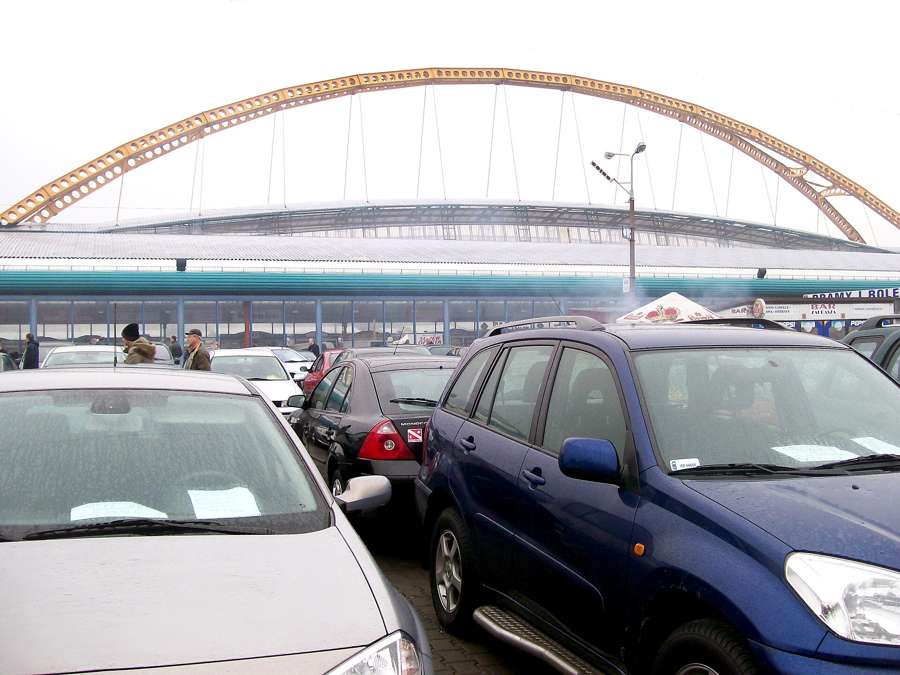
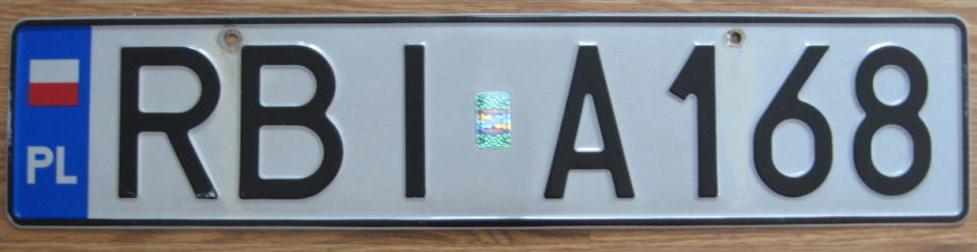
* Photos: used cars at the Mysłowice car market by Ewkaa, CC BY-SA 3.0 (cover); Polish license plate by T c951, public domain (body), both via Wikimedia Commons.
Frequently asked questions
How much tax do I pay when buying a used car in Poland?
A private used-car purchase carries 2% PCC tax on the car's market value, due within 14 days of signing the contract. You file the PCC-3 declaration at the tax office for your address, most easily online via e-Deklaracje on podatki.gov.pl. The tax office can challenge a price below market value, so declare the real value. No PCC applies when a VAT-registered dealer sells with a VAT invoice, or when the buyer holds a qualifying disability certificate and buys for personal use.
How long do I have to register a car after buying it in Poland?
You have 30 days from the purchase date to file the registration application, under article 73aa of the Road Traffic Act as amended from 1 January 2024. The county vehicle office registers the car temporarily for 30 days on the spot and issues the permanent certificate within about a month. Missing the deadline can bring a 500 zł administrative fine, or 1,000 zł once you are more than 180 days late.
Does the seller's insurance stay valid when I buy a used car in Poland?
Yes, the seller's mandatory OC policy passes to you automatically with the car, but only until the end of its current policy period - it never renews automatically. You can cancel the inherited policy and sign your own no later than the same day, or keep it and have your own policy ready to start the moment it expires. Even one day without valid OC triggers a penalty. Check the policy status and expiry date free of charge on ufg.pl before you buy.
Can a foreigner register a car in Poland?
Yes. You register at the vehicle department (wydział komunikacji) for the district where you are registered as resident, so you need a zameldowanie first - permanent or temporary. County offices also require foreigners to attach a document confirming legal stay in Poland, such as a residence card or visa. The fees are the same as for Polish citizens: 160 zł for a standard car registration with new plates, or 80 zł if you keep the existing ones.
What documents do I need to register a used car in Poland?
Bring the registration application, the sale contract as proof of ownership, the existing registration certificate, your identity document and proof of payment of the fees. Since 10 June 2026 you no longer need to physically bring the old plates if they are in good condition - a signed declaration that they are readable and undamaged lets you keep them. If co-owners appear in the paperwork, all of them should be present or represented by a power of attorney.
Do I need a notary to buy a car in Poland?
No. A private used-car sale between individuals only requires a written sale contract (umowa kupna-sprzedaży) signed by both parties, with the date, identities, VIN, registration number and price. That single document serves as your proof of ownership for the tax office, the insurer and the registration office.
Sources
- Gov.pl - Zarejestruj pojazd (fees, documents, temporary registration)
- Gov.pl - PCC-3 civil law transactions tax (2% rate, 14-day deadline)
- Ministry of Finance - PCC on car purchases (market-value rule)
- UFG - OC insurance when buying a used car
- Powiat Bielski - fines for late registration (22 May 2025)
- Powiat Pruszkowski - vehicle registration by foreigners