Canada vs. Poland: Where Is Life Actually Better?
A personal essay by a Canadian living in Poland. The views and experiences are the author's own.
What to know: A Canadian living in Poland scores both countries on safety, healthcare, transport, cost of living, work-life balance and more. His personal result: Poland for everyday lifestyle, Canada for nature.
After moving from Canada to Poland, I started questioning things I'd always taken for granted. From healthcare and safety to grocery shopping, transportation, and work-life balance, here's what surprised me about living in two very different countries.
When I told people I was moving from Canada to Poland, I got some interesting reactions.
"Poland? Why?"
"Isn't Canada one of the best countries in the world?"
"Are you sure you know what you're doing?"
One friend, Daniel, was particularly confused.
"People spend their whole lives trying to move to Canada," he told me over coffee. "And you're voluntarily leaving?"
He had a point.
Canada has an incredible international reputation. Beautiful nature, friendly people, political stability, multicultural cities, and a quality of life that millions of people dream about.
Poland, meanwhile, wasn't exactly the first country that came to mind when my Canadian friends imagined their dream European lifestyle.
But after spending time living in Poland, I began to realize something.
The country with the better international reputation isn't necessarily the country where your everyday life feels better.
And the longer I lived in Poland, the harder it became to answer one simple question:
Where is life actually better?
1. Safety: Poland Surprised Me More Than Anything
I'll start with something that genuinely surprised me: how safe I often felt in Poland.
Canada is a safe country by global standards, and I never considered it particularly dangerous while living there.
But in Poland, especially in the residential neighborhoods and city centers I became familiar with, I noticed a different atmosphere.
I saw children taking public transportation independently, families walking around late in the evening, and people going about their daily routines without appearing particularly concerned.
Of course, Poland has crime. Every country does. And feeling safe in a particular neighborhood doesn't mean crime doesn't exist.
But the everyday sense of security made an impression on me.
One evening, I was walking through Warsaw with my Polish friend Marek. It was getting late, and I commented on how relaxed the streets felt.
He looked at me, confused.
"Why wouldn't they be?"
I laughed.
"That's exactly what I mean."
What struck me wasn't that Poland was magically free of danger. It was that ordinary activities often felt comfortable and uncomplicated.
I didn't realize how much I valued that until I experienced it.
My winner: Poland, based on my personal experience of everyday urban life, though safety varies significantly by city and neighborhood in both countries.
2. Healthcare: Two Systems, Two Different Frustrations
Healthcare is one of those subjects that can start an argument almost anywhere.
In Canada, we take pride in having a publicly funded healthcare system. And rightly so. The idea that you can receive medically necessary hospital and physician services without facing a massive bill at the point of care is something worth protecting.
But anyone who has lived in Canada knows the system has challenges.
Finding a family doctor can be difficult. Specialist appointments may involve long waits. Emergency departments can be overwhelmed.
Before moving abroad, I assumed healthcare in Poland would be a step backward.
Instead, I discovered a system with its own advantages and frustrations.
Poland has public healthcare through the NFZ, but it also has a substantial private healthcare sector.
One of the first things I noticed was how accessible certain private medical services could be.
I spoke with a Polish friend, Anna, who explained why her family used both systems.
"For serious things, we have public healthcare," she said. "But when I need a doctor quickly, sometimes I just book privately."
That combination was interesting to me.
In Poland, private consultations and diagnostic services can sometimes be arranged relatively quickly, depending on the city, specialty, and provider.
Of course, you pay for that convenience directly or through private coverage.
And Poland's public system has significant problems of its own, including specialist waiting times, staffing pressures, and access differences between regions.
Canada offers stronger financial protection for many essential medical services, while Poland can offer more convenient access to some routine services if you're willing and able to pay privately.
My winner: A tie. Poland can win on the convenience of certain private appointments; Canada retains important advantages in publicly funded essential care. Neither system is perfect.
3. Transportation: Poland Wins, and It's Not Even Close for My Lifestyle
This is where Poland really impressed me.
In many Canadian cities, a car isn't just convenient. It's practically a necessity.
Sure, Vancouver, Toronto, and Montreal have public transportation systems. But depending on where you live, getting around without a car can still be frustrating.
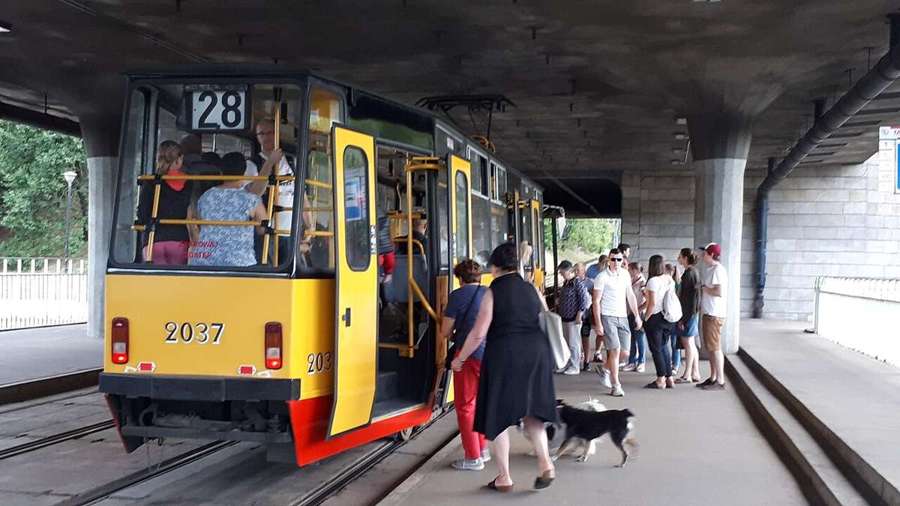
In Poland, especially in cities like Warsaw, Kraków, and Wrocław, I discovered how much easier everyday life can be when public transportation is built into the rhythm of the city.
Trams. Buses. Trains. Metro lines in Warsaw.
And perhaps most importantly, neighborhoods where shops, pharmacies, cafés, and everyday services are within walking distance.
I remember telling my friend Piotr that I was considering driving to a restaurant.
He looked at me as though I'd suggested taking a helicopter.
"Why would you drive? The tram goes right there."
He was right.
I took the tram.
No parking. No traffic stress. No worrying about having a drink with dinner.
Just a short walk, a tram ride, and I was there.
And then there's train travel.
In Canada, traveling between cities often means driving long distances or booking flights. Passenger rail exists, but geography and service limitations make it less practical for many journeys.
In Poland, intercity trains can make traveling between major cities relatively straightforward.
Even better, living in Poland puts much of Europe within reach.
A weekend in Prague? A trip to Berlin? A few days in Vienna?
Suddenly, these places don't feel like once-in-a-lifetime international adventures.
They feel like realistic travel plans.
My winner: Poland. Especially if you live in a major city and enjoy a walkable lifestyle.
4. Cost of Living: Poland Is Cheaper, but There's a Catch
This is probably the question I get asked most often.
"Is Poland really that much cheaper than Canada?"
The answer is yes in many categories, but it's more complicated than people think.
When I first started shopping in Polish supermarkets, I noticed how different some everyday expenses felt.
Groceries, public transportation, certain services, and eating out could be considerably less expensive than what I was used to in Canada.
I remember having lunch at a casual restaurant and mentally converting the bill into Canadian dollars.
I checked the calculation twice.
Not because the meal was suspiciously cheap, but because I'd become so accustomed to Canadian prices that a relatively affordable restaurant bill felt surprising.
But here's the catch.
Poland is much more affordable when you're earning Canadian-level money than when you're earning a typical Polish salary.
And that's an enormous distinction.
Housing costs in Warsaw and Kraków have risen substantially over the years. Rent can consume a significant portion of local income, particularly for younger people.
Imported electronics, cars, and international brands aren't necessarily bargains either.
My Polish friend Paweł put it perfectly during a conversation about salaries.
"You come here with Canadian money and say Poland is cheap," he told me. "Try earning a Polish salary and paying Warsaw rent."
He was absolutely right.
Affordability isn't just about prices.
It's about what you earn compared with what you spend.
Still, if your income is strong relative to local costs, Poland can offer an excellent lifestyle for the money.
My winner: Poland for someone with a strong international income. For someone earning an average local salary, the comparison is far less straightforward.
5. Work-Life Balance: Poland Made Me Rethink My Priorities
One thing I've always noticed about Canadian culture is how easily conversations turn toward work.
What do you do?
Where do you work?
How's business?
Are you busy?
Being busy can almost become a badge of honor.
Poland has plenty of hardworking, ambitious people, and I certainly wouldn't describe the country as a place where everyone finishes work early and relaxes.
But I began noticing some differences in expectations around time off.
Polish employees generally have a statutory entitlement to 20 or 26 days of annual paid vacation, depending on qualifying employment history, along with public holidays.
In much of Canada, minimum annual vacation entitlements begin at two weeks, although provincial rules, tenure, and employers can provide more.
That difference matters.
I remember talking to a Polish colleague, Karolina, about her upcoming vacation.
"How long are you going for?" I asked.
"Two weeks."
"Two whole weeks?"
She laughed.
"Of course. Why would I go for four days?"
It made me realize how deeply my expectations around vacation had been shaped by Canadian working life.
In Poland, I also encountered people who treated Sunday as a genuine day for family, rest, or leisure.
Most ordinary retail stores face Sunday trading restrictions, with exceptions and designated shopping Sundays.
At first, I found this inconvenient.
What do you mean I can't just run to the mall whenever I want?
But eventually, I started to appreciate the slower rhythm.
Of course, some people work long hours in Poland, and the reality varies by industry and job. Not everyone has the freedom to disconnect.
Still, I found aspects of the culture refreshing.
My winner: Poland, particularly when it comes to statutory vacation entitlements and the lifestyle I experienced.
6. Convenience: Canada and Poland Are Better at Different Things
This category surprised me because I expected Canada to win easily.
Canada is modern, efficient, and technologically advanced.
But Poland has some everyday conveniences that genuinely impressed me.
Take Żabka, for example.
If you've lived in Poland, you know exactly what I'm talking about.
These little convenience stores seem to appear everywhere. Need a snack? Coffee? A quick lunch? A few basic groceries?
There's often a Żabka nearby.
Then there's BLIK, the Polish mobile payment system.
The first time I saw someone pay using a short code from their banking app, I was intrigued.
My friend Kuba explained it casually.
"Just use BLIK."
"What's BLIK?"
He stared at me.
"You don't have BLIK in Canada?"
No, Kuba. We don't.
Canada has excellent contactless payments and Interac e-Transfer, but I was impressed by how deeply BLIK had become integrated into everyday payments in Poland.
Then there are parcel lockers.
InPost lockers are so common that receiving a package can feel ridiculously easy. Instead of waiting at home for a delivery, you can pick it up from a nearby locker at a convenient time.
Poland also impressed me with how many errands I could accomplish on foot.
But Canada has its own advantages.
Customer service can feel more conversational and accommodating. Some administrative processes are easier when you're already familiar with the language and institutions. And certain services are designed around the convenience of car-based living.
In Poland, bureaucracy can be exhausting, especially as a foreigner.
A simple administrative task can suddenly involve forms, appointments, documents, and Polish vocabulary you didn't know existed.
My winner: Poland for everyday digital and neighborhood convenience. Canada for familiarity and, in my experience, some aspects of customer service.
7. People and Friendships: Canada Is Friendlier, Poland Can Feel More Personal
This is probably the most emotionally complicated category.
Canadians have a reputation for being friendly.
And from my experience, it's deserved.
People smile. They apologize. They make small talk. They generally try to make social interactions pleasant.
When I first moved to Poland, I missed that.
Polish people initially seemed more serious and reserved.
I remember walking into shops and wondering why nobody smiled.
But as I got to know people, my perspective changed.
I discovered that friendships in Poland could take longer to develop, but once they did, they often felt incredibly meaningful.
I remember visiting a Polish friend's family for dinner.
His mother, Ewa, kept bringing more food to the table.
"Ewa, I'm full," I said.
She waved her hand.
"You're not full. You're just taking a break."
I laughed.
She didn't.
Another plate appeared.
That evening lasted for hours. We talked about family, life, Canada, Poland, and everything in between.
And I remember thinking how comfortable I felt.
Not because everyone was trying to impress me.
But because I was being treated like part of the family.
Canada taught me to appreciate openness.
Poland taught me that warmth doesn't always come with a smile.
My winner: A tie. Canada makes initial social interactions easier for me. Poland has shown me a different, equally valuable kind of connection.
8. Nature and Outdoor Life: Canada Is Almost Impossible to Beat
I love Poland.
But there are things Canada has that are simply extraordinary.
The mountains. The forests. The lakes. The wilderness. The sheer scale of the landscape.
If you've spent time in British Columbia, you know what I mean.
There are places where you can stand surrounded by mountains, water, and forest and feel like you're looking at something almost unreal.
Poland has beautiful nature too.
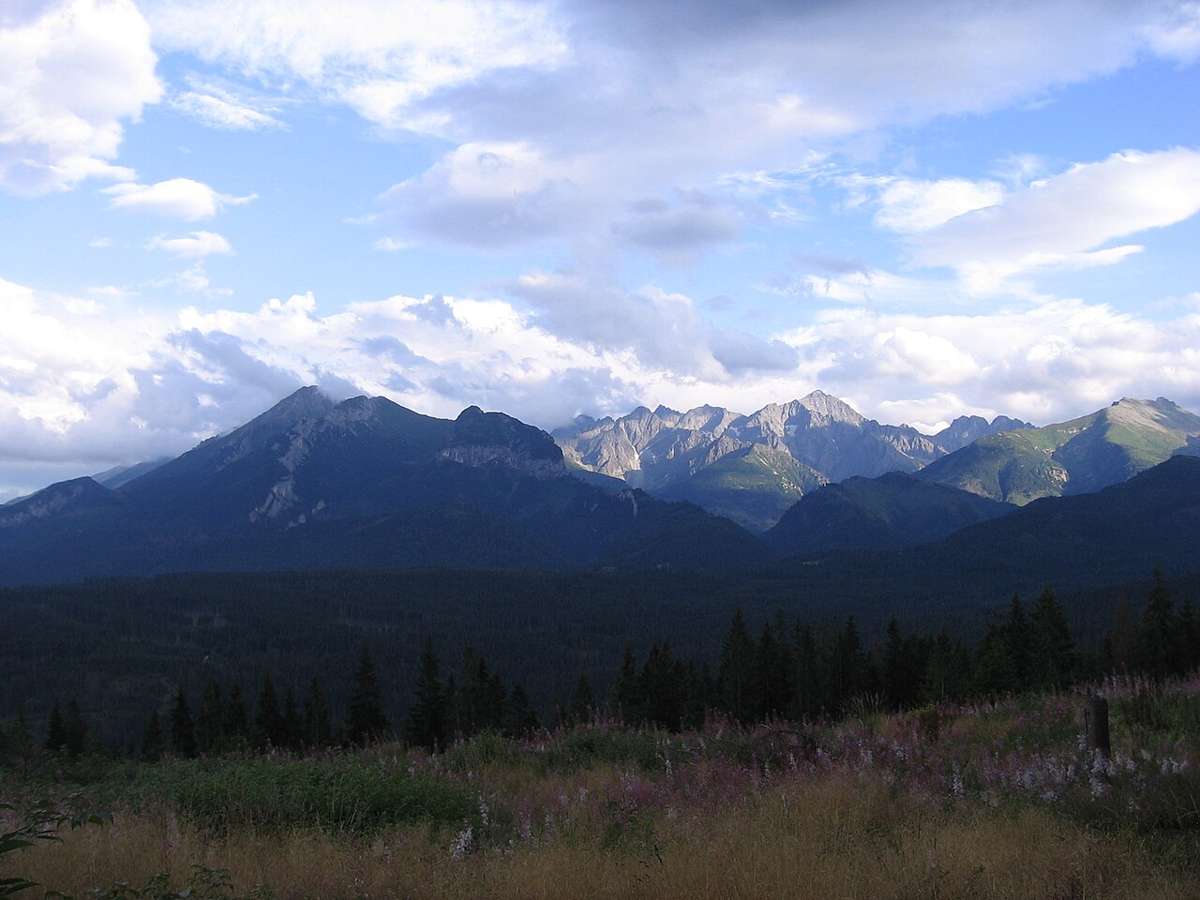
The Tatra Mountains are stunning. The Masurian Lake District is wonderful. The Baltic coast has its own charm, and there are forests and national parks worth exploring throughout the country.
But Canada operates on a different scale.
Poland's advantage is accessibility.
You can explore a wide variety of landscapes without necessarily traveling enormous distances, and crossing into another European country can be part of the adventure.
In Canada, the wilderness often feels vast and spectacular.
In Poland, exploring nature can feel more connected to everyday travel.
I appreciate both.
But if I had to choose purely based on natural scenery and wilderness?
My winner: Canada. No hesitation.
9. Raising a Family: Poland Offers Some Unexpected Advantages
Having a family changes the way you evaluate a country.
Suddenly, things like playgrounds, schools, safety, transportation, and family-friendly neighborhoods become much more important than nightlife or restaurants.
One thing that impressed me in Poland was how naturally children seemed to fit into public life.
Parks and playgrounds are common in many residential neighborhoods. Families spend time outside, and in walkable areas, daily errands can become part of a simple routine.
I also noticed how involved grandparents often were in family life.
Of course, that's not unique to Poland, and family circumstances differ enormously.
But seeing multigenerational families spending time together reminded me that quality of life isn't always measured in income or square footage.
Canada has important advantages too.
Its multicultural environment can be wonderful for children growing up around different cultures and languages. There are strong educational opportunities, beautiful outdoor spaces, and a wide variety of family activities.
Poland brings its own strengths, particularly in urban walkability, public transportation, and the daily convenience of living near essential services.
For me, the deciding factors would be the specific neighborhood, school, family support network, and long-term opportunities available to a child.
My winner: A tie. Both countries can be excellent places to raise a family, but for different reasons.
10. Overall Quality of Life: The Answer I Didn't Expect
After living in both countries, I started realizing that quality of life isn't one single thing.
It's hundreds of little things.
It's how long it takes to get to work.
How much of your income disappears into housing.
Whether you can walk to a café.
How easily you can see a doctor.
Whether your children have a safe place to play.
How often you see your friends.
Whether you feel comfortable walking home at night.
And whether, at the end of the day, you actually enjoy the life you're living.
Canada has enormous strengths.
It's diverse, beautiful, economically developed, and full of opportunities. For many people, it offers a better path toward higher earnings and long-term career growth.
But Poland has something that surprised me.
It can make ordinary life feel easier.
Not always. Not for everyone. And certainly not without frustrations.
But in my experience, the combination of walkable neighborhoods, accessible public transportation, convenient services, and a lifestyle that doesn't always revolve around driving made a meaningful difference.
I didn't move to Poland expecting to question whether Canada was the better place to live.
Yet here I was, doing exactly that.
My Final Scorecard: Canada vs. Poland
| Category | My personal winner |
|---|---|
| Everyday sense of safety | Poland |
| Healthcare | Tie |
| Public transportation | Poland |
| Cost of living with international income | Poland |
| Work-life balance | Poland |
| Everyday convenience | Poland |
| Friendliness and relationships | Tie |
| Nature and wilderness | Canada |
| Raising a family | Tie |
| Overall lifestyle for me | Poland |
These are personal judgments, not objective country rankings. They reflect an urban lifestyle and depend heavily on income, location, employment, and family circumstances.
So, Would I Choose Poland or Canada?
I remember having a conversation with my Canadian friend Daniel, the same friend who questioned my decision to move in the first place.
He asked me something that caught me off guard.
"Okay, you've lived there long enough now. If you had to choose, where would you rather live?"
I thought about it.
Canada had given me so much.
It's a country I know, understand, and genuinely appreciate. I love its openness, its nature, and the opportunities it offers.
But Poland had given me something unexpected.
A different perspective on what makes a good life.
I realized that I didn't necessarily need a bigger house, a bigger car, or a bigger salary to feel happier.
Sometimes, I just wanted to walk to a café.
Take a tram instead of sitting in traffic.
Spend an afternoon with friends without worrying about the next appointment.
Travel somewhere new for the weekend.
And enjoy the ordinary moments that make up most of our lives.
I finally answered Daniel.
"If I could earn a good living in either country, I think I'd choose Poland for my everyday lifestyle."
He looked surprised.
"Seriously?"
"Seriously."
Then I smiled.
"But ask me again when I'm missing the Canadian mountains."
The Country That's Better on Paper Isn't Always Better for You
Here's what living abroad has taught me.
We spend so much time comparing countries using statistics, salaries, rankings, and international reputations.
Those things matter.
But they don't tell the whole story.
A country can have higher average salaries and still leave you feeling financially stretched.
A country can have lower prices and still be difficult to afford on a local income.
A country can be full of friendly strangers without necessarily giving you a strong sense of belonging.
And a country that rarely appears at the top of your dream-destination list can surprise you by becoming a place you genuinely love.
Canada is an amazing country.
Poland is an amazing country.
Neither is perfect.
But if there's one thing I've learned from moving halfway across the world, it's this:
The best country to live in isn't necessarily the richest, the most famous, or the one everyone else wants to move to.
It's the one where your everyday life feels most like the life you actually want to live.
And for me, Poland has made a surprisingly strong case.
* Photos: Tram in Warsaw by Rakoon (CC0) and the Tatra Mountains seen from Głodówka by Mariusz G (public domain), both Wikimedia Commons, illustrative.