Self-Service Car Washes in Poland: Payments, Programmes and Pitfalls
The essentials: Read the bay instructions before paying. Check the time rate, payment method, programme sequence and vehicle restrictions. Use the posted safety guidance, keep proof of payment and report equipment faults promptly.
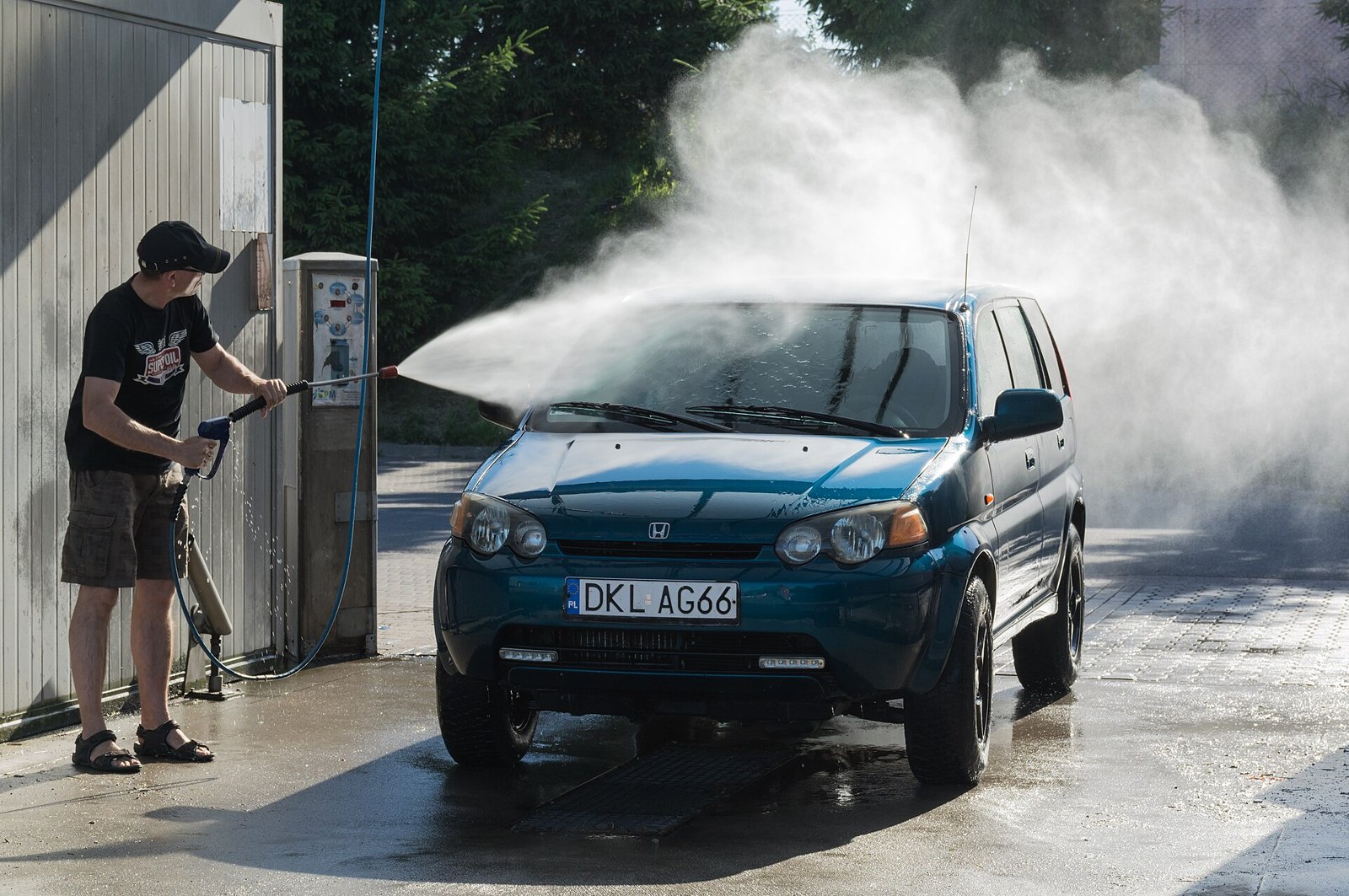
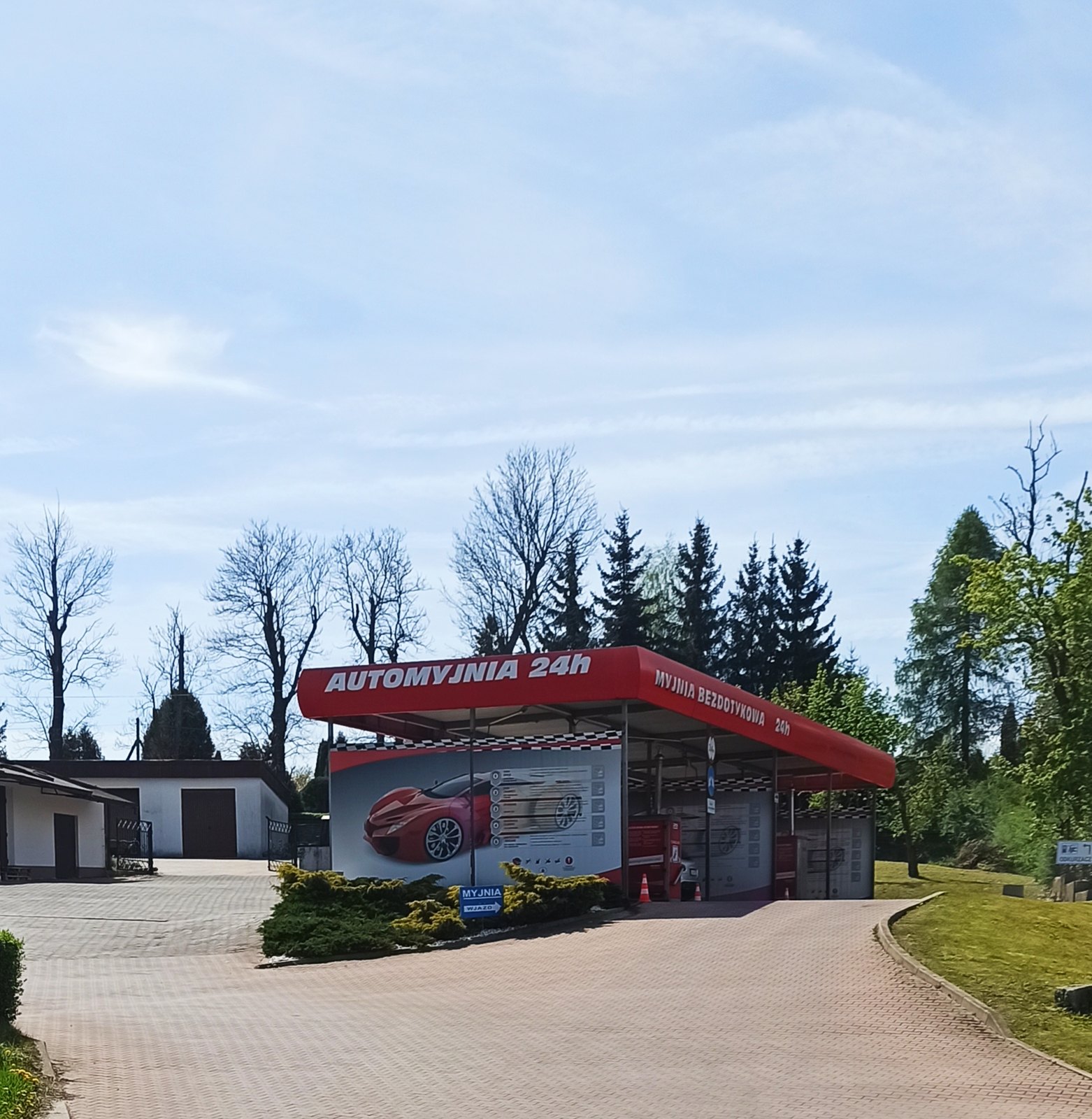
Illustrative July 2015 photograph in Kłodzko, not a demonstration of every current safety requirement. Jacek Halicki / Wikimedia Commons, CC BY-SA 4.0. Resized, same licence.
A self-service car wash in Poland can look simple until the clock starts while you are still translating the buttons. The useful phrase is myjnia bezdotykowa: a touchless wash, usually with a pressure lance that you operate yourself. Add samoobsługowa when searching specifically for self-service rather than a staffed service or automatic machine.
The most important preparation happens before payment. Read the bay instructions, check how time is sold, find the right lance and decide which programmes you need. This guide uses individual operators' published rules as examples, checked on 27 October 2026. They are not a national tariff, a recommendation of those businesses or proof that a particular bay is working today.
Choose the right kind of car wash
Do not drive into an automatic wash expecting a self-service pressure lance. Look at the entrance and equipment, not only the word myjnia. A staffed hand wash, automatic rollover machine and open self-service bay involve different instructions, payment arrangements and vehicle restrictions. If the equipment or signs do not match what you expected, stop before buying a programme.
Check clearance and vehicle limits, especially with a roof box, van or accessories. Published rules can even contain inconsistent figures: the Sosnowiec 6tka page gives different height limits in separate clauses. That is a reason to confirm the actual bay signage with the operator, not choose the larger number. A photograph online cannot establish clearance for your vehicle.
Opening hours also vary. ASB24 publishes round-the-clock operation, while Galeria Stara Ujeżdżalnia's rules tie access to gallery opening days and specified hours. Neither establishes today's operational status. Check the selected location before making a special trip and avoid a bay marked out of service, even if its payment terminal appears active.
Understand what your payment buys
At these example self-service sites, payment buys operating time rather than a promise that the entire car will be clean. ASB24's published rules list 1 zł for 20 seconds. Sosnowiec 6tka lists 1 zł for 25 seconds. Galeria Stara Ujeżdżalnia lists 40 seconds per złoty for several programmes and 35 seconds for its osmotic-water rinse. These are operator examples, not a current Polish average.
Compare seconds per payment unit and any programme differences, rather than assuming the same coin buys the same wash everywhere. Read the displayed rate before paying. The age and wording of a website's rules also matter: ASB24 dates its rules to 2017, the gallery document to November 2024, and the Sosnowiec page contains multiple rule dates. The panel needs checking even when a website lists a number.
Check accepted coins, card minimums and whether you are purchasing time directly or buying tokens. Sosnowiec's rules distinguish bay card payments from a separate token purchase, and say its tokens do not work in the vacuum cleaners. Both Sosnowiec and the gallery state that the relevant coin machines do not give change. Do not put a large amount into an unfamiliar machine just to discover how it works.
The gallery explicitly says the clock starts with the first coin or confirmed card payment. Treat payment as the last preparation step, not the first. If you need a business invoice or receipt with a Polish tax number, check the process beforehand: the example operators have specific pre-payment steps. Do not assume an invoice can always be reconstructed afterwards from a bank transaction.
Prepare the car and yourself before the clock starts
Park within the bay markings and follow its directions for securing the vehicle. The example rules require the engine off and the vehicle secured against movement, with windows and other openings closed. Check doors, the boot and roof before spraying. Keep passengers away from the washing equipment and vehicle movement rather than treating the bay as a waiting area.
Walk around the car first. Look for loose trim, damaged paint, corrosion or accessories that may not tolerate pressure washing. ASB24 and Sosnowiec specifically warn about vulnerable parts and unsuitable surfaces. If the car has a special coating or recent repair, check its care instructions before using unfamiliar chemicals. Sosnowiec advises checking coating compatibility with the coating manufacturer.
Wear suitable clothing and footwear for spray and a wet surface. ASB24 specifies protective clothing and equipment in its rules. Keep the hose from wrapping around the car or catching under a wheel. Know where the lance belongs when finished. Never point the jet at people, animals, electrical equipment or the interior of the vehicle; operator rules expressly prohibit these uses.
Read the programmes, not a universal internet sequence
Useful labels include mycie wstępne for pre-wash, aktywna piana for active foam, spłukiwanie for rinsing, woskowanie for waxing and woda osmotyczna for an osmotic-water rinse. The label helps identify the function, but does not tell you the required distance, dwell time or compatibility with your vehicle. Read the actual instructions beside the controls.
The operators examined advise following their programmed sequence. That is more useful than assuming every machine's numbered buttons mean the same thing. Check whether a programme uses a different lance or brush and how changing programmes affects the paid session. If the instructions are unclear, ask before starting. Do not improvise a chemical mixture or leave a product on the car while searching for a translation.
Kärcher's Polish car-washing guidance warns that high pressure can damage an already damaged paint surface and that touchless washing may not remove every type of dirt. A self-service wash is therefore not a guarantee of a detailer's finish. If dirt remains, do not solve the problem by moving the nozzle progressively closer to a fragile area or spraying it for much longer.
Follow the bay's stated nozzle distance and your vehicle's care guidance. Keep a stable grip because the pressure jet has recoil, as ASB24's instructions explain. Do not lock the trigger into a permanent operating position. Stop if the lance, hose or programme behaves abnormally. A paid balance is not a reason to keep using equipment that appears unsafe.
Brushes, buckets and engine washing need separate permission
Self-service does not mean you can bring any cleaning routine into the bay. ASB24, Sosnowiec and the gallery prohibit customers' own washing chemicals and certain manual washing activities. ASB24 also prohibits using its wash brush on wheels and rims, and requires the brush to be rinsed before use. Follow the selected site's rules rather than assuming that a bucket or personal wheel cleaner is welcome.
Do not wash the engine or oily parts at a bay whose rules prohibit it. The example operators also prohibit pouring oil or other liquids into drains and washing material that can harm the site's wastewater equipment. A drain in the floor is not a general disposal point. If you need engine cleaning or specialist contamination removal, ask a suitable service explicitly instead.
When finished, return the tools to their designated holders rather than laying them on the ground. Move out of the wash bay before extended drying or interior cleaning where the site's layout and rules require it. Both the gallery and Sosnowiec prohibit blocking a bay for drying. Check the vacuum's own payment and use instructions; a wash token or card session may not cover it.
Cold weather and washing outside a designated site
Pay attention to footing before getting out. Sosnowiec warns that wet surfaces can be icy even with maintenance measures, and ASB24 warns about freezing water. Kärcher's guidance also flags winter touchless washing as risky. If there is ice, unsafe access or conditions you cannot manage, choose another time or an appropriate staffed service instead of relying on a heated-floor sign.
Do not assume that washing in an apartment car park is the unrestricted alternative. Rules outside designated washes depend on the municipality and wastewater arrangements. Kielce's municipal guard explains that local rules differ, and describes conditions for washing on private property, including a hard surface and wastewater going to the sanitary sewer rather than soil or water bodies. That is a Kielce explanation, not permission for every Polish driveway.
Check your own municipality's cleanliness rules and the property manager's conditions before washing elsewhere. A landlord's permission alone does not establish compliant drainage. Choosing a suitable designated wash avoids having to guess whether an outdoor parking space has the necessary arrangements, but it still requires respecting that wash's environmental restrictions.
If payment fails or the wash damages something
Stop using a faulty bay and record the location, bay number, exact time, programme and amount paid. Keep the card transaction or other payment evidence, and photograph the fault display and any visible damage without exposing payment details publicly. Contact the operator through the contact information on the machine or its verified site. Do not repeatedly pay in an attempt to force a malfunctioning programme to work.
Sosnowiec asks for the date, precise time, bay, vehicle details and incident description when reporting a fault. The gallery document gives its own written complaint route and stated timetable. These are examples of operators' procedures, not a conclusion that every contractual deadline or liability exclusion is legally decisive. Report promptly and retain a copy of what you sent and any response.
If a dispute remains unresolved, UOKiK says local consumer ombudsmen provide free legal advice and help drafting complaints. Bring the payment evidence, photographs and the terms that applied. A useful first visit ends with the car safely rinsed, the tools put away and no uncertainty about a failed payment. Reading the panel before paying is usually the best way to keep that visit straightforward.
Frequently asked questions
What does myjnia bezdotykowa mean?
It means a touchless car wash. Look for samoobsługowa when you want a self-service bay where you operate the pressure lance, and check that the entrance is not for an automatic machine.
How much does a self-service car wash cost in Poland?
There is no single tariff in the sources checked. Operators publish different seconds per złoty and sometimes different rates by programme. Check the actual bay display, accepted payment and when the clock starts.
Can I bring my own bucket and shampoo?
Do not assume so. The example operator rules prohibit customers' own washing chemicals and certain manual washing activities. Read the selected site rules before bringing a separate cleaning routine.
Can I wash my car in an apartment car park?
Check municipal cleanliness rules, wastewater arrangements and property conditions first. Kielce municipal guidance describes specific drainage and surface conditions, but it does not authorize washing at every address in Poland.
What should I do if the machine takes payment but fails?
Stop using the faulty equipment, retain payment evidence and record the bay, time, programme and fault. Contact the actual operator promptly. For an unresolved consumer dispute, a local consumer ombudsman can provide free advice.
Sources
- Sosnowiec 6tka operator rules, checked 27 October 2026
- ASB24 operator rules, dated 1 April 2017, checked 27 October 2026
- Galeria Stara Ujezdzalnia wash rules, 13 November 2024, checked 27 October 2026
- Karcher Polish car-washing guidance, checked 27 October 2026
- Kielce municipal guard, 20 January 2025, checked 27 October 2026
- UOKiK consumer ombudsmen, checked 27 October 2026