Luggage Storage in Poland: Lockers, Collection Times and Valuables
The essentials: Look for przechowalnia bagażu or skrytki bagażowe. Confirm the exact location, bag size, charging period and collection access. Keep documents and essentials with you, retain the claim record and read the provider restrictions before paying.
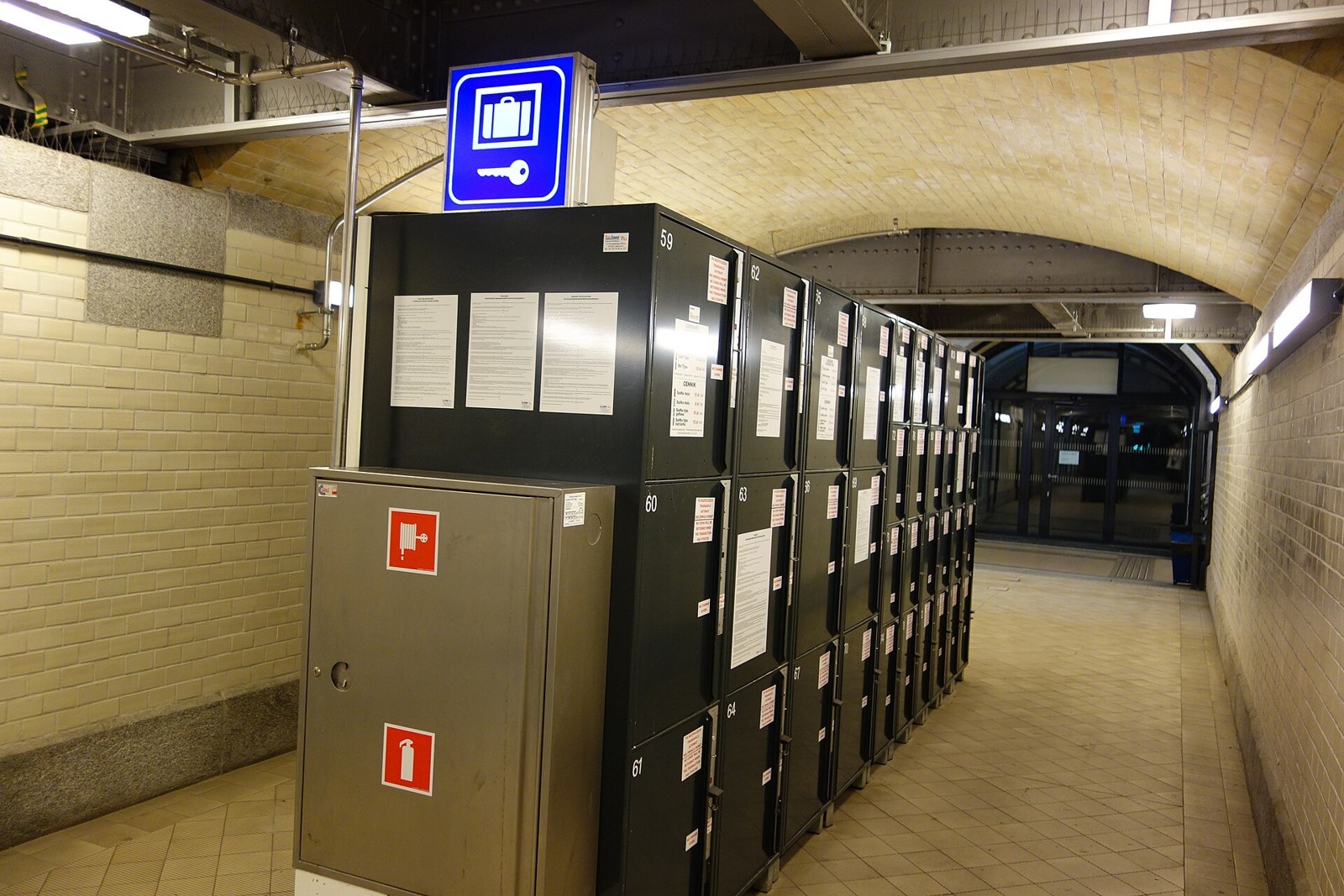
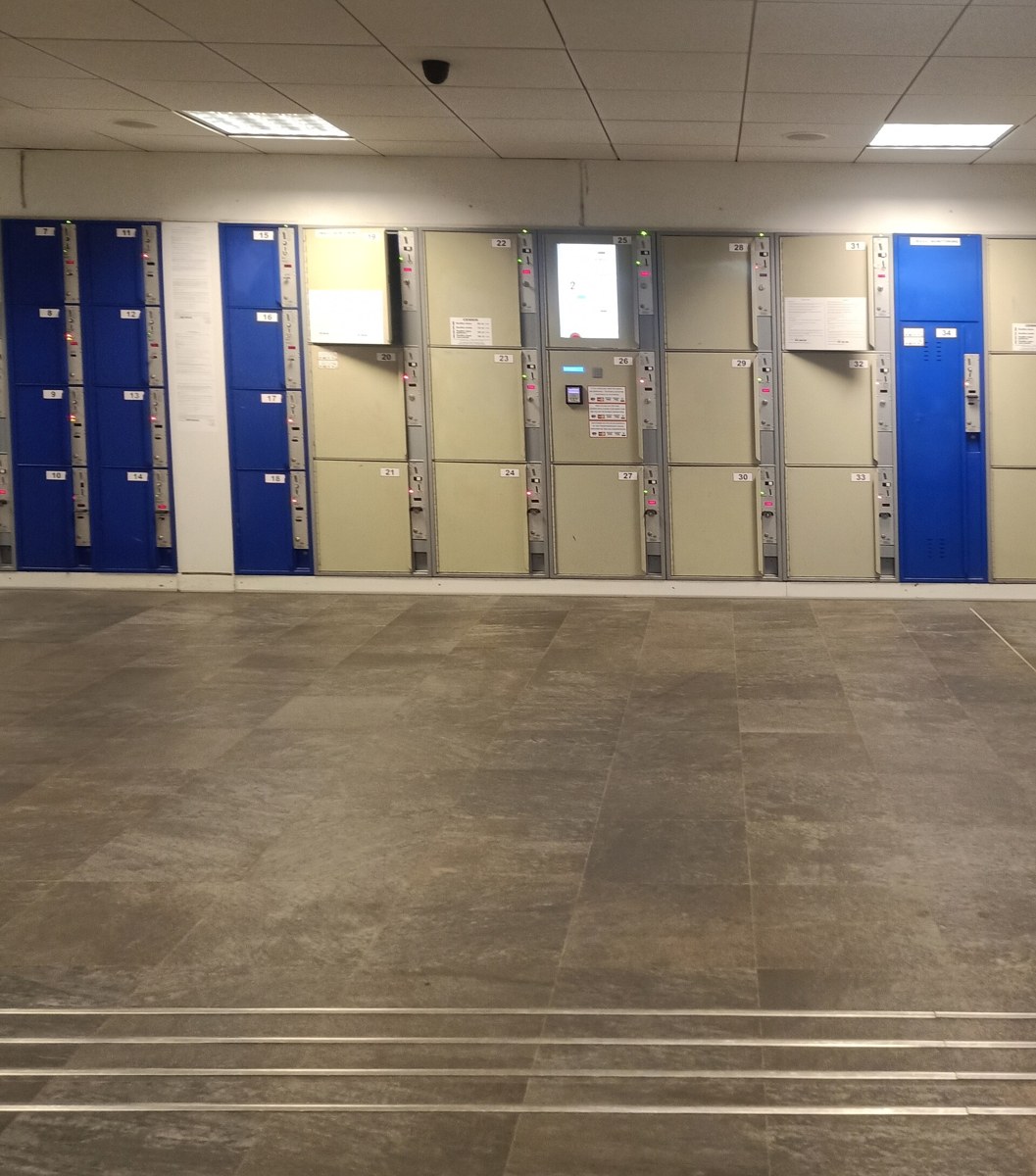
Cover: luggage storage at Wrocław Główny, historical illustrative photograph by Travelarz / Wikimedia Commons, CC BY-SA 3.0 PL. Resized, same licence. Not evidence of today's prices, access or empty lockers.
The awkward gap between checking out and catching a train is easier when you have somewhere legitimate to leave a suitcase. In Poland, search for przechowalnia bagażu, a luggage-storage service, or skrytki bagażowe, luggage lockers. Those are different arrangements. One may be staffed; another may depend on a machine, access code and the building's opening arrangements.
This guide explains how to choose and use storage without turning a few hours of sightseeing into a missed departure. It does not confirm an empty locker, reserve space or quote a final booking price. Railway and operator pages were checked on 27 October 2026. Recheck the exact location, rules and collection arrangements for your own date before paying or leaving your bag.
Three arrangements to distinguish
A station locker is a compartment you use under the displayed operating instructions. Check the size with the actual suitcase, not only the nominal description. Confirm how the charging period works, how the door is reopened and whether opening it ends that storage session. Read the machine's instructions before putting your only payment method or phone inside.
A staffed luggage counter involves handing the item to a person and keeping a receipt or other claim record. Ask how the bag is identified, what evidence you need at collection and when the counter closes. A station building being open does not establish that every business inside is staffed all night. Confirm the service's own hours and the route back to it.
A platform-booked location may be a hotel, shop or another partner business rather than a dedicated storage building. The map pin, public listing and final booking instructions can provide different levels of detail. Read the confirmation for the actual drop-off point. Do not assume a location described as “near the station” is inside the railway station or directly beside your departure platform.
Use current railway information, not an old station table
PKP's luggage-safety page lists stations with luggage lockers, including Warszawa Centralna, Kraków Główny, Wrocław Główny, Poznań Główny, Gdańsk Główny and Gdynia Główna. That is a useful first check for station facilities. It is not a live inventory of free compartments, confirmation that a particular size is available, or a tariff for every station.
The current PKP passenger-information page for Kraków Główny says its luggage lockers are available around the clock. The same page describes restrictions on access to commercial passages overnight, with differing times in separate sections. For a late collection, verify the usable entrance and route with station information rather than inferring that every shopping-centre entrance remains available. Keep extra time for reaching the platform afterward.
Search results can also surface official documents that are much older than they appear. An Intercity station-storage table returned during research explicitly states that its information is from 6 August 2013. We have not used that table for current opening hours. Check the date inside a downloaded document, not just the fact that it sits on a railway website.
Check the whole storage period
Write down the latest time you need the suitcase back, then work backwards from the train or flight. Include the walk to the service, any queue, the return to the station and the next journey. If your transport changes, contact the storage business before its closing time. A promise of general customer support is not the same as physical access to a locked shop.
Check whether a price is per bag, per compartment, per hour, per calendar day or per started storage period. Ask how an overnight stay or late collection changes the charge. A locker that holds two small bags may be priced differently from a platform charging for two separate items. Do not decide on the cheapest arrangement until you understand the unit and the permitted contents.
Bounce's Warsaw page advertises a starting price of 8.25 zł per day when checked for this guide. Treat that as an advertised lead price, not a quote for your exact bags, location or hours. Its terms allow a booking handling fee and say applicable fees are shown before payment. Check the checkout total and currency rather than multiplying the headline by the number of suitcases yourself.
Keep documents and essentials with you
Pack a small bag for the things you cannot safely lose access to: travel documents, payment methods, keys, phone and any medicine you need. Read the chosen operator's actual exclusions. “Luggage storage” does not mean everything inside a suitcase is permitted or protected. Some items may be prohibited altogether, while others may be accepted without the advertised protection.
Stasher's FAQ explicitly says passports and other travel documents must not be left in stored bags. Its terms list identity and immigration documents, keys, wallets, mobile phones and essential or emergency medicines among items that must not be stored. They also distinguish other ineligible items, including some fragile goods, jewellery and high-value items, from ordinary accepted luggage.
Bounce's Polish terms also prohibit a broad set of items, including cash or equivalents, jewellery, medicines, medical equipment and immigration documents. Follow the terms of the service you actually choose; do not combine two operators' rules into one assumed policy. If you need specialist storage for unusual equipment or an essential item, ask directly and obtain a clear answer before booking.
Protection is not an unlimited insurance promise
Read the legal terms behind a large protection number on a booking page. Bounce's Polish terms state that its luggage protection is not an insurance contract and is offered at its discretion, subject to conditions and exclusions. They also say it does not compensate other costs such as transport, extra accommodation or flights booked because property could not be located or accessed.
Those limits matter if your suitcase contains expensive equipment or if delayed access would cause you to miss travel. A headline protection amount is not proof that every item, full replacement value or onward cost is covered. Keep valuables out where the terms require it, pack the bag securely and check the actual claim requirements before deciding the risk is acceptable.
Photograph the bag's exterior and any existing damage before handing it over. Stasher's terms say pre-existing defects should be disclosed and that evidence of its condition can matter in a later claim. Keep your booking confirmation and receipt. Store a copy where you can retrieve it without opening the bag you have just left behind.
At drop-off: record the bag and the collection method
Confirm the number of items being accepted and check that the receipt or booking matches. Ask how identification works at collection and whether someone else can collect if your plans change. Keep the claim ticket, code or booking reference private. Do not leave it in the suitcase or post a photograph of it publicly while the bag is still stored.
For a locker, make sure the door is actually secured and that the payment or storage session has been accepted. For a staffed point, make sure the handover is acknowledged rather than leaving the suitcase beside a counter and walking away. Ask where to find help if the machine fails or a claim record is lost. Save the operator's actual support route from the confirmation.
PKP warns that baggage left unattended at stations is treated as a potential security threat and can trigger disruption and financial consequences. An unstaffed corner, café table or bench is not a substitute for an accepted storage arrangement. If you notice unattended luggage, its advice is not to touch, open or move it, but to notify the appropriate staff or services.
Late collection and a problem at the door
If you are running late, contact the service immediately and keep a record. Do not assume you can simply pay another day's rate after closing. Bounce's terms describe possible relocation of uncollected property, a late-collection charge and additional shipping costs. The actual conditions attached to your booking matter more than a general expectation that the shop will wait.
If access fails, use the support contact from the machine or confirmed booking. Explain the location, bag reference and time, without sending secret codes to unrelated contacts. Record the closed door or fault message and keep receipts for the storage transaction. If the bag is damaged or missing, report it promptly through the provider's process and preserve the evidence needed for a complaint or claim.
Useful Polish before you hand over the suitcase
- Gdzie jest przechowalnia bagażu? Where is the luggage-storage service?
- Czy ta walizka zmieści się w skrytce? Will this suitcase fit in the locker?
- Czy cena jest za sztukę czy za skrytkę? Is the price per item or per locker?
- Do której godziny mogę odebrać bagaż? Until what time can I collect my luggage?
- Co się stanie, jeśli spóźnię się z odbiorem? What happens if I am late collecting it?
Before walking away, make sure you have the collection record, essentials and a realistic return plan. At collection, count your items and inspect the bag before leaving. For an unresolved consumer dispute, UOKiK says local consumer ombudsmen provide free legal advice and help writing complaints. Keep the booking terms and handover evidence so the question can be assessed against the service you actually bought.
Frequently asked questions
What is luggage storage called in Polish?
Przechowalnia bagażu means a luggage-storage service, while skrytki bagażowe means luggage lockers. Confirm whether you are using a staffed counter, a machine or a platform partner business.
Do Polish railway stations have luggage lockers?
PKP lists lockers at selected stations, including several major city stations. A facilities list does not confirm a free compartment, the size you need or the current price. Check the specific station and operator.
Can I leave my passport in stored luggage?
Keep passports and travel documents with you. Stasher explicitly forbids leaving them in stored bags; provider terms also restrict other valuables, essential items and documents. Read the rules for the service you actually choose.
Does luggage protection mean full insurance?
Do not assume so. Bounce states that its protection is not an insurance contract and is subject to conditions, exclusions and discretion. Read the actual terms and check whether your items and possible losses are covered.
What if I am late collecting my bag?
Contact the provider before the agreed collection deadline. Late collection may involve lost access, extra charges or relocation and shipping of the property under the booking terms. Do not assume an automatic extra day of storage.
Sources
- PKP station luggage safety and locker list, checked 27 October 2026
- PKP Krakow Glowny passenger information, checked 27 October 2026
- Bounce Polish legal terms, checked 27 October 2026
- Bounce Warsaw advertised starting prices, checked 27 October 2026
- Stasher terms and prohibited items, checked 27 October 2026
- Stasher FAQ on travel documents, checked 27 October 2026
- UOKiK consumer ombudsmen, checked 27 October 2026