CE Marking in Poland: What It Does and Does Not Mean
The essentials: CE is a manufacturer conformity statement for products covered by specific EU rules. It is not required on every product, does not mean made in the EU and is not a general quality award or personal safety guarantee. Read identity, intended use and warnings too.

Cover: Tara Winstead, source photograph, Pexels License. Image unchanged. A child handling wooden toys. Toys are a relevant product context; this photograph does not establish conformity or age suitability.
The letters CE appear on many products sold in Poland, but they are often asked to carry more meaning than they have. They are not a general quality award, a statement that a product was made in Europe or proof that a public authority approved the particular item for your personal use.
The useful shopping question is narrower. Does this type of product fall under rules requiring CE marking, and what does the manufacturer declare through that marking? Read the answer alongside the product's identity, intended use and warnings. This guide explains that routine without certifying a product, choosing safety equipment or offering a home compliance test.
Understand whose statement the mark is
Your Europe's current business guidance explains that the manufacturer uses CE marking to indicate that a product meets the requirements in the applicable EU product rules. The manufacturer is responsible for compliance and for affixing the marking. The rules concern the product, not the shopper's personal opinion about its quality.
There is no central EU body that gives every manufacturer permission or a certificate to use the mark. The required conformity-assessment process depends on the applicable legislation. Some products can follow a permitted self-assessment route; others require an independent notified body. These are different routes within a legal framework, not interchangeable marketing claims.
A retailer's phrase EU approved can therefore be misleading if it invites you to imagine a universal public-authority approval process. Ask what the actual product and applicable requirements are rather than treating the phrase as an answer to every safety question.
Check whether the category requires CE marking
CE marking is required only where specific harmonised EU product rules require it. It must not be used when there are no applicable requirements providing for it. That is why checking the product category comes before using the mark as a shopping filter.
Your Europe gives examples including toys, drones, electrical and electronic equipment, personal protective equipment and medical appliances. It also lists some kinds of pressure equipment, gas appliances, batteries and machinery. The list is not a substitute for checking the specific product and legislation, particularly where only some types in a broad group are covered.
Do not demand CE marking on everything sold in a shop. Products outside this system can still be subject to general product-safety rules. Equally, do not excuse a missing mark on a product that should carry one simply because another unrelated item legitimately has none.
Keep origin separate from conformity
CE marking does not mean made in the European Union. Products manufactured elsewhere can carry it when the relevant requirements are met. The mark concerns conformity with applicable EU rules, not the factory's country or the nationality of the brand owner.
Read any origin statement separately. A European-sounding company name, an EU address and a CE mark are different pieces of information. Do not combine them into an unsupported claim that a product was manufactured in Poland or elsewhere in Europe.
This distinction works in the other direction too. A non-EU origin is not proof that a CE mark is false. If there is a concern, investigate the actual product information rather than using nationality as a shortcut for a compliance verdict.
Separate CE from a quality ranking
A conformity marking does not rank products from best to worst. It does not tell you that one model will last longer, be easier to use or meet every preference you have. Those are purchasing questions that need their own evidence.
Nor does the mark guarantee that an item is suitable for every person or every task. Read the intended use and relevant warnings. A product designed for one purpose should not be assigned a different purpose merely because CE is visible on its packaging.
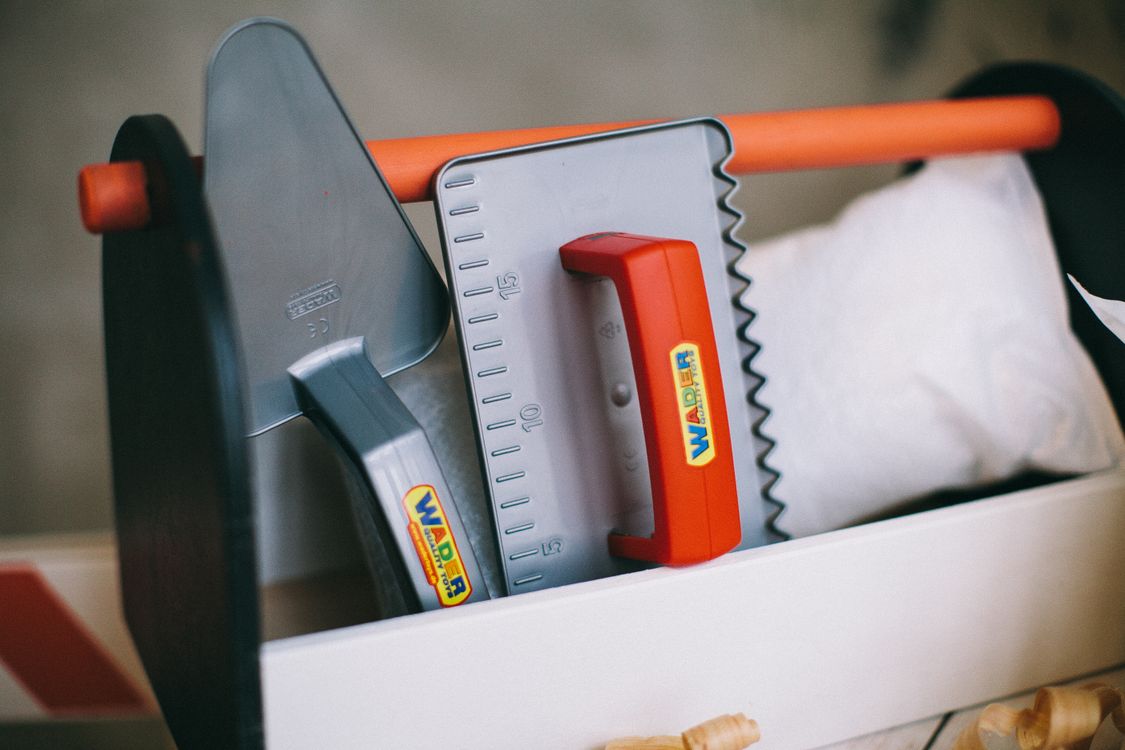
The same caution applies to the photographs accompanying this guide. They illustrate toys as a product context. They are not an assessment of the pictured products' compliance, age suitability or instructions. A picture of an object is not its technical file or a safety approval.
Do not confuse a certificate advertisement with the required process
Your Europe warns about voluntary certificates that are not valid for CE marking. Some may be issued without testing, concern work outside the body's competence or mislead customers and regulators. A document using an official-sounding title is not automatically the document required for the product.
For a consumer, the practical step is to ask a seller or manufacturer for clear product-specific information when a compliance claim is unclear. Do not accept a generic certificate image that cannot be tied to the exact model as a complete answer about the item being sold.
This guide does not teach manufacturers to complete conformity assessment or shoppers to audit a technical file. It explains why the claim needs a connection to the actual product and applicable rules. If a specialist assessment is needed, a visual check in a shop cannot replace it.
Read a nearby number without making a universal rule
Where the relevant assessment involves a notified body and its identification is required, a four-digit identification number can appear with the CE marking. Your Europe explains the notified-body role as an independent organisation authorised for particular conformity-assessment work.
Do not turn that into a rule that every valid CE mark must have a number. The assessment route depends on the product's rules. A missing number is not, by itself, a complete consumer verdict across every category, just as the presence of a number is not proof of every claim a seller makes.
If a number or assessment claim matters to your decision, ask about the exact product and process. Do not choose a random organisation with a similar name or assume that authorisation for one kind of product covers all others.
Look beyond the front photograph
The mark must be visible, legible and indelible under the applicable placement rules. Your Europe says it is preferably placed directly on the product; where that is not possible, it can appear on the packaging or accompanying documents. A cropped online image may not show every place where information is supplied.
Read the product identity and instructions as well. Keep the model name or number so that the information you inspect can be connected to the item in your basket. Similar-looking products and different versions should not be treated as the same item simply because their first photographs look alike.
If a listing supplies only a prominent CE graphic and no useful product detail, ask for the missing information. The purpose is a clear basis for a purchase, not a search for the largest symbol on the page.
Treat suspicious presentation as a reason to check
Your Europe's consumer guidance says suspicious-looking CE marks can be reported to the authorities. It also cautions that the marking has a distinctive uniform form. However, an inexperienced shopper should not turn one blurred image or a spacing comparison from social media into a confident accusation.
Preserve the product name, seller, listing and clear photographs where available. Describe the concern accurately, such as unreadable information or a claim that does not identify the model. This is more useful than declaring a product counterfeit without enough evidence.
A concern about a product that should carry CE but does not deserves attention. Check the category and available product information. Do not proceed on the assumption that a marketplace listing or a familiar seller has already settled the issue for you.
Check recalls and follow the actual notice
CE marking does not prevent later market surveillance or a recall. National authorities inspect and test products. Your Europe's consumer page explains that a product found to pose a safety risk can be recalled and that consumers should follow the authorities' instructions carefully.
If you are checking a recall, match the identifiers in the notice to the actual product. A shared brand name is not always enough; the model or other details can matter. Do not tell another person that their item is covered until the relevant identification has been checked.
The consumer guidance links to the EU-wide alert system for products other than food and medicine. Use the official route from that page rather than relying on a copied screenshot without its source. This article does not reproduce a live list of recalls or claim that an unlisted item has been proven safe.
Keep the conclusion specific
A useful routine starts with the category, then the manufacturer's conformity statement, the exact product identity and the instructions for intended use. Where something is unclear, ask a focused question before relying on the claim. Keep records if an inconsistency needs review.
Do not use CE as a substitute for specialist advice about protective equipment, a medical need or a high-risk task. The relevant category and performance requirements may need more than a general consumer explanation. This guide does not recommend a particular product for those uses.
The final conclusion should fit the evidence. You may establish what the manufacturer declares and which information is available. You should not turn that into authority approval, a personal safety guarantee or a quality ranking. Read the mark for the job it actually has, and let the other product information answer the rest.
Frequently asked questions
Does CE mean made in the EU?
No. It concerns conformity with applicable EU product rules, not manufacturing origin.
Must every CE mark have a four-digit number?
Do not apply that as a universal test. The notified-body role and marking requirements depend on the product-specific assessment route.
Can a CE-marked product be recalled?
Yes. Follow the relevant authority notice and match its identifiers to the actual product.