Coffee Labels in Poland: Beans, Ground, Instant and Decaf
The essentials: Ziarnista means whole beans, mielona ground coffee and rozpuszczalna soluble or instant coffee. Bezkofeinowa means decaffeinated, not a promise of zero caffeine. Match the product form to the actual equipment before comparing roast or species claims.
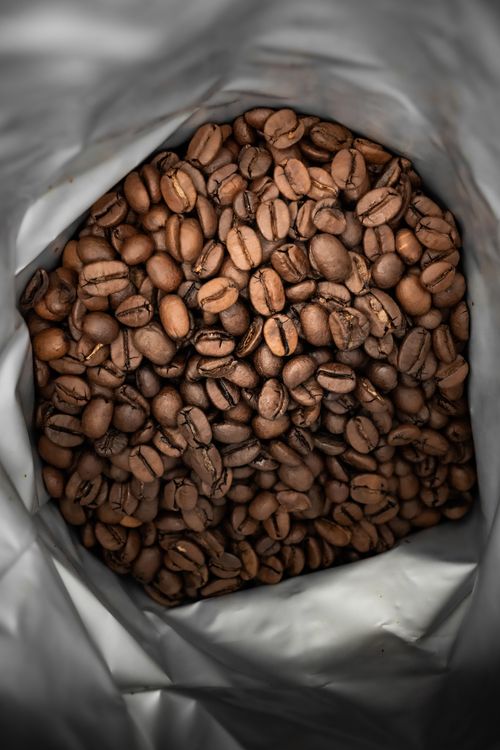
Cover: Justus Menke, source photograph, Pexels License. Image unchanged. Coffee beans inside an open package. Illustrative product-form context, not verified origin, species or roast information.
On a Polish supermarket shelf, the first coffee decision is often a language decision. Ziarnista, mielona and rozpuszczalna describe different forms of the product, not three interchangeable packages for the same equipment. Recognising them can prevent a simple mistake before you begin comparing brands, roast descriptions or prices.
This guide is about packaged coffee and its product description. It is not a cafe recommendation, a brewing recipe or a personal caffeine plan. The photographs illustrate coffee beans and packaging; they do not establish a particular origin, species, roast date or caffeine content. Read the actual package for those claims.
Begin with the product form
Kawa means coffee. Kawa palona means roasted coffee. Within that category, ziarnista indicates whole beans, while mielona indicates ground coffee. A large coffee-bean picture can appear on packages of different products, so find the written description rather than choosing from the picture alone.
Kawa rozpuszczalna is soluble or instant coffee. It is a different product form from ground roasted coffee. IJHARS's July 2026 guide explains instant coffee as a product made through extraction and drying. The practical distinction is that its preparation instructions differ from those for a packet of ground beans.
Read the full name on the item you are buying. A shop may place beans, ground coffee and instant coffee close together or use a shared brand design across them. A familiar colour or logo is not a reliable substitute for the form printed on the package.
Match whole beans to the equipment you actually have
Ziarnista means the beans have not already been ground. Before buying, check whether you have a suitable grinder or a machine with one built in. Do not assume a rental apartment's coffee maker can process beans merely because the machine is described as an ekspres.
The appliance's own instructions should decide what goes into it. This article does not identify a machine from its appearance or authorise putting beans, ground coffee or soluble coffee into an unfamiliar compartment. If the equipment is not yours, establish the model and its instructions first.
Whole beans are a product form, not an automatic promise that you will prefer the result. They may be convenient for one household and inconvenient for another. Choose with your equipment and routine in mind instead of treating the word ziarnista as a universal quality ranking.
Read ground coffee as ground coffee, not instant
Mielona means ground. It does not mean soluble. The distinction matters even when the package is small, tightly packed or covered with a photograph of a prepared cup. Find the preparation information and the product name together before treating it as a quick substitute for instant coffee.
Ground coffee can also have product-specific information about intended preparation. Read what the manufacturer says rather than assuming one grind suits every appliance. This guide supplies no universal grind setting, dose, water temperature or brewing time.
If buying for someone else, ask about the form they use, not only their favourite brand. The same brand may sell beans and several ground products. A photograph of the exact package or a written product description can prevent a well-intended but unusable purchase.
Understand the separate instant-coffee category
The EU rules for coffee extracts reserve names including coffee extract, soluble coffee and instant coffee for the products defined in that legislation. The underlying process uses water extraction from roasted coffee beans. This gives the category a specific meaning beyond a seller's general claim that a drink is easy to prepare.
For an ordinary purchase, check whether the package describes plain instant coffee or a more complex drink mixture. A coffee-themed sachet can contain other ingredients. Read its actual name and composition instead of assuming every powder near the coffee shelf is the same product.
Do not derive a health conclusion or a taste ranking from the category. The important first step is to identify what the packet contains and how its manufacturer intends it to be used. Personal preference comes after that basic identification, not before it.
Keep decaffeinated separate from the other descriptions
Bezkofeinowa means decaffeinated. It is a different kind of information from whole-bean, ground or soluble. Look for both the form and the decaffeinated claim; one does not replace the other. An attractive evening scene on a package is not the same thing as a printed decaffeinated description.
Do not translate decaffeinated into a promise of absolutely no caffeine. The EU coffee-extract rules permit the decaffeinated term for the defined extract products within a specified residual-caffeine limit. This guide does not extend that extract-specific numerical rule to every roasted coffee product.
If a medical or personal requirement depends on caffeine content, ask about the actual product and obtain appropriate advice. Neither a mild-sounding roast nor a species name gives you a precise caffeine amount for the cup you will prepare.
Treat Arabica and Robusta as another question
Arabica and Robusta refer to coffee types, not whether the product is whole, ground or soluble. IJHARS discusses them separately from processing form. A blend can combine them. Read any stated proportions if the distinction matters to you rather than inventing a percentage from a prominent word on the front.
These terms should not replace the preparation check. A package labelled Arabica can still be the wrong form for the equipment available. Resolve the practical form first, then compare the product's other declared features.
Avoid using a species name as a personal safety instruction or an exact caffeine measurement. This guide does not predict your response to a drink, prescribe when to consume it or promise a particular sensory result from one word on the label.
Separate roast descriptions from preparation permission
Palenie relates to roasting. IJHARS describes light, medium and dark roasting in its coffee materials. The package may use Polish or international wording, sometimes alongside its own descriptive scale. Read the explanation supplied for that particular product.
Do not assume that two brands' numbers mean the same thing. If a package uses a strength or intensity scale, look for what the manufacturer says the scale measures. A number with no clear unit should not be converted into milligrams of caffeine or a universally comparable measurement.
Roast information also does not tell you which compartment of a machine to use. Keep the product form, the appliance instructions and any roast description separate. This makes the shopping decision clearer without turning a broad label term into a brewing manual.
Read additional ingredients instead of guessing from flavour words
When a package describes an added flavour or a prepared drink mixture, use its actual composition information. Do not decide from a cup photograph whether it contains milk ingredients, sugar or another addition. Nor should a familiar flavour word be treated as a complete ingredients list.
There is a useful exception to remember when looking for a list: IJHARS's July 2026 leaflet notes that single-ingredient products do not require an ingredients list in the same way. A missing multi-line list is not by itself proof that plain coffee has undisclosed additions.
At the same time, do not use that exception to ignore a mixed product's composition. Identify the item first. A packet of plain coffee and a coffee-based drink mixture should not be treated as one category merely because both display coffee beans.
Buy the right quantity and keep the product identifiable
Read the net quantity printed on the package. Do not rely on bag height, a familiar jar shape or what the brand contained on a previous purchase. Different forms and package sizes can look similar from a distance.
Keep the original label or a clear photograph if you transfer the product to a household container. The product name and preparation information are more useful than a handwritten word coffee when several different products share a kitchen. Keep the original instructions readable and available.
For storage, use the actual package directions. This guide gives no fixed freshness period after opening and no rule that every coffee should be moved to a particular container. A manufacturer's specific storage information is a better starting point than a generic routine applied to every product.
Ask for the missing detail before substituting
If a seller's listing says only coffee, ask whether it is ziarnista, mielona or rozpuszczalna. If buying for a shared kitchen, establish which form the equipment takes. A small clarification can avoid opening a product that does not fit the intended use.
For online shopping, save the exact name and specification, not only the promotional image. Check that the delivered package matches the ordered form. When information conflicts, keep both descriptions and ask the seller to explain the difference rather than assuming the more convenient one is correct.
The shortest useful routine is to identify the form, check preparation compatibility and then read any decaffeinated, species, blend or roast information for its own purpose. These are separate choices. Understanding that separation makes a Polish coffee shelf easier to use without requiring a tasting vocabulary or a claim that one form is best for everyone.
Frequently asked questions
Does mielona mean instant?
No. Mielona means ground. Rozpuszczalna indicates soluble or instant coffee.
Does decaffeinated promise absolutely zero caffeine?
No. Do not turn that description into a zero-caffeine or personal medical guarantee.
Does Arabica tell me whether the coffee is whole or ground?
No. Species and product form are separate information.