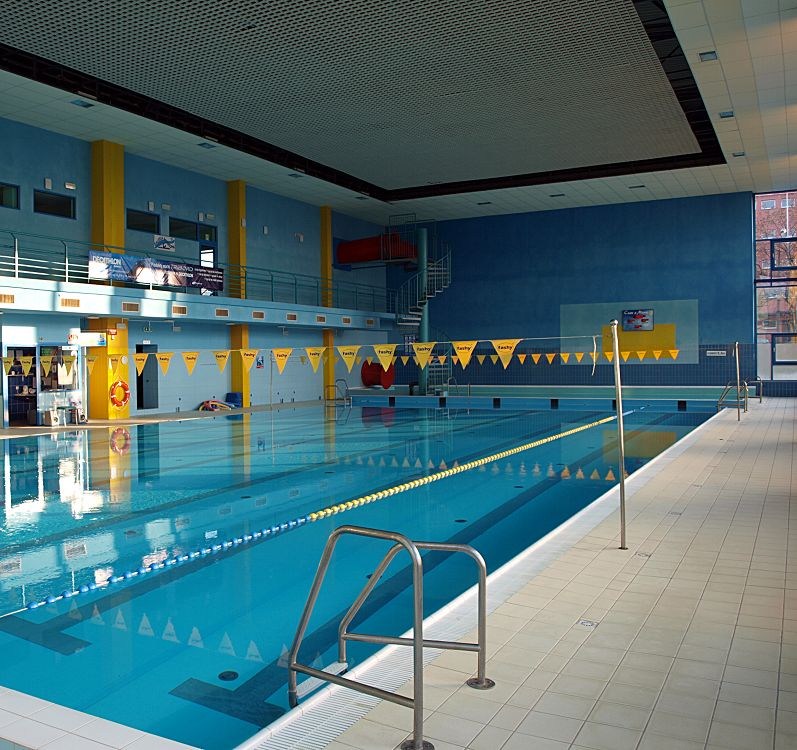
Climbing Gyms in Poland: Bouldering and Your First Visit
The essentials: Choose bouldering or a supervised roped session, tell staff your experience and arrange any needed introduction. Check local footwear, registration, ticket and supervision rules. A ticket, rental equipment or padded floor is not proof of competence or a guarantee against injury.
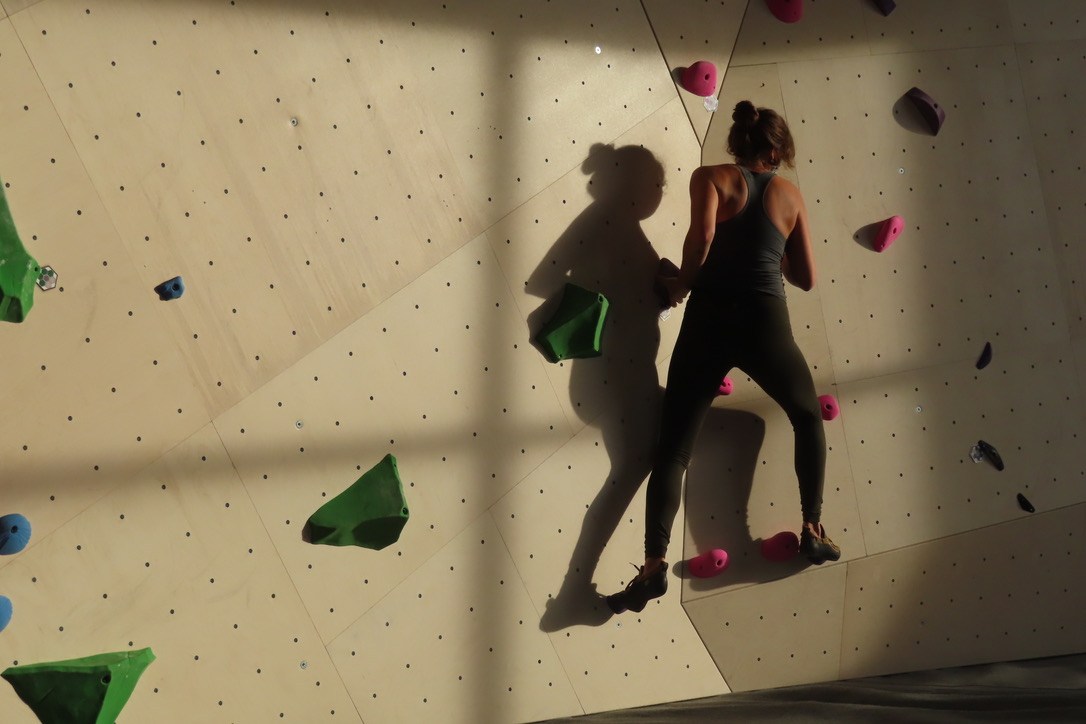
Historical indoor bouldering at the Hive in Winnipeg, 20 August 2020, not a Polish gym or instructional demonstration. Yvette.Cuthbert / Wikimedia Commons, CC BY-SA 4.0. Re-encoded; image adaptation under the same licence.
A climbing gym can offer an indoor activity and a way to meet people after moving to Poland. But “first visit” can mean different things: an independent bouldering entry, an introductory class, a roped session with an instructor or a skills check for somebody who already climbs. Choose the activity and support you need before buying a ticket.
Search for boulderownia for a bouldering gym or ścianka wspinaczkowa for a climbing wall, then read the venue's pierwszy raz page, regulamin and cennik. This is a guide to arranging a visit and understanding local requirements. It is not instruction in climbing, falling, knots, harness fitting, belaying or automatic-belay use.
Separate bouldering from roped climbing
Limbo Bouldering's first-visit page describes bouldering as climbing without a rope on a lower wall. It says a belaying partner is not needed for that activity. That does not mean you can apply the same entry arrangement to a tall roped wall or teach yourself how to use its equipment after buying admission.
Arena Wspinaczkowa Makak's rules distinguish roped climbing, bouldering and training areas, with separate equipment and competence requirements. For independent belaying, the rules require relevant knowledge, skills and experience or completion of the venue's belaying course. They also allow staff to check skills and refuse activity that they judge unsafe.
Tell reception which type of climbing you want and what experience you actually have. If you have never used ropes, say that plainly and ask for an appropriate supervised session. If you have climbed elsewhere but had a long break, disclose that too. Familiarity with one gym or system is not a reason to bypass another venue's check.
Tell staff it is your first visit
Several reviewed venues explicitly ask newcomers to identify themselves. Projekt Boulder's rules and Lokal32's rules require first-time users to tell staff. Limbo's introductory page makes the same request so reception can explain the activity and help the visitor understand the facility.
Do this before entering the activity area, not after trying an unfamiliar wall. Ask what briefing or introduction is available and which parts of the gym your entry permits you to use. A front-desk explanation, an instructor-led introduction and a course that develops independent skills are not automatically the same service.
Check whether ordinary entry and introductory sessions have different reservation rules. VOLT's FAQ says ordinary visits do not require booking but identifies different arrangements for selected classes and locations. Limbo says its introductory class should be arranged in advance. Do not assume an instructor will be available just because the building is open.
If you need English instruction, request it when arranging the session and confirm the response for the actual date and instructor. A website with English text or an English-speaking receptionist does not establish that the safety briefing or entire class will be delivered in English.
Read the risk information without treating mats as a guarantee
Bouldering does not remove the possibility of injury simply because it uses mats instead of ropes. Projekt Boulder's rules describe the activity as high risk and say safety cannot be guaranteed. Lokal32's rules also warn that injuries can occur despite following rules and precautions. Those warnings matter more than a general promotional description of an easy first visit.
Ask staff to explain the venue's activity boundaries and how to use the space before starting. Do not use a translated article, a video or this checklist as a substitute for practical instruction. If a task or piece of equipment is outside your training, stop and get the appropriate help rather than experimenting.
Some regulations contain statements about health, responsibility, insurance and acceptance of risk. Read what you are being asked to accept and ask questions before signing or paying. This guide does not decide whether a clause is legally enforceable or give medical clearance. If you have a health concern relevant to participation, seek suitable medical advice rather than relying on a gym's general FAQ.
Check shoes, clothing and rental terms locally
Shoe policies differ. VOLT and Limbo's newcomer information allows sports shoes for an initial visit. Lokal32's rules require shoes intended for climbing. That is a venue-specific difference, not a national rule to settle by copying the most convenient wording.
Ask what clean footwear is accepted for the activity you booked, whether rental climbing shoes are available in your size and what rental costs. Projekt Boulder's FAQ confirms it rents climbing shoes, but it does not establish stock for a particular size or visit. Check that before making equipment availability essential to your plan.
Ask staff to help with fit rather than choosing equipment solely by your everyday shoe size. For any roped activity, have the provider confirm what equipment is supplied and what fitting and instruction are included. Owning a harness or receiving rental equipment is not evidence that you are ready to use a system independently.
Wear clothing that allows movement and follows the gym's requirements. Check rules on jewellery, pocket contents, chalk and personal gear. Projekt Boulder and Lokal32 restrict jewellery and objects carried while climbing. Ask what to do with items before entering the wall area, rather than leaving them on a mat.
Understand the full price before committing
Ask for the cost of your actual plan: entry, rental shoes, other necessary equipment, instruction and any first-visit charge. A class advertised at one figure may or may not include normal admission or rental. Confirm that in the written offer or booking rather than assuming a package includes everything.
A sports card may also have limits or supplements. VOLT's FAQ says accepted sports cards carry a supplement according to the location's tariff. Limbo's page distinguishes ordinary open entry from the time allowance associated with one sports-card arrangement. Check the current facility listing, your exact card and the current venue tariff before relying on access.
For a course, private session or regular group, ask about missed sessions, cancellation, lateness, minimum numbers and refunds before paying. Makak's rules refer regular-group participation to separate terms for the relevant year. Do not treat the general gym rules as the complete contract for a longer course.
Keep the booking confirmation and the terms that apply to it. A casual single visit is a different decision from buying a pass with an expiry date. Try the format first if you are unsure whether it fits your routine, and only then compare the commitment attached to multi-entry or subscription options.
For children, check consent and supervision separately
A child being old enough for a class does not automatically mean independent access to the gym. Ask about the exact age, activity area, supervision requirement, consent form and who may complete it. State whether you are the parent, legal guardian or another adult accompanying the child.
VOLT's FAQ says 16- and 17-year-olds may climb independently with written guardian consent, while younger children require direct supervision. Projekt Boulder's rules use a different age threshold for independent access with consent. These examples show why an age rule from one facility should not be applied to another.
Individual areas can have additional restrictions. Makak's rules specify stricter instructor or trainer supervision for younger children in its bouldering area than a reader might infer from the general building-entry rules. Ask about the actual area your child will use, not only whether children are welcome.
Confirm where responsibility passes to an instructor and when the session ends. Makak's group rules say children are supervised by instructors only during the scheduled class; before and afterwards they remain the guardian's responsibility. Ask about siblings and waiting areas too. A climbing mat is not an unsupervised play space for a child who is not taking part.
Respect the shared space and report problems
Read the local rules about activity zones, waiting areas and belongings, and follow staff directions. Projekt Boulder and Lokal32 prohibit being underneath people who are climbing and leaving objects in the fall area. Have staff show you where to wait and store things rather than treating the whole padded floor as seating.
Do not adjust holds, repair equipment or try an area marked closed. Makak prohibits changes to the wall and equipment, and its rules require prompt reporting of damaged rental equipment or other hazards. Lokal32 similarly directs users to report technical problems to staff. Reporting is the useful response, not attempting your own fix.
Ask about lockers and deposits. Projekt Boulder's rules describe a key deposit arrangement that does not use an identity document as the deposited item. Other venues have different arrangements for lockers and valuables. Confirm yours and check the locker closes before leaving belongings.
Leave with the next step clear
At the end, return rental items as directed and check any outstanding charges. If something went wrong with equipment, belongings or the session, tell staff promptly and retain the relevant booking and response. Do not interpret a risk warning as a complete answer to every possible service complaint.
Before returning independently, ask whether you have completed the required introduction or whether further instruction or a skills check is needed for the activity you want. If you enjoyed a supervised roped session, that does not itself establish independent belaying competence. Choose the next lesson or entry arrangement with the provider, within your actual training, rather than treating a successful first visit as permission to use every system.
Frequently asked questions
Do I need a belaying partner for bouldering?
Limbo describes its bouldering as climbing without ropes, so a belaying partner is not needed for that activity. This does not apply to roped climbing or remove the need for the venue’s introduction and rules.
Can I arrive without booking?
Some venues allow ordinary entry without booking, while classes and courses have separate arrangements. Confirm the actual visit and instructor availability.
Are ordinary sports shoes accepted?
It depends on the venue. VOLT and Limbo allow sports shoes for newcomers; Lokal32 requires climbing footwear. Check before arriving.
Can a teenager climb independently?
Check the exact gym, area, age and guardian-consent requirements. The reviewed venues have different age thresholds and supervision rules.
Does a supervised first session make me ready to belay independently?
No such conclusion follows from attending a session. Ask what further instruction or competence check is required for the activity at that venue.
Sources
- VOLT FAQ: visits, equipment, classes and minors, checked 28 October 2026
- Projekt Boulder rules: newcomers, risk, kit and supervision, checked 28 October 2026
- Limbo first-visit guide: activity, intro and kit, checked 28 October 2026
- Lokal32/Groto rules: footwear, supervision and shared space, checked 28 October 2026
- Arena Makak rules effective 17 August 2026: competence, equipment and classes, checked 28 October 2026
- Projekt Boulder FAQ: shoe rental and ordinary entry, checked 28 October 2026